
Affiliate Disclosure
Plumber Guide Guys is a participant in the Amazon Services LLC Associates Program, an affiliate advertising program designed to provide a means for sites to earn advertising fees by advertising and linking to Amazon.
How to Become a Plumbing Engineer? Are you ready to design the invisible infrastructure that keeps our world running smoothly? What if your engineering skills could transform how buildings manage water, waste, and critical systems?
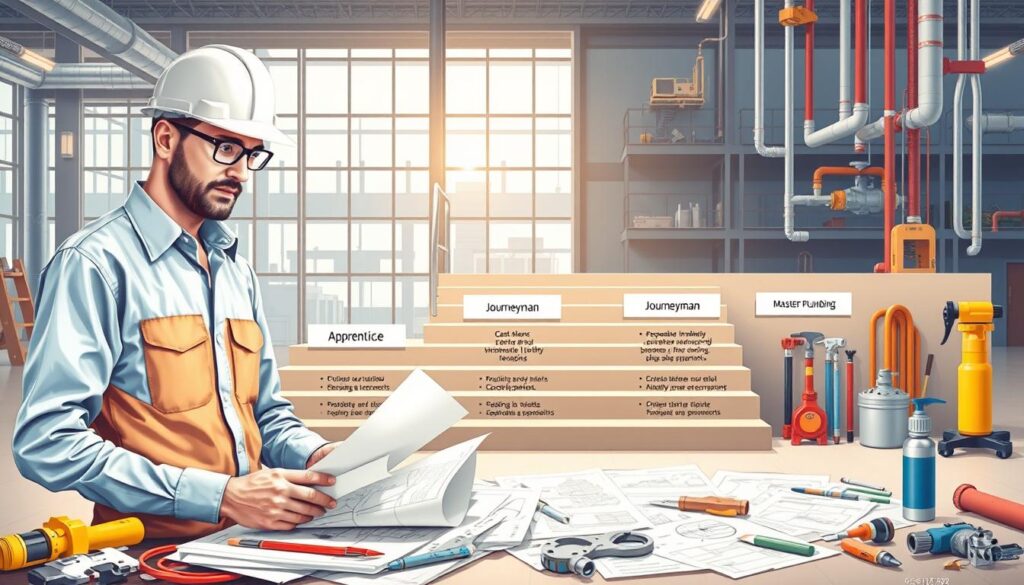
Plumbing engineering is a dynamic career that goes beyond just installing pipes. These experts create complex water management solutions for homes, businesses, and industries. By choosing this career, you’ll impact public health and help build sustainable infrastructure.
To become a plumbing engineer, you need the right education and technical skills. This job requires creative problem-solving and a deep understanding of mechanical systems. Plumbing engineers design networks that ensure safe water, efficient waste disposal, and integrated building systems.
Your journey starts with understanding the vital role these engineers play in modern construction. They design everything from stormwater management systems to fire protection infrastructure. Exploring this comprehensive career pathway can guide you towards a successful career.
Key Takeaways
- Plumbing engineering offers innovative career opportunities in critical infrastructure design
- Technical education is fundamental to becoming a successful plumbing engineer
- The profession requires advanced problem-solving and system design skills
- Plumbing engineers play a critical role in public health and sustainability
- Career progression involves continuous learning and technical specialization
Table of Contents
Understanding the Role of Plumbing Engineers
Plumbing engineers are key in making water systems safe and efficient. They help protect public health and support green infrastructure. Their work is more than just plumbing; it involves complex engineering that affects communities.
They need deep technical skills and know a lot about water and waste management. Plumbing engineers design systems that bring clean water and remove waste well. They work in homes, businesses, and factories.
Key Responsibilities and Public Health Impact
Plumbing engineers do many important things:
- They design complex water networks.
- They create systems for draining water.
- They use tech to save water.
- They make sure systems follow health rules.
Distinguishing Plumbers from Plumbing Engineers
Plumbers mainly install and fix pipes. But plumbing engineers design, plan, and solve big problems. They need to know a lot about:
- How water systems work.
- How to protect the environment.
- How to use computers for design.
- How to build green infrastructure.
Industry Overview and Future Prospects
The field of plumbing engineering is always changing. It’s influenced by new tech and environmental issues. People in this field are working on:
| Technology | Impact |
|---|---|
| Smart Water Management | Real-time monitoring and efficiency |
| Greywater Recycling | Reduced water consumption |
| Energy-Efficient Systems | Lower environmental footprint |
As our needs for infrastructure grow and environmental worries increase, plumbing engineers will be more vital. They will help create lasting, green water solutions for the future.
Educational Requirements and Academic Path
Starting a career as a plumbing engineer needs a clear plan. You must first understand the key education requirements for this field.
To become a plumbing engineer, you need to choose the right path. Most start with specialized engineering degrees. These programs give you the technical skills needed.
Bachelor’s Degree Options
There are several degrees for plumbing engineers:
- Mechanical Engineering
- Civil Engineering
- Architectural Engineering
- Construction Engineering
Essential Coursework and Specializations
Plumbing engineers learn through specific courses. These cover important technical areas:
- Fluid Dynamics
- Thermodynamics
- Hydraulic Systems Design
- Building Materials
- Construction Law and Regulations
Academic Prerequisites and Standards
Academic programs for plumbing engineers require a solid math and science base. You’ll need:
- High school diploma with advanced math and science courses
- Strong grades in physics and calculus
- Demonstrated problem-solving skills
- Potential recommendation letters from technical instructors
Choosing the right plumbing engineering degree is important. Look at program accreditation, curriculum, and industry standards. Your education is key to a successful career in this field.
How to Become a Plumbing Engineer: Step-by-Step Guide
Starting a plumbing engineer career needs careful planning and hard work. Your first step is to understand the key steps to turn your passion into a job.
To become a plumbing engineer, follow a clear path. This includes education, hands-on experience, and ongoing professional growth. Here are the steps to follow:
- Complete a Bachelor’s Degree in Engineering
- Focus on mechanical or environmental engineering
- Choose programs with strong plumbing system design curricula
- Gain Practical Experience
- Look for internships with engineering firms
- Join in supervised project work
- Obtain Professional Certifications
- Go for Certified in Plumbing Design (CPD)
- Get a professional engineering (PE) license
“Success in plumbing engineering comes from combining technical knowledge with practical skills.” – Professional Engineering Association
Your plumbing engineer career will keep growing. It’s important to network and keep up with new tech. These steps are key for lasting success.
| Career Stage | Key Requirements | Typical Duration |
|---|---|---|
| Entry Level | Bachelor’s Degree, Internship | 0-2 Years |
| Mid-Level | Professional Certification, Project Experience | 3-5 Years |
| Senior Level | PE License, Advanced Specializations | 6-10 Years |
Keep going and work on your skills. Becoming a plumbing engineer takes dedication, learning, and a love for making efficient systems.
Professional Certifications and Licenses
To move up in your plumbing engineer career, getting professional certifications is key. These certifications show you’re an expert and serious about being the best in plumbing engineering.
Getting certified is vital for proving your worth and opening up more job chances in plumbing engineering. It’s proof of your technical skills and knowledge.
Certified in Plumbing Design (CPD) Program
The American Society of Plumbing Engineers (ASPE) has a top-notch Certified in Plumbing Design (CPD) program. This certification shows you really get complex plumbing system design.
- Comprehensive examination of technical knowledge
- Rigorous assessment of design capabilities
- Nationally recognized professional credential
ASPE Certification Process
To get your ASPE certification, you need to follow a few important steps. First, you must have the right education and work experience. Then, you can take the big exam.
- Verify educational background
- Document professional experience
- Submit application to ASPE
- Schedule certification exam
- Complete continuing education requirements
International Association of Plumbing and Mechanical Officials (IAPMO) Credentials
IAPMO also offers certifications for plumbing engineers who want to stand out. These credentials prove your technical skills in different plumbing engineering areas.
Professional certifications are not just credentials – they are investments in your career development and technical mastery.
By getting certifications from ASPE and IAPMO, you show you’re dedicated to being the best in plumbing engineering.
Technical Skills and Software Proficiency
Being good at technical skills is key for plumbing design engineer jobs. People in plumbing systems engineering need a wide range of skills. These skills are more than just knowing how to fix pipes.
Important technical skills for plumbing engineers include:
- Advanced hydraulic system calculations
- Pressure loss analysis
- Load balancing techniques
- Risk assessment and mitigation strategies
- Sustainable design principles
Knowing how to use software is also very important. Your skill with design tools can make projects run smoother and more accurately.
| Software Category | Essential Tools | Primary Function |
|---|---|---|
| CAD Software | AutoCAD, Revit | Detailed system design and drafting |
| Hydraulic Modeling | WaterGEMS, Bentley WaterCAD | Simulation and performance analysis |
| Building Information Modeling | Navisworks, BIM 360 | Integrated project coordination |
Keeping up with new things is always important in plumbing systems engineering. You need to know about new technologies, rules, and designs to do well in plumbing design engineer jobs.
“Technical expertise combined with software proficiency defines the modern plumbing engineer.” – ASPE Professional Development Guide
Getting better at these skills takes hard work, practice, and a desire to grow. Spend time on training, online classes, and real projects to improve your skills.
Career Progression and Advancement Opportunities
Your plumbing engineer career path is full of growth and learning chances. As you get more experience, you’ll find many ways to boost your salary and skills.

Working in this field means a clear path to success. The National Society of Professional Engineers says engineers with varied experiences move up faster and earn more.
Entry-Level to Senior Positions
Your career will likely follow this path:
- Junior Plumbing Engineer (0-2 years)
- Design Engineer (2-5 years)
- Senior Design Engineer (5-8 years)
- Principal Engineer (8-12 years)
- Engineering Manager (12+ years)
Specialization Areas
Plumbing engineering has many special areas to explore:
- Sustainable Design – Focus on green building tech
- Healthcare Facility Plumbing
- Industrial Process Piping
- Municipal Infrastructure Systems
- Advanced Water Treatment Technologies
Leadership Roles in Plumbing Engineering
As you move up, you’ll get more leadership chances. Senior engineers can become:
- Department Director
- Chief Technical Officer
- Engineering Consultant
- Project Management Specialist
Strategic networking and continuous learning are key to accelerating your plumbing engineer career path.
Your salary will increase with each step up, showing your growing skills and duties.
Essential Design and Engineering Competencies
Being a plumbing systems engineer means you need both technical skills and professional abilities. You’ll have to learn a wide range of skills, not just the basics.
As a plumbing engineer, you must have several key skills:
- Advanced system design capabilities
- Comprehensive understanding of building codes
- Sophisticated problem-solving techniques
- Precise project management skills
Technical skills are the foundation of plumbing systems engineering. You must know complex design principles and understand hydraulic systems. You also need to find creative solutions for tough projects.
Important skills include:
- Computational fluid dynamics analysis
- Sustainable water management strategies
- Risk assessment and mitigation planning
- Digital modeling and simulation
Modern plumbing engineers must also be good at working with others. You need to communicate well with architects, construction managers, and others. This teamwork is key to success.
“Excellence in plumbing engineering is not just about technical skills, but about holistic problem-solving and innovative thinking.”
To grow in plumbing systems engineering, you need to keep learning, gain practical experience, and stay committed to your career. This field is always changing, so you must adapt and grow.
Industry Networking and Professional Development
To move up in your plumbing engineer career, you need more than just technical skills. Networking and learning new things are key to staying ahead. Joining industry groups opens doors to new chances and broadens your view.

Having a strong network is vital for plumbing engineers looking to grow. Good networking can lead to new tech, jobs, and projects.
Professional Associations and Memberships
Being part of groups like the American Society of Plumbing Engineers (ASPE) has big benefits:
- Access to the latest research
- Meeting with seasoned pros
- Chances for ASPE certification
- Discounts on learning resources
Continuing Education Requirements
Keeping up with the latest in your field is essential. Many places require you to keep learning. This ensures you know about new tech and best ways to do things.
Industry Events and Conferences
“Conferences are not just about learning—they’re about connecting and growing professionally.” – Industry Expert
Important events for plumbing engineers include:
- ASPE Convention and Expo
- International Mechanical Engineering Congress
- Sustainable Design and Engineering Summit
Investing in your growth through networking, learning, and attending conferences boosts your career. It makes you a forward-thinking pro in plumbing engineering.
Salary Expectations and Job Market Outlook
Plumbing engineering is a field with great career opportunities and good pay. The salary for mechanical plumbing engineers changes based on a few important things. Your salary depends on your experience, the area you work in, and your specialization.
Those in plumbing design engineer jobs can look forward to good money. Starting jobs usually pay between $55,000 and $65,000 a year. As you gain more experience and skills, your salary can go up to $80,000 to $110,000.
- Top mechanical plumbing engineers in certain fields can make over $130,000
- Jobs in healthcare and industrial projects pay the most
- Having professional certifications can increase your salary by 15-25%
The job market for plumbing design engineers is strong. With more projects in infrastructure and green buildings, there are more chances to find work. Cities like San Francisco, New York, and Houston have some of the best-paying jobs for skilled people.
Several things can affect how much you earn:
- Having advanced degrees
- Being a Professional Engineer (PE)
- Having special technical skills
- How many years you’ve worked
“Continuous learning and specialization are key to maximizing your earning in plumbing engineering.” – Engineering Career Insights
As technology in building changes, plumbing engineers with skills in green design and smart systems will be in demand. Your career will grow if you keep up with new trends and have a wide range of skills.
Conclusion
Starting a career as a plumbing engineer needs dedication, technical skills, and a love for creating sustainable spaces. Your path includes choosing the right education, getting professional certifications, and always learning more. By improving your technical skills, you’ll help shape modern buildings and improve public health.
To succeed, get a degree in engineering, get certifications like the Certified Plumbing Design, and keep up with new tech. Understanding complex designs and new solutions will make you stand out in this field.
But it’s not just about knowing the tech. Joining industry groups, going to conferences, and being open to change are key. You’ll have chances to help make cities better, improve public health, and support sustainable projects.
As you grow in your career, remember your skills are vital. You’ll help create systems that are strong and efficient, affecting communities. Your work will make a big difference in the quality of our built environments, making this job both challenging and important.