
Affiliate Disclosure
Plumber Guide Guys is a participant in the Amazon Services LLC Associates Program, an affiliate advertising program designed to provide a means for sites to earn advertising fees by advertising and linking to Amazon.
How to Become a Plumber in Virginia? Did you know Virginia’s plumbing industry is set to grow by 14% in the next decade? This growth will create over 2,000 new jobs. Learning to become a plumber in Virginia can lead to a stable and rewarding career. It also offers great growth and financial success opportunities.

To start a plumbing career in Virginia, you need a plan and to know the license requirements. Plumbing is a great job for those who like solving problems and working with their hands.
Aspiring plumbers in Virginia must follow a clear path. This includes education, apprenticeship, getting licensed, and keeping skills sharp. This guide will help you through every important step to succeed in this vital industry.
Key Takeaways
- Virginia’s plumbing industry offers robust career opportunities
- Proper licensing is key for professional success
- Apprenticeship programs give vital practical training
- Continuous education keeps your credentials up to date
- Plumbing careers offer competitive pay and job stability
Table of Contents
Understanding Virginia’s Plumbing Industry Overview
The plumbing industry in Virginia is booming. It offers great jobs for skilled workers. With new projects and old systems needing fixes, plumbers are in high demand.
Virginia’s building and fixing projects need plumbers. You can find jobs in homes, businesses, and public places. This means lots of chances to work in different settings.
Current Industry Demands and Growth Prospects
The plumbing field in Virginia is growing fast. It’s expected to keep growing because of:
- More homes being built
- Old systems needing updates
- Focus on saving energy
- Replacing old infrastructure
Average Salary Expectations in Virginia
Plumbers in Virginia make different amounts based on their experience. Beginners start at about $35,000. Experienced plumbers can make up to $75,000 a year.
| Experience Level | Average Annual Salary |
|---|---|
| Apprentice Plumber | $35,000 – $45,000 |
| Journeyman Plumber | $50,000 – $65,000 |
| Master Plumber | $65,000 – $85,000 |
Career Advancement Opportunities
Plumbing has many ways to grow your career. You can move from apprentice to master plumber with training and experience. You can also specialize in areas like commercial plumbing or green technology.
“The plumbing trade offers a stable and lucrative career path for those willing to develop their skills and expertise.” – Virginia Contractors Association
Virginia Plumbing License Requirements and Classifications
Understanding the virginia plumbing license requirements is key for those in the plumbing field. Virginia has a clear path for career growth through different licenses. These licenses show a plumber’s skills and experience.
The state has three main plumbing licenses. Each has its own rules and duties:
- Apprentice Plumber
- Journeyman Plumber
- Master Plumber
To get a journeyman plumber certification in Virginia, you must meet strict standards. You need to finish both school and work experience under a licensed plumber.
| License Type | Experience Required | Examination |
|---|---|---|
| Apprentice | 0-2 years | Basic skills assessment |
| Journeyman | 4-5 years | Comprehensive trade exam |
| Master | 7-8 years | Advanced technical exam |
Each license level is a step up from the last. This makes a clear path for plumbers in Virginia. The state’s system helps plumbers get better and keep standards high.
To get your license, you must show you know your stuff. You’ll need to pass exams and prove you can do plumbing work. The Virginia Board for Contractors checks these rules to keep everyone safe and work quality high.
How to Become a Plumber in Virginia
Starting a plumbing career in Virginia needs careful planning and steps. If you’re looking into becoming a plumber or an apprentice in Virginia, knowing the process is key.
On your path to becoming a professional plumber, you’ll face several important stages. These require dedication and careful preparation.
Educational Prerequisites
To start your plumbing career in Virginia, you need to meet certain educational requirements:
- High school diploma or GED equivalent
- Minimum age of 18 years
- Basic mathematics and reading skills
- Strong understanding of technical concepts
Required Documentation
Here’s what you’ll need for your plumbing license application:
- Proof of educational background
- Valid government-issued ID
- Social Security documentation
- Work experience verification
- Criminal background check
Application Process Steps
Follow these steps to apply:
- Complete an accredited apprenticeship program
- Gather all necessary documents
- Submit your application to the Virginia Board for Contractors
- Pay the required application fees
- Schedule and pass required exams
Each step moves you closer to a successful plumbing career in Virginia. Attention to detail and thorough preparation are your best tools for success.
Virginia Plumbing Apprenticeship Programs
Starting a career as an apprentice plumber in Virginia begins with the right apprenticeship programs. These programs offer a mix of classroom learning and hands-on experience. They prepare you for a career in plumbing.
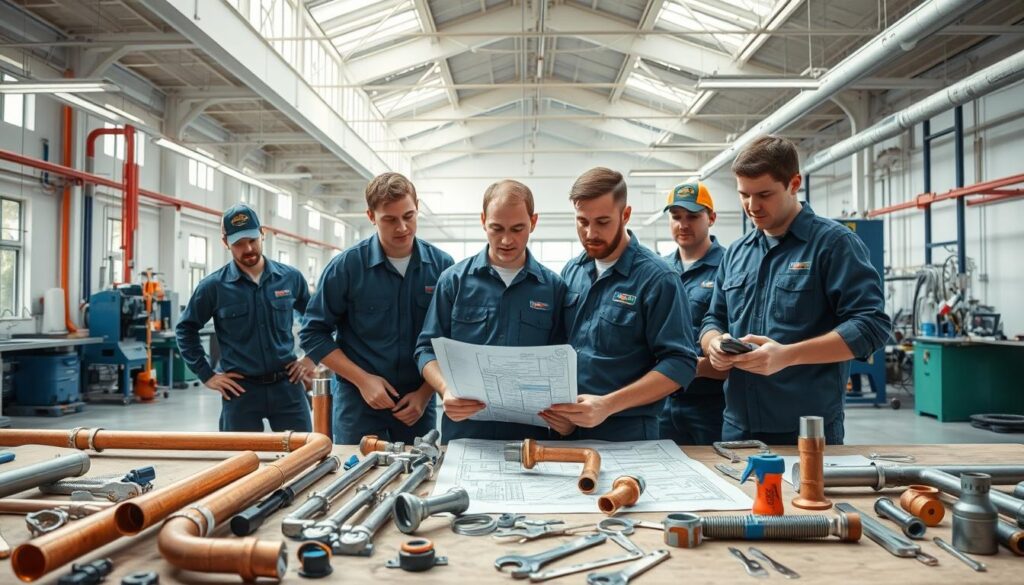
Virginia’s plumbing apprenticeship programs are structured for those entering the skilled trades. They last 4-5 years and include essential training:
- Classroom instruction in technical skills
- Supervised on-the-job training
- Professional mentorship
- Comprehensive safety training
When choosing an apprentice plumber virginia program, look for a few things. The best programs mix theory with practical experience. This balance is key to learning.
| Program Feature | Details |
|---|---|
| Average Program Duration | 4-5 years |
| Weekly Training Hours | 40-44 hours |
| Classroom Instruction | 144 hours annually |
| Minimum Age Requirement | 18 years old |
“An apprenticeship is your gateway to a stable and rewarding career in the plumbing industry.” – Professional Trades Association
Looking for apprenticeships? Check out local trade schools, community colleges, and unions. They offer programs in plumbing. Your hard work and commitment will help you succeed in these programs.
Essential Plumbing Tools and Materials
To become a plumber in Virginia, knowing the right tools and materials is key. Plumbers use more than just basic tools. Learning these tools will help you stand out in the Virginia plumbing field.
Basic Tool Requirements
Every plumber in Virginia needs a good toolbox. Your toolkit should have:
- Pipe wrench for gripping and turning pipes
- Adjustable wrench for versatile applications
- Pliers (rib-joint and slip-joint)
- Screwdrivers (flathead and Phillips)
- Hacksaw for cutting pipes
The professional plumbing guide suggests buying high-quality tools. These tools will last through daily use.
Safety Equipment Necessities
Safety is vital when working as a plumber in Virginia. You’ll need:
- Safety glasses
- Work gloves
- Steel-toe boots
- Protective ear coverings
- Hard hat for construction sites
Material Knowledge Requirements
Knowing different plumbing materials is key. You should be familiar with:
- PVC pipes for drainage systems
- Copper tubing for water supply lines
- Galvanized steel pipes
- PEX tubing for flexible installations
Virginia plumbers need to know which material is best for each job. This ensures their work is both durable and efficient.
Virginia Board for Contractors Examination Process
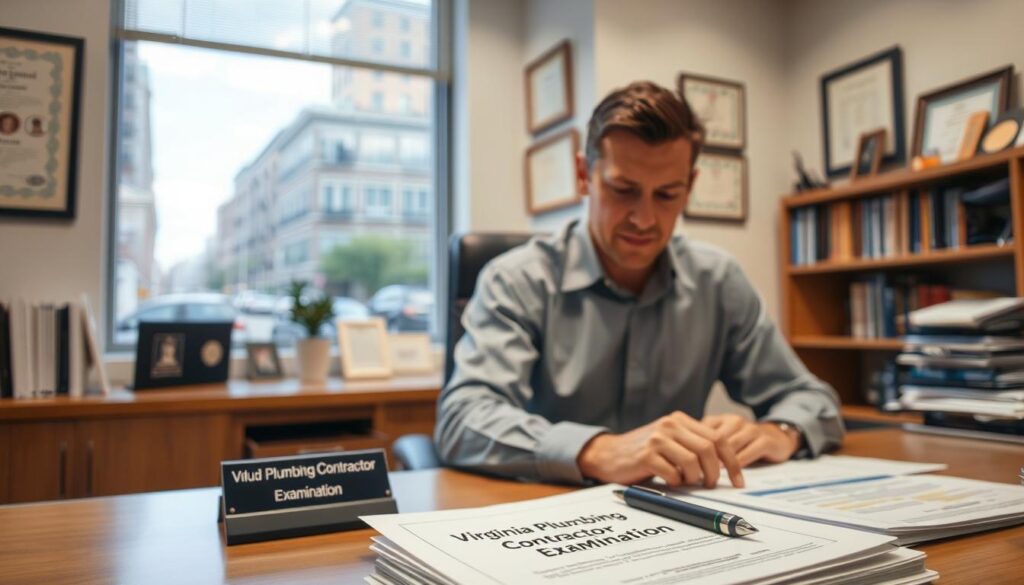
Getting ready for the Virginia Board for Contractors plumbing exam takes a lot of effort. You need to know all about the certification rules. The process checks if you have the right skills and knowledge.
The exam covers important areas to see if you’re ready for the job:
- Plumbing codes and regulations
- Technical knowledge
- Safety protocols
- Practical application skills
The exam has two parts. The written test checks your knowledge. The practical part shows how well you can do the job.
| Exam Component | Duration | Focus Area |
|---|---|---|
| Written Examination | 3 hours | Technical Knowledge |
| Practical Assessment | 2 hours | Skill Demonstration |
To do well in the Virginia Board for Contractors plumbing exam, you should:
- Study current plumbing codes
- Practice technical skills
- Review sample examination materials
- Understand safety regulations
Getting ready is the most important thing for passing your journeyman plumber certification va exam. Spend time studying and practicing to increase your chances of success.
Continuing Education and License Maintenance
Keeping your virginia plumbing license up to date is key for your career and legal needs. As a master plumber virginia, you must stay informed about new standards and rules. This is done through ongoing education.
Continuing education keeps plumbing pros current with new methods, safety rules, and tech. It’s vital for your work.
Required Continuing Education Hours
- Journeyman plumbers: 8 hours of approved courses per licensing cycle
- Master plumbers: 16 hours of specialized training
- Renewal cycles typically last 2-3 years
Approved Education Providers
Virginia has many ways to meet your continuing education needs:
- State-approved technical colleges
- Professional plumbing associations
- Online certified training platforms
- Industry-specific workshops
Make sure the courses you choose are approved by the Virginia Board for Contractors. Focus on important topics like:
- Building code updates
- Safety regulations
- Advanced installation techniques
- Energy-efficient plumbing solutions
It’s important to keep track of your education credits. Keep detailed records of your courses. This helps with license renewal and shows your dedication to your craft.
Business Operations and Legal Requirements
Starting a plumbing business in Virginia needs careful planning and knowing the law. As a master plumber virginia, you must handle several important tasks. These tasks help you build a trustworthy and legal business.
The virginia board for contractors plumbing has strict rules for plumbing businesses. You’ll need to think about:
- Business Registration: You must register your plumbing business with the state
- Insurance Coverage: Get full liability and worker’s compensation insurance
- Bonding Requirements: Get the right surety bonds for contractor work
- Tax Registration: Do all state and federal tax registrations
Managing your finances is key to your plumbing business’s success. You should plan well for:
- Setting the right service prices
- Tracking expenses well
- Creating professional invoices
- Marketing smartly
Networking and learning new skills can really help your business. Think about joining local trade groups and going to professional workshops. This will keep you ahead in Virginia’s plumbing market.
Professional growth and following the law are the basics of a successful plumbing business in Virginia.
Conclusion
Becoming a plumber in Virginia is a rewarding career with lots of growth opportunities. It takes careful planning, dedication to learning, and a commitment to growing professionally. The plumbing industry in Virginia is full of chances for those who are willing to learn and master the trade.
Knowing the licensing rules and getting an apprenticeship are key steps to becoming a plumber in Virginia. Plumbers in Virginia can earn between $59,000 and $80,000 a year. This job also offers financial security and long-term career chances. Small business insurance can help protect your career investments as you start.
Your success in plumbing depends on always learning and keeping up with new tech and rules. Whether you’re starting as an apprentice or growing your business, Virginia’s plumbing sector offers many ways to advance. Start by looking into apprenticeships, preparing for exams, and improving your skills.
The future of plumbing in Virginia looks bright, with more need for skilled workers to tackle big infrastructure problems. Your hard work, technical skills, and commitment to quality will help you build a successful and rewarding career in this vital trade.
FAQ
How long does it take to become a licensed plumber in Virginia?
What are the minimum requirements to start a plumbing apprenticeship in Virginia?
How much does a plumber earn in Virginia?
Do I need to be licensed to work as a plumber in Virginia?
What types of plumbing licenses exist in Virginia?
How much does it cost to become a licensed plumber in Virginia?
How long does it take to become a licensed plumber in Virginia?
What are the minimum requirements to start a plumbing apprenticeship in Virginia?
How much does a plumber earn in Virginia?
Do I need to be licensed to work as a plumber in Virginia?
What types of plumbing licenses exist in Virginia?
How much does it cost to become a licensed plumber in Virginia?
FAQ
How long does it take to become a licensed plumber in Virginia?
It takes 4-5 years to become a licensed plumber in Virginia. You need to complete a 4-year apprenticeship and pass exams for journeyman and master plumber certifications.
What are the minimum requirements to start a plumbing apprenticeship in Virginia?
To start an apprenticeship, you must be 18 or older and have a high school diploma or GED. You also need to pass a basic math and reading test. Some programs require a driver’s license and a clean background check.
How much does a plumber earn in Virginia?
Plumber salaries vary by experience. Apprentices earn 30-50% of a journeyman’s wage. Journeyman plumbers make ,000-,000 a year. Master plumbers can earn ,000-,000 or more, based on experience and location.
Do I need to be licensed to work as a plumber in Virginia?
Yes, plumbers in Virginia must be licensed. You need to complete an apprenticeship and pass exams to become a journeyman plumber. For independent work or running a plumbing business, you need a master plumber license.
What types of plumbing licenses exist in Virginia?
Virginia has three plumbing licenses: Apprentice Plumber, Journeyman Plumber, and Master Plumber. Each requires specific experience, education, and passing exams by the Virginia Board for Contractors.
How much does it cost to become a licensed plumber in Virginia?
Costs vary but include apprenticeship fees (
FAQ
How long does it take to become a licensed plumber in Virginia?
It takes 4-5 years to become a licensed plumber in Virginia. You need to complete a 4-year apprenticeship and pass exams for journeyman and master plumber certifications.
What are the minimum requirements to start a plumbing apprenticeship in Virginia?
To start an apprenticeship, you must be 18 or older and have a high school diploma or GED. You also need to pass a basic math and reading test. Some programs require a driver’s license and a clean background check.
How much does a plumber earn in Virginia?
Plumber salaries vary by experience. Apprentices earn 30-50% of a journeyman’s wage. Journeyman plumbers make $55,000-$65,000 a year. Master plumbers can earn $70,000-$90,000 or more, based on experience and location.
Do I need to be licensed to work as a plumber in Virginia?
Yes, plumbers in Virginia must be licensed. You need to complete an apprenticeship and pass exams to become a journeyman plumber. For independent work or running a plumbing business, you need a master plumber license.
What types of plumbing licenses exist in Virginia?
Virginia has three plumbing licenses: Apprentice Plumber, Journeyman Plumber, and Master Plumber. Each requires specific experience, education, and passing exams by the Virginia Board for Contractors.
How much does it cost to become a licensed plumber in Virginia?
Costs vary but include apprenticeship fees ($1,000-$5,000), exam fees ($100-$300), and licensing fees ($50-$200). Tool expenses add $500-$2,000. Total costs range from $2,000 to $8,000.
Are there ongoing education requirements for plumbers in Virginia?
Yes, plumbers must complete continuing education hours to keep their license. This includes 8-16 hours of approved courses every two years. Courses cover code updates, safety, and new plumbing technologies.
What are the best ways to find plumbing apprenticeship programs in Virginia?
Look for apprenticeship programs at local trade schools, community colleges, and union organizations like UA Local 366. Private contractors and the Virginia Department of Labor and Industry also offer programs. Online resources and career centers can help find opportunities.
What physical requirements should I consider for a plumbing career?
Plumbing is physically demanding. You need strength, flexibility, and stamina. You should be able to lift heavy equipment, work in tight spaces, and stand for long periods. You’ll also work in various weather conditions.
Can I start my own plumbing business in Virginia?
To start a plumbing business, you need a master plumber license, business registration, and liability insurance. You may also need a contractor’s license from the Virginia Board for Contractors. You must meet bonding and insurance requirements.
,000-,000), exam fees (0-0), and licensing fees (-0). Tool expenses add 0-,000. Total costs range from ,000 to ,000.
Are there ongoing education requirements for plumbers in Virginia?
Yes, plumbers must complete continuing education hours to keep their license. This includes 8-16 hours of approved courses every two years. Courses cover code updates, safety, and new plumbing technologies.
What are the best ways to find plumbing apprenticeship programs in Virginia?
Look for apprenticeship programs at local trade schools, community colleges, and union organizations like UA Local 366. Private contractors and the Virginia Department of Labor and Industry also offer programs. Online resources and career centers can help find opportunities.
What physical requirements should I consider for a plumbing career?
Plumbing is physically demanding. You need strength, flexibility, and stamina. You should be able to lift heavy equipment, work in tight spaces, and stand for long periods. You’ll also work in various weather conditions.
Can I start my own plumbing business in Virginia?
To start a plumbing business, you need a master plumber license, business registration, and liability insurance. You may also need a contractor’s license from the Virginia Board for Contractors. You must meet bonding and insurance requirements.