

Affiliate Disclosure
Plumber Guide Guys is a participant in the Amazon Services LLC Associates Program, an affiliate advertising program designed to provide a means for sites to earn advertising fees by advertising and linking to Amazon.
How to Become a Plumber in MN? Are you ready for a career that’s stable, well-paid, and full of chances? Becoming a plumber in Minnesota could be your path to success.
To become a plumber in Minnesota, you need hard work, smart planning, and a drive to grow. The state has a clear path for plumbers, with apprenticeships and licensing rules to help you advance.
This guide will show you how to become a plumber in MN. We’ll break down the licensing steps into easy-to-follow stages. With the right info and motivation, you can do it.
Key Takeaways
- Minnesota requires a 4-year apprenticeship program
- Licensing involves multiple stages of certification
- Plumbing offers competitive salary
- Technical skills and hands-on training are key
- Professional growth continues throughout your career
Table of Contents
Understanding the Plumbing Career Path in Minnesota
Plumbing is a rewarding and stable career for those in skilled trades. In Minnesota, it offers many chances for growth, good pay, and job security. This path can be both financially and personally fulfilling.
Benefits of Choosing Plumbing as a Career
Choosing plumbing as a career has many benefits. The need for skilled plumbers in Minnesota is high, making it a strong job market. You can enjoy:
- Stable employment with consistent work opportunities
- Competitive plumber salary in Minnesota
- Minimal student debt compared to traditional four-year degrees
- Opportunities for entrepreneurship
Career Growth Opportunities
The plumbing profession has a clear path for advancement. You can move up through different levels:
- Apprentice Plumber
- Journeyman Plumber
- Master Plumber
“Plumbing is not just a job, it’s a pathway to a successful and rewarding career.” – Minnesota Trades Association
Average Salary Expectations in Minnesota
Knowing the plumber salary in Minnesota helps plan your career. Starting salaries are competitive, and experienced plumbers earn well. Passing the Minnesota plumbing license exam can increase your earnings.
| Experience Level | Annual Salary Range |
|---|---|
| Apprentice | $35,000 – $45,000 |
| Journeyman | $55,000 – $75,000 |
| Master Plumber | $75,000 – $100,000+ |
Your success in plumbing depends on learning, getting certifications, and keeping up with new tech and methods.
Minnesota Plumbing License Requirements Overview
Understanding the minnesota plumber licensing requirements is key for your plumbing career. Minnesota has strict rules to keep plumbing services safe and professional.
Getting plumber certification in MN means going through different levels. These levels are:
- Apprentice Plumber
- Journeyman Plumber
- Master Plumber
Each level has its own set of requirements. They show your growing skills in plumbing. The Minnesota Department of Labor and Industry checks these rules to make sure plumbers are up to par.
| Licensing Level | Key Requirements | Typical Duration |
|---|---|---|
| Apprentice | High school diploma, registered apprenticeship program | 4-5 years |
| Journeyman | Complete apprenticeship, pass state exam | 2-3 years after apprenticeship |
| Master Plumber | Journeyman experience, advanced exam | 3-5 years after journeyman |
Going through these levels shows your growth and dedication to plumbing. Keeping up with state rules and education keeps you at the top in Minnesota’s plumbing field.
How to Become a Plumber in MN: Essential Steps
Starting a plumbing career in Minnesota needs careful planning and dedication. The path to becoming a plumber involves key steps. These steps will shape your future in plumbing schools in MN.
To become a plumber in MN, first understand the basics and the path to success. This trade is rewarding and challenging.
Educational Prerequisites
Your plumbing career starts with solid education. Minnesota has specific requirements for aspiring plumbers:
- Complete high school diploma or GED
- Maintain strong mathematics and science grades
- Take technical drawing or shop classes if available
Training Requirements
Comprehensive training is key to becoming a skilled plumber in Minnesota. The state has a structured approach to training:
- Enroll in an accredited apprenticeship program
- Complete 4-5 years of apprenticeship training
- Accumulate 7,000+ hours of on-the-job training
| Training Component | Duration | Key Focus |
|---|---|---|
| Classroom Instruction | 144 hours annually | Technical skills and safety protocols |
| Practical Training | 2,000 hours per year | Hands-on plumbing techniques |
Application Process
The final step is the official licensing application. You’ll need to prepare:
- Completed apprenticeship program documentation
- Proof of required training hours
- Application fee payment
- Passing score on journeyman plumber examination
“Success in the plumbing trade is about continuous learning and mastering both technical skills and professional standards.” – Minnesota State Apprenticeship Council
Each step prepares you for a dynamic and rewarding career in plumbing. You’ll be ready with the knowledge and skills for success in Minnesota’s competitive trade market.
Plumbing Apprenticeship Programs in Minnesota
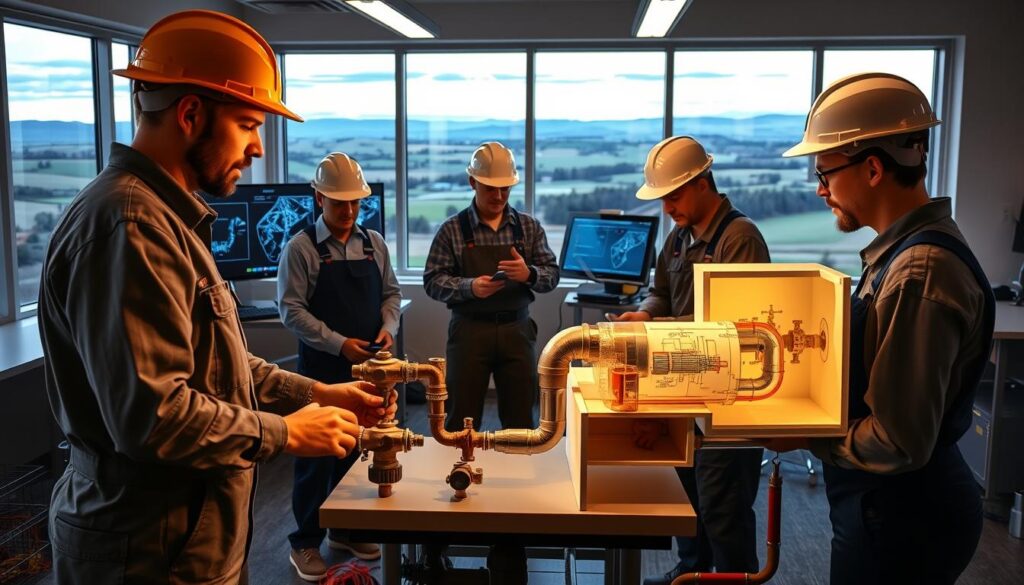
Starting a career in plumbing in Minnesota means joining an apprenticeship program. These programs mix hands-on experience with classroom learning. They are a great way to become a skilled plumber.
Finding Your Apprenticeship Opportunity
Finding a plumbing apprenticeship in Minnesota takes some effort. Look in the right places:
- Local union halls in Minneapolis and St. Cloud
- Technical colleges with plumbing programs
- Professional plumbing associations
- Minnesota Department of Labor and Industry
Work Hours and Training Requirements
Being a plumbing apprentice in Minnesota is a big commitment. You’ll need to:
- 7,000+ work hours of on-the-job training
- 144 hours of classroom learning each year
- Learn about the Minnesota plumbing code
- Work under the watchful eye of licensed pros
Classroom Training Components
In class, you’ll learn key plumbing skills. This includes the Minnesota plumbing code, safety, and technical skills. You’ll also study blueprint reading, math, and water system physics.
Apprenticeships let you earn while you learn. They help you financially while you grow professionally.
The Minneapolis Plumbers JJATC has great apprenticeship programs. They last four years. You’ll get all the training needed to become a certified plumber in Minnesota.
Minnesota Plumbing Code and Regulations
Understanding the Minnesota plumbing code is key for plumbers in the state. It ensures safety, quality, and follows professional standards. This is true for all plumbing work and repairs.
The Minnesota plumbing code is vital for getting certified as a plumber in MN. It sets clear rules that professionals must follow. This helps keep work at a high standard and keeps the public safe.
- Covers installation standards for water supply systems
- Defines proper drainage and waste management protocols
- Establishes safety guidelines for plumbing equipment
- Specifies technical requirements for different plumbing applications
Important parts of the Minnesota plumbing code include:
- Detailed material specifications
- Precise installation techniques
- Required inspection procedures
- Environmental compliance standards
It’s important to keep up with code changes to keep your plumbing certification in MN. The Minnesota Department of Labor and Industry updates these rules often. They do this to keep up with new technology and safety measures.
“Understanding the plumbing code is not just about compliance, but about ensuring the highest level of professional service.” – Minnesota Plumbing Professionals Association
For plumbers, knowing the Minnesota plumbing code shows your skill, safety focus, and commitment. It’s important to keep learning and training. This helps you stay on top in a changing field.
Journeyman Plumber Licensing Process
To become a Minnesota journeyman plumber, you must follow a strict licensing path. This path requires hard work and skill. It includes several important steps to ensure you meet Minnesota’s high plumbing standards.
Examination Requirements for Minnesota Plumbing License Exam
The Minnesota plumbing license exam checks your knowledge of technical skills and rules. You need to show you know a lot about:
- Plumbing codes and standards
- Safety protocols
- Technical installation procedures
- Pipe fitting techniques
- Local and state regulatory requirements
License Application Steps
To get your journeyman plumber license in Minnesota, follow these steps:
- Complete required apprenticeship hours
- Gather documentation of work experience
- Submit official application to state licensing board
- Pay required examination and licensing fees
- Schedule and pass the Minnesota plumbing license exam
Continuing Education Requirements
To keep your Minnesota journeyman plumber license, you must keep learning. The state requires you to take specific continuing education courses. This ensures you’re up-to-date with new technologies and safety standards.
| Education Requirement | Details |
|---|---|
| Annual Hours | 8-12 hours of approved continuing education |
| Topics Covered | Code updates, safety protocols, new technologies |
| Renewal Cycle | Every 2 years |
By following these steps, you’ll successfully get your Minnesota journeyman plumber license. This will lay a strong foundation for a fulfilling career in plumbing.
Master Plumber Requirements and Certification
Becoming a master plumber in Minnesota is a big step in your plumbing career. The requirements are set to ensure you have the best skills and know how to handle complex plumbing systems.
To get your master plumber certification, you must meet a few important criteria:
- Minimum of 4 years experience as a licensed journeyman plumber
- Successful completion of the minnesota plumbing license exam
- Documented proof of professional work experience
- Submission of a detailed application to the state licensing board
The minnesota plumbing license exam checks your advanced knowledge in:
- Complex plumbing systems design
- Advanced installation techniques
- Minnesota state plumbing codes
- Safety regulations and standards
Passing this exam shows you’re an expert and opens up more career chances. Master plumbers can own their own plumbing businesses, pull permits, and lead other plumbers.
Investing in becoming a master plumber will boost your career and pay in Minnesota’s booming plumbing industry.
Essential Tools and Skills for Minnesota Plumbers
To be a top plumber in Minnesota, you need more than just knowledge. Your tools and skills are key to success. Plumbers must know how to use the right equipment, have technical skills, and follow safety rules.
Essential Plumbing Tools
Your toolkit is the base of your plumbing career. Here are the tools every Minnesota plumber needs:
- Pipe wrenches (various sizes)
- Adjustable pipe cutters
- Drain snakes and augers
- Plungers
- Levels and measuring tapes
- Soldering equipment
- Safety goggles and gloves
Technical Skills Development
Learning technical skills is vital for plumbers in MN. You must know how to read blueprints, fit pipes, and solve problems. You also need to know how to weld and solder, and understand system design.
- Blueprint interpretation
- Pipe fitting techniques
- Advanced troubleshooting
- Welding and soldering
- System design understanding
Safety Protocols in Plumbing
Safety is the most important thing in plumbing. Knowing and following the Minnesota plumbing code’s safety rules is key. This includes wearing the right gear, handling tools safely, and knowing about electrical and chemical safety.
- Wearing appropriate personal protective equipment
- Proper handling of tools and materials
- Understanding electrical safety
- Chemical handling procedures
| Skill Category | Proficiency Level | Importance |
|---|---|---|
| Technical Knowledge | Advanced | Critical |
| Tool Mastery | Intermediate to Advanced | Essential |
| Safety Awareness | Expert | Mandatory |
Investing in quality tools and continuous skill development will set you apart in Minnesota’s competitive plumbing industry.
Training Schools and Educational Resources
Looking into plumbing trade schools in MN is exciting. Minnesota has many ways to learn how to become a plumber. You can find training programs that are thorough.
The Minnesota plumbing educational landscape offers many chances for students. Some schools are known for their top-notch training:
- Minnesota State Community and Technical College
- Northwest Technical Institute
- St. Cloud Technical & Community College
- Hennepin Technical College
These schools have special programs to get you ready for a plumbing career. Each school has its own benefits:
| College | Program Type | Credits | Estimated Cost |
|---|---|---|---|
| Minnesota State Community and Technical College | Plumbing Technology | 37-60 | $5,500 |
| Northwest Technical Institute | Plumbing Program | 40-50 | $5,654 |
| Hennepin Technical College | Pre-apprenticeship | 36 | $7,000 |
Groups like the Minneapolis Plumbers JJATC have great training spots. They have over 45 certified teachers. These programs mix theory with practice, making sure you’re ready for your plumbing job.
“Education is the passport to your future in the plumbing trade.” – Experienced Minnesota Plumbing Instructor
When picking a program, think about the curriculum, hands-on training, and if it meets local rules. Your education is a big investment in your plumbing career.
Professional Plumbing Organizations in Minnesota
Getting your plumber certification in MN is easier with professional plumbing groups. These organizations are key in supporting plumbers in Minnesota.
Minnesota has many professional groups that help your plumbing career. They offer great resources for meeting licensing needs and improving skills.
- United Association Local #15 Plumbers and Pipefitters Union
- Minnesota Mechanical Contractors Association
- Minnesota Plumbing & Heating Association
Professional organizations offer many benefits for plumbers:
- Networking with industry pros
- Continuing education courses
- Updates on industry rules
- Support for career growth
| Organization | Primary Focus | Membership Benefits |
|---|---|---|
| Local #15 | Training and Apprenticeship | Comprehensive apprentice programs |
| Minnesota Mechanical Contractors | Industry Standards | Professional certification support |
| Minnesota Plumbing Association | Professional Development | Continuing education resources |
Joining these organizations can greatly improve your professional standing. They offer vital support for your plumbing career in Minnesota.
Conclusion
Becoming a plumber in MN is a thrilling career move with great growth chances. Your path includes careful planning, dedicated training, and a commitment to learning. You’ll need to finish an apprenticeship, pass tough exams, and keep learning.
The plumber salary in Minnesota is good, making it a great choice for job security. Success comes from mastering skills, knowing local codes, and having a strong work ethic. There are many resources to help you grow in your plumbing career.
Exploring a plumbing career in MN means being precise, solving problems, and ready for new tech. The plumbing world is always changing, with lots of chances for skilled people who love their work.
Your plumbing career is waiting. Start by looking into apprenticeships, reaching out to trade schools, and getting ready for Minnesota’s licensing. With hard work and smart planning, you can have a fulfilling plumbing career.