
Affiliate Disclosure
Plumber Guide Guys is a participant in the Amazon Services LLC Associates Program, an affiliate advertising program designed to provide a means for sites to earn advertising fees by advertising and linking to Amazon.
How to Add Plumbing to a Shed? Ever wondered how to turn your ordinary backyard shed into a useful living space? What if adding plumbing could unlock your shed’s hidden possibilities?
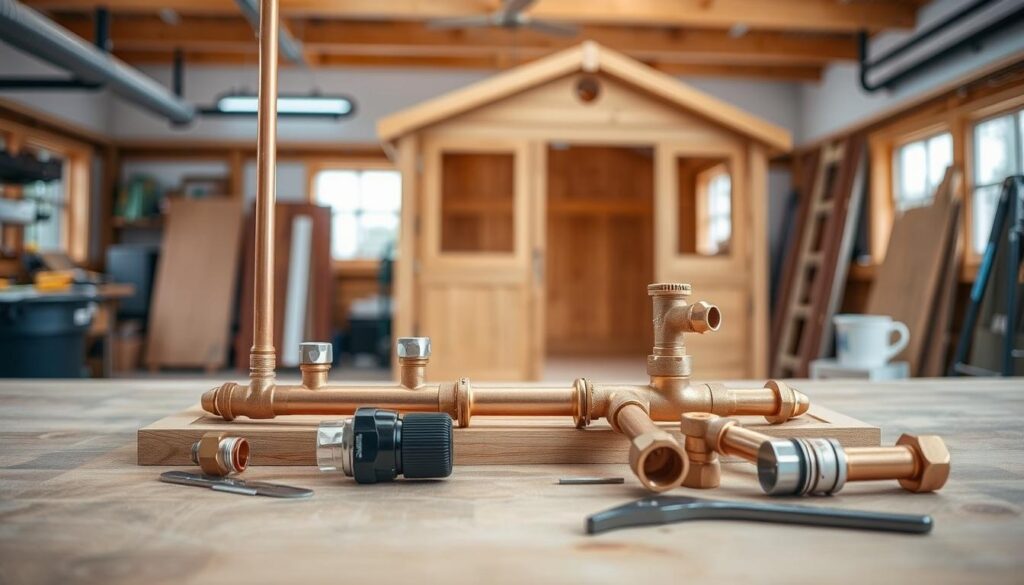
DIY shed plumbing is easier than you might think. Whether you dream of a garden workshop, backyard studio, or compact living area, knowing how to add plumbing is key. It lets you create a space that’s more than just for storage.
This detailed guide will show you how to install plumbing in your shed, step by step. You’ll learn how to plan, do, and keep up a strong plumbing system that fits your needs.
Key Takeaways
- Discover the transformative power of shed plumbing
- Learn critical planning strategies for successful installation
- Understand local building codes and permit requirements
- Explore water source and waste disposal options
- Master essential DIY shed plumbing techniques
Table of Contents
Understanding Shed Plumbing Basics
Turning your utility shed into a place with plumbing needs careful planning. Shed plumbing is different from home plumbing. It has its own set of challenges for homeowners and DIY fans.
Looking into shed water supply options means facing unique setup needs. Space, location, and special water connection needs make planning tricky.
What Makes Shed Plumbing Unique
Shed plumbing faces special challenges compared to home plumbing:
- Limited space for infrastructure
- Greater exposure to temperature extremes
- Distance from primary utility connections
- Specialized material requirements
“Successful shed plumbing begins with understanding its unique environmental and structural constraints.”
Assessing Your Shed’s Plumbing Potential
Before starting plumbing, check a few key things:
- Foundation stability
- Proximity to water sources
- Structural integrity
- Available electrical access
- Drainage possibilities
Key Plumbing System Components
A good shed plumbing system has key parts:
- Water supply lines
- Drainage systems
- Venting mechanisms
- Shut-off valves
- Potential water heating solutions
Knowing these parts helps you create a plumbing system that fits your shed’s needs.
Planning Your Shed Plumbing Project
Starting a garden shed plumbing project needs careful planning. First, assess your needs and the site conditions. Knowing the key elements of plumbing preparation is essential for a successful system.
Before you start, think about these important factors:
- Location assessment for water source proximity
- Terrain and drainage capabilities
- Water usage requirements
- Fixture placement strategies
- Budget considerations
Assessing your shed’s location is key. Proximity to existing water lines affects complexity and costs. Measure the distance to the water source for efficient pipe routing.
Make a detailed layout sketch for your project. Figure out your water needs based on the shed’s use. Will it have a simple sink for gardening or a full water system for workshops?
“Proper planning prevents poor performance in shed plumbing installations.”
Getting advice from a pro can make your project easier. Local plumbers offer insights on challenges, codes, and designs for your property.
Evaluating Water Source Options for Your Shed
Choosing the right water source for your outdoor shed is key for its use and life span. Your decision will depend on where you are, your budget, and what you need for the shed’s water setup.
When planning your shed’s water line, you’ll need to look at different water source options. Each has its own benefits and challenges.
Connecting to Municipal Water Lines
Municipal water is the most reliable for most sheds. Before you start, think about these important points:
- How close you are to water mains
- Local permits you need
- The depth of trenches
- The total cost of installation
Alternative Water Sources for Remote Sheds
If your shed is far from city water, you’ll need to look at other options. Well water is a good choice for places without city water.
- Well Water Systems
- Needs a pro to install
- Includes a pump and tank
- Needs regular water tests
- Rainwater Collection
- Is a green water source
- Needs a filter
- Depends on the weather
Water Pressure and Quality Considerations
It’s important to know about water pressure and quality, no matter your source. Getting a professional test can help you choose the best option for your shed.
Pro Tip: Always talk to local experts to make sure your shed’s water setup follows all local rules and safety standards.
Understanding Local Building Codes and Permits
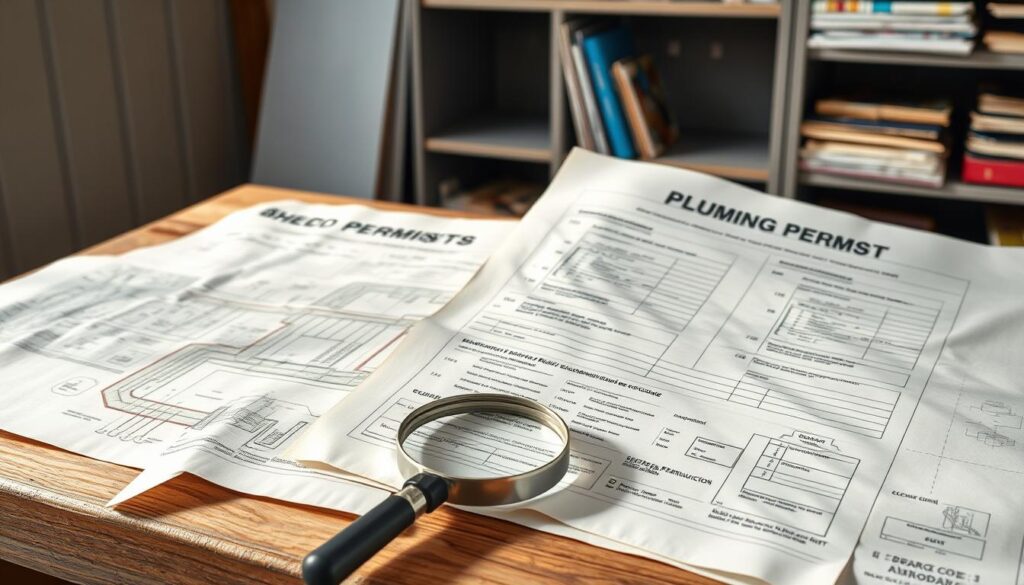
Understanding shed plumbing permits can be tricky. But knowing the local building codes is key for a good project. Your area’s rules will tell you what plumbing you can do in your shed.
Before you start plumbing, find out the plumbing rules in your area. Each town has its own rules for permits. These rules can really affect your project.
- Contact your local building department
- Request specific shed plumbing permit information
- Understand zoning restrictions
- Identify applicable building codes
Pro tip: Talking to a local building inspector can save you time and prevent costly mistakes.
“Proper permits protect your investment and ensure safety” – Local Building Inspector
Typical permit needs for shed plumbing include:
- Detailed site plans
- Plumbing system diagrams
- Specification sheets
- Proof of compliance with local building codes
Ignoring permit rules can lead to big problems. You might face:
- Potential fines
- Insurance complications
- Difficulties selling your property
- Required removal of unpermitted installations
Your local building department will check your plumbing project at key points. They make sure your shed’s plumbing is safe and works right.
How to Add Plumbing to a Shed
Adding plumbing to your shed needs careful planning and precise steps. Your shed’s foundation must be solid for a successful plumbing setup. This guide will help you set up water and drainage systems in your outdoor space.
Before starting, assess your shed’s needs and possible challenges. Good preparation saves time and avoids costly errors.
Site Preparation and Foundation Requirements
A stable foundation is key for a good shed drain system. Your shed’s base must be level, strong, and ready for plumbing. Here are important steps to prepare:
- Ensure a level concrete slab or solid ground base
- Create appropriate access points for pipe penetration
- Plan trenching routes for water and waste lines
- Install a moisture barrier to prevent water damage
Installing Water Supply Lines
Choosing the right water supply is vital for your shed’s plumbing. Flexible PEX piping is best for most projects because it’s durable and doesn’t freeze.
- Choose PEX pipes for maximum flexibility
- Install shut-off valves at strategic points
- Trench water lines below local frost line
- Pressure test all connections before finalizing
Setting Up Waste Disposal Systems
Planning your shed’s drainage system is important for waste management. You’ll need to decide between a municipal sewer or other waste disposal methods based on your location.
- Determine appropriate drainage slope (1/4 inch per foot)
- Install P-traps to prevent sewer gas entry
- Create proper venting for waste lines
- Add cleanout access points for maintenance
By following these steps, you’ll have a reliable water system in your shed that meets your needs.
Selecting the Right Plumbing Materials and Fixtures
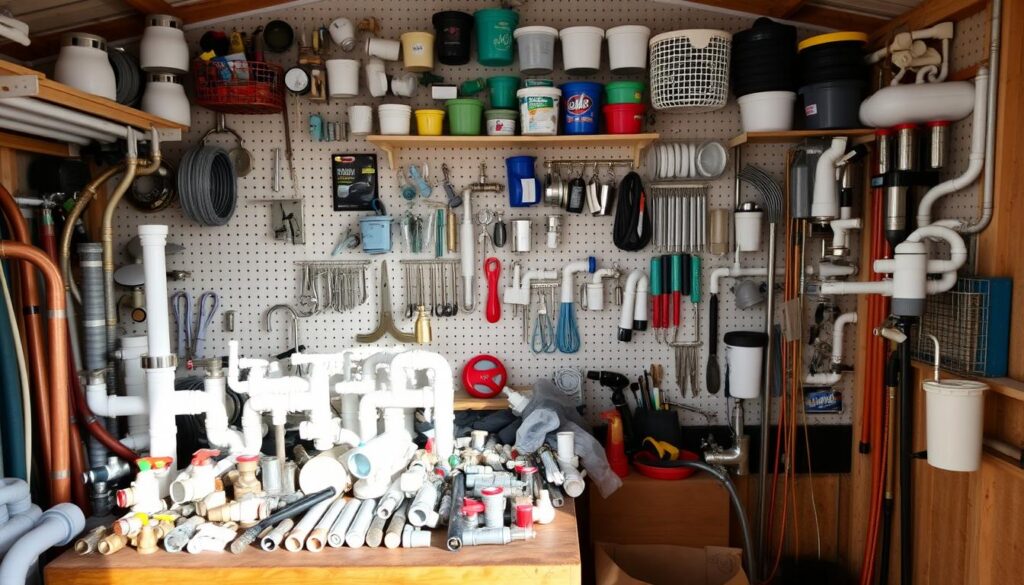
Choosing the right plumbing materials for sheds is important. You need to think about durability, functionality, and your project’s needs. Shed plumbing offers many options for a reliable system.
PEX piping is a top choice for water supply lines. It’s flexible and resists freezing, making it great for sheds. PEX piping has many benefits:
- Minimized connection points
- Excellent temperature resistance
- Easy installation
- Cost-effective solution
When picking shed plumbing fixtures, choose durable materials. They should handle different weather conditions well. Different materials are best for different uses:
- PVC pipes: Ideal for drainage and waste lines
- CPVC: Best for hot water supply
- Stainless steel: Excellent for high-pressure applications
Your fixture choice should match your shed’s purpose. Utility sheds need simple, strong fixtures. Workshop or studio sheds might need more advanced options.
Think about using water-saving technologies like low-flow faucets and dual-flush toilets. They save water and lower costs over time for your shed’s plumbing.
Installing Sinks and Faucets in Your Shed
Adding a sink to your shed can really boost its use. It’s great for a workspace, gardening spot, or utility area. A well-planned sink installation can change your outdoor space a lot.
Choosing Space-Saving Sink Options
For sheds, it’s all about small designs. Look into these options:
- Corner sinks that fit into tight spots
- Wall-mounted sinks to free up floor space
- Fold-down sinks that save space when not used
- Narrow utility sinks for small areas
Proper Sink Installation Techniques
Getting your sink right in your shed needs careful steps. First, measure your space well. Make sure the sink fits right and has enough room above it. Then, get your mounting area ready, whether it’s a wall, countertop, or custom cabinet.
Connecting Water Supply and Drain Lines
Connecting the water and drain lines is key. Here’s what to do:
- Put in flexible lines for hot and cold water
- Add shut-off valves for easy fixes
- Use a P-trap to block sewer smells
- Make sure the drain slopes right
- Check all connections for leaks
Tip: Pick materials that handle temperature and moisture well. Stainless steel or heavy-duty plastic sinks are best for sheds.
Adding Bathroom Facilities to Your Shed
Turning your shed into a bathroom space needs careful planning. It’s not just about adding fixtures. It’s about making a space that’s both comfortable and practical for you.
When thinking about putting a toilet in your shed, you have a few choices:
- Standard flush toilets that need full plumbing
- Composting toilets for green waste management
- Macerating toilets for tough drainage spots
- Portable chemical toilets for short-term use
Setting up a shower in your shed requires careful planning. Compact bathroom fixtures for shed spaces can help use your space well. Here are some tips for saving space:
- Corner shower units that save floor space
- Prefabricated shower stalls for easy setup
- Fold-away or collapsible fixtures
- Multifunctional bathroom parts
“The key to successful shed bathroom plumbing is understanding your specific requirements and limitations.” – Professional Shed Design Expert
Having the right water supply, drainage, and ventilation is key for your shed bathroom. Always check local building codes. You might also want to get a professional plumber for a safe and right installation.
Winterizing and Protecting Your Shed Plumbing
It’s important to protect your shed’s plumbing from cold weather. Unprotected pipes can freeze, causing damage and expensive repairs. This can also harm the structure of your shed.
To winterize your shed plumbing, you need a solid plan. This plan should cover all possible risks. It will save you time and money on repairs.
Insulating Pipes for Cold Weather
Insulating your shed’s pipes is the first step against freezing. Here are some key tips for protecting your pipes:
- Use foam pipe sleeves for full coverage
- Apply heat tape in very cold areas
- Seal gaps with spray foam insulation
- Focus on pipes in unheated spots
Preventing Frozen Pipes and Burst Lines
To stop pipes from freezing, you need to act early. Temperature control and strategic protection are key to keeping your plumbing safe.
- Keep your shed warm, above 32°F
- Let faucets drip in extreme cold
- Use frost-free hose bibs for outdoor connections
- Open cabinet doors to let warm air in
Seasonal Maintenance Requirements
“An ounce of prevention is worth a pound of cure” – this is true for shed plumbing maintenance.
Make a maintenance plan for all seasons. Regularly check your system for weak spots. Fix these before they become big problems.
- Spring: Look for winter damage
- Summer: Watch for expansion issues
- Fall: Re-insulate for cold weather
- Winter: Keep an eye on freezing pipes
By following these steps, you’ll keep your plumbing safe. This ensures a reliable water system all year.
Troubleshooting Common Shed Plumbing Issues
Shed plumbing problems can quickly turn from minor annoyances to major headaches if left unchecked. Understanding how to diagnose and fix common issues will save you time, money, and frustration.
When tackling shed plumbing problems, start by identifying the specific issue. Low water pressure in shed systems often stems from several causes:
- Partially closed shut-off valves
- Mineral buildup in aerators
- Kinked supply lines
- Faulty pressure regulators
Fixing shed plumbing leaks requires a systematic approach. Look for telltale signs like water stains, unexpected moisture, or unexplained water meter changes. Early detection prevents costly water damage.
“Prevention is always cheaper than repair” – Plumbing Professionals
Drainage issues can manifest in multiple ways. Slow drains, gurgling sounds, or foul odors indicate blockages or venting problems. Here are some quick troubleshooting techniques:
- Use a plunger for minor clogs
- Try drain snakes for deeper blockages
- Avoid chemical drain cleaners that might damage pipes
- Consider enzymatic cleaners for organic buildup
Always prioritize safety and know when to call a professional. Some plumbing challenges exceed DIY capabilities and require expert intervention.
Conclusion
Completing a successful shed plumbing project needs careful planning and execution. You’ve learned how to turn your shed into a functional space with water systems. From knowing local building codes to picking the right materials, every choice matters.
Your shed plumbing project does more than add water systems. It makes your property more useful and versatile. Whether it’s for a workshop, home office, or living area, good plumbing boosts your shed’s value and use.
Getting professional help is key throughout the project. Even DIY experts can benefit from local plumbers. They ensure your plumbing meets standards and works well. This guide will help you set up a strong, lasting plumbing system for your shed.
Patience and precision are essential for a successful shed plumbing project. Plan well, choose quality materials, and focus on proper installation. Your hard work will pay off with a space that’s more functional and enjoyable.
FAQ
How much does it typically cost to add plumbing to a shed?
How much does it typically cost to add plumbing to a shed?
FAQ
How much does it typically cost to add plumbing to a shed?
Adding plumbing to a shed can cost between 0 and ,000. The price depends on several factors. These include how far the water lines are, the complexity of the installation, and the fixtures you choose. A simple utility sink might cost 0-
FAQ
How much does it typically cost to add plumbing to a shed?
Adding plumbing to a shed can cost between $500 and $5,000. The price depends on several factors. These include how far the water lines are, the complexity of the installation, and the fixtures you choose. A simple utility sink might cost $500-$1,000. A full bathroom could cost $3,000-$5,000.
Do I need a permit to add plumbing to my shed?
Yes, in most cases. Permits are needed for plumbing work, like water connections and bathroom fixtures. They ensure your installation meets safety and building codes. Always check with your local building department for specific requirements.
Can I install plumbing in a shed without a concrete foundation?
It’s possible but not recommended. You need a stable base to avoid pipe damage. Consider using pier systems or reinforced wooden platforms. They require careful planning and support for proper installation.
What’s the best type of pipe for shed plumbing?
PEX is the top choice for water lines in sheds. It’s flexible, resistant to freezing, and easy to install. PVC is best for drainage due to its durability and affordability. Your choice depends on your climate and local codes.
How do I prevent my shed plumbing from freezing?
To prevent freezing, insulate pipes with foam sleeves and use heat tape. Keep the shed warm and allow faucets to drip in cold weather. Frost-free hose bibs are also helpful. In very cold sheds, you might need to drain the system during winter.
Can I add a bathroom to my existing shed?
Yes, but it needs careful planning. Consider the shed’s structure, water supply, drainage, and local codes. Ensure there’s enough space, proper ventilation, and adequate water pressure. You might need a septic system or sewer connection.
What are my water source options for a shed?
You can connect to municipal lines, drill a well, collect rainwater, or use hauled water. The best option depends on your location, budget, and shed use. Each choice has its pros and cons regarding cost, reliability, and water quality.
How difficult is DIY shed plumbing?
DIY plumbing difficulty varies with your skills and project complexity. Simple tasks like installing a utility sink are doable for DIY experts. More complex projects might need a professional. Success requires good planning, understanding local codes, and the right tools.
,000. A full bathroom could cost ,000-,000.
Do I need a permit to add plumbing to my shed?
Yes, in most cases. Permits are needed for plumbing work, like water connections and bathroom fixtures. They ensure your installation meets safety and building codes. Always check with your local building department for specific requirements.
Can I install plumbing in a shed without a concrete foundation?
It’s possible but not recommended. You need a stable base to avoid pipe damage. Consider using pier systems or reinforced wooden platforms. They require careful planning and support for proper installation.
What’s the best type of pipe for shed plumbing?
PEX is the top choice for water lines in sheds. It’s flexible, resistant to freezing, and easy to install. PVC is best for drainage due to its durability and affordability. Your choice depends on your climate and local codes.
How do I prevent my shed plumbing from freezing?
To prevent freezing, insulate pipes with foam sleeves and use heat tape. Keep the shed warm and allow faucets to drip in cold weather. Frost-free hose bibs are also helpful. In very cold sheds, you might need to drain the system during winter.
Can I add a bathroom to my existing shed?
Yes, but it needs careful planning. Consider the shed’s structure, water supply, drainage, and local codes. Ensure there’s enough space, proper ventilation, and adequate water pressure. You might need a septic system or sewer connection.
What are my water source options for a shed?
You can connect to municipal lines, drill a well, collect rainwater, or use hauled water. The best option depends on your location, budget, and shed use. Each choice has its pros and cons regarding cost, reliability, and water quality.
How difficult is DIY shed plumbing?
DIY plumbing difficulty varies with your skills and project complexity. Simple tasks like installing a utility sink are doable for DIY experts. More complex projects might need a professional. Success requires good planning, understanding local codes, and the right tools.