
Affiliate Disclosure
Plumber Guide Guys is a participant in the Amazon Services LLC Associates Program, an affiliate advertising program designed to provide a means for sites to earn advertising fees by advertising and linking to Amazon.
How Thick Are Plumbing Walls? Did you know that up to 15% of home construction costs are for plumbing? Knowing how thick plumbing walls are can save you a lot of time and money. This is true for both home renovations and new constructions.
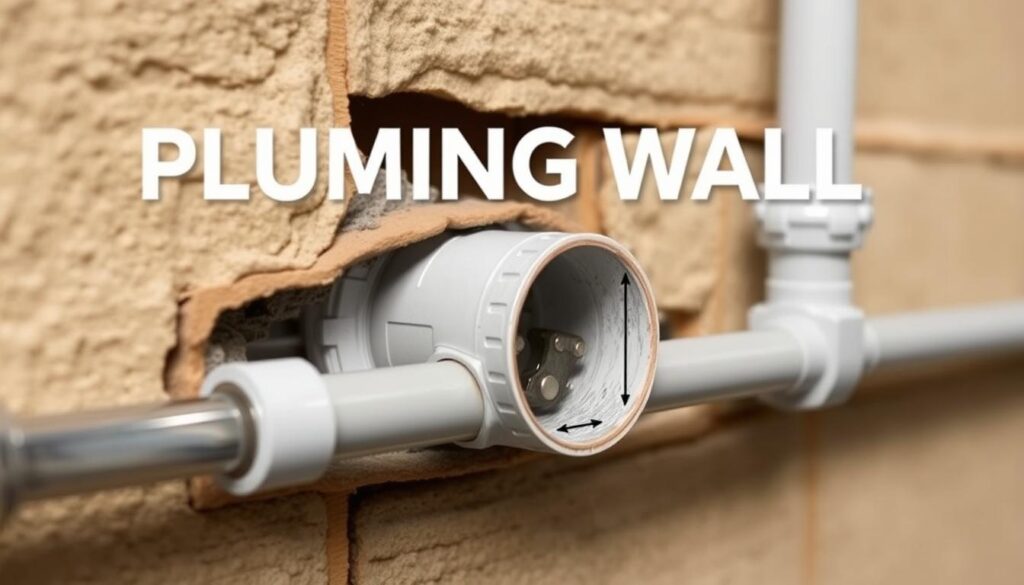
Standard plumbing wall thickness is key for your home’s water and drainage systems to work well. Builders and contractors know that exact wall sizes are important. They ensure pipes are placed right, the structure is strong, and codes are followed.
When building plumbing walls, you must think about pipe size, insulation, and local rules. The wall’s thickness affects water pressure and future maintenance needs.
Key Takeaways
- Plumbing wall thickness varies based on specific project requirements
- Proper wall dimensions are critical for efficient pipe installation
- Building codes influence standard plumbing wall thickness
- Wall thickness impacts water pressure and system performance
- Professional planning prevents costly future modifications
Table of Contents
Understanding Standard Plumbing Wall Dimensions
When planning bathroom wall construction, knowing the exact dimensions is key. The structure of your plumbing wall affects your bathroom’s efficiency and function.
- 2×4 stud walls (standard for homes)
- 2×6 stud walls (best for complex plumbing)
Basic Wall Framing Measurements
Wall framing is essential for plumbing. A 2×4 wall has about 3.5 inches of space inside. This is enough for smaller pipes.
| Wall Type | Interior Depth | Typical Usage |
|---|---|---|
| 2×4 Stud Wall | 3.5 inches | Simple residential plumbing |
| 2×6 Stud Wall | 5.5 inches | Complex plumbing systems |
Minimum Space Requirements for Plumbing
Contractors say to leave enough space between pipes. Good spacing helps water flow and avoids future problems.
Common Wall Configurations
Your bathroom wall should be easy to access and maintain. Well-planned pipe dimensions make repairs and upgrades simpler. This avoids the need for major wall work.
How Thick Are Plumbing Walls in Modern Construction
When planning your home’s plumbing, knowing about drywall thickness is key. Modern methods make water pipe spaces more efficient and space-saving.
Residential plumbing walls usually range from 4 to 8 inches thick. The exact size depends on a few important factors:
- Number of pipes being installed
- Type of plumbing materials used
- Building code requirements
- Structural design considerations
Today, builders often suggest an 8-inch wall configuration for full plumbing systems. This size allows for enough space for various pipes and future changes.
Different materials affect wall thickness. For example:
- Stick-built homes might use 2×4 or 2×6 framing
- Prefabricated structures have more standard wall depths
- Commercial buildings need stronger wall systems
Your plumbing needs will decide the best wall thickness. Talking to a professional plumber can help design the most efficient space for your project.
Building Code Requirements for Plumbing Wall Construction
Understanding building code requirements is key for plumbing wall construction. These rules ensure your home’s plumbing is safe, works well, and is strong. Each area has its own rules for framing and wall building.
Building codes for plumbing walls are not just rules. They keep your home safe from water damage, structural problems, and safety risks. Knowing these rules can save you time, money, and avoid renovation troubles.
Local Building Regulations
Every city has its own building codes for plumbing walls. These rules cover:
- Minimum wall thickness for pipes
- Clearances around plumbing fixtures
- Approved materials for walls
- Ventilation and drainage needs
Safety Standards and Compliance
Safety is the top priority in plumbing wall building. Your local codes will outline:
- Pipe material standards
- Insulation needs
- Fire-stopping methods
- Wall support rules
Inspection Requirements
Inspectors are vital in checking plumbing walls meet standards. They look at:
- Pipe placement and alignment
- Wall framing strength
- Building code compliance
- Sealing and waterproofing
Before starting plumbing wall work, talk to your local building department. They can guide you on framing and current plumbing wall codes in your area.
Wet Wall Thickness for Different Plumbing Systems
Knowing the right wet wall thickness is key for plumbing success. The space needed for water pipes depends on several important factors. These factors affect the design of your plumbing system.
When looking at wet wall thickness, you must consider several things. The needs can change based on:
- Pipe material type
- Pipe diameter
- Number of pipes installed
- Local building codes
Wet wall thickness usually ranges from 4 to 6 inches. This range fits different pipe setups. Copper, PVC, and PEX piping systems each need their own space in the wall.
| Pipe Material | Recommended Wall Thickness | Installation Considerations |
|---|---|---|
| Copper | 4-5 inches | Rigid installation, requires precise spacing |
| PVC | 5-6 inches | Flexible routing, lightweight material |
| PEX | 4-5 inches | Flexible piping, easy installation |
Experts say to leave extra space for future changes. Your wet wall thickness should allow for upgrades or repairs without big changes.
Planning Your Bathroom Plumbing Wall Layout
Creating a good bathroom wall layout needs careful planning. Think about your shower plumbing setup. The right plan can save you time, money, and trouble during construction.
Good bathroom plumbing design is about more than looks. It’s about function and easy upkeep.
Supply Line Considerations
When building your bathroom walls, keep these supply line tips in mind:
- Keep pipe length short to avoid heat loss
- Put hot and cold lines together for easier setup
- Use insulated pipes to keep water warm
- Choose the right pipe size for good water pressure
Drain and Vent Placement
Where you put drains and vents is key for your shower plumbing. The right spot prevents water damage and ensures good drainage.
- Put drains at the shower floor’s lowest point
- Follow the right slope for water flow
- Install vent pipes to avoid air pressure problems
Future Maintenance Access
“Plan your bathroom walls with future repairs in mind.” – Professional Plumbing Association
Make your bathroom walls easy to fix later. Add access panels or sections that can be removed. This makes repairs simple without big demolition.
Smart planning turns your bathroom into a well-designed, easy-to-maintain space.
Determining Wall Thickness for Multiple Pipe Installations
When planning plumbing installations, it’s key to know about pipe chase dimensions. The wall thickness is important for fitting in multiple pipes well. Usually, an 8-inch thick wall is enough for different plumbing parts like supply lines, drains, and vents.
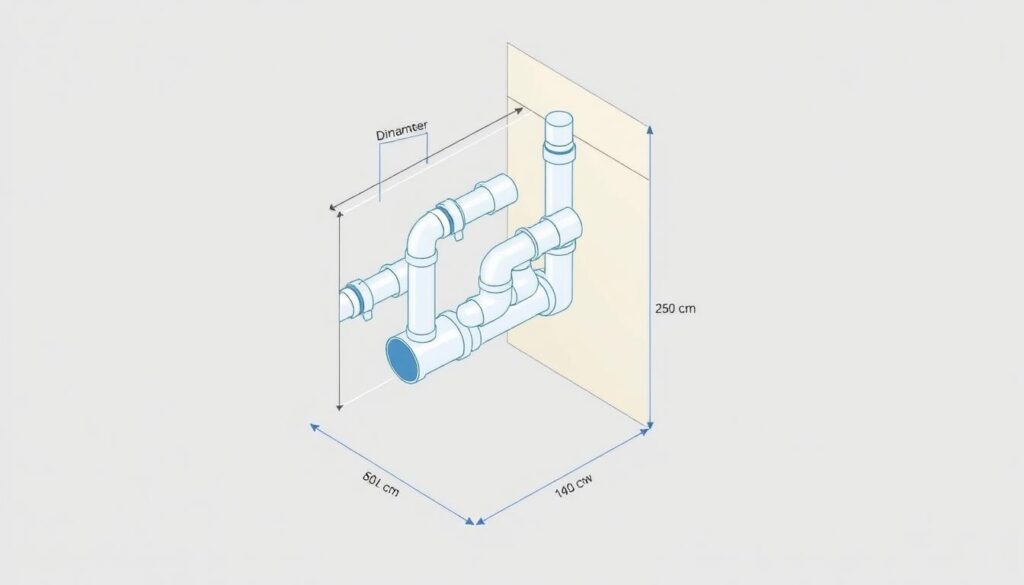
When thinking about framing for plumbing, you need to consider a few things. These include the number of pipes, their size and material, insulation needs, and access for future maintenance.
- Number of pipes to be installed
- Pipe diameter and material
- Required insulation space
- Future maintenance access
Experts say it’s smart to plan the pipe layout carefully. This helps avoid problems like:
- Lower water pressure
- Pipe damage
- Hard maintenance access
| Wall Thickness | Pipe Configuration | Recommended Usage |
|---|---|---|
| 4-6 inches | Single pipe system | Limited residential applications |
| 6-8 inches | Multiple pipe systems | Standard residential and light commercial |
| 8-12 inches | Complex plumbing networks | Commercial and multi-unit buildings |
By planning your pipe chase dimensions well, you can make a plumbing system that works now and in the future.
PEX Piping and Wall Space Requirements
PEX (cross-linked polyethylene) piping has changed the game in plumbing. It’s flexible and efficient, making the most of your wall space. Knowing how PEX works can help you design better plumbing systems.
PEX piping is a big win for both homes and businesses. Its special properties mean you can fit more pipes in less space than old-style pipes.
PEX-B Installation Guidelines
Here are key tips for installing PEX-B pipes:
- Keep a 1-inch clearance between pipes
- Use supports every 32 inches
- Keep pipes away from direct sunlight and extreme temperatures
- Use the right PEX crimp tools for tight connections
Spacing Between Hot and Cold Lines
It’s important to space hot and cold water lines right. This keeps water at the right temperature and stops heat from moving where it shouldn’t. Here’s what experts say:
- Hot and cold lines should be at least 6 inches apart
- Insulate if they’re closer than that
- Check local building codes for specific rules
“PEX piping offers unparalleled flexibility in modern plumbing design” – Professional Plumbers Association
Following these guidelines helps you make the most of your space. You’ll get plumbing systems that work well and last a long time.
Shower and Bathtub Wall Construction Guidelines
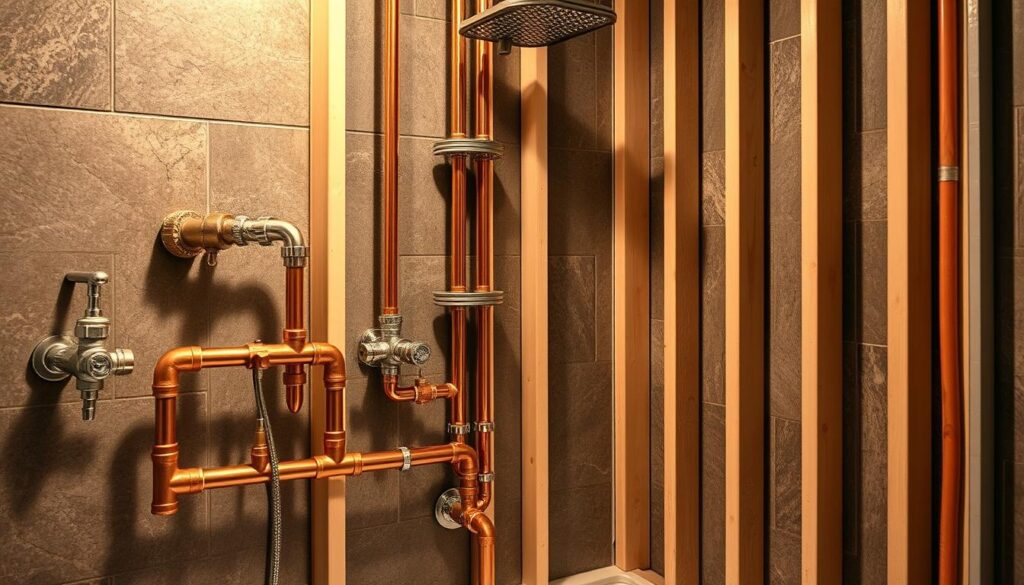
When planning your bathroom wall construction, it’s key to know the details of shower and bathtub installations. Your shower plumbing needs careful prep and exact execution for a waterproof, strong, and useful space.
Important things to think about for bathroom wall construction around showers and bathtubs include:
- Proper waterproofing techniques
- Structural support for plumbing fixtures
- Moisture-resistant barrier implementation
- Precise framing and rough-in measurements
The wall thickness for shower plumbing usually is 4-6 inches. This gives enough room for supply lines, drain pipes, and needed support. You need a strong frame that can handle moisture and hold up heavy fixtures.
Waterproofing is vital in bathroom wall construction. Use specialized waterproof membranes around shower areas to stop moisture from getting in. Silicone sealants and cement board add extra protection against water damage.
When putting in shower valves and fixtures, make sure they’re aligned right and mounted securely. Right spacing and support stop leaks and structural problems. Getting it done right by a pro or with careful DIY can make your shower last a long time.
Special Considerations for Laundry and Utility Walls
When planning laundry and utility spaces, knowing about pipe chase dimensions and plumbing framing is key. Your laundry wall needs careful design for appliances and plumbing.
Designing an efficient laundry wall involves several important factors. These factors affect both how well it works and how long it lasts. Proper planning ensures your washer and dryer connections meet all needs while keeping the structure strong.
Washer/Dryer Connection Requirements
Your laundry wall must handle specific plumbing needs for washers and dryers. Professional guidelines suggest dedicated spaces for water supply lines and drain pipes.
- Minimum 2-inch drain pipe diameter
- Hot and cold water supply lines
- Electrical connections for appliances
- Proper clearance for equipment
Ventilation Needs
Adequate ventilation stops moisture buildup and mold growth. Your utility wall should have good vent strategies. This keeps air flowing and protects your investment.
Support Structure Requirements
Reinforced framing is vital for heavy laundry equipment. Use sturdy 2×6 studs for maximum support. This ensures long-term stability and avoids structural problems.
By focusing on pipe chase dimensions and framing, you can build a strong and efficient laundry wall. It meets both functional and structural standards.
Conclusion
Knowing how thick plumbing walls should be is key for good construction. The thickness affects your home’s plumbing system’s function and efficiency. Planning well ensures enough space for pipes and future maintenance.
Building codes for plumbing walls are more than rules; they’re safety musts. They keep your home safe and ensure water and drainage work right. You need to think about local codes, pipe types, and how to install them correctly.
Construction methods are always getting better, making plumbing easier. Keeping up with new ways and tech can help you choose the right wall thickness and pipe placement. Every project is different, so getting advice from pros can be really helpful.
Investing in knowing about plumbing wall specs will benefit your home in the long run. With careful planning and following building standards, you’ll have a plumbing system that lasts. It will make your home reliable and efficient for many years.