

Affiliate Disclosure
Plumber Guide Guys is a participant in the Amazon Services LLC Associates Program, an affiliate advertising program designed to provide a means for sites to earn advertising fees by advertising and linking to Amazon.
How Much to Replace Galvanized Plumbing? Did you know that about 50% of homes built before the 1960s have galvanized plumbing? These systems are now at a critical point where they need to be replaced. Knowing the cost of replacing galvanized pipes can save homeowners thousands of dollars in water damage and repair costs.
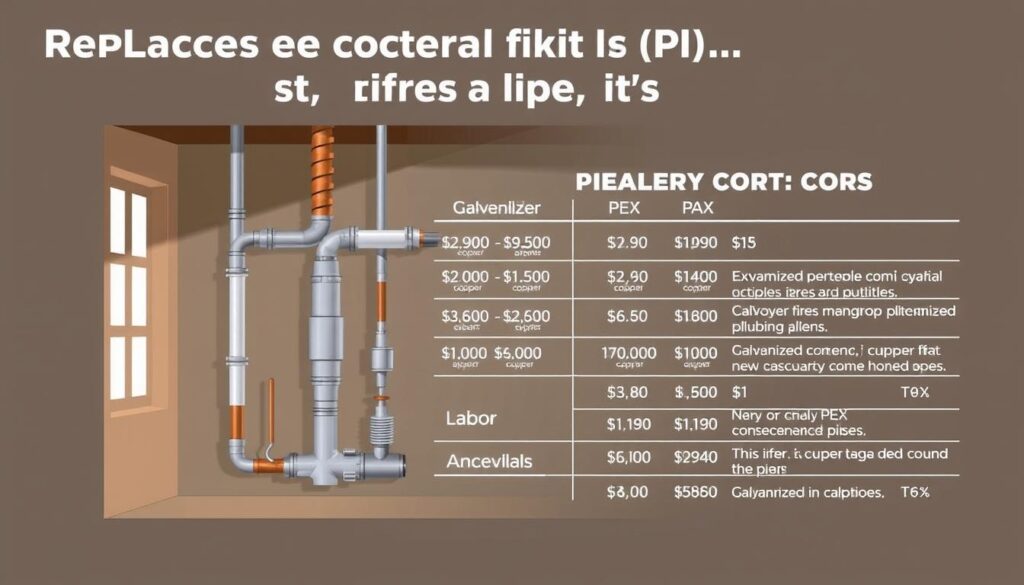
Replacing galvanized plumbing is a big home improvement project. It needs careful planning and budgeting. The cost to replace galvanized plumbing varies a lot. This depends on your home’s size, how easy it is to access the pipes, and the materials you choose.
This guide will help you understand how to update your home’s old water system. You’ll learn about the risks of old pipes and the costs involved. You’ll get valuable information to make a smart choice about your plumbing.
Key Takeaways
- Typical repiping costs range from $3,000 to $12,000
- Factors like home size and pipe accessibility impact replacement expenses
- Proactive replacement can prevent costly water damage
- Multiple material options exist for modern pipe systems
- Professional assessment is key before starting replacement
Table of Contents
Understanding Galvanized Plumbing Systems
Galvanized plumbing has a long history in American homes, mainly before the 1960s. These steel pipes were coated with zinc to fight rust and last longer. Knowing about galvanized pipes is key when thinking about replacing old plumbing.
What Are Galvanized Pipes?
Galvanized pipes were common in homes for many years. They were made by dipping steel pipes in hot zinc to protect them from rust. Though they were a big step forward, they have big downsides that affect water quality and home structure.
Common Issues with Aging Galvanized Plumbing
As galvanized pipes get older, they start to corrode inside. The cost to replace old galvanized pipes depends on several important things:
- Rust buildup that blocks water flow
- Potential lead contamination
- Lower water pressure
- Higher chance of sudden leaks
“Galvanized pipes usually last 40-50 years before they start to really break down,” says plumbing expert Michael Rodriguez.
Signs of Deteriorating Galvanized Pipes
Spotting plumbing problems early can save you a lot of money. Look out for these signs:
- Water that looks reddish-brown
- Water pressure that’s way down
- Leaks in the pipes
- Water that tastes like metal
Knowing these signs helps homeowners decide when to replace pipes and what it might cost.
How Much to Replace Galvanized Plumbing: Complete Cost Breakdown
Knowing the cost to replace galvanized plumbing is key for homeowners with old pipes. The price to replace these pipes changes a lot based on several important factors.
To figure out the cost, look at your home’s size. Different sizes have different price ranges:
- Small homes (under 1,200 sq ft): $3,000–$6,000
- Medium homes (1,200–2,000 sq ft): $5,000–$9,000
- Large homes (over 2,000 sq ft): $8,000–$15,000
Your total cost will depend on a few key things that affect the price:
| Cost Factor | Price Impact |
|---|---|
| Pipe Accessibility | $500–$2,500 additional |
| Wall/Floor Repair | $1,000–$4,000 |
| Permit Fees | $200–$800 |
Pro tip: Always get quotes from licensed plumbers to get the right price for your home. A professional can help you understand what your project really needs.
Replacing galvanized plumbing now can save you from expensive water damage and health issues later.
Material Options and Their Costs
When you replace galvanized pipes, you’ll find many material options. These choices affect the cost of pex vs copper replacement. Knowing about these options helps you decide what’s best for your home’s plumbing.
Choosing the right piping material is complex. It involves looking at durability, installation ease, and cost. Your home’s needs will help you pick the best option.
PEX Piping Solutions
PEX (cross-linked polyethylene) pipes are a great choice for replacing galvanized pipes. They are flexible and offer many benefits:
- Lower material costs
- Easier installation
- Resistance to corrosion
- Reduced labor expenses
Copper Pipe Installation
Copper pipes are a traditional and reliable choice for home plumbing. They are more expensive but last longer and are durable.
| Material | Cost per Foot | Lifespan | Installation Difficulty |
|---|---|---|---|
| PEX | $0.60 – $1.20 | 40-50 years | Easy |
| Copper | $3.00 – $5.00 | 50-70 years | Moderate |
Modern Alternatives to Galvanized Pipes
There are also newer materials like CPVC and composite pipes. Each material has its own benefits that might fit your plumbing needs.
Your final choice depends on your budget, home layout, and what you expect in the long run. Talking to a professional plumber can guide you through these options.
Labor Costs and Installation Considerations
When you’re looking to replace your water pipes, knowing the labor costs is key. Plumbers usually charge between $50 and $120 an hour. This makes labor a big part of your budget.
The cost to replace galvanized pipes depends on a few things:
- Home size and layout complexity
- Pipe accessibility
- Number of fixtures needing replacement
- Local labor rates
A whole-house repipe usually takes 2-4 full days by a two-person crew. Your project’s time frame will depend on your home’s specifics and how much pipe needs to be replaced.
When planning your water pipe replacement, keep these tips in mind:
- Always hire licensed plumbers
- Request detailed written estimates
- Check contractor references
- Understand possible hidden costs
Choosing experienced professionals for the job means your pipes will be installed right. This avoids future plumbing problems and expensive fixes. Your initial investment in quality labor can save you a lot in the long run.
Factors Affecting Replacement Costs
When planning to replace your plumbing, several key factors can change your costs. Knowing these helps you plan better and get ready for any challenges.
Homeowners need to think about many things that affect the cost of updating their plumbing.
Home Size and Layout Complexity
Your home’s design is a big factor in repiping costs. Different designs can make the project more or less complex:
- Single-story homes need less work
- Multi-story buildings are more complex
- Open floor plans are easier to install
- Small layouts might take longer
Accessibility Challenges
How easy it is to get to your plumbing system affects the cost. Important factors include:
- Accessible attic and crawl spaces save money
- Slab foundations need special tools
- Penetrating walls and ceilings adds $20-$50 per square foot
- Hidden pipes make it harder to work
Regional Price Variations
Costs for repiping vary by location. Cities usually cost more due to higher labor rates than rural areas.
Your location, local market, and skilled plumbers’ availability will affect your final cost.
Timeline and Project Phases
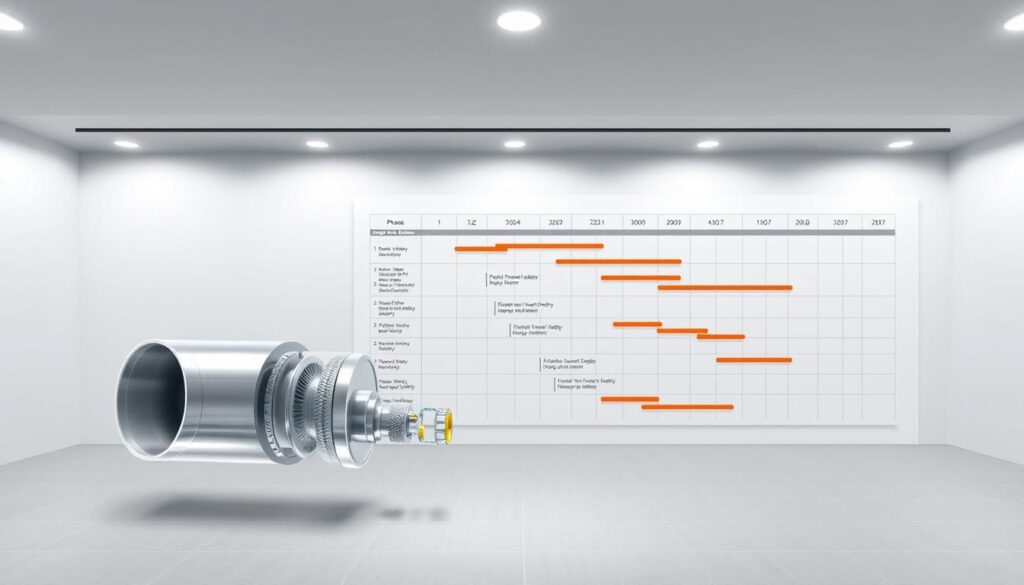
When planning to replace galvanized plumbing, knowing the timeline is key. A typical repiping project has several phases. These phases affect your costs and how much your home is disrupted.
The replacement process usually takes 1 to 5 days. This depends on your home’s size and layout. A complete plumbing upgrade can be well-planned and executed.
- Initial Assessment: 1-2 hours
- Preparation and Protection: 2-4 hours
- Pipe Removal: 1-2 days
- New Pipe Installation: 1-3 days
- Final Inspection and Cleanup: 4-6 hours
Your project’s length depends on a few important factors:
| Factor | Impact on Timeline |
|---|---|
| Home Size | Larger homes require more time |
| Pipe Accessibility | Difficult access increases duration |
| Complexity of Installation | Multiple stories or complex layouts extend timeline |
Getting ready for your plumbing upgrade means expecting water service breaks and room access issues. Professional plumbers aim to keep disruptions low. They ensure a thorough and efficient replacement.
Permits and Building Code Requirements
Replacing galvanized pipes is more than just a swap. Your estimate must cover permits and rules to make sure it’s legal and safe.
Local building codes can be tricky. When figuring out the cost to update old galvanized pipes, you need to know the permits required. These ensure your project is safe and legal.
Understanding Local Regulations
Every area has its own rules for plumbing updates. What you need will depend on:
- City or county building codes
- Specific plumbing jurisdiction guidelines
- Type of property (residential or commercial)
- Extent of pipe replacement
Inspection Process
Inspections are key for accurate estimates. Inspectors check:
- Proper pipe material selection
- Correct installation techniques
- Compliance with local building standards
- Potential water system modifications
Documentation Requirements
Good documentation is essential. You’ll need to gather:
- Detailed project plans
- Contractor licensing information
- Material specifications
- Signed permit applications
Pro Tip: Always check with your local building department before starting any plumbing replacement project.
Permit fees vary, from $150 to $600, based on where you are. Skipping this could lead to fines or issues with selling your home later.
Value Added to Your Property
Replacing your galvanized pipes with copper is more than just maintenance. It’s a smart investment in your home’s future. This change can greatly increase your property’s value and attract buyers who want a modern plumbing system.
When you spend on plumbing upgrades, you’re protecting your home’s structure. This brings real financial benefits. A new plumbing system offers several benefits that boost your property’s value:
- Increased home market value by up to 5-7%
- Enhanced water quality and pressure
- Reduced risk of water damage
- Improved energy efficiency for water-related appliances
Potential buyers see the value in a modern plumbing system. New pipes show that you take care of your home. This can make your home more appealing to buyers. Insurance companies might also offer lower rates for homes with copper pipes.
“A well-maintained plumbing system is like a home’s circulatory system—critical for overall health and performance.”
Your decision to repipe is a wise financial move. It ensures your property’s value stays high and gives you peace of mind.
Conclusion
Deciding how much to replace galvanized plumbing is key for homeowners. It’s not just fixing a problem; it’s a smart move to keep your home safe. It ensures clean water and prevents damage to your home’s structure.
Modern pipes have big benefits over old galvanized ones. They give better water pressure, cleaner water, and save you money on repairs. Experts say you could get back 80-120% of what you spend by making your home more valuable.
Experts say to get several quotes and check local building codes before replacing pipes. Choose materials that fit your home’s needs. This careful planning makes the process smooth and worth the investment.
Seeing pipe replacement as a smart home upgrade is wise. It keeps your home safe and makes you feel secure. With the right research and advice, fixing pipes becomes a smart choice for your home’s future.
FAQ
How much does it typically cost to replace galvanized plumbing in an entire house?
What are the best replacement materials for galvanized pipes?
How much does it typically cost to replace galvanized plumbing in an entire house?
What are the best replacement materials for galvanized pipes?
FAQ
How much does it typically cost to replace galvanized plumbing in an entire house?
Replacing galvanized plumbing costs vary. It depends on your home’s size and layout. For a whole-house repipe, expect to spend between ,000 and ,000. Smaller homes might cost ,000-,000. Larger homes or complex layouts can cost ,000 to ,000 or more.
What are the best replacement materials for galvanized pipes?
PEX and copper are top choices. PEX is less expensive, flexible, and easy to install. It costs
FAQ
How much does it typically cost to replace galvanized plumbing in an entire house?
Replacing galvanized plumbing costs vary. It depends on your home’s size and layout. For a whole-house repipe, expect to spend between $2,000 and $15,000. Smaller homes might cost $2,000-$5,000. Larger homes or complex layouts can cost $8,000 to $15,000 or more.
What are the best replacement materials for galvanized pipes?
PEX and copper are top choices. PEX is less expensive, flexible, and easy to install. It costs $0.50 to $2 per linear foot. Copper is durable and traditional but costs more, $2 to $5 per linear foot, and is harder to install.
How long does a typical galvanized pipe replacement project take?
Repiping a house takes 2 to 5 days. A small home might take 2-3 days. Larger homes or multi-story homes could take up to 5-7 days.
What are the signs that I need to replace my galvanized pipes?
Look for rusty water, low water pressure, frequent leaks, visible corrosion, and old pipes. If you see these signs, it’s time to get a professional to check and possibly replace them.
Do I need permits for replacing galvanized plumbing?
Yes, you need permits for plumbing replacements. Permit costs are $50 to $500, depending on your area. Always check with your local building department and make sure a licensed plumber gets the permits.
How will replacing galvanized pipes impact my home’s value?
Replacing old pipes can increase your home’s value. It improves water quality, prevents water damage, and makes your home more attractive. It can also lower your insurance premiums and reduce the risk of costly repairs.
What is the difference between PEX and copper pipe replacement costs?
PEX pipes are cheaper, costing $0.50-$2 per linear foot, and are easy to install. Copper pipes are more expensive, costing $2-$5 per linear foot, and are harder to install. PEX is often cheaper, but copper may last longer.
How do regional differences affect plumbing replacement costs?
Costs vary by region. Urban areas have higher labor rates, while rural areas have lower costs. Always get quotes from local plumbers to understand costs in your area.
How long does a typical galvanized pipe replacement project take?
What are the signs that I need to replace my galvanized pipes?
Do I need permits for replacing galvanized plumbing?
How will replacing galvanized pipes impact my home’s value?
What is the difference between PEX and copper pipe replacement costs?
FAQ
How much does it typically cost to replace galvanized plumbing in an entire house?
Replacing galvanized plumbing costs vary. It depends on your home’s size and layout. For a whole-house repipe, expect to spend between ,000 and ,000. Smaller homes might cost ,000-,000. Larger homes or complex layouts can cost ,000 to ,000 or more.
What are the best replacement materials for galvanized pipes?
PEX and copper are top choices. PEX is less expensive, flexible, and easy to install. It costs
FAQ
How much does it typically cost to replace galvanized plumbing in an entire house?
Replacing galvanized plumbing costs vary. It depends on your home’s size and layout. For a whole-house repipe, expect to spend between $2,000 and $15,000. Smaller homes might cost $2,000-$5,000. Larger homes or complex layouts can cost $8,000 to $15,000 or more.
What are the best replacement materials for galvanized pipes?
PEX and copper are top choices. PEX is less expensive, flexible, and easy to install. It costs $0.50 to $2 per linear foot. Copper is durable and traditional but costs more, $2 to $5 per linear foot, and is harder to install.
How long does a typical galvanized pipe replacement project take?
Repiping a house takes 2 to 5 days. A small home might take 2-3 days. Larger homes or multi-story homes could take up to 5-7 days.
What are the signs that I need to replace my galvanized pipes?
Look for rusty water, low water pressure, frequent leaks, visible corrosion, and old pipes. If you see these signs, it’s time to get a professional to check and possibly replace them.
Do I need permits for replacing galvanized plumbing?
Yes, you need permits for plumbing replacements. Permit costs are $50 to $500, depending on your area. Always check with your local building department and make sure a licensed plumber gets the permits.
How will replacing galvanized pipes impact my home’s value?
Replacing old pipes can increase your home’s value. It improves water quality, prevents water damage, and makes your home more attractive. It can also lower your insurance premiums and reduce the risk of costly repairs.
What is the difference between PEX and copper pipe replacement costs?
PEX pipes are cheaper, costing $0.50-$2 per linear foot, and are easy to install. Copper pipes are more expensive, costing $2-$5 per linear foot, and are harder to install. PEX is often cheaper, but copper may last longer.
How do regional differences affect plumbing replacement costs?
Costs vary by region. Urban areas have higher labor rates, while rural areas have lower costs. Always get quotes from local plumbers to understand costs in your area.
How do regional differences affect plumbing replacement costs?
.50 to per linear foot. Copper is durable and traditional but costs more, to per linear foot, and is harder to install.
How long does a typical galvanized pipe replacement project take?
Repiping a house takes 2 to 5 days. A small home might take 2-3 days. Larger homes or multi-story homes could take up to 5-7 days.
What are the signs that I need to replace my galvanized pipes?
Look for rusty water, low water pressure, frequent leaks, visible corrosion, and old pipes. If you see these signs, it’s time to get a professional to check and possibly replace them.
Do I need permits for replacing galvanized plumbing?
Yes, you need permits for plumbing replacements. Permit costs are to 0, depending on your area. Always check with your local building department and make sure a licensed plumber gets the permits.
How will replacing galvanized pipes impact my home’s value?
Replacing old pipes can increase your home’s value. It improves water quality, prevents water damage, and makes your home more attractive. It can also lower your insurance premiums and reduce the risk of costly repairs.
What is the difference between PEX and copper pipe replacement costs?
PEX pipes are cheaper, costing
FAQ
How much does it typically cost to replace galvanized plumbing in an entire house?
Replacing galvanized plumbing costs vary. It depends on your home’s size and layout. For a whole-house repipe, expect to spend between $2,000 and $15,000. Smaller homes might cost $2,000-$5,000. Larger homes or complex layouts can cost $8,000 to $15,000 or more.
What are the best replacement materials for galvanized pipes?
PEX and copper are top choices. PEX is less expensive, flexible, and easy to install. It costs $0.50 to $2 per linear foot. Copper is durable and traditional but costs more, $2 to $5 per linear foot, and is harder to install.
How long does a typical galvanized pipe replacement project take?
Repiping a house takes 2 to 5 days. A small home might take 2-3 days. Larger homes or multi-story homes could take up to 5-7 days.
What are the signs that I need to replace my galvanized pipes?
Look for rusty water, low water pressure, frequent leaks, visible corrosion, and old pipes. If you see these signs, it’s time to get a professional to check and possibly replace them.
Do I need permits for replacing galvanized plumbing?
Yes, you need permits for plumbing replacements. Permit costs are $50 to $500, depending on your area. Always check with your local building department and make sure a licensed plumber gets the permits.
How will replacing galvanized pipes impact my home’s value?
Replacing old pipes can increase your home’s value. It improves water quality, prevents water damage, and makes your home more attractive. It can also lower your insurance premiums and reduce the risk of costly repairs.
What is the difference between PEX and copper pipe replacement costs?
PEX pipes are cheaper, costing $0.50-$2 per linear foot, and are easy to install. Copper pipes are more expensive, costing $2-$5 per linear foot, and are harder to install. PEX is often cheaper, but copper may last longer.
How do regional differences affect plumbing replacement costs?
Costs vary by region. Urban areas have higher labor rates, while rural areas have lower costs. Always get quotes from local plumbers to understand costs in your area.
.50- per linear foot, and are easy to install. Copper pipes are more expensive, costing – per linear foot, and are harder to install. PEX is often cheaper, but copper may last longer.
How do regional differences affect plumbing replacement costs?
Costs vary by region. Urban areas have higher labor rates, while rural areas have lower costs. Always get quotes from local plumbers to understand costs in your area.