
Affiliate Disclosure
Plumber Guide Guys is a participant in the Amazon Services LLC Associates Program, an affiliate advertising program designed to provide a means for sites to earn advertising fees by advertising and linking to Amazon.
How Much to Plumb a House? Did you know plumbing can be up to 15% of a home’s budget? Knowing the cost to plumb a house is key for homeowners and contractors. Plumbing costs are complex, influenced by many factors that affect your project’s total cost.
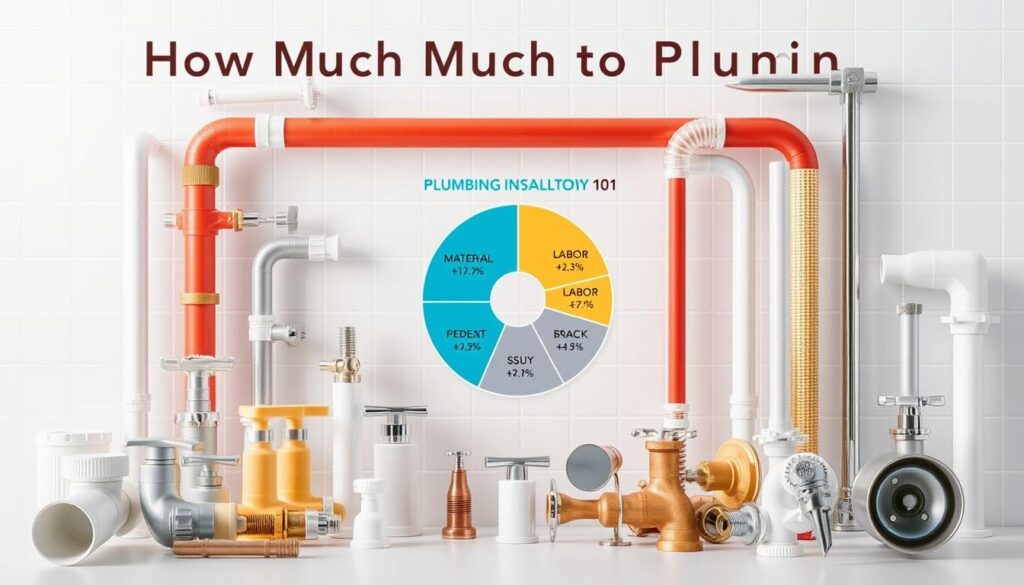
When planning to build or renovate, understanding plumbing costs is vital. The cost to plumb a house changes based on size, location, and material quality. Every choice, from pipes to fixtures, adds to the total cost.
This guide will cover everything about plumbing installation costs. You’ll learn how different factors affect the price and how to manage your budget without sacrificing quality.
Key Takeaways
- Plumbing costs can represent up to 15% of total home construction expenses
- Multiple factors impact plumbing installation costs
- Understanding cost variables helps in effective budgeting
- Professional assessment is key for accurate price estimation
- Material and labor choices significantly influence overall expenses
Table of Contents
Understanding Basic Plumbing Installation Costs
Planning a new home plumbing project? Knowing the basics of house plumbing price is key to budgeting well. Plumbing costs include labor, materials, and permits.
Understanding home plumbing costs means looking at several important factors. These factors affect your total investment.
Plumber Labor Rates and Expenses
Labor costs usually make up 30-50% of your plumbing bill. Plumbers charge differently based on:
- Where you live
- How experienced they are
- How complex the job is
- How long it takes to finish
Material Cost Considerations
The cost of your plumbing project changes with the materials you choose. Here’s a look at different pipe types and their prices:
- Copper pipes: Most expensive, but lasts long
- PVC pipes: More affordable
- PEX pipes: Flexible, priced in the middle
Permit and Inspection Fees
Local laws require plumbing permits, adding to your costs. These fees check if your work meets safety and building codes. Permit costs vary from $50 to $500, based on your area and project size.
Pro tip: Always include permit and inspection fees in your plumbing budget.
How Much to Plumb a House: National Average Costs
Knowing the costs of plumbing your home is key to planning your budget. The average cost to plumb a house changes a lot based on different factors.
For a typical home, plumbing costs can be between $8,000 and $20,000. These costs vary based on several important things:
- House size
- Pipe material selection
- Geographic location
- Complexity of plumbing layout
Here’s a breakdown of plumbing costs by house size:
| House Size | Plumbing Cost Range | Pipe Material |
|---|---|---|
| 1,000 sq ft | $4,500 – $8,000 | PEX/PVC |
| 1,500 sq ft | $6,750 – $12,000 | Mixed Materials |
| 2,000 sq ft | $8,000 – $15,000 | Copper/PEX |
Pro tip: Your plumbing costs will also depend on local labor rates and what materials are available. Always ask for quotes from licensed plumbers to get the best price.
Factors Affecting Plumbing Installation Prices
When planning a home plumbing installation, it’s key to know what affects prices. Many things can change your total cost. It’s important to look at each one before starting your project.
Your home’s unique features greatly impact plumbing costs. Let’s look at the main factors that can change your costs.
House Size and Layout Complexity
The size and design of your home affect plumbing prices. Larger homes need:
- More extensive piping networks
- Additional fixture connections
- Complex routing through multiple levels
Geographic Location Variations
Plumbing costs vary a lot by region. Local market conditions affect both labor and material costs.
| Region | Average Cost per Square Foot |
|---|---|
| Northeast | $155 |
| Midwest | $120 |
| South | $100 |
| West | $135 |
Material Quality Selection
Your choice of materials greatly affects costs. Choosing high-quality materials might raise initial costs but can save on repairs and replacements.
- Budget-friendly PVC pipes
- Mid-range copper piping
- Premium stainless steel options
By considering these factors, you can make smart choices for your plumbing. This helps manage your plumbing rough-in cost well.
Breaking Down Pipe Installation Expenses
Understanding the cost of water pipe installation is key when planning your home’s plumbing. The type of pipe you choose greatly affects costs. It impacts both the materials and labor needed for your project.
When looking at plumbing contractor rates, you’ll find many pipe material options:
- Copper Pipes: Most expensive option
- Typically $9,000 for a 1,500 square foot home
- Highly durable and long-lasting
- Resistant to corrosion
- PVC Pipes: Budget-friendly alternative
- Around $4,500 for similar home size
- Lightweight and easy to install
- Good for indoor plumbing systems
- PEX Pipes: Flexible and cost-effective
- Approximately $4,000-$5,000 for installation
- Excellent for cold climates
- Quick and simple installation
Your specific water pipe installation cost will depend on several factors. These include your home’s size, the type of pipe, and local labor rates. Professional plumbers usually charge between $45-$200 per hour. This can greatly affect your total project cost.
Pro tip: Always get multiple quotes from licensed plumbing contractors. This ensures you get competitive pricing and quality workmanship.
Plumbing Fixtures and Fittings Cost Analysis
When figuring out the cost to plumb a house, knowing the prices of fixtures and fittings is key. The cost can change a lot based on the quality and type of fixtures you pick for your home.
Plumbing fixtures are a big deal for your home’s plumbing system. On average, they cost between $3,000 and $5,000 for a new home. The price can vary based on the material and what you need.
Bathroom Fixture Costs
The fixtures in your bathroom can really affect your plumbing costs. Here’s what you might expect to pay:
- Toilet: $100 – $500
- Sink: $50 – $300
- Shower: $200 – $1,500
- Bathtub: $300 – $2,000
Kitchen Plumbing Expenses
Kitchen fixtures are also important for your plumbing costs. Here are some typical prices:
| Fixture | Price Range |
|---|---|
| Kitchen Sink | $100 – $600 |
| Dishwasher Hookup | $150 – $300 |
| Garbage Disposal | $75 – $250 |
Utility Room Requirements
Your utility room needs special plumbing attention. Plan for these important connections:
- Washing Machine Hookup: $100 – $250
- Utility Sink: $100 – $500
- Drainage System: $200 – $600
Quality is important. While cheaper options are available, spending on durable fixtures can save you money in the long run.
Water Heater and Main Line Installation
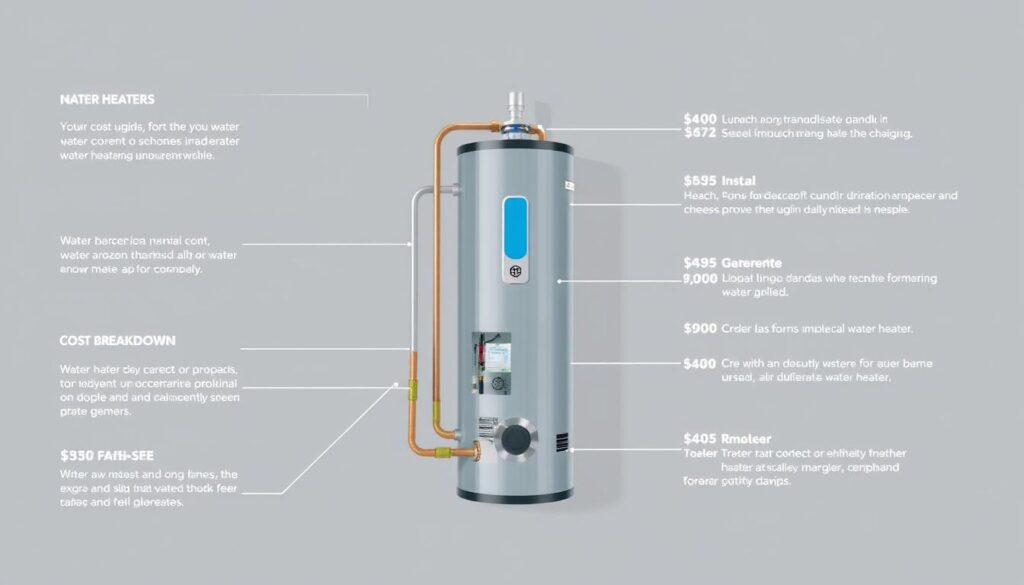
When planning your new home plumbing cost, it’s important to know about water heater and main line installation. The total cost can be between $7,000 and $12,500. This depends on your house size and specific needs.
Water heaters are a big part of plumbing costs. You have a few choices:
- Traditional tank water heaters
- Tankless water heating systems
- Solar-powered water heaters
Each type has its own installation needs. A standard tank water heater costs about $1,950 to install. Tankless units usually cost around $2,800 on average.
| Water Heater Type | Average Installation Cost | Estimated Lifespan |
|---|---|---|
| Tank Water Heater | $1,200 – $2,500 | 10-15 years |
| Tankless Water Heater | $2,500 – $4,000 | 20+ years |
| Solar Water Heater | $4,000 – $5,500 | 20-25 years |
Main water line installation also adds to your plumbing costs. Costs can vary based on soil conditions, how far the water supply is, and the type of pipe. Getting a professional assessment is important for accurate budgeting.
Choosing the right water heater and understanding main line installation costs is key. It helps you make smart decisions for your home’s plumbing.
Cost-Saving Strategies for New Plumbing Systems
Lowering the cost of plumbing doesn’t mean you have to sacrifice quality. Smart homeowners can find ways to save money without giving up on a reliable plumbing system.
When you’re planning your home’s plumbing, there are smart ways to cut costs. These can help you manage what you pay for plumbing services.
Smart Material Selection Tips
Choosing the right materials is key to saving on plumbing costs. Here are some tips:
- Opt for durable, mid-range materials that balance quality and affordability
- Purchase materials during seasonal sales
- Compare prices from multiple suppliers
- Consider long-term durability over immediate cost savings
Strategic Installation Timing
Timing your plumbing project can save you a lot of money. Contractors often charge less during their slow seasons, usually the winter.
Effective Contractor Negotiation
To get lower rates from contractors, you need a smart approach:
- Request detailed written quotes from multiple contractors
- Negotiate bundled service packages
- Ask about possible discounts for big projects
- Be open about your budget limits
“Sometimes paying more for quality items that will last longer can be cheaper in the long run,” advises home improvement expert Michael Rodriguez.
Investing wisely in your home’s plumbing can save you a lot of money in the long run.
Common Plumbing Upgrades and Their Costs
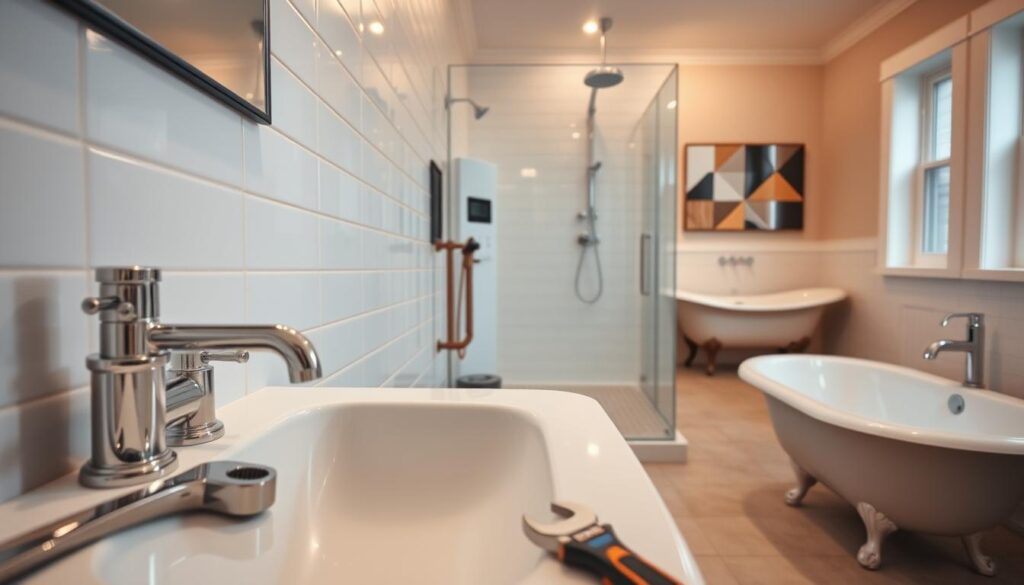
Upgrading your home’s plumbing can boost its value and function. Knowing the cost of water pipe installation helps you make smart choices for your plumbing system.
Popular upgrades can make your home more efficient and comfortable. Here are some key improvements to think about:
- Water Filtration Systems
- Whole-house filters: $500 – $2,500
- Under-sink reverse osmosis systems: $200 – $600
- Water Heater Upgrades
- Tankless water heaters: $1,500 – $3,500
- Energy-efficient models: $1,000 – $2,500
- Bathroom Plumbing Enhancements
- Low-flow toilet installations: $200 – $500
- Smart shower systems: $500 – $1,500
Upgrading your plumbing can save money in the long run. Energy-efficient fixtures cut down on bills, and modern systems increase your home’s value. Always talk to a professional plumber for the best installation and to get the most from your investment.
Pro tip: Compare multiple quotes and consider energy-efficient options to balance upfront water pipe installation cost with long-term savings.
Conclusion
Figuring out how much to plumb a house needs careful planning. The cost depends on many things, like your home’s size and where you live. By doing your research and comparing prices, you can make a good budget for your plumbing work.
The cost of plumbing rough-in can change a lot. Homeowners should think about the long-term benefits, not just the short-term savings. Choosing durable materials and professional installers can save you money in the future.
Every plumbing job is different. This guide helps with costs, but talking to local plumbers will give you the best estimate. Take your time to look at different quotes, ask about material quality, and understand the work fully before deciding.
Your plumbing system is a big investment in your home. With the right knowledge and planning, you can get a plumbing system that works well and lasts long.
FAQ
What is the average cost to plumb a new house?
How much do plumbers charge per hour?
What type of pipes are most cost-effective?
Do I need a permit for plumbing installation?
How much does it cost to install a water heater?
What factors most impact plumbing installation costs?
How can I reduce my plumbing installation expenses?
What’s the difference in cost between copper and PEX pipes?
What is the average cost to plumb a new house?
How much do plumbers charge per hour?
What type of pipes are most cost-effective?
Do I need a permit for plumbing installation?
How much does it cost to install a water heater?
What factors most impact plumbing installation costs?
How can I reduce my plumbing installation expenses?
What’s the difference in cost between copper and PEX pipes?
FAQ
What is the average cost to plumb a new house?
The cost to plumb a new house varies. It depends on the house size, location, and materials used. For an average-sized home, it’s usually between ,000 and ,000. Larger homes or more complex systems can cost a lot more.
How much do plumbers charge per hour?
Plumbers charge between and 0 per hour. This rate changes based on the plumber’s experience, location, and job complexity. Urban areas and licensed plumbers usually charge more.
What type of pipes are most cost-effective?
PEX pipes are often the cheapest option. They’re flexible, easy to install, and resistant to freezing. PVC is also a budget-friendly choice for some applications.
Do I need a permit for plumbing installation?
Yes, you need a permit for plumbing work. Permit costs vary from to 0, based on your location and project scope. Always check with local authorities before starting plumbing work.
How much does it cost to install a water heater?
Installing a water heater costs between 0 and ,500. The cost depends on the type (tank or tankless) and capacity. Electric models are cheaper to install than gas ones. Tankless water heaters have a higher upfront cost but save energy.
What factors most impact plumbing installation costs?
Several factors affect plumbing costs. These include house size, plumbing complexity, location, material quality, and labor rates. Larger homes with complex designs cost more to plumb.
How can I reduce my plumbing installation expenses?
To save on plumbing costs, get multiple quotes and install during off-peak seasons. Choose affordable materials and be flexible with fixture choices. Planning and research can help manage costs.
What’s the difference in cost between copper and PEX pipes?
Copper pipes cost to per foot, while PEX pipes are
FAQ
What is the average cost to plumb a new house?
The cost to plumb a new house varies. It depends on the house size, location, and materials used. For an average-sized home, it’s usually between $4,000 and $15,000. Larger homes or more complex systems can cost a lot more.
How much do plumbers charge per hour?
Plumbers charge between $45 and $200 per hour. This rate changes based on the plumber’s experience, location, and job complexity. Urban areas and licensed plumbers usually charge more.
What type of pipes are most cost-effective?
PEX pipes are often the cheapest option. They’re flexible, easy to install, and resistant to freezing. PVC is also a budget-friendly choice for some applications.
Do I need a permit for plumbing installation?
Yes, you need a permit for plumbing work. Permit costs vary from $50 to $500, based on your location and project scope. Always check with local authorities before starting plumbing work.
How much does it cost to install a water heater?
Installing a water heater costs between $800 and $3,500. The cost depends on the type (tank or tankless) and capacity. Electric models are cheaper to install than gas ones. Tankless water heaters have a higher upfront cost but save energy.
What factors most impact plumbing installation costs?
Several factors affect plumbing costs. These include house size, plumbing complexity, location, material quality, and labor rates. Larger homes with complex designs cost more to plumb.
How can I reduce my plumbing installation expenses?
To save on plumbing costs, get multiple quotes and install during off-peak seasons. Choose affordable materials and be flexible with fixture choices. Planning and research can help manage costs.
What’s the difference in cost between copper and PEX pipes?
Copper pipes cost $2 to $5 per foot, while PEX pipes are $0.50 to $2 per foot. PEX is cheaper and easier to install, making it a popular choice.
How much does bathroom plumbing installation cost?
Bathroom plumbing installation costs $1,500 to $5,000. This depends on the number of fixtures, layout complexity, and material quality. It includes both rough-in plumbing and fixture installation.
Are plumbing upgrades worth the investment?
Many plumbing upgrades increase your home’s value and efficiency. Upgrades like water-saving fixtures and efficient water heaters can save money on utilities. They can also boost your home’s resale value.
How much does bathroom plumbing installation cost?
FAQ
What is the average cost to plumb a new house?
The cost to plumb a new house varies. It depends on the house size, location, and materials used. For an average-sized home, it’s usually between ,000 and ,000. Larger homes or more complex systems can cost a lot more.
How much do plumbers charge per hour?
Plumbers charge between and 0 per hour. This rate changes based on the plumber’s experience, location, and job complexity. Urban areas and licensed plumbers usually charge more.
What type of pipes are most cost-effective?
PEX pipes are often the cheapest option. They’re flexible, easy to install, and resistant to freezing. PVC is also a budget-friendly choice for some applications.
Do I need a permit for plumbing installation?
Yes, you need a permit for plumbing work. Permit costs vary from to 0, based on your location and project scope. Always check with local authorities before starting plumbing work.
How much does it cost to install a water heater?
Installing a water heater costs between 0 and ,500. The cost depends on the type (tank or tankless) and capacity. Electric models are cheaper to install than gas ones. Tankless water heaters have a higher upfront cost but save energy.
What factors most impact plumbing installation costs?
Several factors affect plumbing costs. These include house size, plumbing complexity, location, material quality, and labor rates. Larger homes with complex designs cost more to plumb.
How can I reduce my plumbing installation expenses?
To save on plumbing costs, get multiple quotes and install during off-peak seasons. Choose affordable materials and be flexible with fixture choices. Planning and research can help manage costs.
What’s the difference in cost between copper and PEX pipes?
Copper pipes cost to per foot, while PEX pipes are
FAQ
What is the average cost to plumb a new house?
The cost to plumb a new house varies. It depends on the house size, location, and materials used. For an average-sized home, it’s usually between $4,000 and $15,000. Larger homes or more complex systems can cost a lot more.
How much do plumbers charge per hour?
Plumbers charge between $45 and $200 per hour. This rate changes based on the plumber’s experience, location, and job complexity. Urban areas and licensed plumbers usually charge more.
What type of pipes are most cost-effective?
PEX pipes are often the cheapest option. They’re flexible, easy to install, and resistant to freezing. PVC is also a budget-friendly choice for some applications.
Do I need a permit for plumbing installation?
Yes, you need a permit for plumbing work. Permit costs vary from $50 to $500, based on your location and project scope. Always check with local authorities before starting plumbing work.
How much does it cost to install a water heater?
Installing a water heater costs between $800 and $3,500. The cost depends on the type (tank or tankless) and capacity. Electric models are cheaper to install than gas ones. Tankless water heaters have a higher upfront cost but save energy.
What factors most impact plumbing installation costs?
Several factors affect plumbing costs. These include house size, plumbing complexity, location, material quality, and labor rates. Larger homes with complex designs cost more to plumb.
How can I reduce my plumbing installation expenses?
To save on plumbing costs, get multiple quotes and install during off-peak seasons. Choose affordable materials and be flexible with fixture choices. Planning and research can help manage costs.
What’s the difference in cost between copper and PEX pipes?
Copper pipes cost $2 to $5 per foot, while PEX pipes are $0.50 to $2 per foot. PEX is cheaper and easier to install, making it a popular choice.
How much does bathroom plumbing installation cost?
Bathroom plumbing installation costs $1,500 to $5,000. This depends on the number of fixtures, layout complexity, and material quality. It includes both rough-in plumbing and fixture installation.
Are plumbing upgrades worth the investment?
Many plumbing upgrades increase your home’s value and efficiency. Upgrades like water-saving fixtures and efficient water heaters can save money on utilities. They can also boost your home’s resale value.
Are plumbing upgrades worth the investment?
.50 to per foot. PEX is cheaper and easier to install, making it a popular choice.
How much does bathroom plumbing installation cost?
Bathroom plumbing installation costs
FAQ
What is the average cost to plumb a new house?
The cost to plumb a new house varies. It depends on the house size, location, and materials used. For an average-sized home, it’s usually between $4,000 and $15,000. Larger homes or more complex systems can cost a lot more.
How much do plumbers charge per hour?
Plumbers charge between $45 and $200 per hour. This rate changes based on the plumber’s experience, location, and job complexity. Urban areas and licensed plumbers usually charge more.
What type of pipes are most cost-effective?
PEX pipes are often the cheapest option. They’re flexible, easy to install, and resistant to freezing. PVC is also a budget-friendly choice for some applications.
Do I need a permit for plumbing installation?
Yes, you need a permit for plumbing work. Permit costs vary from $50 to $500, based on your location and project scope. Always check with local authorities before starting plumbing work.
How much does it cost to install a water heater?
Installing a water heater costs between $800 and $3,500. The cost depends on the type (tank or tankless) and capacity. Electric models are cheaper to install than gas ones. Tankless water heaters have a higher upfront cost but save energy.
What factors most impact plumbing installation costs?
Several factors affect plumbing costs. These include house size, plumbing complexity, location, material quality, and labor rates. Larger homes with complex designs cost more to plumb.
How can I reduce my plumbing installation expenses?
To save on plumbing costs, get multiple quotes and install during off-peak seasons. Choose affordable materials and be flexible with fixture choices. Planning and research can help manage costs.
What’s the difference in cost between copper and PEX pipes?
Copper pipes cost $2 to $5 per foot, while PEX pipes are $0.50 to $2 per foot. PEX is cheaper and easier to install, making it a popular choice.
How much does bathroom plumbing installation cost?
Bathroom plumbing installation costs $1,500 to $5,000. This depends on the number of fixtures, layout complexity, and material quality. It includes both rough-in plumbing and fixture installation.
Are plumbing upgrades worth the investment?
Many plumbing upgrades increase your home’s value and efficiency. Upgrades like water-saving fixtures and efficient water heaters can save money on utilities. They can also boost your home’s resale value.
,500 to ,000. This depends on the number of fixtures, layout complexity, and material quality. It includes both rough-in plumbing and fixture installation.
Are plumbing upgrades worth the investment?
Many plumbing upgrades increase your home’s value and efficiency. Upgrades like water-saving fixtures and efficient water heaters can save money on utilities. They can also boost your home’s resale value.