
Affiliate Disclosure
Plumber Guide Guys is a participant in the Amazon Services LLC Associates Program, an affiliate advertising program designed to provide a means for sites to earn advertising fees by advertising and linking to Amazon.
How Much Plumbing Tape to Use? Ever wondered why some plumbing connections leak while others stay tight? It might come down to how much plumbing tape you use. The right amount of teflon tape can turn a DIY project into a success or a disaster.
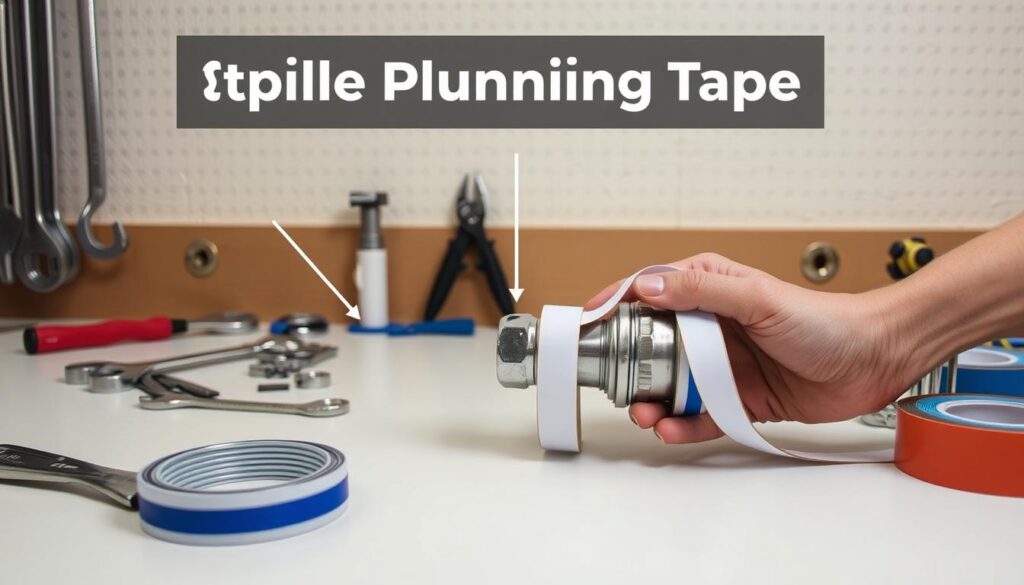
Plumber’s tape is a thin but mighty tool for watertight seals in pipe connections. It’s key for both DIY enthusiasts and professional plumbers. Knowing how much tape to use is vital to avoid leaks and ensure connections last.
This guide will cover everything about choosing, applying, and using plumbing tape effectively. You’ll learn how to tackle household repairs and complex plumbing jobs like a pro. Discover the secrets to creating leak-free joints used by experts.
Key Takeaways
- Plumbing tape is essential for creating watertight pipe connections
- Proper application prevents leaks and ensures reliable seals
- Different projects may require different tape application techniques
- Understanding tape properties helps achieve better results
- Correct tape usage can save time and prevent costly repairs
Table of Contents
Understanding Plumber’s Tape and Its Properties
Plumber’s tape is a key tool in plumbing. It helps make pipe connections watertight. Knowing its properties can greatly improve your work in home repairs or plumbing projects.
What is PTFE Tape?
PTFE (polytetrafluoroethylene) tape is a special synthetic material. It looks simple, but it’s made for precision. This tape is made from a fluoropolymer and seals well in many plumbing tasks.
Common Names for Plumber’s Tape
- Teflon tape
- Thread seal tape
- Pipe thread tape
- PTFE tape
Material Properties and Benefits
The special features of plumber’s tape make it very useful. Here are its main benefits:
- Chemical Resistance: It can handle many chemicals
- Temperature Tolerance: It works well in extreme temperatures
- Non-Adhesive Nature: It prevents threads from getting stuck or damaged
- Flexibility: It fits different pipe shapes and sizes
Your way of wrapping plumber’s tape affects the seal’s quality. Doing it right ensures a tight, reliable connection. This prevents leaks and keeps the system working well.
Different Types and Colors of Plumbing Tape
Plumbing tape comes in many types and colors. The thickness and layers of the tape depend on your plumbing needs. It’s important for plumbers and DIY fans to know the color codes for each use.
- White Tape: Standard for most water pipe connections
- Yellow Tape: Designed for natural gas lines
- Green Tape: For oxygen and medical gas systems
- Pink Tape: Best for potable water
The tape’s thickness is key for a good seal. Thin tapes are good for small pipes, while thick ones seal big pipes better. Professional tapes usually range from 2-4 mil thickness.
When picking plumbing tape, think about a few things:
- Pipe material
- What you’ll use it for (water, gas, oxygen)
- How much pressure it needs to handle
- The temperature it will be in
Experts say knowing your project’s needs is vital. The right tape makes sure your connections are tight and safe.
How Much Plumbing Tape to Use: Essential Guidelines
Learning how much thread sealing tape to use is key for strong plumbing connections. The right amount can mean the difference between a tight seal and a leak.
For plumbing joint sealing, precision and skill are essential. Professional plumbers know that the correct tape amount prevents water damage and ensures pipes last longer.
Recommended Number of Wraps
Here are the main steps for applying thread sealing tape:
- Wrap the tape clockwise around the pipe threads
- Use 2-4 complete wraps for most standard connections
- Make sure the coverage is even without too much tape
Proper Tension and Application
Getting the tape application right means keeping tension consistent. Stretch the tape a bit as you wrap for a tight seal. The tape should fit smoothly over the pipe threads without bulging.
Signs of Over-wrapping
Know when you’ve used too much tape:
- Threads are completely hidden
- Too much tape makes fitting hard
- Tape looks bunched or wrinkled
The aim is a clean, even application. This lets pipes connect well and seals against leaks effectively.
Correct Direction and Application Technique
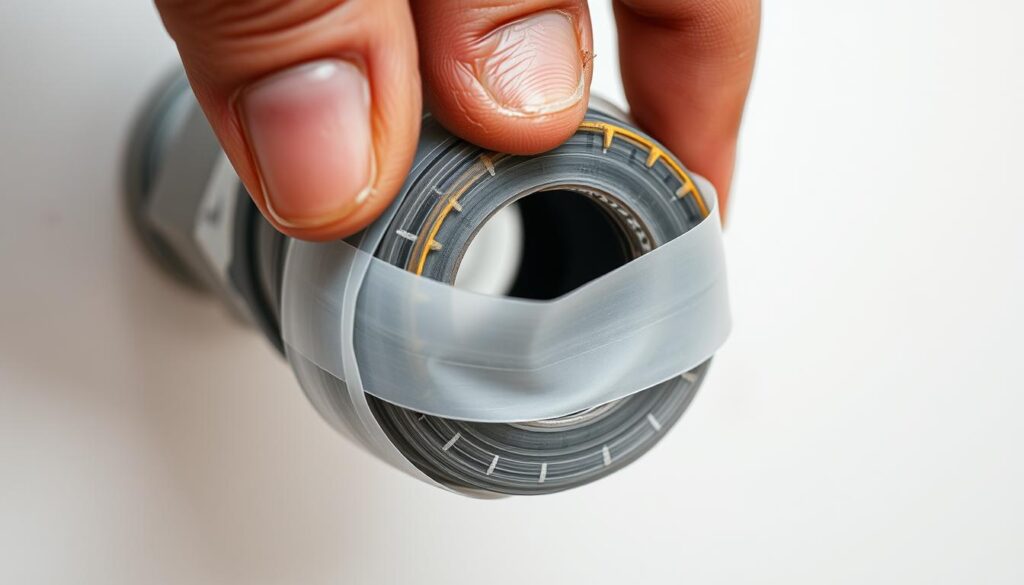
Knowing the right way to use teflon tape is key for a tight seal in plumbing. When you apply the tape, a certain method is best. This method makes sure the seal works well and avoids leaks.
To apply teflon tape right, wrap it in the same direction as the pipe threads. This way, the tape gets tighter and fills in gaps as you join pipes or fittings.
- Start at the first thread of the male pipe end
- Wrap the tape clockwise around the threads
- Maintain consistent tension while wrapping
- Cover approximately 2-3 complete thread rotations
When using teflon tape, remember these important points:
- Always wrap away from the pipe’s end
- Ensure the tape lies flat without wrinkles
- Avoid stretching the tape too tightly
- Cut the tape cleanly after wrapping
Using teflon tape the wrong way can make it come undone, leading to leaks. By sticking to these steps, you’ll get a leak-free connection. This ensures your plumbing works well.
Common Applications and Uses
Plumbing tape is a key tool in plumbing. It’s used for sealing water pipes and joints. Whether you’re a DIYer or a pro plumber, knowing its uses can help you with many projects.
Both pros and homeowners use plumbing tape for many sealing tasks. The right use can stop leaks and make connections secure in various places.
Household Plumbing Projects
In homes, plumbing tape is vital for repairs and installations:
- Fixing leaky faucets
- Installing shower heads
- Connecting bathroom and kitchen fixtures
- Sealing pipe joints in water heaters
Industrial Applications
Plumbing tape also has big roles in industrial settings:
- Chemical processing equipment
- Manufacturing pipeline connections
- HVAC system maintenance
- Agricultural irrigation systems
Specific Fixtures and Fittings
Different fixtures need special sealing methods. Plumbing tape is great for:
- Gas line connections
- Water pipe threads
- Compression fittings
- Threaded pipe joints
Choosing the right tape and applying it right makes connections watertight and secure in any plumbing job.
Best Practices for a Watertight Seal
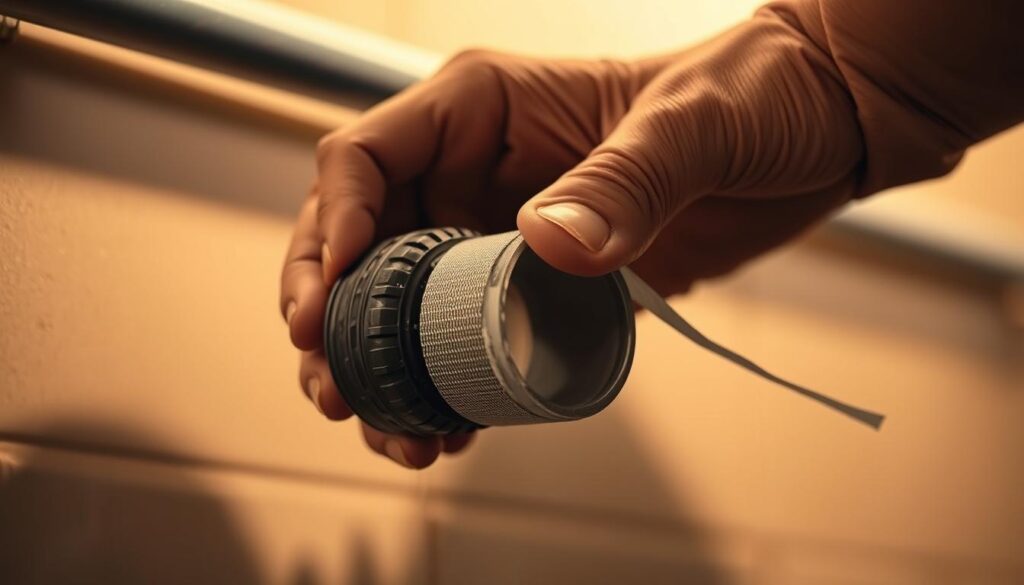
Getting a perfect seal with plumber’s tape needs precision and attention to detail. Your wrapping technique can be the difference between a leak-free connection and a water disaster.
Before you start, make sure your pipe surfaces are clean and dry. Dust, moisture, or debris can ruin the tape’s seal.
- Inspect pipe threads thoroughly for any damage or irregularities
- Clean threads with a dry cloth to remove dirt or moisture
- Check that threads are smooth and free from corrosion
When applying plumber’s tape, follow these key techniques:
- Start at the end of the pipe threads
- Wrap the tape clockwise around the threads
- Maintain consistent tension while wrapping
- Overlap each wrap by about 50% for complete coverage
Your thread sealing tape quantity should cover 3-4 complete wraps around the pipe threads. Too little tape won’t create a proper seal, while too much can prevent proper connection of fittings.
“Precision is key in creating a watertight seal that lasts.” – Professional Plumbing Experts
Always ensure the tape lies flat and smooth against the threads. No wrinkles or air pockets should be allowed, as they can ruin the seal’s integrity.
When Not to Use Plumbing Tape
It’s important to know when not to use plumbing tape for pipe thread sealing. While it’s useful in many cases, there are times when other methods are better. This ensures a tight seal.
Professional plumbers know that not all connections work well with plumbing tape. Knowing its limits helps avoid leaks and damage to your plumbing.
Incompatible Materials and Connections
Some materials and connections don’t work well with plumbing tape. You should avoid using it in these situations:
- PVC pipes with built-in gaskets
- Copper pipe connections
- PEX pipe threads with pre-installed sealing mechanisms
- Compression fittings
Alternative Sealing Methods
When plumbing tape isn’t the best choice, try these alternatives:
- Pipe Dope: A liquid sealant for metal connections
- Liquid thread sealants for certain industrial uses
- Specialized gaskets for unique connections
Always check the manufacturer’s advice for the best sealing method. The right choice depends on the pipe, connection, and use.
Pro tip: When unsure, ask a professional plumber for advice. They can assess your plumbing needs.
Troubleshooting Common Issues
Working with plumbing tape can sometimes lead to problems. Knowing how much tape to use and the right direction are key. They help avoid leaks and ensure connections are tight.
Spotting and fixing common issues can save you time and prevent water damage. Here are some helpful tips:
- Leak Detection: If you notice water seeping through a connection, carefully remove the existing tape
- Reapplication Technique: Clean the pipe threads thoroughly before reapplying tape
- Tape Application: Ensure you’re wrapping in the correct direction (clockwise) to prevent unraveling
The amount of tape used is very important. Too little tape can create weak seals, while too much can cause threading problems. Experts usually suggest 3-5 wraps for standard connections.
| Issue | Potential Cause | Solution |
|---|---|---|
| Persistent Leaks | Incorrect tape application | Remove tape, clean threads, reapply with proper tension |
| Tape Bunching | Uneven wrapping | Stretch tape slightly while applying, maintain consistent overlap |
| Poor Seal | Insufficient coverage | Add 1-2 more wraps, ensure complete thread coverage |
Remember, practice makes perfect when troubleshooting. If you’re unsure, ask a professional plumber or watch video tutorials to get better.
Conclusion
Knowing how to use teflon tape is key for strong plumbing connections. It helps prevent leaks and keeps pipe fittings secure. By following this guide, you’ll be ready to seal plumbing joints like a pro.
Choosing the right tape and applying it correctly is important. Learn to wrap threads right, keep tension even, and use the right number of turns. For more tips, check out expert advice on plumber’s tape techniques.
Success in plumbing comes from paying attention to details and mastering tape use. It’s the same for fixing home fixtures or industrial connections. Practice, use quality materials, and work with care on each project.
Good preparation and technique are essential for tight seals. With what you’ve learned, you can handle plumbing tasks with confidence. This reduces the chance of leaks or failures.