
Affiliate Disclosure
Plumber Guide Guys is a participant in the Amazon Services LLC Associates Program, an affiliate advertising program designed to provide a means for sites to earn advertising fees by advertising and linking to Amazon.
How Much Is Plumber Per Hour? Did you know American homeowners spend about $1,500 a year on plumbing repairs? Knowing how much a plumber charges per hour helps with budgeting. It makes it easier to decide on home maintenance needs.
When you face a plumbing problem, knowing the average plumber’s hourly rate is key. Plumbing services cost between $45 and $150 an hour. Most plumbers charge around $75 an hour, plus extra fees. Rates change based on location, job complexity, and the plumber’s experience.
Your local plumbing costs depend on many things. Plumbers spend a lot of time and training to offer reliable services. This is why their hourly rates are what they are. Whether it’s a simple fix or a big installation, knowing these rates helps you plan and budget better.
Key Takeaways
- Average plumber hourly rates range from $45 to $150
- Most plumbers charge around $75 per hour
- Rates vary by location and job complexity
- Experience level impacts service costs
- Always get multiple quotes before hiring
Table of Contents
Understanding Plumber Service Rates
When you face a plumbing problem, knowing the cost helps you plan your budget. Local plumber prices include several parts that add up to the total cost of plumbing services.
Professional plumbers set their rates based on important factors. These ensure they offer quality service and cover their business costs.
Basic Service Call Fees
Service call fees are common in plumbing. These fees range from $50 to $150 and usually cover the first hour. It’s like paying for the plumber’s time and skill to come to your place.
- Average service call fee: $50-$150
- Covers first hour of professional assessment
- Includes initial diagnostic work
Minimum Charges and Trip Fees
Local plumber prices also include travel costs. Plumbers charge trip fees from $1 to $2 per mile after the first 10 miles from their base.
| Distance | Trip Fee |
|---|---|
| First 10 miles | Free |
| 11-20 miles | $1-$2 per mile |
| Over 20 miles | Negotiated rate |
Insurance and Overhead Costs
Your plumbing service cost also includes the plumber’s business expenses. This includes liability insurance, worker’s compensation, vehicle upkeep, and equipment. These costs are big investments that affect the price.
- Liability insurance protection
- Worker’s compensation coverage
- Professional equipment maintenance
- Ongoing training and certifications
Knowing these rate parts helps you see the value in professional plumbing services. It helps you make smart choices for your home maintenance.
How Much Is Plumber Per Hour: Breaking Down the Costs
Understanding plumbing labor charges can feel like navigating a complex maze. Plumber hourly rates vary significantly based on several key factors that impact your total service cost.
When determining how much is plumber per hour, you’ll encounter a range of pricing structures. Typical rates span from $45 to $150 per hour, depending on the professional’s expertise and the specific job requirements.
- Residential service rates typically range between $75-$125 per hour
- Complex repairs might push hourly rates to $150 or higher
- Simple maintenance tasks could cost closer to $45-$75 per hour
Your location plays a big role in plumbing labor charges. Urban areas with higher living costs tend to have more expensive plumber rates compared to rural regions. Metropolitan centers like San Francisco or New York typically see higher hourly rates due to increased overhead expenses.
“The cost of a plumber isn’t just about time—it’s about expertise, specialized skills, and solving complex problems.” – Professional Plumbing Association
Factors influencing plumber hourly rates include:
- Professional certification level
- Job complexity
- Required specialized tools
- Emergency or after-hours service
Remember that while hourly rates matter, the most important factor is hiring a qualified professional who can solve your plumbing issues effectively and efficiently.
Professional Plumber Classifications and Rates
Knowing the different plumber levels helps you choose the right one for your needs. Each plumber has their own skills, experience, and fees. The hierarchy shows their training and expertise.
There are three main plumber levels, each with its own qualifications and rates:
- Apprentice Plumbers: Entry-level professionals
- Journeyman Plumbers: Experienced mid-level technicians
- Master Plumbers: Top-tier professionals with advanced certifications
Master Plumber Rates
Master plumbers are at the top of the plumbing field. They have a lot of training and charge more, from $75 to $200 an hour. They can tackle tough projects, design systems, and offer expert advice.
| Plumber Level | Hourly Rate Range | Expertise Level |
|---|---|---|
| Master Plumber | $75 – $200 | Highest Skill Level |
| Journeyman Plumber | $45 – $125 | Intermediate Skill |
| Apprentice Plumber | $25 – $40 | Entry Level |
Journeyman Plumber Costs
Journeyman plumbers are in the middle in terms of skill and cost. They have practical experience and state licenses, charging $45 to $125 an hour. They can do most plumbing jobs on their own.
Apprentice Plumber Fees
Apprentice plumbers are learning on the job, working under others to get experience. They charge $25 to $40 an hour. Even though they’re cheaper, they work with experienced plumbers to ensure quality.
Emergency and After-Hours Plumbing Costs
When plumbing emergencies happen, the cost can be steep. Leaks or burst pipes don’t wait for a good time. This means you might pay more for urgent repairs.
Emergency plumbing services cost between $150 to $300 per hour. This is more than the usual rates. It’s because plumbers work extra hours to help you quickly.
- Weeknight emergency calls: 1.5x standard rate
- Weekend emergency services: 2x standard hourly rate
- Holiday emergency repairs: Up to 2.5x standard pricing
Knowing when to call an emergency plumber can save you money. Call them for big problems like:
- Major water leaks threatening structural damage
- Sewage backups
- Complete loss of water pressure
- Frozen or burst pipes
To avoid high costs, keep your plumbing in check. Fix small problems early. Regular checks can prevent big, expensive repairs later.
Residential vs. Commercial Plumbing Rates
Knowing the difference between residential and commercial plumbing rates helps with budgeting. Both need skilled plumbers, but their costs and complexity differ a lot.
Residential Service Pricing Breakdown
Residential plumbing costs are between $45 and $200 per hour. This depends on the job’s complexity and where you live. Home plumbing jobs are usually simpler and less expensive.
- Standard home repairs cost $75-$150
- Replacing fixtures costs $100-$250
- Fixing leaks is $150-$350
Commercial Project Complexity
Commercial plumbing needs special skills and bigger systems. These jobs require more expertise and cost more.
| Service Type | Average Hourly Rate | Project Complexity |
|---|---|---|
| Residential Plumbing | $70-$120 | Low to Medium |
| Commercial Plumbing | $85-$250 | High |
Building Code Compliance Factors
Commercial plumbing must follow stricter building codes than residential. These rules affect both residential and commercial costs.
- Commercial projects need more detailed permits
- Special equipment raises costs
- Compliance documents add to expenses
Professional plumbers suggest getting several quotes. This helps understand the cost differences between residential and commercial plumbing.
Common Plumbing Services and Their Costs
Knowing the cost of plumbing services can help you plan for unexpected repairs. Each service has its own price, based on how complex it is. The plumber’s hourly rate also affects the total cost.
Here are some common plumbing services you might need:
- Leak Repairs: Usually cost between $75 and $500
- Faucet leaks: $75-$200
- Pipe leaks: $150-$500
- Drain Unclogging:
- Kitchen sink: $100-$275
- Bathroom drain: $110-$300
- Water Heater Services:
- Repair: $250-$750
- Installation: $600-$1,800
Big plumbing jobs can really hit your wallet. Sewer line repairs, for example, can cost between $1,500 and $3,700. The final price depends on the job’s complexity, materials, and the plumber’s rates.
Pro tip: Always get multiple quotes and ask about possible extra charges to avoid surprises.
Your location and the job’s specifics affect the cost. Plumbers consider the job’s complexity, materials, and time when setting their rates.
Factors Affecting Plumbing Service Prices
Knowing what affects local plumber prices helps you plan your budget better. Plumbing labor costs can change due to several important reasons.
When you need a plumber, many things affect the cost. Understanding these can help you save money and make better choices.
Geographic Location’s Impact on Pricing
Your location greatly affects plumbing service rates. Cities usually charge more than rural areas because of:
- Higher cost of living
- Increased overhead expenses
- Greater demand for services
Complexity of Plumbing Jobs
The complexity of your plumbing job affects the cost. More complex jobs need special skills and more time, raising the price.
| Job Complexity Level | Estimated Price Range | Time Required |
|---|---|---|
| Simple Repair | $100 – $300 | 1-2 hours |
| Moderate Complexity | $300 – $800 | 3-6 hours |
| High Complexity | $800 – $2,500 | 6-12 hours |
Material Quality and Its Cost Implications
The materials used in your plumbing project also matter. High-quality materials might cost more upfront but save money in the long run due to their durability and fewer repairs.
- Standard materials: Lower initial cost
- Premium materials: Higher upfront expense
- Professional-grade components: Best long-term value
By knowing these factors, you can better understand local plumber prices. This helps you make informed decisions for your plumbing needs.
Flat Rate vs. Hourly Billing Structures
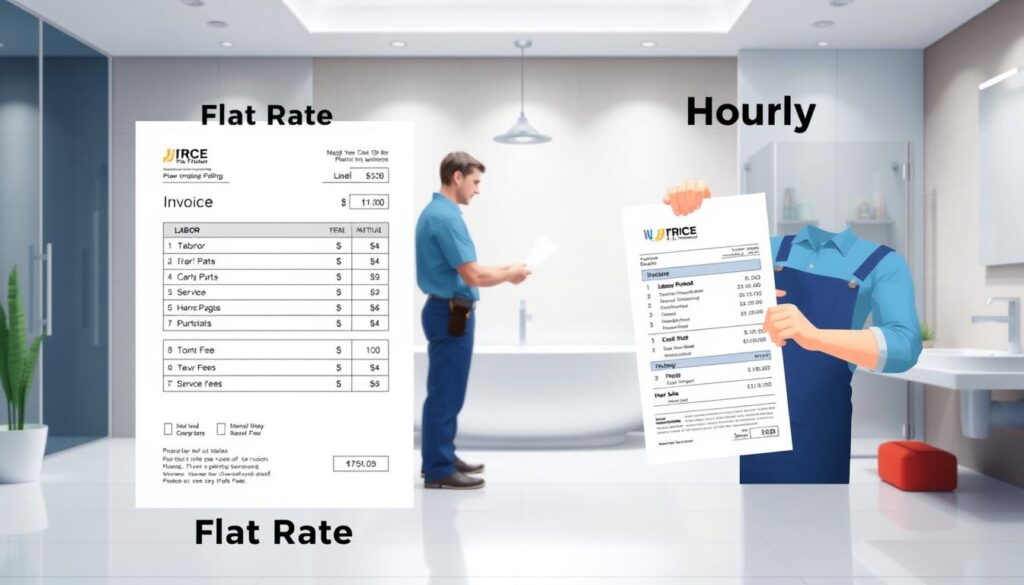
When you hire a plumber, knowing about different billing ways can help you control costs better. The plumbing world mainly uses two main ways: flat rate and hourly billing.
Flat rate pricing is clear and upfront. You’ll know the total cost before the work starts. This means the plumber’s hourly rate doesn’t matter as much. You’re paying a set price for certain services.
- Flat rate advantages:
- Clear, predictable pricing
- No surprise expenses
- Simplified budgeting
- Hourly rate advantages:
- More flexible for complex jobs
- Better for unpredictable repairs
- Potential cost savings for smaller tasks
For simple tasks like fixing faucets or clearing drains, flat rates apply. These costs usually range from $130 to $520. But for more complex jobs with unknown timelines, hourly billing is used. It reflects the actual work done.
Choosing the right billing method depends on your plumbing needs. Always ask plumbers about their pricing to avoid hidden costs.
Licensing and Insurance Requirements
Protecting your home and investment is key. Hiring a qualified professional is essential. Licensed plumber fees might seem high, but they are vital for your safety.
Each state has its own rules for plumbers. These rules ensure they have the right skills and knowledge.
When looking at plumbing labor costs, remember these important points:
- State-specific educational requirements
- Mandatory apprenticeship hours
- Comprehensive licensing examinations
- Ongoing professional certification
Working with unlicensed plumbers can be risky. Potential consequences include:
- Substandard work quality
- Potential property damage
- Voided home insurance claims
- Legal liability for improper installations
Professional plumbers need to have insurance. This insurance usually includes general liability and workers’ compensation. It protects you from unexpected costs during plumbing projects.
Always verify a plumber’s credentials before hiring to ensure quality and safety.
Choosing a licensed professional is your best option. They show they are experts with current certifications and insurance. While it might cost a bit more, the benefits are worth it.
Conclusion
Knowing how much a plumber charges per hour helps you plan your budget better. Plumbing costs can vary a lot, from $45 to $200 an hour. This depends on where you are, the plumber’s skills, and how complex the job is.
Looking for the cheapest plumber isn’t always wise. Even though they might cost more, skilled plumbers with the right licenses and insurance do better work. This work can save you money in the long run. Get quotes from different plumbers, understand their service agreements, and compare their estimates before you decide.
When choosing a plumber, think about the cost and the quality of work. Look at the plumber’s experience, certifications, and reputation. This guide will help you make the right choice for your plumbing needs.
Learning about plumber rates and costs can save you money and stress. Be informed, ask questions, and pick a plumber who is clear about their prices and does great work.