
Affiliate Disclosure
Plumber Guide Guys is a participant in the Amazon Services LLC Associates Program, an affiliate advertising program designed to provide a means for sites to earn advertising fees by advertising and linking to Amazon.
How Much Is a Plumbing Permit? Did you know that nearly 70% of homeowners don’t know about plumbing permit needs? Knowing the cost of a plumbing permit can prevent legal and financial troubles later.
When you plan plumbing work, you must deal with local rules and fees. The price of a plumbing permit changes based on where you live, the project’s size, and local rules. Usually, homeowners pay between $50 and $500 for a permit.
Getting the right permit is key to making sure your plumbing work follows local codes and is safe. Whether it’s small fixes or big renovations, knowing the permit cost is a first step in your project.
Key Takeaways
- Plumbing permit costs range from $50 to $500
- Permits vary by location and project complexity
- Local building departments set specific permit requirements
- Permits protect homeowners and ensure code compliance
- Different types of plumbing work require different permits
Table of Contents
Understanding Plumbing Permit Basics
Getting into building department plumbing permits can seem tough. But knowing the basics helps you follow local rules. Plumbing work needs careful planning and approval to meet safety and quality standards.
Permit needs for plumbing work change based on your project’s size and complexity. Knowing when and why you need a permit can save you time, money, and legal trouble.
Types of Plumbing Work Requiring Permits
Not every plumbing job needs a permit, but many big changes do. Here are some common scenarios that usually need a building department plumbing permit:
- Installing new water lines
- Replacing main sewer lines
- Adding bathroom or kitchen fixtures
- Extensive pipe replacements
- Connecting to municipal water systems
Local Building Department Regulations
Every city has its own rules for plumbing work. Your local building department is the final say on permits. They make rules to ensure:
- Correct installation methods
- Health and safety standards
- Following current building codes
- Protecting public infrastructure
Permit Application Process Overview
Getting a plumbing permit involves a few main steps. You’ll need to submit detailed plans, pay fees, and schedule inspections. Professional plumbers can make this process smoother, ensuring all plumbing work permits are met.
Pro tip: Always contact your local building department before starting any big plumbing project to know what permits you need.
How Much Is a Plumbing Permit for Residential Properties
Knowing the cost of plumbing permits can help you plan your home projects better. The cost of permits varies a lot, depending on where you live and the project’s details.
Every city has its own way of setting permit fees. Some charge a flat rate, while others base it on the project’s size or complexity.
- Basic plumbing repairs: $50-$150
- Bathroom renovation permit cost: $100-$500
- Water heater installation permits: $75-$250
- Extensive pipe replacement: $200-$800
Your local building department will figure out the exact cost of permits. They look at several important things:
- Project scope
- Total square footage of work
- Estimated project value
- Specific plumbing modifications
| Project Type | Average Permit Cost | Typical Processing Time |
|---|---|---|
| Minor Bathroom Update | $100-$250 | 3-5 business days |
| Full Bathroom Renovation | $250-$500 | 1-2 weeks |
| Whole-House Replumbing | $500-$1000 | 2-3 weeks |
Pro tip: Always check with your local building department for the most accurate and current residential plumbing permit fees, as they can change frequently.
Commercial Plumbing Permit Cost Factors
Understanding commercial plumbing permit costs can be tricky. Knowing what affects these costs helps you plan your budget better. Commercial permits are different from residential ones because of their unique needs and complexity.
Several important factors influence the cost of commercial plumbing permits:
Square Footage Considerations
The size of your commercial space affects the permit cost. Bigger spaces need more permits and inspections. Owners should expect:
- Higher fees for larger square footage
- Increased complexity of permit documentation
- More detailed plan review processes
Project Scope Impact on Pricing
The type of plumbing project you have greatly affects the cost. Different projects have different permit needs:
- Minor repairs with limited scope
- Extensive system replacements
- New installation projects
- Retrofitting existing infrastructure
*Complexity drives cost in commercial plumbing permit pricing*
Commercial Building Classifications
The type of building you have also affects the cost. Different types need different permits:
- Retail spaces
- Industrial facilities
- Office complexes
- Healthcare institutions
Each type has its own rules that change the cost of permits. Talking to local building departments can help get a better estimate for your project.
Standard Fee Structures for Plumbing Work
Knowing the average cost of plumbing permits helps you plan your budget for home or business upgrades. Cities usually have different ways to figure out how much a plumbing permit costs.
Plumbing permit fees depend on the type and size of the project. For example, homes and businesses have different prices. You’ll find a few main ways to calculate these fees:
- Flat-rate fees for standard installations
- Per-unit pricing for multiple fixture projects
- Value-based fees depending on project scope
- Itemized charges for specific plumbing work
In places like Halifax, the permit fee structure shows how cities price permits. Home plumbing permits can cost between $25 and $250. This depends on how complex the project is and how many fixtures are involved.
“Knowing your local permit fees can save you time and unexpected expenses during home renovation projects.”
The cost of plumbing permits usually goes up with the project’s complexity. Simple home repairs cost less than big commercial jobs. Always ask your local building department for the exact price in your area.
Things that can change the cost of permits include:
- Number of plumbing fixtures
- Type of building (residential or commercial)
- Scope of the plumbing project
- Local municipal regulations
Pro tip: Budget an extra 10-15% above the estimated permit cost to cover any extra fees or inspections.
Additional Costs and Inspection Fees
Understanding plumbing inspection fees can be tricky for homeowners and contractors. Knowing the costs helps you plan your budget better and avoid surprises.
Plumbing inspection fees are key in any plumbing project. They check if your work follows local building codes and safety rules.
Pre-inspection Requirements
Before a plumbing inspection, you must get your project ready. Important steps include:
- Completing all needed paperwork
- Ensuring your work follows local codes
- Preparing detailed project plans
- Checking materials and installation standards
Final Inspection Charges
Final plumbing inspection fees are between $100 and $500. This depends on where you are and how complex your project is. These fees cover:
- Checking the system thoroughly
- Verifying code compliance
- Assessing safety standards
- Providing detailed reports
“Proper preparation can significantly reduce your overall plumbing inspection fees” – Professional Plumbing Association
Re-inspection Fee Policies
If you fail the first inspection, you’ll face re-inspection fees. These can cost $50-$200 more. To avoid extra costs:
- Stick to local building codes
- Work with licensed professionals
- Fix any issues before the inspection
Pro tip: Always keep in touch with your local building department to know the plumbing inspection fees in your area.
Payment Methods and Processing Times

Understanding how to pay for plumbing permits can be easy. Each city has its own way to handle payments, making it simpler for everyone. This is true for both homeowners and contractors.
Local governments offer many ways to pay for plumbing permits. You can:
- Use online payment portals
- Pay in person at city hall
- Make credit card transactions
- Do electronic bank transfers
- Pay with a traditional check or money order
The time it takes to get a plumbing permit varies. It usually takes 3 to 10 business days. But, it can change based on your project’s complexity and the city’s workload.
To get your permit faster, try these tips:
- Submit all needed documents
- Check that you have all required forms
- Give detailed project plans
- Apply when the city is less busy
Some cities offer fast service for a fee. This can cut down waiting time from weeks to days. It’s great for urgent plumbing needs or projects with tight deadlines.
Pro tip: Always contact your local building department to confirm specific payment methods and current processing times for plumbing permits.
Common Variations in Permit Pricing by Project Type
Plumbing permit costs can change a lot based on the project type. Knowing these changes helps homeowners and contractors plan their budgets better.
Each plumbing project has its own permit needs, which affect the cost. Cities look at several things when setting permit prices.
New Construction vs. Renovations
Plumbing permits for new buildings and renovations cost differently. New construction usually needs more permits and costs more.
- New construction permits often range from $500-$2,000
- Renovation permits usually cost between $100-$500
- How much work is done affects the price
Emergency Repair Permits
Emergency plumbing fixes might get special permits. Some places have quick permits for urgent repairs.
| Repair Type | Typical Permit Cost | Processing Time |
|---|---|---|
| Minor Emergency Repairs | $75-$250 | 24-48 hours |
| Major Infrastructure Repairs | $250-$750 | 3-5 business days |
Special Installation Requirements
Special plumbing jobs need special permits. Things like commercial water treatment or unique home setups need careful checks.
- Complex systems mean more permits
- Special permits might need extra engineering checks
- More technical work can raise costs
Always talk to your local building office to find out the permit cost for your project. Knowing the costs helps with budgeting.
Permit Fee Calculation Methods
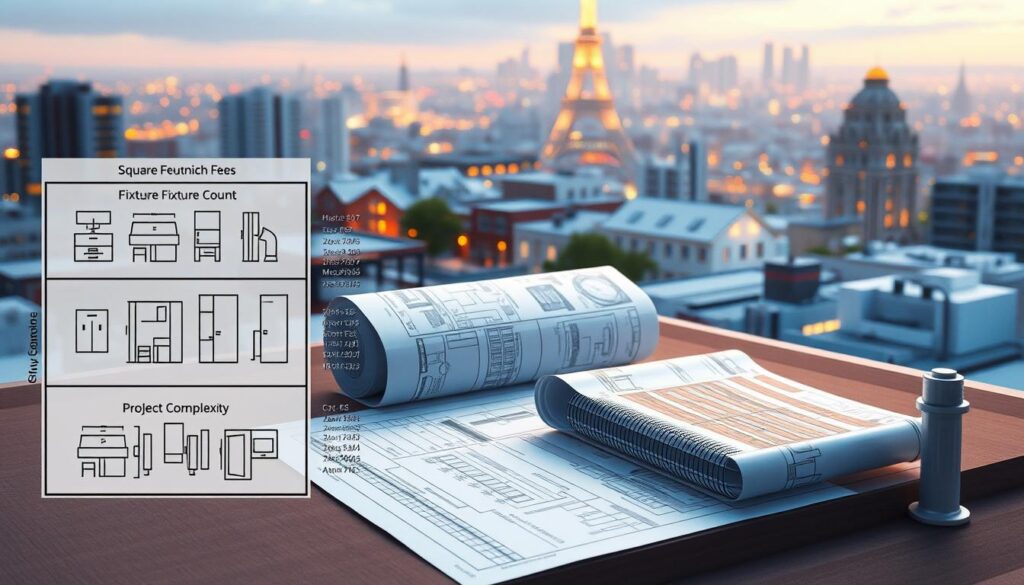
Figuring out the cost of a plumbing permit involves understanding different calculation methods. Local building departments use these methods based on several key factors. These factors help determine the total cost of your plumbing permit.
Most cities use one of these main ways to figure out the cost of a plumbing permit:
- Fixture Count Method: Fees are based on the number of plumbing fixtures being installed or replaced
- Project Valuation Approach: Fees are calculated as a percentage of the total project value
- Flat Rate System: Fixed fees for specific types of plumbing work
The most common ways to calculate include:
- Multiplying the number of plumbing fixtures by a standard rate
- Calculating fees based on the total square footage of the project
- Assessing the overall project valuation and applying a percentage-based fee
When figuring out the cost of a plumbing permit, consider these factors:
- Type of plumbing work being performed
- Size and complexity of the project
- Location-specific municipal regulations
- Total estimated project value
To get an accurate estimate, contact your local building department directly. They can give you the latest info on the cost of a plumbing permit for your project. This ensures you budget correctly for all necessary fees.
Conclusion
Understanding local permit costs for plumbing can be tricky. But knowing the main factors helps you plan your budget better. Each area has its own rules and fees for plumbing permits.
It’s important to check what your local building department needs. The cost of plumbing permits changes based on the project, the property, and local codes. Plumbers suggest setting aside money for permit fees to avoid surprises.
Getting the right permits is key for safety and following the law. Working with your local building department helps ensure your plumbing work is up to standard. Always ask about current fees and any extra inspection costs to avoid surprises.
Doing your homework on permits protects your property and ensures quality work. It also helps avoid legal issues later. Contact your local building department for the latest info on plumbing permit fees in your area.