
Affiliate Disclosure
Plumber Guide Guys is a participant in the Amazon Services LLC Associates Program, an affiliate advertising program designed to provide a means for sites to earn advertising fees by advertising and linking to Amazon.
How Much Does Plumbing New House Cost? Understanding plumbing costs in new homes can save you a lot of money and stress. When thinking about plumbing costs for a new house, it’s important to know all the details. Plumbing in new homes includes complex systems that need careful planning and budgeting.
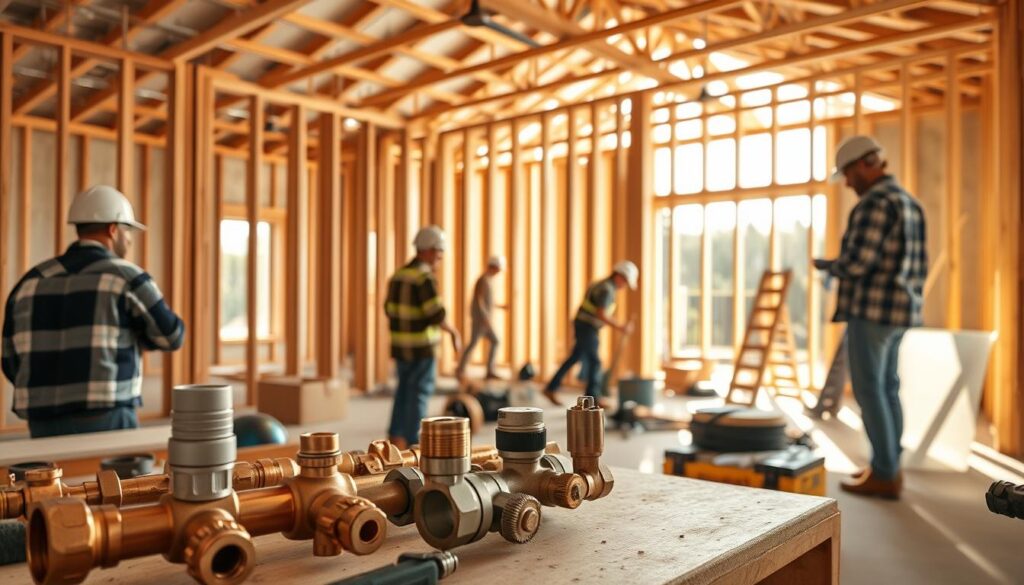
Plumbing a new home means setting up fresh water lines, drainage, vents, and gas lines before the walls go up. On average, plumbing costs about $4.50 per square foot for the initial setup. This investment is key to making sure your home’s water and waste systems work right.
The total cost of plumbing depends on several things. These include the size of your home, local building rules, the materials you choose, and the cost of labor in your area. Plumbers suggest planning well to avoid extra costs during construction.
Key Takeaways
- Average plumbing costs range from $4.50 to $5.50 per square foot
- Rough-in work represents a significant portion of total plumbing expenses
- Material choices directly impact overall project budget
- Professional planning reduces unexpected construction costs
- Regional variations can significantly influence plumbing installation prices
Table of Contents
Understanding New Home Plumbing Basics
When planning for a new home, knowing your plumbing system is key. It’s a complex network for clean water and waste. It’s important to understand the basics before looking at costs.
Plumbing systems are detailed and need careful planning. A good system has many parts working together. They ensure water and waste are managed well.
Core Components of a Residential Plumbing System
- Water supply pipes
- Drainage pipes
- Fixture connections
- Ventilation systems
- Water heating infrastructure
Types of Plumbing Installations
| Installation Type | Primary Use | Typical Materials |
|---|---|---|
| Copper Piping | Cold and hot water lines | Copper tubing |
| PEX Piping | Flexible water distribution | Cross-linked polyethylene |
| PVC Drainage | Waste and vent systems | Polyvinyl chloride |
Planning Your Plumbing Layout
Planning your plumbing layout is all about smart pipe and fixture placement. Think about efficient water flow and avoiding future problems. Plumbers use special methods to design layouts that save money and work well.
Every part of your plumbing system is important. Knowing the basics helps you make smart choices. This can even save you money in the long run.
Average Cost Per Square Foot for New Construction
When planning a new home, knowing the plumbing costs is key. Contractors use square footage to estimate plumbing costs. This helps homeowners plan their budget easily.
The cost of plumbing in a new home is usually between $4.50 to $7.50 per square foot. Your plumbing costs will depend on your home’s size and how complex the plumbing is.
- 1,000 sq ft home: Approximately $4,500 – $7,500
- 1,500 sq ft home: Approximately $6,750 – $11,250
- 2,000 sq ft home: Approximately $9,000 – $15,000
Several factors can affect the cost of plumbing in a new home:
- Where you live
- The plumbing design’s complexity
- The materials chosen
- The local labor market
Remember, these estimates are for the basic plumbing work. Costs for fixtures, special connections, and upgrades can add up.
Pro tip: Always get multiple quotes from licensed plumbing contractors to ensure competitive pricing for your new home construction.
How Much Does Plumbing New House Cost
Knowing the cost of plumbing in a new house is key for homeowners. Plumbing is a big part of your home’s setup, with prices changing based on several things.
To figure out plumbing costs for a new house, look at a few main expenses. These add up to your total budget:
Rough-In Plumbing Expenses
Rough-in plumbing sets up the pipe base before walls and fixtures are added. For a 2,000 square foot home with 2-3 bathrooms, expect to pay:
- Pipe installation: $8,000 to $12,000
- Materials: Copper or PEX piping
- Complexity: Depends on home layout and design
Fixture Installation Costs
Costs for each fixture can greatly affect your budget. Here’s what you might pay for:
- Toilets: $450 – $750 per unit
- Sinks: $500 – $1,000 each
- Bathtubs: $800 – $1,800
- Complete fixture package: Approximately $4,000
Labor and Material Breakdown
Your plumbing costs will split between materials and labor. Plumbers charge:
- Labor rates: $50 – $200 per hour
- Material costs: 30-40% of total project
- Complex installations: Higher labor rates
Pro tip: Always get multiple quotes and ensure detailed cost breakdowns to manage your plumbing installation budget effectively.
Bathroom Plumbing Installation Costs
Bathrooms are a big part of your home plumbing budget. Knowing what each part costs helps you plan better for your new home.
Installing bathroom plumbing includes many parts. The cost varies based on the fixtures you choose and how complex the installation is.
- Rough-in plumbing costs: $1,600 – $2,900 per bathroom
- Toilet installation: $200 – $600
- Bathroom sink installation: $100 – $500
- Shower installation: $800 – $2,000
- Bathtub installation: $1,500 – $4,500
The cost of your bathroom plumbing depends on a few things:
| Fixture | Basic Cost Range | Premium Cost Range |
|---|---|---|
| Toilet | $200 | $600 |
| Sink | $100 | $500 |
| Shower | $800 | $2,000 |
| Bathtub | $1,500 | $4,500 |
Pro tip: The more bathrooms you have, the more you’ll spend on plumbing. Plan carefully to keep costs down.
Kitchen and Utility Room Plumbing Expenses
When planning new construction plumbing expenses, your kitchen and utility room are key. They need special plumbing setups. Knowing the costs helps you budget and avoid surprises.
Kitchen and utility room plumbing involves many parts. These parts affect your construction budget. Good planning ensures water and waste are managed well and everything works right.
Kitchen Fixture Costs
Kitchen plumbing fixtures need careful spending. Here are some costs:
- Kitchen sink installation: $350-$500
- Dishwasher hookup: $400-$650
- Garbage disposal connection: $100-$450
Appliance Connection Fees
Connecting big kitchen appliances needs expert plumbing. Things like refrigerators with water dispensers, gas ranges, and top-notch dishwashers need pros.
| Appliance | Average Connection Cost |
|---|---|
| Refrigerator Water Line | $150-$300 |
| Gas Range Connection | $200-$500 |
| Dishwasher Installation | $250-$500 |
Utility Room Requirements
Utility rooms need special plumbing for washing machines, water heaters, and drainage. You’ll spend $500-$1,500 on plumbing for these rooms.
“Proper planning in kitchen and utility room plumbing prevents costly retrofitting later.” – Professional Plumbing Association
Material Choices and Their Impact on Cost
When planning your house plumbing installation budget, picking the right materials is key. It affects both the initial cost and the long-term performance. The type of plumbing pipes and fixtures you choose greatly influences the cost.
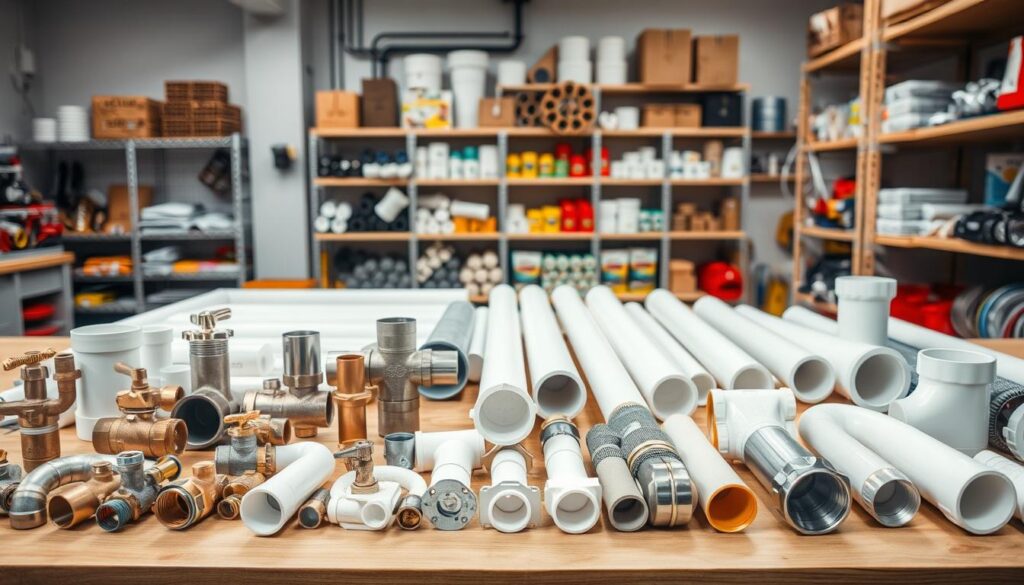
- PEX Tubing: Flexible and affordable, ranging from $0.50 to $2.00 per linear foot
- Copper Piping: Durable but more expensive, costing between $2.00 and $10.00 per foot
- PVC/CPVC Pipes: Budget-friendly plastic option, priced at $0.50 to $3.00 per foot
Knowing the pros and cons of each material is important. PEX is flexible and cheaper, while copper lasts longer. Plastic pipes are a good choice for those watching their budget.
Pro tip: Think about long-term maintenance and replacement costs when picking your plumbing materials.
Your budget will depend on pipe length, home size, and local rates. Talking to a professional can help you find a balance between cost and quality.
Labor Costs Across Different Regions
Knowing how much plumbing costs can help you plan your budget better. Plumbing labor rates change a lot in the US. This is because of where you are, local economy, and demand.
Urban vs Rural Pricing Dynamics
Plumbing costs vary a lot between cities and countryside. In big cities, prices are higher because of living costs and competition. Places like San Francisco, New York, and Los Angeles charge more for skilled workers.
- Urban areas: $100-$150 per hour
- Rural areas: $50-$80 per hour
- Specialized urban markets: Rates can exceed $200 per hour
Regional Cost Variations
Your location affects plumbing costs a lot. Places with high living costs and strong construction markets have higher rates.
| Region | Average Hourly Rate | Typical Project Cost |
|---|---|---|
| California | $125-$175 | $15,000-$22,000 |
| Midwest | $65-$95 | $8,000-$12,000 |
| Southern States | $70-$110 | $9,000-$15,000 |
Seasonal Price Fluctuations
Plumbing costs change with the seasons. Spring and summer are busier, making rates higher. Winter might be cheaper.
Pro tip: Schedule your new construction plumbing during off-peak seasons to potentially save on labor costs.
Always ask for several quotes and compare prices. This way, you can make sure you’re getting a good deal for your plumbing project.
Permits and Inspection Requirements
When planning your new home plumbing project, it’s key to know about permits and inspections. These are important for following the law and avoiding legal trouble. Make sure your plumbing price guide includes these costs, as they can greatly affect your budget.
Most places require permits for new plumbing installations. The cost and what you need can change a lot based on where you are and what you’re doing. Plumbers usually add these costs to their rates.
- Building permit fees range from $50 to $500
- Inspection costs typically run between $100 and $250
- Some places need you to get checked at different times in your project
To get through the permit process well, talk to your local building department early. They can tell you what you need for your area and what documents and fees you’ll face for your plumbing work.
Inspections are more than just rules. They check if your plumbing is safe and meets building codes. Skipping them can lead to expensive fixes or legal problems later.
“Always budget for permits and inspections as part of your total plumbing installation costs.” – Professional Plumbing Association
Pro tip: Some cities let you apply for permits online. This can make things faster and easier for your plumbing work.
Common Cost-Saving Strategies
Managing your plumbing system pricing for new builds needs smart planning. You can save money without losing quality. With the right steps, you can cut your house plumbing installation budget a lot.
Smart homeowners know saving on plumbing starts with planning. The right moves can keep costs down without hurting your home’s quality.
Material Selection Tips
Choosing materials wisely can cut costs a lot. PEX piping is a great choice over traditional options, saving thousands.
- Select standard-quality fixtures
- Compare material durability
- Consider long-term maintenance costs
Timing Your Project Strategically
When you start your project matters a lot. Off-peak seasons often mean better rates from contractors.
| Season | Potential Savings | Contractor Availability |
|---|---|---|
| Winter | 10-15% | High |
| Summer | 5-10% | Low |
Bulk Purchase Benefits
Buying more materials can lead to big savings. Negotiate with suppliers and contractors to make the most of your budget.
- Request volume discounts
- Bundle material purchases
- Compare supplier pricing
Good planning turns your plumbing project into a smart investment in your home.
Hidden Costs and Contingencies
When figuring out the cost of plumbing in a new house, many homeowners miss important hidden expenses. These can quickly add up and surprise you. Unexpected plumbing issues during construction are common.
Some common hidden plumbing costs include:
- Unforeseen site conditions
- Soil composition complications
- Unexpected pipe rerouting
- Additional waterproofing requirements
- Code compliance modifications
Experts suggest saving 10-15% of your plumbing budget for unexpected costs. This extra money helps cover surprises without ruining your project.
| Contingency Category | Potential Cost Range | Recommended Action |
|---|---|---|
| Soil Excavation | $500 – $3,000 | Pre-site geological assessment |
| Pipe Rerouting | $1,000 – $5,000 | Detailed initial blueprint review |
| Code Compliance Updates | $750 – $2,500 | Consult local building regulations |
By planning for possible plumbing problems, you can avoid financial shocks. This makes building your home smoother and less stressful.
Professional vs DIY Installation Considerations
Choosing between hiring a pro or doing it yourself can affect your plumbing costs. Saving money might make you want to do it yourself. But plumbing needs special skills and knowledge of local codes.
Professional plumbers offer more than just connecting pipes. Their rates vary from $50 to $150 an hour, based on where you live and their experience. This cost ensures:
- Proper code compliance
- Guaranteed workmanship
- Comprehensive system design
- Long-term reliability
DIY plumbing might seem cheap at first, but it can lead to costly mistakes. Wrong installations can cause:
- Water damage
- Structural issues
- Reduced home value
- Voided insurance claims
“A professional plumber’s expertise is an investment in your home’s future infrastructure.” – National Plumbing Association
Think about your skills, time, and the project’s complexity. For big jobs, like new home plumbing, hiring a pro is safer and saves money in the long run.
Conclusion
Figuring out the cost of plumbing in a new house can be tricky. But this guide helps break it down. Your plumbing system is a big deal for your home’s function and value.
The guide shows that plumbing costs can range from $8,000 to $20,000. Things like your home’s size, the materials used, where you live, and what fixtures you choose affect the price. Making smart choices can help keep costs down.
Before you start, talk to professional plumbers. They know local rules and can give you a detailed estimate. Good plumbing now means fewer problems later and keeps your home solid.
Even though the initial cost is important, choosing quality and hiring pros is worth it. This guide is your guide through the plumbing world.
FAQ
What is the average cost of plumbing for a new house?
How much does plumbing cost per square foot in new construction?
What are the most expensive plumbing components in a new house?
How do different plumbing materials affect the total cost?
What is the average cost of plumbing for a new house?
How much does plumbing cost per square foot in new construction?
What are the most expensive plumbing components in a new house?
How do different plumbing materials affect the total cost?
FAQ
What is the average cost of plumbing for a new house?
Plumbing for a new house costs between ,000 and ,000. This depends on the house’s size, how complex it is, and the materials used. The cost can change a lot based on the house’s size, number of bathrooms, and plumbing needs.
How much does plumbing cost per square foot in new construction?
Plumbing for new homes costs to per square foot. This price can change based on the house’s design, number of fixtures, and local labor costs. Bigger homes might cost less per square foot because of the scale.
What are the most expensive plumbing components in a new house?
The most costly parts are usually bathroom fixtures, kitchen plumbing, water heaters, and main water lines. High-end fixtures and complex layouts can make the cost go up a lot.
How do different plumbing materials affect the total cost?
The cost of plumbing materials can change a lot. PEX piping is the cheapest at
FAQ
What is the average cost of plumbing for a new house?
Plumbing for a new house costs between $4,000 and $15,000. This depends on the house’s size, how complex it is, and the materials used. The cost can change a lot based on the house’s size, number of bathrooms, and plumbing needs.
How much does plumbing cost per square foot in new construction?
Plumbing for new homes costs $4 to $6 per square foot. This price can change based on the house’s design, number of fixtures, and local labor costs. Bigger homes might cost less per square foot because of the scale.
What are the most expensive plumbing components in a new house?
The most costly parts are usually bathroom fixtures, kitchen plumbing, water heaters, and main water lines. High-end fixtures and complex layouts can make the cost go up a lot.
How do different plumbing materials affect the total cost?
The cost of plumbing materials can change a lot. PEX piping is the cheapest at $0.50-$2 per foot. Copper pipes cost $2-$4 per foot. Brass or stainless steel can cost even more. Each material has its own durability and performance.
Are permits necessary for new home plumbing?
Yes, you need permits for new home plumbing. The cost is $50 to $500, depending on where you live. Permits make sure your plumbing meets local codes and is safe.
Can I save money by doing some plumbing work myself?
DIY can save on labor costs, but it’s best to hire professionals for new homes. Mistakes can be very expensive and might not meet codes. If you’re skilled, you can do some simple tasks, but complex plumbing is best left to experts.
How do regional differences impact plumbing costs?
Plumbing costs vary by region. Urban areas often have higher labor costs, 20-30% more than rural areas. Local codes, material availability, and labor market conditions all affect prices.
What unexpected costs should I budget for in new home plumbing?
Add 10-15% to your estimate for unexpected costs. Common surprises include site conditions, extra connections, code upgrades, or structural issues.
How long does plumbing installation take in a new house?
Plumbing installation takes 1-2 weeks for a typical home. Larger or more complex homes might need 3-4 weeks. The time depends on the home’s size, number of bathrooms, and plumbing complexity.
What type of plumbing is best for a new home?
PEX is the most popular choice for new homes. It’s flexible, durable, and cost-effective. It’s also resistant to freezing and easier to install than copper. But, the best choice depends on local conditions and building requirements.
Are permits necessary for new home plumbing?
Can I save money by doing some plumbing work myself?
How do regional differences impact plumbing costs?
What unexpected costs should I budget for in new home plumbing?
How long does plumbing installation take in a new house?
What type of plumbing is best for a new home?
.50- per foot. Copper pipes cost – per foot. Brass or stainless steel can cost even more. Each material has its own durability and performance.
Are permits necessary for new home plumbing?
Yes, you need permits for new home plumbing. The cost is to 0, depending on where you live. Permits make sure your plumbing meets local codes and is safe.
Can I save money by doing some plumbing work myself?
DIY can save on labor costs, but it’s best to hire professionals for new homes. Mistakes can be very expensive and might not meet codes. If you’re skilled, you can do some simple tasks, but complex plumbing is best left to experts.
How do regional differences impact plumbing costs?
Plumbing costs vary by region. Urban areas often have higher labor costs, 20-30% more than rural areas. Local codes, material availability, and labor market conditions all affect prices.
What unexpected costs should I budget for in new home plumbing?
Add 10-15% to your estimate for unexpected costs. Common surprises include site conditions, extra connections, code upgrades, or structural issues.
How long does plumbing installation take in a new house?
Plumbing installation takes 1-2 weeks for a typical home. Larger or more complex homes might need 3-4 weeks. The time depends on the home’s size, number of bathrooms, and plumbing complexity.
What type of plumbing is best for a new home?
PEX is the most popular choice for new homes. It’s flexible, durable, and cost-effective. It’s also resistant to freezing and easier to install than copper. But, the best choice depends on local conditions and building requirements.