

Affiliate Disclosure
Plumber Guide Guys is a participant in the Amazon Services LLC Associates Program, an affiliate advertising program designed to provide a means for sites to earn advertising fees by advertising and linking to Amazon.
How Much Does It Cost to Become a Plumber? Did you know plumbers can make a median salary of $62,970 a year? The cost of becoming a plumber is more than just money. It’s about the earnings you can make. To understand the cost, you need to look at several factors that affect your career.
Starting a plumbing career means planning your finances carefully. You’ll face costs for education, training, licensing, and tools. This guide will help you understand the financial side of plumbing, so you can make smart choices for your career.
The plumbing field offers stable jobs and chances for growth. With more projects in the U.S., plumbers are needed more than ever. Investing in your training can lead to a fulfilling and secure career.
Key Takeaways
- Median plumber salary reaches nearly $63,000 annually
- Multiple training pathways exist for aspiring plumbers
- Initial career investment varies based on education route
- Licensing and certification are key for success
- Tool and equipment costs are part of career preparation
Table of Contents
Understanding the Path to Becoming a Licensed Plumber
Becoming a licensed plumber takes hard work, technical skills, and a clear educational path. Your journey to a plumbing career involves key steps. These steps turn you from a beginner to a skilled tradesperson.
The path to becoming a licensed plumber has many training and certification stages. The cost of plumber certification can change a lot. It depends on where you are and your educational choices.
Educational Prerequisites
To begin your plumbing career, you must meet certain educational needs:
- High school diploma or GED
- Strong foundation in mathematics
- Basic understanding of physics and mechanical systems
- Minimum age requirement (typically 18 years old)
Types of Plumbing Licenses
The cost of journeyman plumber training includes different license levels:
- Apprentice Plumber: Entry-level certification
- Journeyman Plumber: Intermediate professional level
- Master Plumber: Advanced professional certification
Certification Timeline
Most states need 6,000-8,000 documented work hours for a journeyman license. This usually means a 4-5 year apprenticeship. During this time, you’ll get practical experience and learn technical skills.
Your commitment to learning and professional development is vital. It will help you succeed in the plumbing certification process.
How Much Does It Cost to Become a Plumber
Starting a plumbing career needs good financial planning. Knowing the costs helps you choose the right path. This guide covers the expenses for becoming a plumber, from apprenticeships to trade school.
There are several financial aspects to consider when becoming a plumber. The total cost depends on your education choice and location.
Apprenticeship Program Expenses
Apprenticeships are often cheaper than traditional school. They offer unique benefits:
- Earn while you learn with hourly wages during training
- Minimal upfront educational expenses
- Potential employer-sponsored training programs
- Hands-on experience combined with paid work
Trade School Tuition Fees
Trade school for plumbing costs range from $3,000 to $15,000. Costs vary based on:
- Program duration
- Institution reputation
- Geographic location
- Comprehensive curriculum offerings
Licensing and Examination Costs
Licensing fees are a big part of your journey. Budget for:
- Exam registration fees: $50-$300
- Background check costs: $20-$100
- Initial licensing fees: $75-$250
- Potential renewal expenses every few years
Pro tip: Some employers and unions may reimburse parts of your licensing and exam costs. Look into all financial support options.
Essential Skills and Knowledge Required for Plumbing
To succeed in plumbing, you need more than just technical skills. You must also develop a wide range of abilities. Affordable plumbing training programs help build a strong foundation of knowledge. This knowledge will make you stand out in a competitive field.
Being good at math is key for plumbers. You’ll do lots of calculations, like:
- Pipe sizing and measurements
- Water pressure calculations
- Material quantity estimations
- System design dimensions
Technical skills are also vital. Learning to read blueprints is essential. It lets you understand complex system layouts. Your ability to read these documents will greatly affect your work.
Problem-solving skills are also critical. You’ll face unique challenges that need:
- Quick analytical thinking
- Creative solution development
- Adaptability in complex situations
- Precise diagnostic capabilities
Being physically fit and having good customer service skills are also important. A great plumber combines technical skills with excellent communication. This helps build trust with clients and work well in different environments.
“Success in plumbing isn’t just about fixing pipes—it’s about understanding systems, solving problems, and serving customers effectively.”
Your plumbing career starts with learning these diverse skills. Affordable plumbing training programs are designed to prepare you for real-world challenges.
Training Programs and Educational Pathways
Starting a plumbing career means choosing the right path. You need to find a balance between learning in class and getting hands-on experience.
Vocational Schools vs. Apprenticeships
There are two main ways to get into plumbing: vocational schools and apprenticeships. Each has its own benefits for those starting out:
- Vocational schools focus on classroom learning.
- Apprenticeships give you real-world experience with experts.
- Some programs mix both, teaching you in class and on the job.
Duration of Training Programs
Plumbing training usually lasts four to five years. You’ll learn important skills and get lots of experience. A typical program includes:
- 1,560 hours of on-the-job training each year.
- Eight weeks of classroom learning yearly.
- Skills grow as you move up levels.
Certification Requirements
To get a plumbing license, you must meet certain requirements. Your salary will improve as you get certified. Key steps include:
- Finishing an approved training program.
- Passing written and practical tests.
- Getting work experience under licensed pros.
“Success in plumbing is about combining technical knowledge with practical skills.” – Professional Plumbing Association
Understanding Plumbing Safety Standards and Regulations
Safety is key in your plumbing career. Plumbers must follow strict safety rules to protect everyone. You’ll learn important safety steps to keep workplaces safe.
Getting plumber certification means you’ll get safety training. This training covers many important topics:
- Workplace Hazardous Materials Information System (WHMIS) certification
- Fall protection techniques
- Proper handling of hazardous materials
- Safe equipment operation guidelines
- Personal protective equipment (PPE) requirements
The Occupational Safety and Health Administration (OSHA) sets safety rules for plumbers. You’ll learn about managing risks, responding to emergencies, and staying safe. You’ll also learn how to spot and prevent hazards.
Keeping up with safety rules is important. Many places require plumbers to get safety certified again. This ensures plumbers know the latest safety practices and technology.
“Safety is not an option in the plumbing profession—it’s a fundamental requirement for professional success.” – OSHA Plumbing Safety Guidelines
By following strict safety rules, you protect yourself and others. It shows you’re serious about your plumbing career.
Tools and Equipment Investment for New Plumbers
Starting a plumbing career needs careful planning and the right tools. As a new plumber, knowing the key tools and safety gear is key. The right tools help you work efficiently and are a big part of your training.
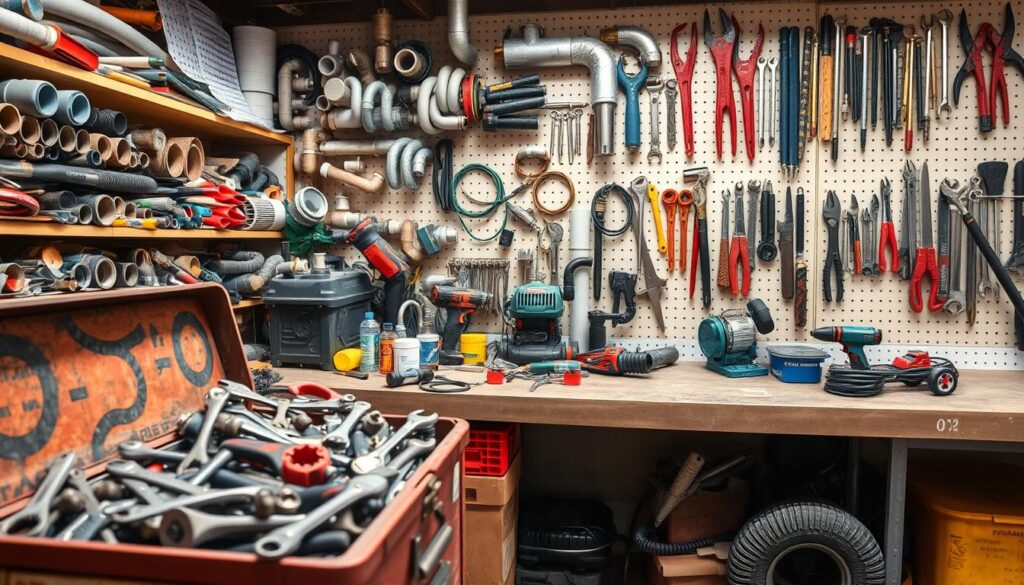
Building your toolkit includes hand tools and specialized plumbing gear. The cost might seem high at first, but it’s vital for your career.
Essential Hand Tools for Plumbers
- Pipe wrenches (various sizes)
- Adjustable wrench
- Pliers set
- Hacksaw
- Measuring tape
- Level
- Screwdriver set
Power Tools and Specialized Equipment
| Tool Category | Estimated Cost Range | Professional Necessity |
|---|---|---|
| Pipe Threading Machine | $500 – $2,000 | High |
| Drain Cleaning Machine | $300 – $1,500 | Medium |
| Pipe Camera Inspection System | $1,000 – $3,000 | Advanced |
Safety Equipment Investments
Keeping yourself safe is critical in plumbing. You’ll need:
- Safety glasses
- Work gloves
- Steel-toe boots
- Protective hearing equipment
- Hard hat for construction sites
“Investing in quality tools is investing in your plumbing career’s future.” – Professional Plumbing Association
Your plumbing career begins with a solid toolkit. Start with the basics and add more as you grow and tackle tougher jobs.
Career Advancement and Salary
Your plumbing career has many paths for growth and financial gain. Moving from apprentice to journeyman and then to master plumber boosts your pay. The money you spend on education early on can lead to big rewards later.
Choosing a specialty is key to your career’s success. Different areas can greatly affect how much you earn:
- Commercial plumbing systems
- Industrial pipeline maintenance
- Green technology installations
- High-end residential plumbing
Salaries vary by experience and where you work. New plumbers start at about $35,000 a year. Experienced master plumbers can make $70,000 to $100,000 yearly. Being in a union can also increase your pay.
“Your skills and continuous learning are the most valuable investments in your plumbing career.” – Professional Plumbers Association
To increase your earnings, try these strategies:
- Pursue advanced certifications
- Join professional plumbing associations
- Develop specialized technical skills
- Explore entrepreneurial opportunities
Working overtime and handling emergencies can greatly increase your income. Many plumbers make extra money on weekends and after work. This makes plumbing a rewarding and flexible career.
Blueprint Reading and Technical Skills Development
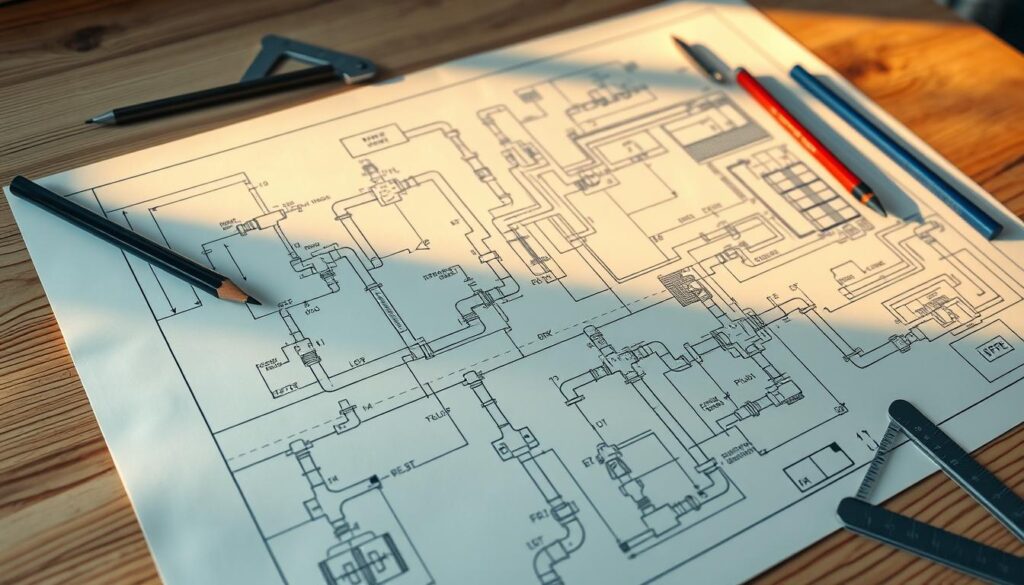
Getting good at technical skills is key for your plumbing career. As a pro plumber, you’ll need more than just basic pipe skills. Learning to read blueprints and draw technical plans is vital. These skills boost your value and pay in the plumbing world.
Mathematical Requirements in Plumbing
Your training will focus on improving your math skills. Plumbers need to be exact with their calculations for many tasks:
- Calculating pipe angles and slopes
- Measuring water flow rates
- Determining pipe diameter and pressure needs
- Switching between metric and imperial units
Technical Drawing and Interpretation Skills
Knowing how to read and make architectural drawings is essential. You’ll learn to use standard tools for both 2D and 3D drawings.
| Drawing Type | Skills Required | Professional Application |
|---|---|---|
| Orthographic Drawings | 2D Technical Rendering | Precise Spatial Planning |
| Isometric Drawings | 3D Perspective Visualization | Complex Plumbing System Design |
| CAD Software | Digital Design Techniques | Advanced Project Mapping |
Investing in these technical skills makes you stand out in plumbing. Your skills in blueprint reading, math, and technical drawings will make you more valuable than others starting out.
Conclusion
Looking into the cost to become a plumber shows a promising career. It offers good pay and many job chances across the U.S. Your hard work in learning can lead to a stable job with great pay.
Being a plumber is not just about money. It takes time and effort in apprenticeships and school. Plumbers are always needed, from homes to big buildings.
Starting your plumbing career needs careful planning. You’ll learn about costs, education, and skills needed. This job is secure, with chances to grow and help your community.
Thinking about plumbing? It’s not just a job. It’s a skill that brings personal growth and financial security. Your hard work can lead to a rewarding career with good pay and respect.
FAQ
How long does it take to become a licensed plumber?
What are the initial educational requirements to start a plumbing career?
How much does a plumbing apprenticeship cost?
What tools will I need to start my plumbing career?
How long does it take to become a licensed plumber?
What are the initial educational requirements to start a plumbing career?
How much does a plumbing apprenticeship cost?
What tools will I need to start my plumbing career?
FAQ
How long does it take to become a licensed plumber?
It usually takes 4-5 years to get a plumbing license. You’ll do an apprenticeship that mixes work and classroom learning. After that, you pass exams to become a journeyman plumber. To be a master plumber, you need more time and experience.
What are the initial educational requirements to start a plumbing career?
You need a high school diploma or GED to start. Good math and science skills are key. Most programs want you to have taken algebra, geometry, and physics in school.
How much does a plumbing apprenticeship cost?
Apprenticeships are often paid, earning ,000 to ,000 a year. Union programs are usually free. Trade school costs range from ,000 to ,000.
What tools will I need to start my plumbing career?
You’ll spend 0 to
FAQ
How long does it take to become a licensed plumber?
It usually takes 4-5 years to get a plumbing license. You’ll do an apprenticeship that mixes work and classroom learning. After that, you pass exams to become a journeyman plumber. To be a master plumber, you need more time and experience.
What are the initial educational requirements to start a plumbing career?
You need a high school diploma or GED to start. Good math and science skills are key. Most programs want you to have taken algebra, geometry, and physics in school.
How much does a plumbing apprenticeship cost?
Apprenticeships are often paid, earning $14,000 to $30,000 a year. Union programs are usually free. Trade school costs range from $3,000 to $20,000.
What tools will I need to start my plumbing career?
You’ll spend $500 to $1,500 on tools at first. You’ll need pipe wrenches, pliers, and safety gear. Apprenticeships may give you some tools, and you can add more as you go.
What are the different levels of plumbing certification?
There are three levels: Apprentice, Journeyman, and Master Plumber. Each level needs more education, experience, and exams. Master plumbers have 5-10 years of experience and can run their own business.
How much can I expect to earn as a plumber?
Salary varies by experience and location. Apprentices start at $30,000-$40,000. Journeyman plumbers make $50,000-$70,000. Master plumbers can earn $70,000-$100,000 or more. Special skills and overtime can increase your pay.
Are there any ongoing costs after becoming a licensed plumber?
Yes, there are ongoing costs like license renewal fees ($50-$200) and continuing education. You’ll also need to replace tools and might need liability insurance. Getting extra certifications can also boost your income.
What are the physical requirements for becoming a plumber?
Plumbing is tough, needing strength, flexibility, and stamina. You must be okay with tight spaces, lifting heavy, and standing for long periods. You’ll work in different weather and places.
How do I choose between a trade school and an apprenticeship program?
Think about your learning style, budget, and career goals. Apprenticeships are free and paid, while trade schools cost money. Many plumbers start with school and then do an apprenticeship.
What additional skills do I need beyond technical plumbing knowledge?
Plumbers need problem-solving, customer service, and communication skills. You should also know math, blueprint reading, and plumbing codes. Basic business skills are helpful too.
,500 on tools at first. You’ll need pipe wrenches, pliers, and safety gear. Apprenticeships may give you some tools, and you can add more as you go.
What are the different levels of plumbing certification?
There are three levels: Apprentice, Journeyman, and Master Plumber. Each level needs more education, experience, and exams. Master plumbers have 5-10 years of experience and can run their own business.
How much can I expect to earn as a plumber?
Salary varies by experience and location. Apprentices start at ,000-,000. Journeyman plumbers make ,000-,000. Master plumbers can earn ,000-0,000 or more. Special skills and overtime can increase your pay.
Are there any ongoing costs after becoming a licensed plumber?
Yes, there are ongoing costs like license renewal fees (-0) and continuing education. You’ll also need to replace tools and might need liability insurance. Getting extra certifications can also boost your income.
What are the physical requirements for becoming a plumber?
Plumbing is tough, needing strength, flexibility, and stamina. You must be okay with tight spaces, lifting heavy, and standing for long periods. You’ll work in different weather and places.
How do I choose between a trade school and an apprenticeship program?
Think about your learning style, budget, and career goals. Apprenticeships are free and paid, while trade schools cost money. Many plumbers start with school and then do an apprenticeship.
What additional skills do I need beyond technical plumbing knowledge?
Plumbers need problem-solving, customer service, and communication skills. You should also know math, blueprint reading, and plumbing codes. Basic business skills are helpful too.