
Affiliate Disclosure
Plumber Guide Guys is a participant in the Amazon Services LLC Associates Program, an affiliate advertising program designed to provide a means for sites to earn advertising fees by advertising and linking to Amazon.
How Many Plumbing Vents Are Needed? Did you know a single blocked plumbing vent can cause problems in up to 80% of your home? Knowing how many vents you need is key to a healthy drainage system.
Plumbing vents are vital for your home’s plumbing. They help water flow right, keep sewer gases out, and keep pipe pressure just right. Homeowners need to know the plumbing vent code for their home’s specific needs.
Your home’s drainage system needs these vents to work well. Without enough vents, you might get clogs, slow drains, and even health risks from sewer gas.
Key Takeaways
- Plumbing vents are essential for proper drainage
- Each home requires a specific number of vents based on layout
- Incorrect venting can lead to significant plumbing problems
- Local building codes dictate minimum vent requirements
- Professional assessment helps determine optimal vent placement
Table of Contents
Understanding Plumbing Vent Systems
Your home’s plumbing system is more complex than you might realize. Plumbing vent systems are key for keeping your drainage system healthy and efficient. They manage air pressure, prevent water flow problems, and keep your home safe from sewer gases.
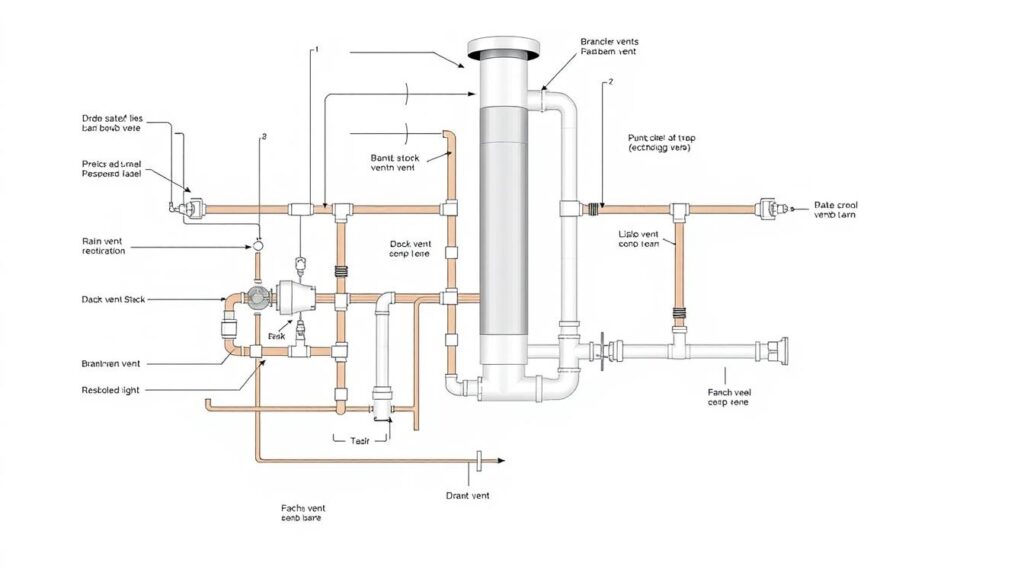
Components of a Plumbing Vent System
A typical plumbing vent system has several important parts. These parts work together to ensure your drainage and air circulation are good. Multiple vent pipes on the roof are essential for this network.
- Main vent stack
- Branch vents
- Auxiliary vents
- Roof penetration points
Function of Plumbing Vents
Proper plumbing vent installation makes your drainage system work better. It does this by:
- Equalizing air pressure in pipes
- Preventing water from being siphoned out of drain traps
- Removing sewer gases from your home
- Allowing wastewater to flow smoothly
Basic Principles of Vent Design
Designing a good plumbing vent system needs careful thought. You must consider pipe sizing, placement, and local building codes. The goal is to create a balanced system that maintains optimal air pressure and prevents drainage issues.
A well-designed vent system is like the respiratory system of your home’s plumbing – it keeps everything flowing smoothly and prevents blockages.
The Essential Role of Plumbing Vents in Your Home
Plumbing vents are the unsung heroes of your home’s plumbing system. They work silently to keep your drainage healthy and working well. A bathroom plumbing vent diagram shows the complex network that stops plumbing problems.
Your home’s plumbing needs good ventilation to work right. Without enough venting, you might face many issues:
- Slow-draining sinks and toilets
- Unpleasant sewer gas odors
- Gurgling sounds in pipes
- Potential water pressure problems
The right number of roof vents is key to keeping air pressure in your plumbing system. These vents let air into the pipes, ensuring water flows smoothly. Good venting stops vacuum effects that can mess up drainage and cause big plumbing problems.
Plumbing vents also protect your home from harmful sewer gases. They block toxic gases from getting into your living areas. This keeps your home safe and healthy for you and your family.
Proper plumbing ventilation is not just a luxury – it’s a necessity for maintaining a functional and safe home.
Getting a well-designed plumbing vent system can save you money and health risks. Knowing how important these vents are helps you see the complex engineering behind your home’s plumbing.
Types of Plumbing Vents and Their Applications
Knowing the different plumbing vents is key for a good vent pipe sizing guide. Each vent has its own role in keeping your plumbing system working right.
True Vents: The Primary Ventilation Solution
True vents are simple and direct. They go from your drainage system to the outside air, usually through the roof. They’re vital for:
- Removing sewer gases
- Keeping air pressure balanced in drain lines
- Stopping water seal problems in traps
Common Vents: Efficient Shared Ventilation
Common vents are great for many fixtures at once. They connect two drain lines to one vent stack. This is good for:
- Small bathroom spaces
- Less complicated venting
- Lowering installation costs
Wet Vents: Dual-Purpose Drainage
Wet vents are special because they’re both a drain and a vent. This makes them a smart choice for saving space in homes.
Air Admittance Valves: Modern Venting Alternative
Air admittance valves (AAVs) are a mechanical fix when roof vents aren’t possible. These vents:
- Let air into the plumbing system
- Keep sewer gases out of homes
- Work well when roof venting is hard
| Vent Type | Primary Function | Best Used In |
|---|---|---|
| True Vents | Direct outdoor ventilation | Standard residential buildings |
| Common Vents | Shared fixture ventilation | Compact living spaces |
| Wet Vents | Combined drain and vent | Space-efficient designs |
| Air Admittance Valves | Mechanical air intake | Locations with venting restrictions |
How Many Plumbing Vents Are Needed?
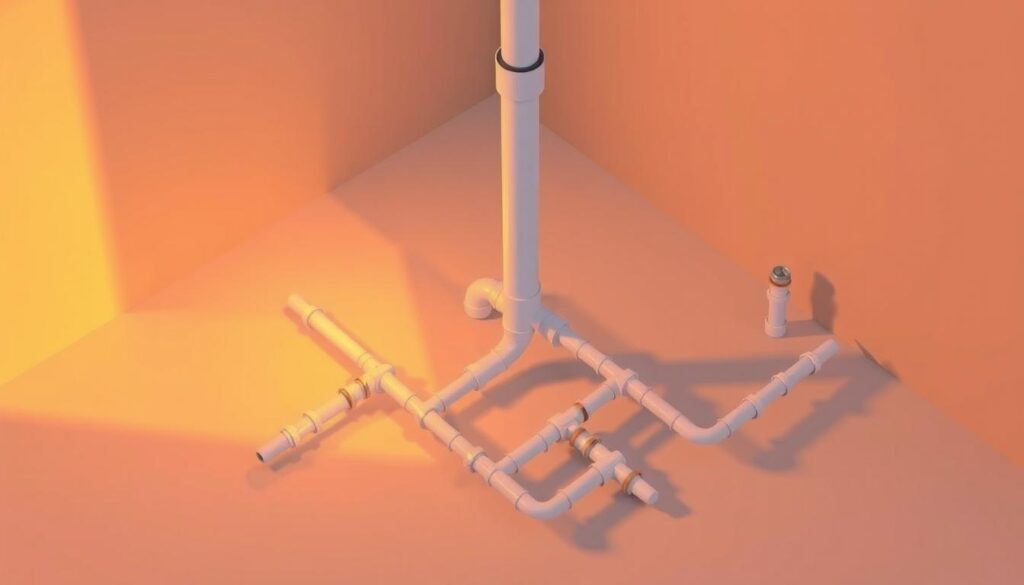
Finding out how many plumbing vents your home needs isn’t simple. It depends on several important factors. Knowing how many vents you need helps avoid water flow and pressure problems.
The number of vents needed changes based on your home’s layout and fixtures. Most homes need at least one vent for each drain pipe. This helps with air flow and stops vacuum effects that can harm water drainage.
- Single-story homes usually need fewer vents
- Multi-story homes require more complex venting systems
- Each bathroom needs its own vent connection
Experts suggest a careful method to figure out plumbing vents. They look at:
- The total number of fixtures
- The distance between drains and the main stack
- Local building code rules
Pro tip: Always talk to a licensed plumber to figure out your home’s venting needs. They can give a detailed plan for your home’s plumbing setup. This ensures your system works well.
The main thing is not just putting in vents. It’s about putting them in right to keep water flowing well and avoid plumbing issues.
Factors Affecting the Number of Required Vents
Figuring out how many plumbing vents your home needs is important. It’s about understanding a few key factors. This ensures your home drains well and avoids plumbing problems.
Your home’s unique features are key in figuring out vent needs. Different things affect how your plumbing system vents.
House Size and Layout Considerations
The size and design of your home affect your vent setup. Bigger homes with complex layouts often need:
- More vent pipes
- Smart vent placement
- Extra connections for kitchen sinks
Number of Plumbing Fixtures
Each plumbing fixture needs a vent to work right. The number of fixtures you have affects your venting needs:
- Toilets
- Sinks
- Showers
- Washing machines
- Dishwashers
Local Building Code Compliance
Local building codes set rules for vent installations. These rules help make sure your drainage system is safe and works well. Always check with local building authorities or a pro plumber to know what you need.
Proper venting is not just a recommendation—it’s a critical safety measure for your home’s plumbing system.
Proper Sizing and Installation Requirements
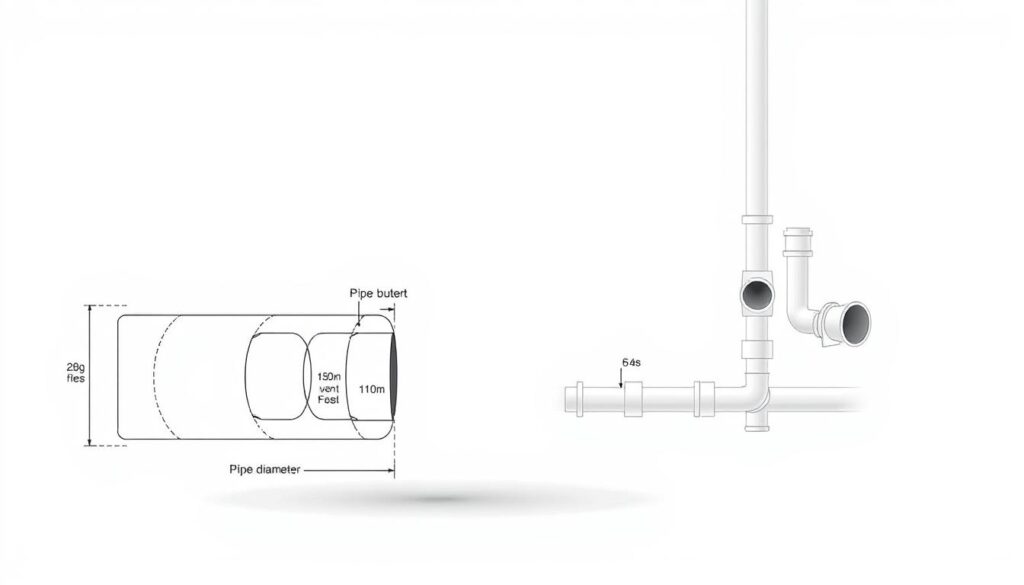
Knowing how to size your vent pipes is key to a working plumbing system. The size of your vent pipes affects your home’s drainage. You need to think about a few important things when installing plumbing vents.
To figure out vent pipe sizes, you must follow certain rules:
- Measure the diameter of downstream drain pipes
- Consider the total number of fixtures connected
- Evaluate the horizontal and vertical pipe lengths
- Comply with local building codes
The main rule for vent pipe sizing is that the vent pipe should be at least as big as the drain pipe it serves. Using vents that are too small can cause big problems. These problems include slow drains, gurgling sounds, and sewage backups.
When installing your plumbing vents, remember to:
- Keep a minimum slope of 1/4 inch per foot
- Connect vents to the main stack at the right height
- Make sure no horizontal vent runs are too long
- Keep vent terminations from getting blocked
Professional plumbers use special math to find the right vent pipe sizes. They look at fixture units and drainage needs. Even though this math can be hard, following the manufacturer’s guidelines and local codes will help you get a good venting system.
Common Plumbing Vent Problems and Solutions
Keeping your home’s plumbing vent system in good shape is key. It helps avoid health risks and ensures water drains right. If you have multiple vent pipes on your roof, watch out for common problems.
Knowing about bathroom plumbing vent issues can help you fix them early. This way, you avoid bigger problems later.
Blockages and Obstructions
Vent pipes can get clogged by many things. This causes big drainage issues. Some common culprits include:
- Leaves and debris
- Animal nests
- Ice and snow buildup
- Fallen branches
Improper Installation Issues
Bad installation can cause big plumbing problems. Look out for these signs:
- Inadequate pipe slope
- Incorrect pipe sizing
- Improper connection points
Maintenance Requirements
Regular upkeep stops most plumbing vent issues. Here’s a simple maintenance plan:
| Maintenance Task | Frequency |
|---|---|
| Roof vent inspection | Annually |
| Clear debris from vent openings | Twice a year |
| Check for animal intrusions | Seasonally |
Get a pro to check your system every two years. They can spot problems before they cost a lot to fix.
Code Requirements for Plumbing Vents
Knowing the plumbing vent code requirements is key for a safe and working home plumbing system. Local building codes set rules for proper ventilation. They help avoid health risks.
The number of roof vents needed depends on a few important things:
- Total number of plumbing fixtures in your home
- Square footage of your living space
- Specific local building regulations
- Configuration of your plumbing system
Typically, plumbing vent code requirements say that:
- Each fixture must have enough ventilation
- Vent pipes must go through the roof
- Vent sizes match the fixture drain sizes
- Vents should be placed to avoid trapped air
Professional plumbers will figure out the minimum number of roof vents for your home. Wrong venting can cause big problems like sewage backup, slow drains, and health risks.
Get a licensed plumber to check if your home follows all local plumbing vent code requirements.
Building codes differ a lot between cities. What’s okay in one place might not be in another. So, getting expert advice is very important.
Professional Installation vs DIY Considerations
Homeowners often face a big choice: do it themselves or get a pro for plumbing vent installation. DIY might seem appealing, but plumbing vents need special skills and care.
Professional plumbers offer big benefits for vent installation:
- They know local building codes well
- They’re experts in vent system design
- They can set up one vent for many fixtures well
- They use advanced tools for the job
Your home’s plumbing system is complex and delicate. Wrong vent installation can cause big problems like bad drainage, sewer gas leaks, or damage to your home. Pros make sure your vents work right and are safe.
“A professionally installed plumbing vent system protects your home’s entire drainage infrastructure.” – Professional Plumbing Association
Thinking about DIY? Consider these points:
- Do you really know local plumbing codes?
- Do you have the technical skills needed?
- Can you measure and size correctly?
- Do you have the right tools?
For most, getting a licensed plumber is the best choice for vent installation. Their knowledge keeps your plumbing system running well and efficiently.
Signs Your Home Needs Additional Venting
Knowing how many plumbing vents your home needs is key to a healthy plumbing system. Spotting early signs of bad venting can prevent expensive fixes and health risks.
Your plumbing system sends out clear signals when venting is off. These signs should not be ignored. They can lead to bigger problems with your kitchen sink vent pipe and drainage system.
- Slow Drainage: Water that drains slowly or backs up often
- Gurgling Sounds: Strange noises from drains or toilets
- Sewer Odors: Bad smells from sink or drain areas
- Bubbling Water: Unusual bubbling in toilet bowls or sink basins
Experts say to get a pro to check if you see many of these signs. They mean your plumbing might need more vents or fixes for good air flow and drainage.
Ignoring these signs can lead to big plumbing problems and damage to your home.
If problems keep happening, call a licensed plumber. They can figure out what your home needs and suggest the right fixes for your plumbing setup.
Conclusion
Knowing what your home needs for plumbing is key to keeping everything running well. Installing plumbing vents right is more than just following rules. It keeps your home working right and saves you from big repair bills later.
Your plumbing vents are important for air pressure and keeping bad smells out. They also help water drain without problems. Figuring out how many vents you need depends on your home’s design, how many fixtures you have, and local rules.
Getting a pro to check your plumbing needs is the best way to go. Plumbers with experience can look at your home and set up a vent system that’s safe and works well. This way, you protect your plumbing and avoid future problems.
Don’t forget, keeping your plumbing in good shape is important. Regular checks and updates can stop big issues before they start. This keeps your plumbing working well for many years.