
Affiliate Disclosure
Plumber Guide Guys is a participant in the Amazon Services LLC Associates Program, an affiliate advertising program designed to provide a means for sites to earn advertising fees by advertising and linking to Amazon.
How Long Will PEX Plumbing Last? Did you know over 60% of new homes in the U.S. now use PEX plumbing? This new piping technology has changed how water flows in homes. It’s a durable and affordable choice compared to old copper pipes.
Knowing how long PEX plumbing lasts is key for homeowners. They want their homes to last a long time. PEX pipes are a reliable choice for water systems.
This guide will tell you all about PEX plumbing’s durability. We’ll look at the tech behind these flexible pipes. You’ll learn how they perform in different conditions and how to make your water system last longer.
Key Takeaways
- PEX plumbing offers exceptional durability and flexibility
- Modern PEX systems can last up to 50 years with proper installation
- Environmental factors significantly impact PEX pipe lifespan
- PEX provides cost-effective alternative to traditional piping materials
- Professional installation is critical for maximizing pipe performance
Table of Contents
Understanding PEX Plumbing Systems
PEX plumbing has changed the game for home water systems. It’s known for its durable tubing. This modern option is a flexible and reliable choice for homeowners.
PEX, or Cross-linked Polyethylene, was introduced in the late 1960s. It has changed how we handle water in our homes. PEX plumbing systems are now more popular than ever. This is because of their unique features and lasting performance.
What is Cross-linked Polyethylene (PEX)?
PEX is a special plastic that’s been chemically enhanced. This makes it stronger and more flexible. These traits are key to its long-lasting performance in plumbing.
- Molecular structure is modified to increase durability
- Resistant to temperature variations
- Highly flexible compared to traditional pipes
Evolution of PEX in Residential Plumbing
PEX started in Germany and arrived in the U.S. in the 1980s. It was first used for radiant floor heating. Soon, it became a key part of home water systems.
| Decade | PEX Application | Market Penetration |
|---|---|---|
| 1980s | Radiant Heating | Limited |
| 1990s | Residential Plumbing | Growing |
| 2000s-Present | Primary Piping Material | Over 60% of New Construction |
Key Components of PEX Systems
A PEX system includes special pipes, fittings, and tools. These are designed for reliable, leak-free connections.
PEX represents a significant advancement in residential water distribution technology.
Knowing about these parts helps us see the engineering behind modern plumbing. It shows how PEX focuses on durability and lasting performance.
Types of PEX Piping and Their Characteristics
Understanding PEX water lines durability starts with knowing the manufacturing methods. PEX piping has three main types. Each type has its own features that affect how long it lasts and how well it works.
PEX pipes fall into three categories based on how they’re made. This method greatly affects their strength and how long they last.
PEX-A: Peroxide Manufacturing Method
PEX-A is the most advanced method. It has several key benefits:
- Maximum flexibility among PEX types
- Superior resistance to cold temperature cracking
- Exceptional memory and crack resistance
- Fastest production method
PEX-B: Moisture-Cure Method
PEX-B has its own set of advantages:
- Slightly stiffer compared to PEX-A
- Enhanced chlorine resistance
- More cost-effective manufacturing process
- Good overall performance for residential applications
PEX-C: Irradiation Method
PEX-C has unique properties:
- Most rigid PEX variant
- More susceptible to kinking
- Created through electron beam processing
- Lower cost compared to other methods
Choosing the right PEX type depends on your project’s needs, budget, and desired performance. Each method has its own benefits for different plumbing needs.
How Long Will PEX Plumbing Last
Homeowners can look forward to a long life for their PEX plumbing, up to 40-50 years. This is based on tests and real-world use in homes and businesses. The pex pipe lifespan is well-documented and reliable.
Several factors make PEX piping last longer:
- It resists corrosion and mineral buildup.
- Its flexibility prevents cracking.
- It can handle temperature changes well.
- High-quality manufacturing is key.
Warranties for PEX plumbing range from 25 to 50 years. This shows how confident manufacturers are in its long-term performance. Independent studies have shown PEX systems working great after 30 years.
The actual life of your PEX plumbing depends on a few things:
- How well it’s installed.
- The water quality in your area.
- Protection from sunlight.
- Regular maintenance.
While metal pipes may not last as long, PEX is a strong choice for today’s plumbing. With the right care and professional setup, your system could last even longer than 50 years.
Factors Affecting PEX Lifespan and Durability
To understand PEX tubing’s durability, we must look at environmental and structural challenges. These factors can greatly affect your pex plumbing system’s longevity. Knowing them helps you make better choices for installation, upkeep, and long-term care.
Your PEX plumbing system faces many challenges that can impact its performance and lifespan. By understanding these, you can make informed decisions about its care.
UV Exposure and Protection
PEX tubing is very sensitive to ultraviolet radiation. Direct sunlight can quickly damage the material, reducing its durability. To protect your pipes:
- Store PEX pipes indoors
- Avoid installation near sunny windows
- Use protective sleeves for outdoor applications
Temperature Fluctuations
PEX tubing behaves differently with temperature changes compared to metal pipes. It expands and contracts more. This means you need to install it carefully:
- Never stretch PEX pipes tightly
- Allow room for natural expansion
- Use proper support and spacing
Water Quality Impacts
The chemistry of your water can affect your PEX plumbing system’s lifespan. Things like chlorine content, pH levels, and minerals are important.
Proper water treatment and regular monitoring can significantly extend the life of your PEX plumbing system.
By understanding these key factors, you can improve your PEX piping’s durability and performance. This ensures a reliable and long-lasting plumbing solution for your home.
PEX vs Traditional Plumbing Materials
Choosing plumbing materials can be tricky. PEX water lines are now a top choice for homes. They outdo copper in many ways.
Let’s look at the main differences between PEX and traditional plumbing:
- Cost Efficiency: PEX is much cheaper than copper, saving you money upfront
- Installation Speed: PEX is quicker to install, needing fewer connections and more flexible routes
- Corrosion Resistance: PEX doesn’t corrode or get pinhole leaks like copper does
- Temperature Performance: PEX handles temperature changes better than metal pipes
The debate on longevity clearly favors PEX. Copper lasts 50-70 years, but PEX can last 40-50 years with the right care.
PEX also reduces noise. Metal pipes can cause water hammer, but PEX keeps water flow silent. This makes your home more comfortable.
PEX is a modern, efficient choice over traditional plumbing. It offers better performance and saves money.
Installation Best Practices for Maximum Longevity
Installing PEX pipes right is key to their long life. How you install PEX pipes affects their lifespan. Following professional tips can avoid problems and make your plumbing last longer.
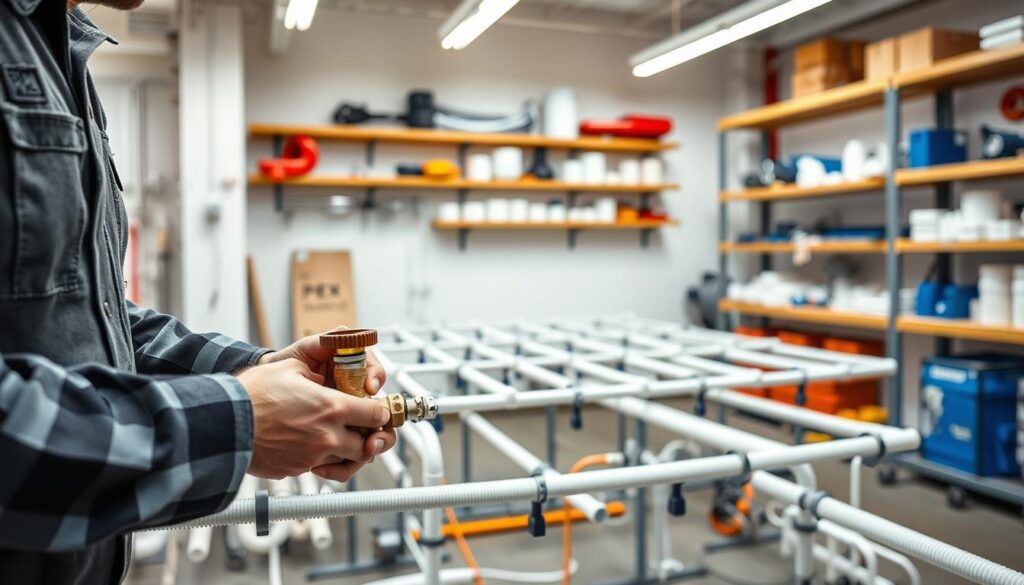
Experts say paying attention to details makes PEX pipes last longer. Using smart installation methods keeps your plumbing working well for years.
Proper Support and Spacing Techniques
Good PEX pipe installation needs careful support and spacing. Here are some important tips:
- Use pipe hangers every 32 inches for horizontal runs
- Allow minimum 1/2 inch space between pipes
- Protect pipes from possible structural movement
- Avoid tight bends that could stress the material
Connection Methods
| Connection Type | Durability Rating | Installation Complexity |
|---|---|---|
| Copper Crimping | High | Moderate |
| Expansion Connections | Very High | Complex |
| Push-Fit Connections | Good | Easy |
Environmental Considerations
Keep your PEX plumbing safe from harsh environments. Strategic placement helps avoid damage and keeps it working well.
- Minimize direct sunlight exposure
- Insulate pipes in temperature-variable zones
- Shield from possible mechanical damage
Following these installation tips will make your PEX plumbing last longer and work better.
Common Issues and Preventive Maintenance
Knowing when to replace PEX plumbing is key for a reliable home water system. PEX water lines are usually very durable. But, homeowners need to watch out for issues that could harm their plumbing.
Regular maintenance can make your PEX plumbing last longer. Look out for these important warning signs:
- Persistent water discoloration
- Unexplained drops in water pressure
- Visible corrosion or mineral buildup
- Strange odors in water supply
To keep your PEX water lines in top shape, follow these preventive steps:
- Do annual visual checks on exposed piping
- Look for leaks around connections
- Keep pipes away from extreme temperatures
- Avoid harsh chemical cleaners
To know when to replace PEX plumbing, understand what can wear it down. Ultraviolet exposure, chemical interactions, and mechanical stress can shorten its life. Plumbers suggest checking your system every 10-15 years for the best performance.
Professional tip: Catching small problems early can save you from expensive replacements.
By being proactive and careful, you can make your PEX plumbing last longer. This keeps your home’s water flowing smoothly.
Cost Analysis: PEX Investment and Long-term Value
Homeowners need to think about the cost of PEX plumbing before making a decision. PEX pipes last long and save money, making them great for homes and businesses.
Cost is a big deal when picking plumbing materials. PEX is cheaper than copper, which is a big plus.
Initial Installation Costs
PEX pipes cost between $0.40 to $4 per linear foot. This is much cheaper than copper. The savings add up when you look at the whole project cost.
- PEX: $0.40 – $4 per linear foot
- Copper: $2 – $12 per linear foot
- CPVC: Comparable to PEX pricing
Maintenance Expenses
PEX lasts longer than copper, saving you money on repairs and upkeep. Its flexibility means fewer problems over time.
“PEX systems offer lower long-term maintenance expenses compared to traditional piping materials.” – Plumbing Industry Research
Replacement Considerations
PEX pipes can last 40-50 years, meaning you won’t need to replace them often. This saves you money and keeps your plumbing system running smoothly.
| Material | Average Lifespan | Replacement Cost |
|---|---|---|
| PEX | 40-50 years | Low |
| Copper | 50-70 years | High |
Choosing PEX means investing in a plumbing system that’s both affordable and durable. It’s a smart choice for any home improvement project.
Warranty and Certification Standards
Investing in PEX plumbing means knowing about warranties and certifications. These ensure your pipes last long and keep your water safe. Most brands offer warranties that cover your investment for many years.
Quality PEX piping systems must meet certain standards. The NSF/ANSI Standard 61 is the top standard for water system parts. It makes sure PEX pipes are safe and don’t harm your water.
- Typical warranty periods range from 25 to 50 years
- NSF/ANSI Standard 61 validates water safety
- Manufacturers test pipes for durability and performance
Looking at the life of PEX piping, manufacturers share how it performs under different conditions. High-quality PEX pipes usually have warranties that cover:
- Material defects
- Manufacturing inconsistencies
- Performance under standard installation conditions
Your warranty will depend on the manufacturer and the PEX pipe type. Always check the warranty details to know what’s covered and what’s not.
“Certification standards are your assurance of quality and safety in plumbing systems.” – Plumbing Industry Expert
Choosing PEX pipes with strong warranties and certifications means you’re getting a reliable plumbing solution. It meets the highest standards in the industry.
Conclusion
Knowing how long PEX plumbing lasts is key for homeowners. Studies show PEX systems can last 40-50 years if installed right. This makes them a strong choice over metal pipes.
Many things affect how long PEX plumbing lasts. These include how well it’s installed, the water it carries, and how well it’s maintained.
Deciding to replace PEX plumbing needs careful thought and a pro’s opinion. Even though PEX is durable, signs like leaks or color changes might mean it’s time for a new one. Regular checks by experts can catch problems early, saving you money.
PEX plumbing keeps getting better, giving homeowners better options. By following the best installation methods, keeping your system in good shape, and being proactive, you can extend its life. Regular inspections and proper care will keep your plumbing working well for years.
Every plumbing system is different. Talking to licensed plumbers who know your area’s water can give you the best advice. They can help you make smart choices for your PEX plumbing.