

Affiliate Disclosure
Plumber Guide Guys is a participant in the Amazon Services LLC Associates Program, an affiliate advertising program designed to provide a means for sites to earn advertising fees by advertising and linking to Amazon.
How Long to Become a Plumber? In 2018, 44,200 plumbers worked in the United States, with a median age of 37. Knowing how long it takes to become a plumber is key for those interested in this trade. The path to becoming a plumber usually takes 4-5 years, filled with training and certifications.

Your journey starts with a detailed apprenticeship program. These programs mix hands-on learning with technical classes. They prepare you for a rewarding and stable career. By exploring the plumbing career path, you’ll see how to go from apprentice to skilled plumber.
Aspiring plumbers face a structured and demanding path. You’ll need to finish high school, join an apprenticeship, gain experience, and get certifications. Each step builds your skills and knowledge in this vital trade.
Key Takeaways
- Plumbing career typically requires 4-5 years of training
- Apprenticeship programs combine practical and technical education
- Secondary school completion is a fundamental requirement
- Median plumber age is 37 years old
- Certification and licensing are critical steps in the career path
Table of Contents
Understanding the Path to Becoming a Licensed Plumber
Starting a career as a plumber needs careful planning and preparation. Your path to becoming a licensed plumber involves several steps. These steps will shape your future in the trades. Knowing the initial requirements and educational paths is key for success.
Aspiring plumbers must follow a structured approach to enter this rewarding profession. The journey to becoming a master plumber starts with a solid education and practical experience.
Key Requirements and Prerequisites
Your plumbing career begins with meeting basic qualifications:
- High school diploma or equivalent
- Minimum age requirement of 18 years
- Physical fitness for demanding work
- Basic math and problem-solving skills
Education Options Overview
There are several educational paths to start your plumbing career. Each path has its own benefits for learning technical skills:
| Education Path | Duration | Key Benefits |
|---|---|---|
| Vocational Training | 6-24 months | Structured curriculum, hands-on learning |
| Community College | 2 years | Associate degree, complete training |
| Apprenticeship Program | 4-5 years | Paid on-job training, mentorship |
Initial Steps to Consider
Your first steps should be research and preparation. Connect with local plumbing unions, explore apprenticeship opportunities, and understand licensing requirements in your state. Networking with experienced professionals can offer valuable insights into the plumbing industry.
Becoming a master plumber is a gradual process. It requires dedication, continuous learning, and practical experience. Your commitment to mastering technical skills will shape your long-term success in this essential trade.
Traditional Apprenticeship Programs Explained
Starting a plumbing apprenticeship opens the door to a fulfilling career in skilled trades. It usually lasts 4-5 years. This time lets you learn both hands-on and in the classroom, preparing you to become a licensed plumber.
During your apprenticeship, you’ll learn by doing and studying. This mix of work and class lets you earn as you learn. It’s a great choice for those who prefer a hands-on career.
- Typical apprenticeship duration: 4-5 years
- Training components:
- On-the-job training (approximately 2,000 hours per year)
- Classroom instruction (144 hours annually)
- Key skills developed:
- Technical knowledge
- Safety protocols
- Problem-solving techniques
Most apprenticeships are offered by unions or contractor associations. These groups offer structured training that meets industry standards. You’ll work with experienced plumbers who teach you about plumbing systems, installations, and repairs.
“An apprenticeship is not just a job – it’s a career-launching opportunity that provides real-world skills and professional growth.” – Professional Plumbers Association
To start your apprenticeship, you need a high school diploma or GED, be 18 or older, and pass basic math and reading tests. Some programs might ask for an entrance exam or interview to see if you’re right for the plumbing field.
Trade School and Vocational Training Options
Choosing a career in plumbing through trade school is a great step. It offers a clear path to becoming a skilled plumber. You’ll get all the training needed for a successful plumbing career.
Trade school programs for plumbing last from 6 months to 2 years. These programs teach you the essential skills and knowledge for your future.
Program Duration and Curriculum
The length of plumber training programs varies. It depends on the school and the curriculum. Most programs include:
- Certificate programs (6-12 months)
- Associate degree programs (2 years)
- Comprehensive vocational training tracks
Hands-on Training Components
Your trade school will mix classroom learning with hands-on training. You’ll do:
- Workshop sessions
- Practical laboratory exercises
- Simulated job site training
Cost Considerations
It’s important to know the costs of becoming a plumber. Here’s a cost breakdown:
| Program Type | Average Duration | Estimated Cost |
|---|---|---|
| Certificate Program | 6-12 months | $3,000 – $10,000 |
| Associate Degree | 2 years | $10,000 – $30,000 |
“Investing in your plumbing education is the first step toward a rewarding technical career.” – Professional Trades Association
The length of your plumbing trade school program affects your skills and job chances. Pick a program that fits your career goals and training needs.
How Long to Become a Plumber: Timeline Breakdown
Understanding the plumbing career path timeline is key for those interested in this field. Becoming a licensed plumber takes several years. It involves training and certification at different stages.
Your journey to becoming a plumber has key milestones:
- High School Preparation: Get your high school diploma or GED (1-4 years)
- Apprenticeship Program: 4-5 years of structured training
- Journeyman Licensing: 2-3 years after apprenticeship
- Master Plumber Certification: 2-4 years of experience later
Most plumbers spend about 8-10 years from start to master plumber status. The time varies based on your state’s rules and your career pace.
Important parts of your plumbing career include:
- Finishing formal education
- Starting an apprenticeship
- Getting work experience
- Passing state exams
- Keeping up with professional growth
Your hard work and focus will speed up your progress. Some might finish quicker, while others take longer.
Success in plumbing needs patience, skill, and ongoing learning.
State Licensing Requirements and Variations
Getting a journeyman plumber license is not easy. Each state has its own rules. Your journey to becoming a certified plumber depends on your state’s laws.
Knowing the plumber certification timeline is key. Every state has its own rules. These rules affect your education, work hours, and professional status.
Diverse State Standards
Licensing rules change a lot from state to state. Some main differences are:
- Minimum experience hours
- Educational needs
- Training program rules
- Age limits
Examination Process
The certification test checks your skills and knowledge. You need to prepare well to pass.
| State | Experience Required | Exam Complexity |
|---|---|---|
| California | 4 years | High |
| Texas | 3 years | Moderate |
| New York | 5 years | High |
Renewal Requirements
To keep your plumbing license, you must keep learning and renew it. Renewal usually involves:
- Getting continuing education credits
- Pay renewal fees
- Show current work experience
- Pass skills tests
Pro tip: Always check your state’s specific licensing board for the most current requirements, as regulations can change frequently.
Journeyman Plumber Certification Process
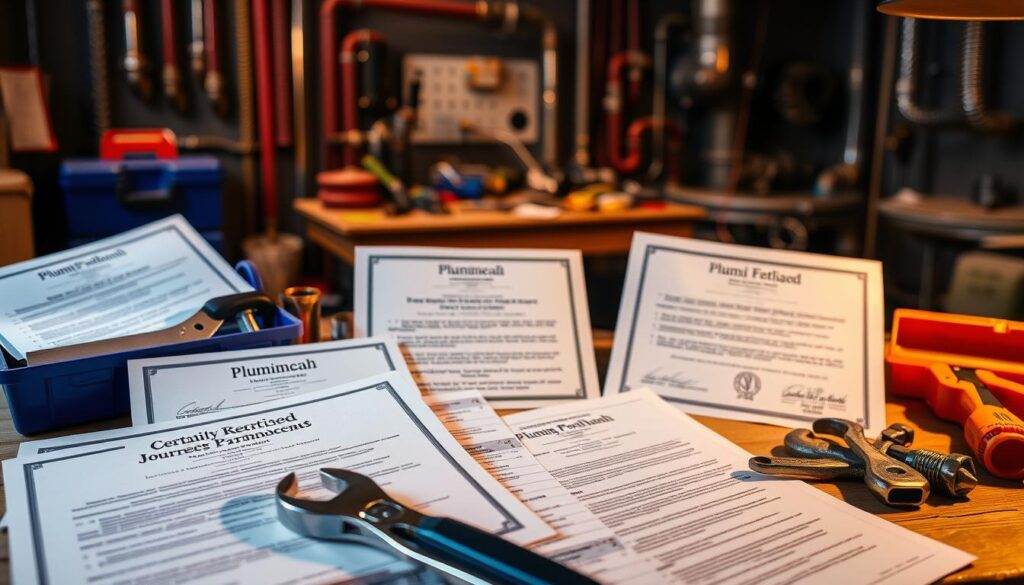
Becoming a journeyman plumber is a big step in your plumbing career. It involves a mix of hands-on experience, formal education, and tests.
The path to becoming a journeyman plumber takes several years. Most states need you to finish a 4-5 year apprenticeship program.
- Complete a state-approved apprenticeship program
- Accumulate 8,000 hours of documented work experience
- Pass a rigorous state licensing examination
- Demonstrate proficiency in local plumbing codes
During your apprenticeship, you’ll learn from experienced plumbers. You’ll get to work on both home and business plumbing systems. The requirements for becoming a journeyman plumber include:
- Minimum age of 18 years
- High school diploma or equivalent
- Successful completion of technical training
- Passing a thorough written and practical exam
Your certification shows you’re skilled and opens up more career chances in plumbing. Each state has its own rules for getting certified. Make sure to check your local requirements to make the process easier.
Professional tip: Keep a record of every hour you work during your apprenticeship. Also, keep detailed records of your training and work experience.
Advancing to Master Plumber Status
Reaching master plumber status is the top of a plumbing career. It needs a lot of work, experience, and special skills. These skills make you stand out in the plumbing world.
Getting to be a master plumber is a big journey. You must show you know a lot and meet tough standards. These standards are higher than what journeyman plumbers need.
Experience Requirements
To become a master plumber, you usually need to:
- Have 5-7 years of plumbing work experience
- Be a licensed journeyman plumber
- Show a detailed work history
- Get verified hours in different plumbing areas
Additional Certifications
Getting extra certifications can boost your skills. Think about getting training in:
- Commercial plumbing systems
- Advanced pipe fitting
- Green plumbing
- Municipal water system management
Business Management Skills
Good master plumbers know it’s not just about fixing pipes. They also need to know how to run a business. This means:
- Starting your own plumbing business
- Handling big project contracts
- Understanding money matters
- Talking well with clients
“Mastery in plumbing is not just about technical skills, but about complete professional growth.” – Professional Trades Association
Becoming a master plumber takes a lot of learning, hard work, and a drive for excellence.
Specialized Plumbing Certifications and Training
To move up in plumbing, you need more than basic training. Getting specialized certifications can boost your career and pay. Plumbers with extra qualifications are more sought after.
There are many areas to specialize in, like:
- Medical Gas Systems Certification
- Green Plumbing Technologies
- Solar Thermal Plumbing
- Commercial Industrial Plumbing
- Sustainable Water Management
Each certification needs its own training. It shows you have advanced skills. The cost and time vary, based on the program’s depth.
| Certification | Average Training Duration | Potential Salary Increase |
|---|---|---|
| Medical Gas Systems | 4-6 weeks | 15-25% higher |
| Green Plumbing Technologies | 3-5 weeks | 10-20% higher |
| Solar Thermal Plumbing | 2-4 weeks | 12-22% higher |
Pro tip: Always check with your state licensing board to understand specific requirements for specialized certifications.
“Continuous learning is the minimum requirement for success in any field.” – Brian Tracy
Getting specialized certifications can change your plumbing career. It increases your skills and opens up new job chances.
Career Advancement and Earning Potential
Your plumbing career path timeline is full of growth and financial success. Moving from apprentice to licensed plumber boosts your earnings. Knowing your career path helps you make smart choices.
The apprentice to licensed plumber time is key. You’ll learn important skills and lay a strong foundation for success.
Salary Progression Insights
Plumbers see big salary increases as they grow. Here’s what you might earn:
- Apprentice Level: $30,000 – $40,000 annually
- Journeyman Plumber: $50,000 – $70,000 annually
- Master Plumber: $70,000 – $100,000+ annually
Career Growth Opportunities
Your plumbing career has many paths for advancement:
- Specialization: Focus on areas like commercial, residential, or industrial plumbing
- Business Ownership: Start your own plumbing company
- Supervisory Roles: Become a project manager or team leader
- Technical Training: Become an instructor or consultant
“The most successful plumbers never stop learning and adapting to new technologies and market demands.” – Professional Trades Association
Investing in education and certifications boosts your career and earnings in plumbing.
Continuing Education and Professional Development
Staying up-to-date in plumbing is key. Your training doesn’t stop after you get certified. You need to keep learning to stay ahead in the field.
Many places require plumbers to take extra classes to renew their licenses. These classes make sure plumbers know about:
- New safety rules
- Advanced skills
- New technologies
- Updated building codes
Getting your initial training is just the start. Online courses now make it easy to learn more without missing work.
There are many ways to grow professionally:
- State-approved online courses
- Technical workshops
- Industry conferences
- Specialized certification programs
Keeping up with learning can really help your career. By always looking to improve, you’ll stay on top in the plumbing world.
Modern Plumbing Technologies and Skills
The plumbing world is changing fast with new technologies. Your training now covers more than just fixing pipes. Plumbers need to learn about the latest tech to keep up.
Here are some big changes in plumbing:
- Smart home water management systems
- Advanced water conservation techniques
- Digital diagnostic tools
- Sustainable plumbing practices
Now, your training includes digital skills. You’ll learn about IoT devices, thermal imaging, and water filters. These skills help you stay ahead in the industry.
Plumbers need to be tech-savvy. You’ll learn about:
- Wireless leak detection systems
- Smart water heater technologies
- Eco-friendly pipe materials
- Digital project management tools
The future of plumbing is smart, sustainable, and technology-driven. To succeed, you must keep learning and adapting to new tech.
“Technology is changing plumbing faster than ever before. Stay current or get left behind.” – Industry Expert
Conclusion
Starting a career in plumbing is a smart move towards a stable and rewarding job. It takes about 4-5 years to become a licensed plumber. This includes training, apprenticeships, and getting certified.
This journey is worth it because plumbing is always in demand. You’ll get to work in homes and businesses. Your hard work will open doors to many opportunities.
Each step in your plumbing career builds important skills. You’ll learn a lot in trade school and through apprenticeships. Getting licensed shows you’re ready for the job.
This effort pays off with a good salary and chances to grow. You’ll be in high demand as plumbing technology advances.
Plumbing is more than a job; it’s a career with a future. As buildings and technology change, plumbers will always be needed. Staying up-to-date with new skills will help you succeed.
If you’re thinking about plumbing or already in training, keep going. Becoming a plumber takes time, effort, and learning. But it’s a rewarding path that requires dedication and hard work.