

Affiliate Disclosure
Plumber Guide Guys is a participant in the Amazon Services LLC Associates Program, an affiliate advertising program designed to provide a means for sites to earn advertising fees by advertising and linking to Amazon.
How Long Is Plumbing Apprenticeship? Did you know the U.S. is facing a big shortage of skilled plumbers? Over 25,000 new jobs are expected to open every year. Knowing how long a plumbing apprenticeship lasts can help you start a good career in the trades.
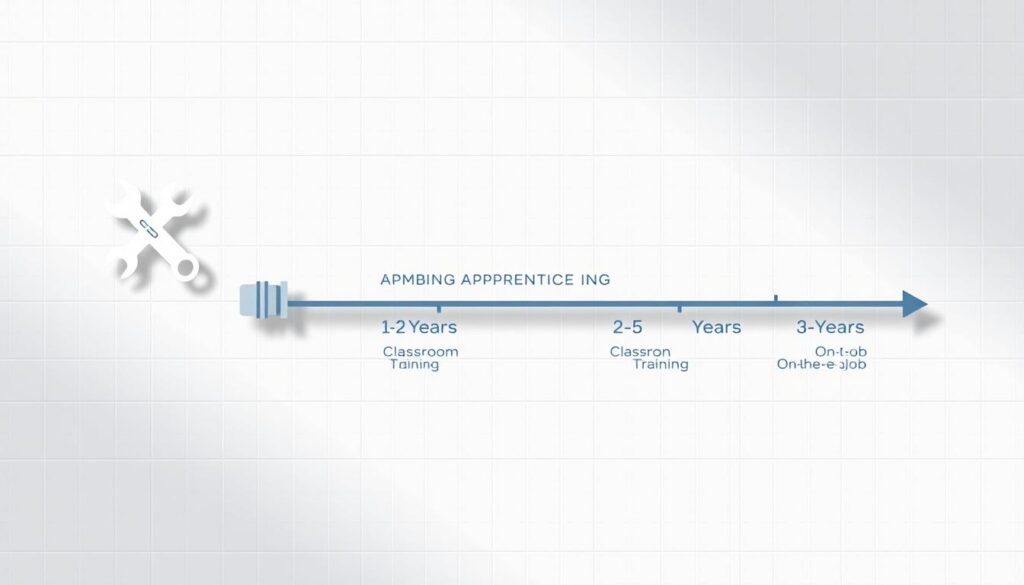
A plumbing apprenticeship usually lasts 4-5 years. It mixes classroom learning with thousands of hours of real-world training. This program turns eager students into skilled workers who keep our infrastructure running.
Choosing a plumber apprenticeship lets you earn money while you learn. You’ll pick up practical skills, technical knowledge, and professional certifications. These can lead to a fulfilling career in plumbing.
Key Takeaways
- Plumbing apprenticeships last 4-5 years
- Programs combine classroom and practical training
- High demand for skilled plumbers nationwide
- Opportunity to earn while learning a trade
- Potential for stable, well-paying career
Table of Contents
Understanding the Plumbing Career Path
Starting a plumbing career is exciting and stable. It has a structured path with many chances for growth and success. Plumbing is in high demand in the U.S., making it a great choice for a reliable and well-paying job.
Basic Requirements and Prerequisites
To begin your journey to become a licensed plumber, you need to meet some basic requirements:
- High school diploma or GED certificate
- Minimum age of 18 years
- Physical fitness and ability to perform manual labor
- Basic mathematical and problem-solving skills
Most start by joining a vocational program or community college. This helps them learn the basics. The apprenticeship pathway is key for learning practical skills and becoming a pro.
Career Advancement Opportunities
Your plumbing career will go through three main stages:
- Apprentice: Entry-level with supervised training
- Journeyman: Licensed to work on your own
- Master Plumber: Advanced to own a business and manage big projects
Industry Demand and Job Security
The plumbing industry is very secure. With ongoing building and upkeep, plumbers have steady work. The U.S. Bureau of Labor Statistics says the trade jobs will keep growing, making this career stable and rewarding.
The Essential Components of Plumbing Apprenticeship Programs
Plumbing apprenticeship programs are a great way to become a skilled tradesperson. You’ll learn in the classroom and get hands-on experience. This mix of learning prepares you for a fulfilling career.
These programs usually last 4-5 years. You’ll learn important skills through a structured program. By the end, you’ll be ready to tackle tough plumbing jobs.
- Classroom Instruction: Learn theoretical knowledge and technical skills
- Practical Training: Gain real-world experience under expert supervision
- Technical Skill Development: Master pipe systems, installation techniques, and repair methods
Your journey to becoming an apprentice plumber will cover many key areas:
- Plumbing Codes and Regulations
- Safety Protocols
- Pipe System Design
- Tools and Equipment Management
You’ll work with experienced mentors during your apprenticeship. They’ll share insights and knowledge that books can’t match.
The most successful plumbers understand that learning is a continuous journey of skill refinement and professional growth.
Investing in a thorough apprenticeship program sets you up for a rewarding career in plumbing. It’s a smart move for your future.
How Long Is Plumbing Apprenticeship Across Different States
Plumbing apprenticeship rules change a lot in the United States. It’s key for future plumbers to know these rules. The length and setup of these programs vary a lot by state.
Looking into plumbing apprenticeship time, you’ll see most states have a similar setup. But, each state has its own twist. Usually, apprenticeships last 4 to 5 years, with some important differences to note.
Standard Timeline Requirements
The usual plumbing apprenticeship includes:
- About 8,000 hours of real-world training
- 144 hours of classroom lessons each year
- Learning both practical and theoretical skills
State-Specific Variations
States have their own ways of handling apprenticeships. For example:
- California: Needs a 4-5 year apprenticeship
- Texas: Has more flexible training times
- New York: Focuses on a lot of classroom learning
Required Working Hours
The heart of any plumbing apprenticeship is the practical experience. Most states require about 8,000 to 9,000 hours of work. This usually means:
| Training Component | Hours Required |
|---|---|
| On-the-Job Training | 8,000-9,000 hours |
| Classroom Instruction | 500-700 hours |
Your path will depend on your state’s rules and the apprenticeship you pick. It’s vital to check the exact needs in your area to make sure you meet them.
Finding and Applying for Plumbing Apprenticeship Programs
Starting your plumbing career needs careful planning and knowing how to apply for apprenticeships. Your first step is finding the right apprenticeship.
There are several ways to find plumbing apprenticeships:
- Local union halls
- Technical community colleges
- Professional plumbing associations
- Online apprenticeship databases
- Regional vocational training centers
Creating a strong application is key. You must show:
- High school diploma or equivalent
- Minimum age requirement (typically 18)
- Physical fitness for trade work
- Basic mathematics and reading skills
Most apprenticeships require passing tests:
| Assessment Type | Purpose |
|---|---|
| Aptitude Test | Evaluate mathematical and mechanical reasoning |
| Physical Examination | Confirm fitness for demanding physical work |
| Personal Interview | Assess communication skills and motivation |
Pro tip: Network with local plumbers and attend trade school career fairs to increase your chances of finding apprenticeship opportunities.
Understanding the application process can greatly improve your chances of getting a plumbing apprenticeship.
Classroom Training and Educational Requirements
How long your plumbing training is very important. Classroom learning gives you the basics needed for a plumbing career. Getting your apprentice plumber certification takes time, mixing book learning with hands-on skills.
Aspiring plumbers study many important subjects. They learn about key areas that help them face plumbing challenges in the real world.
Technical Knowledge Components
You’ll learn essential technical skills in your training. The course covers:
- Plumbing system design principles
- Blueprint reading and interpretation
- Mathematics specific to plumbing calculations
- Material science and pipe fitting techniques
- Advanced hydraulic system understanding
Safety Training and Certifications
Safety is a big part of plumbing school. Your training includes strict safety rules and lessons. These are to keep workers and clients safe.
| Safety Training Area | Key Focus |
|---|---|
| Personal Protective Equipment | Proper usage and maintenance |
| Hazardous Material Handling | Chemical safety and disposal |
| Emergency Response | First aid and workplace incident management |
Code Compliance Education
Knowing plumbing codes is key. Your training covers local and national codes. This ensures you can work safely and legally.
Students learn about building codes and permits. They also learn standard practices to protect health and safety.
On-the-Job Training Experience
Your journey to becoming a plumber starts with on-the-job training. This is the key to becoming licensed. You’ll learn by doing, working with experts in real situations.
To become a licensed plumber, you need about 8,000 hours of hands-on experience. You’ll start with simple tasks and move to harder ones. A comprehensive plumbing apprenticeship helps you learn important skills right in the workplace.
- Initial tasks include basic maintenance and support work
- Gradually advance to complex installation projects
- Learn safety protocols and professional techniques
- Develop problem-solving skills in real-world scenarios
You’ll learn about all kinds of plumbing, from fixing homes to setting up commercial systems. Your mentors will help you at every step. They’ll teach you the technical details and the best ways to do things.
| Training Stage | Skills Developed | Typical Duration |
|---|---|---|
| Entry Level | Basic tool usage, safety protocols | 1-2 years |
| Intermediate | Complex repairs, system installations | 2-3 years |
| Advanced | Specialized technical work | 3-4 years |
As you move through your apprenticeship, you’ll grow from a beginner to a skilled plumber. This is the start of a rewarding career in plumbing.
Tools and Equipment Requirements for Apprentices
Starting your plumber apprenticeship journey requires more than just skill and determination. You’ll need to invest in a set of tools and safety equipment. These will support you throughout your plumbing trade school years and professional career.
Your success in the plumber apprenticeship duration depends on having the right equipment. Professional plumbers suggest building a robust toolkit. It should be of quality, durable, and functional.
Essential Tool List for Apprentices
- Pipe wrenches (14″ and 18″ sizes)
- Adjustable pipe cutters
- Basin wrench
- Pliers set (needle-nose and channel lock)
- Tape measure
- Hacksaw
- Level
- Flashlight
Safety Equipment Requirements
Protecting yourself is key during your plumbing apprenticeship. Invest in high-quality safety gear. This ensures your long-term health and career sustainability.
- Safety glasses
- Work gloves
- Steel-toe boots
- Hard hat
- Hearing protection
Investment Costs Breakdown
| Equipment Category | Estimated Cost Range |
|---|---|
| Basic Hand Tools | $300 – $600 |
| Power Tools | $200 – $500 |
| Safety Equipment | $150 – $300 |
| Total Initial Investment | $650 – $1,400 |
While the initial investment might seem high, remember that quality tools are a long-term investment. Many apprenticeship programs offer guidance on selecting the most cost-effective and durable equipment.
Transitioning from Apprentice to Journeyman Plumber
Becoming a licensed plumber is a big step in your career. It takes hard work, skill, and meeting certain requirements. This journey usually takes 4-5 years of training and experience.
Your path to becoming a journeyman plumber includes several key steps:
- Complete a full apprenticeship program
- Accumulate required work hours (usually 8,000 hours)
- Pass the state licensing examination
- Demonstrate technical proficiency in plumbing systems
The journey to becoming a licensed plumber is tough. You’ll need to show your skills through:
- Documented hands-on work experience
- Successful completion of technical training
- Passing a state licensing exam
As you move up, you’ll get more responsibilities and earn more. You’ll handle more complex tasks and work on your own more.
“Becoming a journeyman plumber represents a significant professional achievement in the trades.” – National Plumbing Association
Remember, each state has its own rules. It’s important to know what your state requires. Your hard work and commitment will help you succeed in getting your journeyman plumber certification.
Financial Aspects and Earning Earning During Apprenticeship
Starting your plumbing apprenticeship opens up great financial chances. At first, your pay might be low. But, as you learn and grow, your earnings will rise.
Apprentices start off making about 40-50% of what a journeyman plumber earns. As you train more, your pay goes up. This makes plumbing apprenticeship a smart career choice.
- First-year apprentices: 40-50% of journeyman wage
- Second-year apprentices: 50-60% of journeyman wage
- Third-year apprentices: 60-70% of journeyman wage
- Fourth-year apprentices: 70-80% of journeyman wage
Knowing how long a plumbing apprenticeship lasts helps with planning your finances. Most programs last 4-5 years. During this time, your earnings will keep going up. In big cities, plumbers can make up to $80,000 a year.
“Your apprenticeship is an investment in your future financial success.” – Plumbing Industry Expert
Plumbing isn’t just about the money right now. It also offers long-term financial security. There’s always a need for skilled plumbers, which means steady work and maybe even starting your own business. Your apprenticeship is a smart move towards a fulfilling and profitable career.
Conclusion
Pursuing a plumbing career is an exciting journey. It involves a structured apprenticeship program. This program usually lasts 4-5 years, mixing classroom learning with hands-on training.
Each state has its own rules for plumbing apprenticeships. But, all programs focus on technical skills, practical experience, and safety. This means you’ll get a well-rounded education.
Choosing this path opens many doors. Plumbers are always needed, in homes, businesses, and factories. By finishing your apprenticeship, you’ll be ready for a stable job with good pay.
A plumbing apprenticeship is more than a job. It’s a respected career that needs technical skills, problem-solving, and support for critical infrastructure. Your hard work and dedication will lead to a rewarding career in plumbing.
FAQ
How long does a typical plumbing apprenticeship take?
What are the basic requirements to start a plumbing apprenticeship?
Do I get paid during my plumbing apprenticeship?
How much classroom training is required during an apprenticeship?
Are plumbing apprenticeship requirements different in each state?
What tools do I need to start a plumbing apprenticeship?
How long does a typical plumbing apprenticeship take?
What are the basic requirements to start a plumbing apprenticeship?
Do I get paid during my plumbing apprenticeship?
How much classroom training is required during an apprenticeship?
Are plumbing apprenticeship requirements different in each state?
What tools do I need to start a plumbing apprenticeship?
FAQ
How long does a typical plumbing apprenticeship take?
Plumbing apprenticeships usually last 4-5 years. You’ll get about 8,000 hours of on-the-job training. Plus, you’ll have 144-576 hours of classroom learning. This depends on your state’s rules and the program you choose.
What are the basic requirements to start a plumbing apprenticeship?
To start, you must be 18 or older. You also need a high school diploma or GED. You should pass a basic math and reading test. And, you must be physically fit for the job’s demands.
Do I get paid during my plumbing apprenticeship?
Yes, apprentices earn a starting wage of 40-50% of a journeyman plumber’s salary. As you learn more, your pay will go up.
How much classroom training is required during an apprenticeship?
You’ll need 144-576 hours of classroom time. This covers plumbing codes, pipe systems, safety, math, blueprint reading, and technical skills.
Are plumbing apprenticeship requirements different in each state?
Yes, they vary by state. While the basics are the same, details like training hours, classroom time, and licensing exams can change a lot.
What tools do I need to start a plumbing apprenticeship?
You’ll need basic tools like wrenches, pipe cutters, and safety gear. A starter kit can cost 0-
FAQ
How long does a typical plumbing apprenticeship take?
Plumbing apprenticeships usually last 4-5 years. You’ll get about 8,000 hours of on-the-job training. Plus, you’ll have 144-576 hours of classroom learning. This depends on your state’s rules and the program you choose.
What are the basic requirements to start a plumbing apprenticeship?
To start, you must be 18 or older. You also need a high school diploma or GED. You should pass a basic math and reading test. And, you must be physically fit for the job’s demands.
Do I get paid during my plumbing apprenticeship?
Yes, apprentices earn a starting wage of 40-50% of a journeyman plumber’s salary. As you learn more, your pay will go up.
How much classroom training is required during an apprenticeship?
You’ll need 144-576 hours of classroom time. This covers plumbing codes, pipe systems, safety, math, blueprint reading, and technical skills.
Are plumbing apprenticeship requirements different in each state?
Yes, they vary by state. While the basics are the same, details like training hours, classroom time, and licensing exams can change a lot.
What tools do I need to start a plumbing apprenticeship?
You’ll need basic tools like wrenches, pipe cutters, and safety gear. A starter kit can cost $500-$1,500, depending on the quality.
Can I become a plumber without an apprenticeship?
It’s possible in some places, but an apprenticeship is usually required. It gives you the hands-on training you need and is often a state law.
What is the difference between an apprentice, journeyman, and master plumber?
An apprentice is in training. A journeyman has 4-5 years of experience and has passed licensing exams. A master plumber has even more experience and can run a plumbing business.
How challenging is a plumbing apprenticeship?
It’s very challenging, both physically and mentally. You need strong problem-solving skills, physical fitness, and attention to detail. You’ll work in different environments and weather.
What is the job outlook for plumbers?
The outlook is excellent. The Bureau of Labor Statistics says plumbers will see a 5% growth rate from 2020-2030. This is faster than average, ensuring good job security and opportunities.
,500, depending on the quality.
Can I become a plumber without an apprenticeship?
It’s possible in some places, but an apprenticeship is usually required. It gives you the hands-on training you need and is often a state law.
What is the difference between an apprentice, journeyman, and master plumber?
An apprentice is in training. A journeyman has 4-5 years of experience and has passed licensing exams. A master plumber has even more experience and can run a plumbing business.
How challenging is a plumbing apprenticeship?
It’s very challenging, both physically and mentally. You need strong problem-solving skills, physical fitness, and attention to detail. You’ll work in different environments and weather.
What is the job outlook for plumbers?
The outlook is excellent. The Bureau of Labor Statistics says plumbers will see a 5% growth rate from 2020-2030. This is faster than average, ensuring good job security and opportunities.