
Affiliate Disclosure
Plumber Guide Guys is a participant in the Amazon Services LLC Associates Program, an affiliate advertising program designed to provide a means for sites to earn advertising fees by advertising and linking to Amazon.
How Long Does PVC Plumbing Last? Did you know PVC pipes can last longer than most homeowners? They can last up to 100 years if installed and maintained well. Knowing how long PVC plumbing lasts is key for smart home investments.
The lifespan of PVC pipes depends on several factors. Your home’s environment, how well they’re installed, and the water quality all matter. These factors help determine how long PVC pipes will last in your home.
Today’s plumbers see PVC as a durable and affordable choice for homes and businesses. Learning about PVC pipe lifespan helps you make better choices for your plumbing.
Key Takeaways
- PVC pipes can last up to 100 years with proper care
- Environmental conditions significantly impact pipe durability
- Professional installation is critical for maximizing lifespan
- Regular maintenance extends PVC pipe performance
- Understanding pipe quality helps prevent unexpected replacements
Table of Contents
Understanding PVC Plumbing Systems
PVC plumbing has changed the way we handle water in our homes and businesses. It’s known for being tough and versatile. When looking at plumbing options, PVC is a top pick for many.
What is PVC Piping?
PVC piping is made from a special plastic designed for moving water and waste. It’s built to last, making it a favorite among plumbers and builders.
- Lightweight and easy to install
- Resistant to chemical corrosion
- Long-lasting performance
- Cost-effective solution
Common Applications in Modern Plumbing
PVC pipes are key in many plumbing systems. They work well in different settings, helping keep your plumbing system running smoothly.
| Plumbing Application | PVC Usage |
|---|---|
| Water Supply Lines | Primary material for residential water distribution |
| Drainage Systems | Efficient waste water management |
| Sewage Pipes | Underground waste transportation |
| Irrigation Systems | Agricultural and landscape water delivery |
Benefits of PVC Pipe Installation
Using PVC pipes has many benefits. They last a long time and need little upkeep, unlike metal pipes.
- Superior corrosion resistance
- Minimal heat conductivity
- Smooth interior surface preventing buildup
- Flexible installation options
Choosing PVC plumbing means picking a reliable and long-lasting option for your water needs.
The Expected Lifespan of PVC Pipes
Knowing how long PVC pipes last is key for homeowners and contractors. PVC pipes can last from 50 to 100 years. This makes them very durable compared to other materials.
Several important factors help PVC pipes last longer:
- They resist corrosion and chemical damage.
- They need little maintenance.
- They can handle different weather conditions.
New ways of making PVC pipes have made them even better. Thanks to advances in science, PVC pipes are now stronger and last longer.
Experts say that under the best conditions, PVC pipes might last more than 100 years. How long they last depends on a few things:
- The quality of how they were installed.
- The type of water they carry.
- The weather they face.
- How well they are taken care of.
The life of your PVC pipes will depend on these factors. Regular checks can help keep your pipes in good shape for a long time.
Factors Affecting PVC Pipe Durability
Knowing what affects PVC pipe durability is key to a lasting plumbing system. The lifespan of your PVC plumbing system depends on several important factors. These factors can either make your pipes last longer or shorter.
PVC pipes are tough, but outside conditions can change how well they work and last.
Environmental Conditions
Outside factors greatly affect PVC pipe durability. Different environmental elements can stress and damage your pipes:
- Direct sunlight can break down PVC material
- Big changes in temperature can cause pipes to expand and contract
- Chemicals in the soil or air can harm pipes
Installation Quality
How well your pipes are installed is very important. Professional installation means:
- Pipes are aligned correctly
- They are joined right
- They are supported well
- They are protected from damage
Water Quality and Pressure
Water’s chemical makeup and pressure can harm your pipes. High mineral content or too much water pressure can wear pipes down faster.
Keeping an eye on water quality and pressure can help your PVC pipes last longer.
How Long Does PVC Plumbing Last Compared to Other Materials
When looking at how long PVC plumbing lasts, it’s key to compare it with other piping materials. PVC drain pipe life expectancy is truly impressive compared to other plumbing options.
Different plumbing materials last for varying lengths of time, affecting your home’s structure. Knowing these differences helps you choose the best for your plumbing system.
| Pipe Material | Average Lifespan | Durability Rating |
|---|---|---|
| PVC Pipes | 50-80 years | Excellent |
| Copper Pipes | 70-80 years | Very Good |
| Galvanized Steel | 20-50 years | Fair |
| Polybutylene | 10-15 years | Poor |
PVC pipes stand out in several important ways:
- Corrosion resistance
- Longer operational lifespan
- Lower maintenance needs
- Cost-effective installation
Your choice of piping material greatly affects plumbing reliability over time. PVC plumbing offers a great mix of durability and affordability. It’s highly recommended for both homes and businesses.
Professional plumbers often suggest PVC for its long-lasting and high-performance qualities.
When looking at plumbing materials, remember that PVC pipes usually beat traditional options. They are better at resisting environmental stress and chemical damage.
Signs of PVC Pipe Deterioration
It’s important to know the signs of PVC pipe wear and tear. Spotting these early can help you plan when to replace your pipes. This can prevent expensive water damage.
To figure out when to replace PVC pipes, look for key signs. Your pipes show their health through visual and performance clues.
Visual Indicators of Pipe Damage
- Visible cracks or fractures along the pipe surface
- Discoloration or unusual staining
- Noticeable warping or deformation
- Chalky or brittle exterior texture
Performance Issues to Watch
Performance problems can signal pipe wear:
- Reduced water pressure
- Frequent unexplained leaks
- Unusual sounds in the plumbing system
- Water quality changes
Structural Changes Indicating Replacement
| Structural Sign | Potential Severity | Recommended Action |
|---|---|---|
| Significant pipe sagging | High | Immediate inspection |
| Multiple connection failures | Medium to High | Professional evaluation |
| Consistent moisture around pipes | Medium | Comprehensive assessment |
Regular professional inspections can help catch these warning signs before they escalate into major plumbing emergencies.
Impact of Sun Exposure on PVC Piping
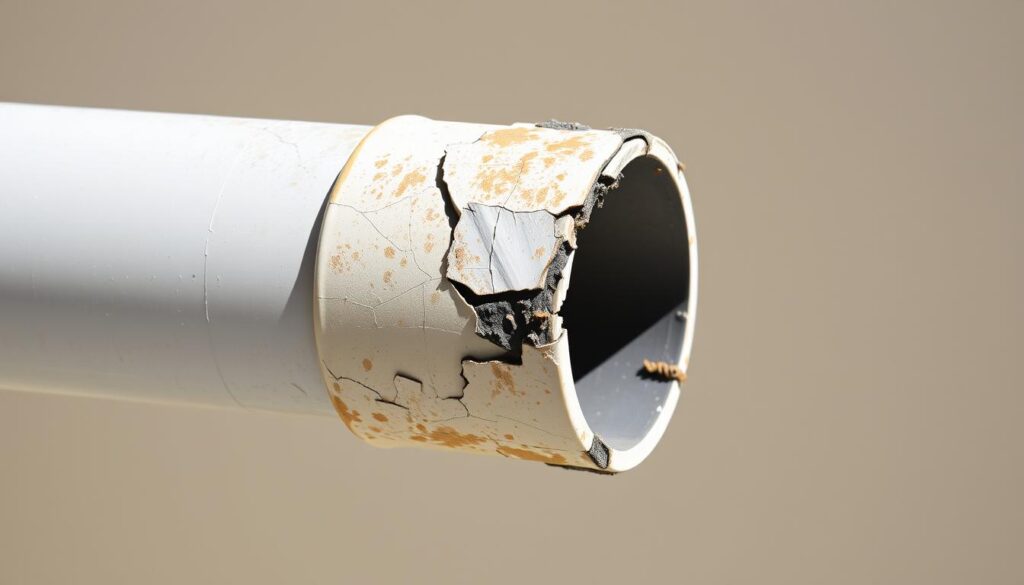
It’s important to know how sun exposure affects PVC pipes. UV rays can harm PVC pipes if they’re not protected. This can shorten the life of your plumbing system.
Research from the Uni-Bell PVC Pipe Association shows how UV rays affect PVC pipes. While sunlight can damage some materials, PVC pipes are very durable.
- UV rays may cause surface discoloration
- Extended exposure can potentially reduce impact strength
- Protective measures can significantly extend pipe life
To keep your PVC pipes safe from sun damage, try these tips:
- Paint exposed pipes with UV-resistant paint
- Install protective covers or sleeves
- Store pipes in shaded areas before installation
- Use pipe insulation with UV protection
Protecting your PVC pipes is key to their durability. Simple shielding methods can prevent UV damage. This keeps your plumbing system strong and working well for many years.
Underground PVC Pipe Performance
Installing PVC plumbing systems underground comes with unique challenges. These challenges can affect the pvc water line durability. The underground environment is complex and directly impacts your pvc plumbing system lifespan.
Underground pipes face many environmental stressors. These stressors can affect their long-term performance. Knowing these factors helps protect underground infrastructure.
Soil Conditions and Their Impact
Different soil types greatly affect PVC pipe durability. Important factors include:
- Soil pH levels
- Mineral composition
- Moisture content
- Presence of rocks or debris
Freeze-Thaw Cycle Challenges
In areas with big temperature changes, underground PVC pipes face intense stress. Freeze-thaw cycles can cause ground movement. This movement can damage pipe integrity.
| Soil Type | Impact on PVC Pipes | Recommended Mitigation |
|---|---|---|
| Clay Soil | High expansion/contraction | Deeper installation, additional cushioning |
| Sandy Soil | Better drainage, less pressure | Standard protective measures |
| Rocky Terrain | Potential mechanical damage | Protective sleeves, careful backfilling |
To protect underground PVC pipes, you need a good plan. Professional installation techniques that consider local conditions are key.
Proper Installation Techniques for Maximum Longevity
Proper installation is key to making PVC pipes last longer. A professional job can add years to your pipes and avoid problems.
- Precise pipe cutting with the right tools
- Thorough cleaning of the pipe surface before joining
- Correct use of PVC cement
- Ensuring pipes fit fully into fittings
The quality of your installation affects how long PVC pipes last. Plumbers suggest a few steps to keep pipes in good shape:
- Use sharp, clean tools for cutting pipes
- Remove all dirt and debris from pipe surfaces
- Apply primer before using PVC cement for stronger bonds
- Make sure pipes fit fully into fittings
Temperature is also important for PVC pipe installation. The best temperatures for installation are between 40-100 degrees Fahrenheit. This ensures the best bonding and performance.
| Installation Factor | Recommended Practice |
|---|---|
| Cutting | Use pipe cutters for clean, square edges |
| Cleaning | Remove all dirt and moisture before joining |
| Cementing | Apply thin, even layer of PVC cement |
| Temperature | Install between 40-100°F |
Remember, proper installation is key to maximizing the lifespan of your PVC plumbing system.
Maintenance Tips to Extend PVC Pipe Life
Keeping your PVC plumbing system in good shape is key. Knowing how to care for your PVC pipes can make them last longer. This can save you from expensive repairs down the line.
Regular upkeep is vital for your PVC pipes. Homeowners should use a few important strategies. These help keep your pipes working well and prevent them from wearing out too soon.
- Avoid using harsh chemical cleaners that can degrade PVC material
- Monitor and maintain consistent water pressure
- Conduct annual visual pipe inspections
- Address leaks immediately
- Protect pipes from extreme temperature fluctuations
Managing water pressure is important for your PVC pipes. Too much pressure can cause pipes to crack or weaken. Installing a pressure regulator can help keep pressure between 40-80 PSI.
| Maintenance Action | Frequency | Expected Benefit |
|---|---|---|
| Visual Inspection | Annually | Early Problem Detection |
| Pressure Check | Bi-Annually | Prevent Pipe Stress |
| Cleaning | As Needed | Prevent Buildup |
Experts say to treat PVC pipes with care. Gentle cleaning methods and avoiding rough handling can make them last longer.
Proper maintenance can extend PVC pipe life by up to 50-75 years.
By following these maintenance tips, you’ll keep your plumbing system in top shape. This will help avoid costly repairs and keep your pipes running smoothly.
Latest Research on PVC Pipe Durability
The study of PVC pipe durability is growing with new scientific research. Experts are learning more about how long PVC pipes last. This helps both homeowners and professionals.
New studies show PVC pipes are very durable. The Water Research Foundation found that well-installed PVC pipes can last up to 100 years.
Cutting-Edge Scientific Studies
Research has focused on several important areas:
- Stress regression testing
- Slow crack growth analysis
- Fatigue resistance evaluation
- Long-term material performance
Industry Findings
| Research Area | Key Findings | Lifespan Projection |
|---|---|---|
| Material Resilience | Exceptional chemical resistance | Up to 100 years |
| Environmental Stability | Minimal degradation under various conditions | 90-100 years |
| Structural Integrity | Strong resistance to corrosion | 100+ years |
Research keeps showing why PVC pipes are great for plumbing. Improvements in material science are making PVC pipes last even longer. This makes them a reliable choice for water systems.
Modern research confirms that PVC pipes represent a long-lasting and cost-effective plumbing solution when properly installed and maintained.
When to Replace PVC Plumbing
Knowing when to replace PVC pipes is key to keeping your home’s plumbing in top shape. PVC pipes can last for decades. But, there are signs that show it’s time for a new one.
How often to replace PVC pipes depends on a few important things. Generally, well-kept PVC pipes can last 50-100 years. But age isn’t the only thing to consider.
- Visible cracks or damage
- Persistent leaks
- Reduced water pressure
- Discoloration or unusual odors
- Frequent pipe repairs
Experts say to check your PVC pipes every 10-15 years. During these checks, they can spot wear and tell if you need a new one.
Some situations need quick action for replacement:
- Significant structural damage
- Multiple leak points
- Evidence of underground pipe deterioration
- Water quality issues
For those watching their budget, replacing PVC pipes during big home updates is wise. It can avoid costly plumbing problems later on.
Conclusion
Exploring how long PVC plumbing lasts shows its amazing durability. It’s a top choice for reliable, long-lasting pipes. With the right care, your PVC pipes could last up to 100 years.
The lifespan of PVC plumbing depends on several key factors. These include the environment, water quality, how well it’s installed, and regular upkeep. Knowing these can help your pipes last longer. Keeping an eye on your pipes and fixing issues early can also help.
PVC plumbing is a smart, cost-effective choice for homes and businesses. Thanks to ongoing research, PVC pipes are getting even better. Investing in quality PVC now means you’ll have dependable water flow for years.
The plumbing world is always looking to improve, and PVC is at the forefront. It’s helping create efficient, long-lasting, and eco-friendly water systems. By staying up-to-date and following best practices, you can enjoy the many benefits of PVC.