
Affiliate Disclosure
Plumber Guide Guys is a participant in the Amazon Services LLC Associates Program, an affiliate advertising program designed to provide a means for sites to earn advertising fees by advertising and linking to Amazon.
How Long Does Plumbing Last in a House? Did you know that nearly 10% of homes in the United States have water leaks? These leaks waste over 90 gallons per day. Knowing how long plumbing lasts in a house is key to avoid costly water damage and unexpected repairs.
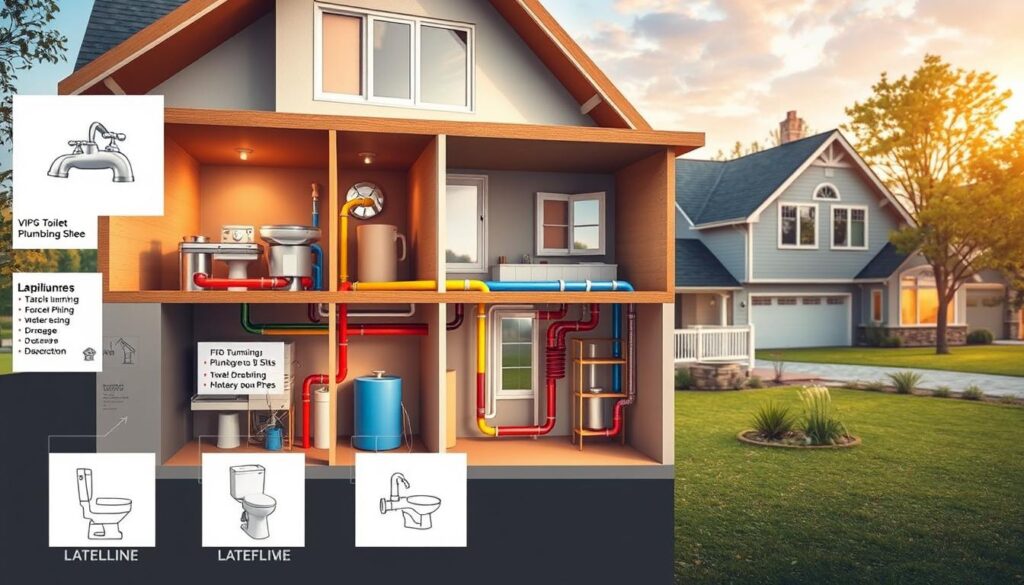
Your home’s plumbing system is a complex network of pipes, fixtures, and connections. It works silently behind walls and under floors. The lifespan of your plumbing system depends on many factors, like materials, water quality, and how well you maintain it.
Most homeowners don’t know that different plumbing materials last for different lengths of time. From copper to PVC, each type of pipe wears down at its own pace. Knowing how long your plumbing will last can help you plan for maintenance and budget for replacements.
Key Takeaways
- Plumbing systems have varying lifespans based on material type
- Regular maintenance can extend pipe durability
- Water quality significantly impacts pipe longevity
- Professional inspections are critical for early problem detection
- Different pipe materials have unique durability characteristics
Table of Contents
Understanding Your Home’s Plumbing System Lifespan
Your home’s plumbing system is very important. It needs to be well understood and taken care of. The durability of residential plumbing depends on many factors. These factors affect how long your pipes will last.
The lifespan of your plumbing can change a lot. This is because of several important things:
- Pipe material composition
- Water quality
- Installation techniques
- Maintenance frequency
- Local environmental conditions
Knowing how long your plumbing might last is key. Being proactive can help you avoid big repair costs later on.
| Pipe Material | Expected Lifespan | Key Characteristics |
|---|---|---|
| Brass/Cast Iron | 80-100 years | Highly durable, resistant to corrosion |
| Copper | 70-80 years | Excellent heat conductivity, moderate durability |
| PVC | 24-50 years | Lightweight, cost-effective, limited longevity |
Experts say it’s smart to get your plumbing checked often. Every home is different. This means each home needs its own check-up to plan for the future.
Different Types of Plumbing Materials and Their Durability
Knowing what materials your home’s plumbing system uses is key to keeping it running well. Today’s homes use many types of pipes, each with its own strengths and lifespan.
It’s important for homeowners to know about the different pipes out there. The type of pipe you choose can affect how long it lasts and how well it holds up to wear and corrosion.
Brass and Cast Iron Pipes: Vintage Durability
Brass and cast iron pipes are the top picks for traditional plumbing. They can last an amazing 80-100 years with the right care. These pipes are often found in older homes and are known for their long-lasting quality.
- Brass pipes resist corrosion well
- Cast iron pipes are very strong
- Great for long-term plumbing needs
Copper Pipes: Reliable and Versatile
Copper pipes are a favorite among homeowners. They usually last 70-80 years and fight off bacteria and corrosion well.
“Copper pipes are the backbone of modern residential plumbing systems” – Professional Plumbing Association
PVC Piping: Modern and Cost-Effective
PEX pipes last from 24-50 years, making them popular for new homes. PVC pipes are light, cheap, and stand up to many environmental challenges.
| Pipe Material | Average Lifespan | Key Characteristics |
|---|---|---|
| Brass/Cast Iron | 80-100 years | Extremely durable, heavy-duty |
| Copper | 70-80 years | Corrosion-resistant, reliable |
| PVC/PEX | 24-50 years | Lightweight, affordable |
If you’re thinking about replacing your galvanized pipes, think about what your home needs. Talk to a professional plumber to find the best material for your plumbing system.
Signs Your Plumbing System Needs Replacement
Knowing when to replace your house pipes is key to keeping your home in good shape. Your plumbing system gives hints that it’s nearing the end of its life. Spotting these signs early can help you dodge expensive water damage and urgent repairs.
Here are some important signs it might be time to think about replacing your pipes:
- Persistent water discoloration (rust-colored or brownish water)
- Frequent pipe leaks or unexplained water damage
- Noticeable drop in water pressure
- Strange sounds like whistling or banging in pipes
- Recurring plumbing repairs
Water quality is a big factor in deciding when to replace your pipes. Older pipes, like those made from galvanized steel, are more likely to corrode and build up minerals. These problems can make your water unsafe and weaken your home’s structure.
| Pipe Age | Replacement Likelihood | Recommended Action |
|---|---|---|
| 0-20 years | Low | Regular maintenance |
| 20-40 years | Moderate | Professional inspection recommended |
| 40+ years | High | Consider full system replacement |
Experts say it’s smart to have your pipes checked every few years. This way, you can catch problems before they get worse. It’s a way to keep your home’s plumbing system running smoothly.
How Long Does Plumbing Last in a House?
Knowing how long plumbing lasts in a house is key for homeowners. Your home’s plumbing system is complex and needs regular checks.
The lifespan of plumbing in a house depends on many factors. Each part of your plumbing system lasts differently.
Factors Affecting Plumbing Longevity
Several important things affect how long your plumbing lasts:
- Water quality and mineral content
- Installation craftsmanship
- Maintenance frequency
- Material composition
- Usage patterns
Average Lifespan by Component
Each plumbing part has its own lifespan:
- Pipes: 50-70 years, depending on the material
- Fixtures: 10-25 years
- Water heaters: 8-12 years
- Sewer lines: 30-50 years
Environmental Impact on Pipes
Your local environment affects your plumbing’s lifespan. Soil, temperature, and water chemistry can speed up or slow down pipe wear.
Regular inspections and proactive maintenance can extend your plumbing system’s life.
Main Water Line Durability and Maintenance
Your home’s main water line is key to keeping your plumbing working well. It’s buried deep underground, linking your home to the city’s water supply. It’s vital for keeping your plumbing in good shape.
Knowing about your main water line can help avoid problems and make it last longer. Most are made from materials like:
- Copper
- PVC
- Ductile iron
- Galvanized steel
The life of your main water line depends on a few important things:
- Material quality
- Soil conditions
- Water chemistry
- Installation techniques
It’s important to have regular checks to keep your plumbing in top shape. Plumbers suggest inspecting your main water line every 3-5 years. Look out for signs like changes in water pressure, color changes, or moisture near the pipe.
Proactive maintenance can save you thousands in repair costs.
To keep your plumbing in the best condition, get professional checks and fix small problems early. This can prevent big, expensive repairs later on.
Common Issues with Aging Plumbing Systems
As your home’s plumbing system gets older, you’ll see warning signs of trouble. Knowing these signs helps you decide when to replace your pipes. This can prevent expensive water damage.
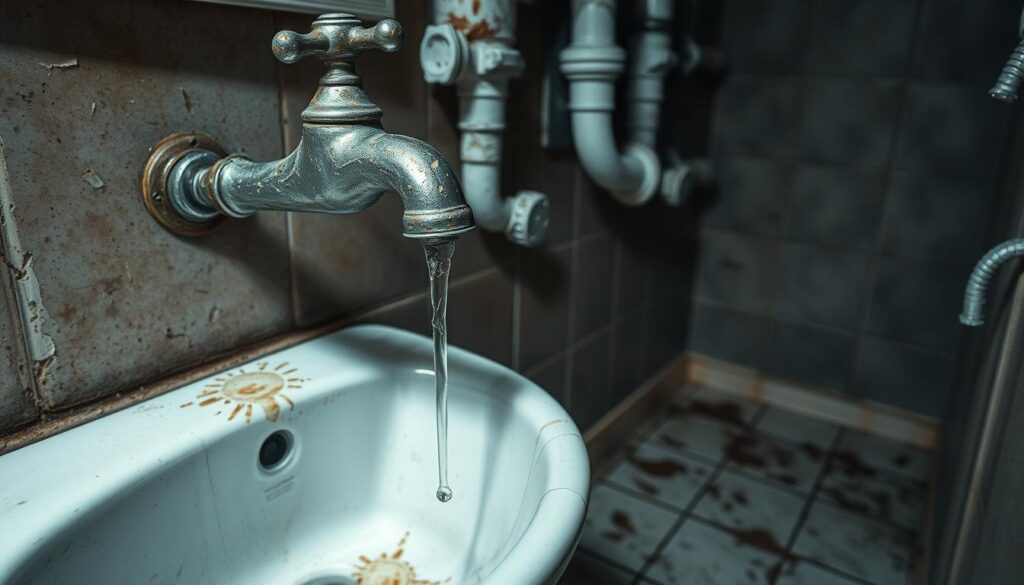
Water Discoloration: A Red Flag for Pipe Deterioration
Brown or rust-colored water means your pipes are corroding. This happens when old pipes start to break down. They release rust into your water. The age of your plumbing system is a big factor here.
- Rust-colored water suggests internal pipe degradation
- Potential health risks from contaminated water
- Indicates immediate need for pipe inspection
Pressure Problems Signal Underlying Issues
Unstable water pressure can point to bigger plumbing problems. If the water pressure is always changing or weak, it might be due to mineral buildup or pipe damage.
Leaks and Corrosion: Silent Destroyers
Seeing moisture, small leaks, or pipe corrosion is a big warning sign. These signs often show up when pipes are near the end of their life.
Proactive maintenance can save thousands in possible water damage repairs.
If you see many signs of wear, it’s time to call a professional plumber. They can tell if it’s time to replace your plumbing system.
Identifying Problems in Exposed Pipes
If your house is 60 years or older, exposed pipes are key to check during your home pipe replacement timeline. These pipes often run through basements, crawl spaces, or utility areas. They give valuable insights into your plumbing system’s condition.
Visual inspection is vital for plumbing system maintenance. Look for these warning signs of pipe problems:
- Discoloration on pipe surfaces
- Rust or corrosion patches
- Visible moisture accumulation
- Flaking or dimpling of pipe material
- Unusual mineral deposits
When checking exposed pipes, focus on joint connections and areas with stress. Even small changes in appearance can mean big problems. Spotting these signs early can help you plan for replacements and avoid expensive repairs.
Regular checks should include:
- Water stains around pipe connections
- Soft or bulging pipe sections
- Unexpected temperature variations
- Strange sounds during water usage
Remember, keeping your home’s plumbing system in check depends on early detection and regular monitoring. Plumbers suggest thorough pipe inspections every two years. This ensures your system works well and avoids sudden failures.
The Impact of Water Quality on Pipe Longevity
Water quality is key to your home’s plumbing system lasting longer. The minerals and chemicals in your water can greatly impact your pipes, mainly copper ones.
Hard water has lots of minerals like calcium and magnesium. These can harm your plumbing system a lot. They cause scale buildup inside pipes, leading to several issues:
- Reduced water flow
- Increased internal pipe pressure
- Accelerated corrosion
- Potential pipe damage
Mineral Content Effects
Mineral deposits make your pipes rough on the inside. This rough surface catches debris and speeds up corrosion. The buildup can greatly shorten your plumbing system’s life and cost a lot to fix.
Corrosion Prevention
To keep your plumbing system in good shape, you need to act early. Think about getting water softening systems to remove extra minerals. These systems stop scale buildup and keep your copper pipes in better condition by keeping the inside smooth.
Regular water quality testing can help you understand your home’s specific mineral challenges and develop targeted protection strategies.
When to Schedule Professional Inspections
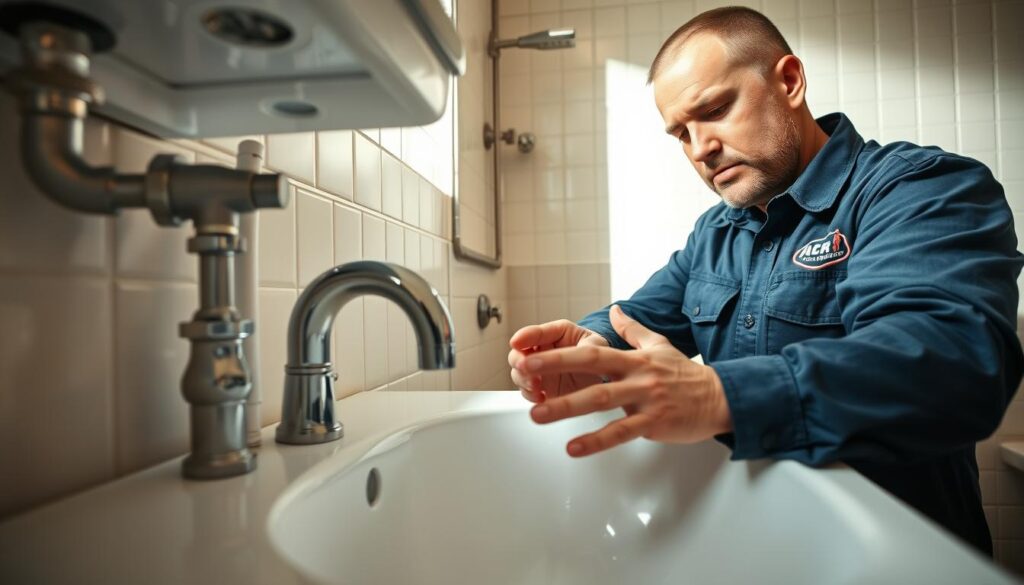
Keeping your home’s plumbing in top shape is key. Regular checks can save you from expensive fixes and keep your pipes running longer. Experts say it’s smart to get your plumbing checked at set times to spot problems early.
When to get your pipes checked depends on your home’s age and type. Here are some guidelines for when to replace your house pipes and get a professional check-up:
- For homes under 10 years old: Inspect every 2-3 years
- For homes 10-25 years old: Annual professional inspection recommended
- For homes over 25 years: Bi-annual thorough check-up
It’s also important to get a plumbing inspection at these times:
- Before buying a new home
- After big changes in water pressure
- When you keep having drainage problems
- After big home renovations
Using camera inspections on your main water line is very helpful. These tools can find hidden issues in your pipes. This helps you decide if you need to replace or fix parts of your plumbing.
Proactive plumbing maintenance is always more cost-effective than emergency repairs.
Preventive Maintenance Tips for Extended Plumbing Life
Keeping your home’s plumbing system in good shape is key. It helps your plumbing last longer and saves you from expensive fixes. With the right care, your plumbing can go the extra mile, saving you money and stress.
Regular upkeep is essential for a healthy plumbing system. By being proactive, you can spot problems early. This way, you avoid big issues later on.
Essential Maintenance Checklist
- Inspect visible pipes quarterly for signs of wear or corrosion
- Check under sinks for subtle leaks or moisture
- Test water pressure annually
- Clean drain stoppers and remove hair/debris monthly
- Flush water heater to remove sediment buildup
DIY Inspection Guidelines
Homeowners can do simple checks to keep an eye on their plumbing:
- Look for green or white mineral buildup on pipes
- Listen for unusual sounds in pipes or when flushing
- Watch for changes in water color or taste
- Monitor water bill for unexpected increases
Early detection can prevent major plumbing disasters and extend your system’s life by years.
Getting a professional to check your plumbing every two to three years is a good idea. This, along with your own DIY efforts, will help your plumbing last longer. It also keeps repair costs down.
Modern Plumbing Materials and Technologies
The world of plumbing has changed a lot with new materials and smart tech. Today, homeowners can use innovative solutions. These solutions make plumbing systems last longer and work better.
PEX (cross-linked polyethylene) piping is a big step forward in plumbing. It’s flexible and has many benefits over old pipes:
- It resists corrosion and mineral buildup
- It lasts longer than copper pipes
- It’s easier to install with fewer connections
- It handles temperature and pressure better
Smart tech is making plumbing better. Now, there are systems that detect leaks early. They can spot small leaks, pipe stress, and odd water use.
Trenchless pipe replacement is another big change. It fixes pipes underground with little digging. This means less damage to your property and quicker fixes.
Using these new materials and tech can make your plumbing better. It can last longer and cost less to maintain in the long run.
Conclusion
Knowing how long plumbing lasts in a house is key for homeowners. Your plumbing system is a big investment that needs care and maintenance. The life of your pipes depends on the material, water quality, and regular checks by pros.
Don’t overlook when you might need to replace your pipes. Getting regular checks from plumbers can spot problems early. This way, you can fix small issues before they turn into big, expensive repairs.
Being informed is your strongest defense against plumbing problems. Knowing about your pipes, water, and upkeep needs helps you make smart choices. Work with trusted experts to keep your plumbing system running well for years.
Preventive care is cheaper than fixing emergencies. By looking after your plumbing, you save money and protect your home. Plus, you’ll feel secure knowing your water systems are working great.