

Affiliate Disclosure
Plumber Guide Guys is a participant in the Amazon Services LLC Associates Program, an affiliate advertising program designed to provide a means for sites to earn advertising fees by advertising and linking to Amazon.
How Long Does It Take To Learn Plumbing? Did you know plumbers can earn over $56,330 a year? Top plumbers make up to $97,170. Learning about plumbing is your first step to a rewarding career.
To become a licensed plumber, you need dedication and hard work. You’ll go through vocational education, apprenticeships, and get certified. It’s a journey that requires mastering complex skills.
This guide will cover everything about becoming a licensed plumber. We’ll look at training paths, time needed, and important career milestones. Whether you’re starting after high school or changing careers, knowing the timeline is key to making the right choices.
Key Takeaways
- Plumbing training typically takes 4-5 years to complete
- Apprenticeship programs are key for hands-on learning
- Certification needs vary by state
- There are many ways to start your plumbing career
- Starting salaries are between $35,000-$45,000
Table of Contents
Understanding the Path to Becoming a Licensed Plumber
To become a licensed plumber, you need hard work, planning, and a clear path. Your journey starts with several key steps. These steps turn you from a beginner to a skilled plumber.
Basic Requirements and Prerequisites
Before starting your plumbing career, you must meet some basic needs. Most states require certain qualifications to join plumbing programs:
- High school diploma or GED equivalent
- Minimum age of 18 years
- Physical fitness for demanding manual work
- Basic math and problem-solving skills
Different Training Paths Available
The time it takes to become a plumber varies based on your training choice. You have three main paths:
- Vocational School Programs – A mix of classroom and hands-on training
- Community College Technical Courses
- Apprenticeship Programs through unions or trade organizations
Industry Certification Overview
Plumbing certification rules change by state, but there’s a common path. You’ll need to finish detailed training that includes:
- 720 hours of in-school technical instruction
- 8,280 hours of practical work experience
- Passing a state-specific licensing examination
- Obtaining journeyperson certification
Knowing these basics helps you plan your plumbing career. It sets you up for success in the long run.
Trade School Programs and Duration
Exploring plumbing trade school programs is a great way to start a rewarding career. You need to pick the right program that fits your goals and learning style.
There are many educational paths for aspiring plumbers. Each program has its own length and focus, giving you choices to begin your career.
College Diploma Programs
College diploma programs offer deep training for plumbers. They last from 1-2 years and cover a lot of technical knowledge:
- Comprehensive theoretical and practical training
- Structured curriculum covering advanced plumbing techniques
- Opportunities for hands-on learning in professional workshops
Vocational Training Options
Vocational training provides flexible and focused programs. You can choose from:
- Short-term certificate programs (6-24 weeks)
- Community college technical courses
- Specialized trade school workshops
Cost Considerations
It’s important to know the cost of vocational plumbing education. Prices vary a lot between programs:
| Program Type | Average Duration | Estimated Cost |
|---|---|---|
| Community College Program | 2 years | $10,000 – $25,000 |
| Trade School Certificate | 6-24 weeks | $3,000 – $15,000 |
| Apprenticeship Program | 4-5 years | Minimal tuition (often employer-sponsored) |
Pro tip: Many trade schools offer financial aid, scholarships, and flexible payment plans to help manage your educational expenses.
How Long Does It Take to Learn Plumbing
Learning plumbing is a journey that changes based on your path and effort. It can take months to years to learn plumbing skills. Each training option has its own timeline.
Several factors affect how long it takes to learn plumbing:
- Pre-apprenticeship programs: Typically 24 weeks
- Trade school diploma: Approximately 1-2 years
- Apprenticeship: 4-5 years of combined classroom and practical training
Your learning pace in plumbing depends on:
- How quickly you learn
- The education path you choose
- Hands-on experience you get
- How much you commit to learning
| Training Path | Duration | Primary Focus |
|---|---|---|
| Certificate Program | 6-12 months | Basic technical skills |
| Associate Degree | 2 years | Comprehensive technical education |
| Apprenticeship | 4-5 years | Hands-on professional training |
Pro tip: Consistent practice and hands-on experience are key to improving your plumbing skills fast.
Success in plumbing needs patience, ongoing learning, and a love for solving tough technical problems.
Essential Skills and Knowledge Requirements
Learning to be a plumber takes more than just knowing how to use tools. You need to understand both technical skills and how to work with people. Plumbers must learn a lot more than just how to fix pipes.
Technical skills are key to being good at plumbing. You’ll need to know how to:
- Use hand and power tools safely
- Work with different types of pipes and how to install them
- Read and understand building codes and blueprints
- Fix and install various plumbing fixtures
But it’s not all about the technical stuff. Soft skills are important too. Skills like problem-solving, communication, and customer service will help you stand out.
Your path to becoming a plumber involves many skills:
- Understanding plumbing systems
- Getting hands-on experience
- Learning safety rules
- Improving your communication with customers
Remember, becoming a skilled plumber takes time, effort, and never-ending learning. Every skill you learn brings you closer to being ready for tough plumbing jobs.
Apprenticeship Structure and Timeline
Starting a plumbing apprenticeship needs hard work and careful planning. It’s a journey to become a skilled plumber. You’ll learn in classrooms and get hands-on experience.
Training to be a journeyman plumber is structured. It turns beginners into experts. The program requires a lot of effort but offers a solid way to learn skills.
Classroom Training Hours
Your apprenticeship includes important classes to learn the basics:
- 144-180 classroom hours every year
- Learning math for plumbing
- Understanding pipe system designs
- How to read blueprints
- Knowing safety rules
On-the-Job Experience Requirements
Getting practical experience is key in your training. You’ll need to:
- Complete 8,000-9,000 hours of work
- Work under the watch of licensed plumbers
- Work on different projects
- Keep improving your skills
Certification Milestones
As you move through your apprenticeship, you’ll reach important certification points:
- Entry-Level Apprentice: First training phase
- Advanced Apprentice: More duties
- Journeyman Certification: Final step to becoming a pro
It takes about 4-5 years of hard work to finish. You’ll learn a lot in classes and get real-world experience.
Core Course Components and Training Areas
Plumbing training covers a wide range of topics to get you ready for a career in the trades. You’ll learn about key areas that lay a strong foundation in plumbing skills.
The main parts of your training include:
- Plumbing basics and key principles
- Learning about tools and materials
- Understanding electrical systems and safety
- Installing heating and cooling systems
- How to service and fix problems
At places like NAIT’s plumbing courses, you’ll gain practical and theoretical knowledge. You’ll learn more than just how to fix leaks. You’ll understand how systems work fully.
| Training Area | Key Skills Learned | Typical Hours |
|---|---|---|
| Plumbing Fundamentals | Pipe fitting, blueprint reading | 60-80 hours |
| Electrical Knowledge | Wiring, circuit understanding | 40-50 hours |
| Heating Systems | Installation, maintenance | 50-70 hours |
| Troubleshooting | Diagnostic techniques | 30-40 hours |
Professional plumbing training gives you skills that go beyond fixing pipes. Your training will get you ready for a fulfilling career in the trades.
Safety Certifications and Licensing Requirements
Becoming a licensed plumber is more than just knowing how to fix pipes. Safety certifications are key to plumbing certification requirements. Plumbers need to know how to keep themselves and others safe on the job.
To start a plumbing career, you must get several important safety certifications. These are needed to handle job site dangers well.
Required Safety Credentials
Plumbers need many safety certifications to work legally and safely. Some of these include:
- WHMIS (Workplace Hazardous Materials Information System)
- Working at Heights certification
- Elevating Work Platforms training
- Lockout & Tag Safety
- Scaffold Users’ Hazard Awareness
- Confined Spaces Hazard Awareness
State-Specific Requirements
Every state has its own rules for plumbing certifications. You must check with your local board to know what safety training you need. Some states ask for extra safety courses.
Ongoing Education Requirements
Keeping your plumbing license up to date is ongoing. Most states require you to take continuing education classes. This keeps you current with safety rules, new tech, and best practices.
Invest in your career by keeping up with safety training and licensing rules. Your dedication to safety will make you stand out in the plumbing field.
Career Progression and Specialization Options
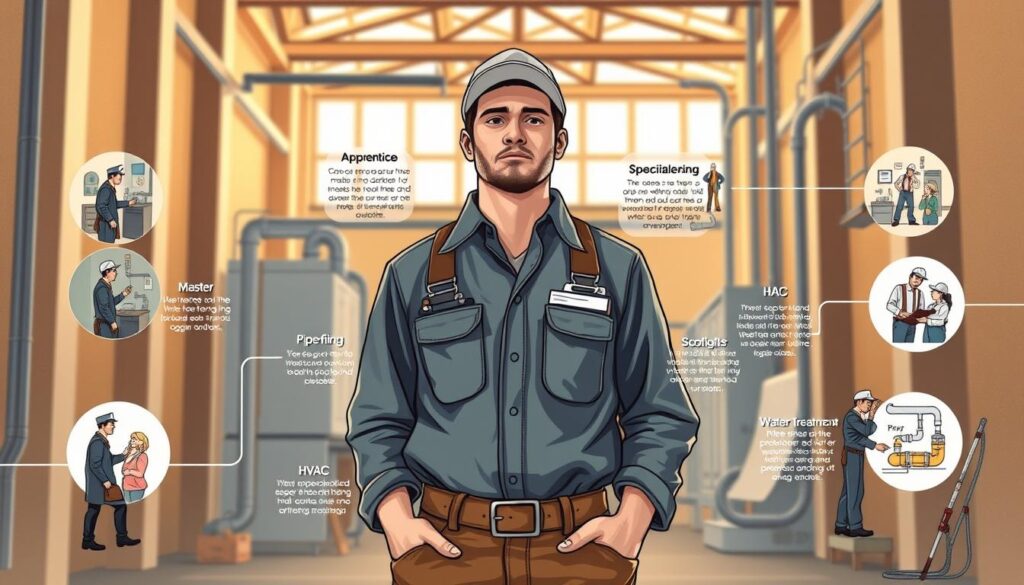
As you move up in your plumbing career, many exciting paths open up. You’ll go from an apprentice to a master plumber. This journey requires skill growth and years of experience in various areas.
Plumbers can choose from many career paths that use their technical skills and growth. Each area has its own challenges and benefits for those who invest in their career.
- New Construction Projects
- Residential Plumbing Maintenance
- Commercial Plumbing Systems
- Municipal Water Infrastructure
- Green Technology Installations
Your career path can lead to roles like project management, teaching, or starting your own business. The important thing is to keep learning and stay up-to-date with new technologies.
| Career Stage | Experience Required | Potential Specializations |
|---|---|---|
| Apprentice | 0-4 years | Basic residential work |
| Journeyman | 4-8 years | Commercial and industrial systems |
| Master Plumber | 8-12 years | Complex systems, consulting, training |
Getting good at things like green plumbing technologies or sustainable water management can make you more attractive to employers. It can also lead to new and exciting career opportunities.
Salary Expectations and Job Market Outlook
Starting your journey as a journeyman plumber opens up a world of opportunities. You’ll find good pay and strong job prospects. The plumbing field is stable, with chances to earn well in different areas.
Several things affect how much plumbers make:
- Experience level
- Geographic location
- Specialization
- Certification credentials
Plumbers can earn a wide range of salaries. New apprentices earn less, but experienced plumbers make more. This shows how salaries grow as you gain experience.
| Career Stage | Average Annual Salary | Potential Range |
|---|---|---|
| Apprentice Plumber | $35,000 – $45,000 | 50-60% of journeyman rate |
| Journeyman Plumber | $55,000 – $75,000 | Full professional rate |
| Master Plumber | $75,000 – $100,000 | Top-tier earning |
The job market for plumbers is strong. There’s always a need for plumbers in homes, businesses, and factories. Projects like new buildings, green tech, and fixing old systems keep jobs coming.
“Skilled trades like plumbing offer recession-resistant career paths with excellent growth.” – Bureau of Labor Statistics
Investing in journeyman plumber training is a smart move. It leads to a fulfilling career with good pay and job security for years to come.
Conclusion
Learning to be a plumber takes dedication and planning. Your journey starts with training and ends with a license. It can take 4-7 years to master the skills needed.
To become a licensed plumber, you must keep learning and practicing. Schools, apprenticeships, and vocational training are key. Your success depends on your eagerness to learn and master plumbing skills.
The plumbing industry offers great career growth and financial stability. Knowing what training and certifications you need helps plan your career. Your education and training lead to good job opportunities.
Begin your plumbing career with confidence. Look for apprenticeships, join professional groups, and find educational programs that match your goals. Your future in plumbing is waiting for your hard work and passion.