

Affiliate Disclosure
Plumber Guide Guys is a participant in the Amazon Services LLC Associates Program, an affiliate advertising program designed to provide a means for sites to earn advertising fees by advertising and linking to Amazon.
How Long Does It Take to Get Your Plumbing License? Did you know the plumbing industry makes over $124 billion a year in the U.S.? Getting a plumbing license is a smart career choice. It takes time and planning to get your license.
Getting a plumbing license isn’t the same for everyone. It takes 2 to 5 years, depending on where you live. Your time frame depends on apprenticeships, school, and local rules.
If you’re starting or changing careers, getting a plumbing license is a big step. You’ll learn in class and get hands-on experience. Each step gets you closer to being a skilled, licensed plumber.
Key Takeaways
- Plumbing license timelines range from 2-5 years
- Requirements differ by state and jurisdiction
- Combination of classroom and practical training is essential
- Apprenticeship programs are key for skill building
- Licensing involves many stages of education and tests
Table of Contents
Overview of the Plumbing Licensure Path
Becoming a licensed plumber is a journey with many steps. Your path to getting a plumbing license depends on where you are and what you want to achieve.
The rules for getting a plumbing license can be tough to understand. But knowing the basic steps can help you move forward in your career. It’s important to check the rules in your state because they can be different.
Different Types of Plumbing Licenses
There are three main types of plumbing licenses:
- Apprentice Plumber: This is the first step, where you learn under supervision.
- Journeyman Plumber: This level lets you do more work on your own.
- Master Plumber: This is the highest level, where you can work independently and supervise others.
Basic Requirements for Licensing
Most states have similar steps to get a plumbing license:
- Finish an approved apprenticeship program.
- Get the needed training hours.
- Pass a big exam to show you know your stuff.
- Show you have the right work experience.
State-Specific Variations
Every place has its own rules for plumbing licenses. Some states might ask for extra training or special certifications.
“Understanding your state’s specific regulations is key to successfully obtaining your plumbing license.” – Professional Plumbers Association
Looking up your state’s licensing board is a good way to get the latest info for your career.
How Long Does It Take to Get Your Plumbing License
Getting your plumbing license takes 2-5 years. The time it takes depends on several factors. These include state rules, how much you commit, and specific licensing needs.
On your way to becoming a licensed plumber, you’ll go through many stages. These stages add up to the total hours you need for your license. Key factors that affect your timeline are:
- Apprenticeship duration
- Educational requirements
- State-specific regulations
- Individual learning pace
Different states have different hours needed for plumbing certification. On average, you’ll need to complete:
| License Type | Typical Hours Required | Estimated Completion Time |
|---|---|---|
| Apprentice | 4,000-8,000 hours | 2-4 years |
| Journeyman | 8,000-12,000 hours | 4-5 years |
Your progress can speed up or slow down your timeline. Some plumbers finish faster by working full-time or taking intensive courses. Dedication and consistent effort are key to getting your license quickly.
“Success in obtaining a plumbing license is about persistence and meeting each milestone with commitment.” – Professional Plumbing Association
Remember, while most people take 2-5 years, your journey might be different. Find out your state’s exact needs for the best estimate of your plumbing license journey.
Understanding Plumbing Apprenticeship Programs
Plumbing apprenticeship programs are key to becoming a pro plumber. They mix hands-on learning with classroom education. This combo gives you the skills to excel in this challenging field.
Starting a plumbing apprenticeship means you’ll get both practical and classroom training. The time it takes varies, usually 4-5 years, based on your state’s rules.
On-the-Job Training Components
On the job, you’ll learn from seasoned plumbers. You’ll pick up essential skills like:
- Pipe installation techniques
- Reading technical blueprints
- Understanding safety protocols
- Handling specialized plumbing equipment
Classroom Education Requirements
Classroom learning adds to your practical skills. You’ll study the theory of plumbing, including:
- Plumbing codes and regulations
- Mathematics for plumbing calculations
- Building system design
- Advanced troubleshooting techniques
Required Training Hours
Training hours for plumbing certification are set to prepare you well. You’ll need about 8,000-9,000 hours, split between work and class.
Dedicated apprentices can expect to invest significant time and effort into mastering their craft.
By fully committing to these hours, you’ll lay a strong foundation for a plumbing career.
Educational Requirements and Trade School Options
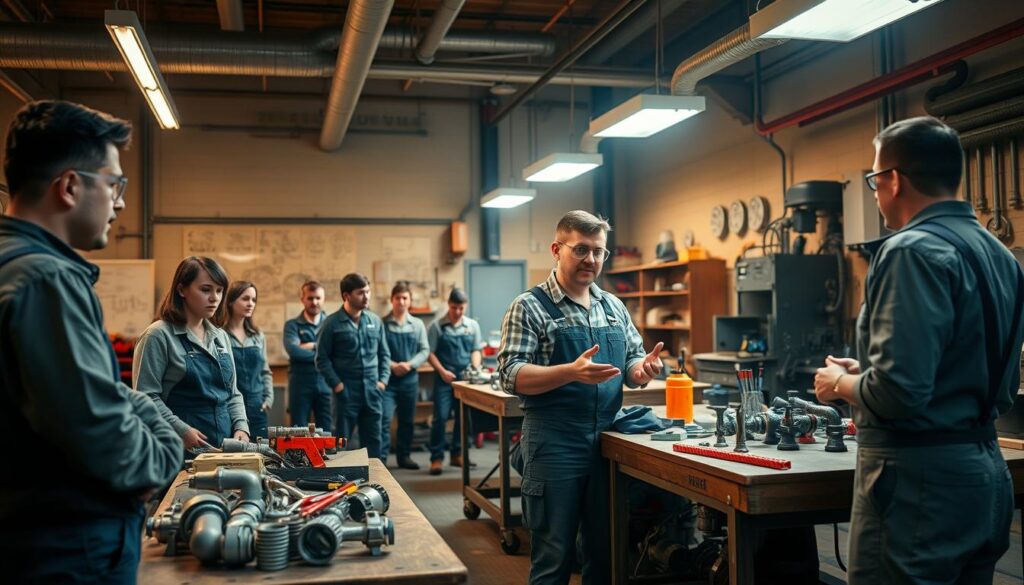
Starting a career as a professional plumber involves understanding your educational path. You’ll learn about the plumbing trade school length and the training options in the United States.
Trade schools provide structured programs that cover essential plumbing skills. These programs last from six months to two years. They depend on the professional plumber qualification path you choose.
- Classroom instruction focusing on technical skills
- Hands-on training with professional equipment
- Safety procedures and industry regulations
- Blueprint reading and system design
Your education will include three main levels of training:
| Training Level | Key Focus Areas | Approximate Duration |
|---|---|---|
| First Level | Basic plumbing principles and safety | 6-12 months |
| Second Level | Advanced pipe systems and technical calculations | 12-18 months |
| Third Level | Specialized techniques and code compliance | 18-24 months |
When choosing a program, look for accredited schools that meet state licensing needs. Quality education is key to your future in the plumbing field.
State Licensing Exam Preparation and Process
Getting ready for your state plumbing license exam takes a lot of planning and hard work. It’s not just about memorizing things. You need to really understand the plumbing license rules and find a good study plan.
Study Materials and Resources
First, you need to get the right study materials. Look for resources that cover all important areas of the exam. This includes:
- Official state licensing board study guides
- Comprehensive plumbing code books
- Practice exams from reputable plumbing licensing resources
- Online training modules
- Professional plumbing reference manuals
Exam Structure and Content
The exam will cover many important areas. You’ll see questions on:
- Plumbing codes and regulations
- Safety protocols
- Technical installation techniques
- Diagnostic and repair skills
- Local and state-specific plumbing requirements
Testing Locations and Scheduling
Setting up your exam time is important. Talk to your local licensing board for details. Many places have different testing spots and times to fit your schedule.
Pro tip: Book your exam well in advance and allow ample time for thorough preparation.
Journeyman to Master Plumber Progression
Going from journeyman plumber to master plumber is a big step in your career. It takes years of hard work and training. You’ll need to meet certain requirements to move up.
To get ahead in plumbing, you must follow a few steps. These steps are part of the master plumber licensing process:
- Complete a minimum of 4-5 years as a licensed journeyman plumber
- Accumulate substantial work experience in complex plumbing projects
- Pass a thorough master plumber licensing exam
- Show you have advanced technical and management skills
Becoming a master plumber is not just about knowing how to fix pipes. You also need to manage complex systems and understand building codes. You might even have to lead a team of plumbers.
“Becoming a master plumber is about demonstrating mastery of both technical skills and professional leadership.” – Professional Plumbing Association
Your education and experience are key to moving up. Many places require you to keep learning to stay certified. Investing in your skills can lead to better pay and more job chances.
It usually takes 5-7 years to go from journeyman to master plumber. This depends on your state’s rules and how fast you progress in your career.
Financial Considerations and Training Costs
Getting a professional plumber qualification needs careful financial planning. Knowing the costs of plumbing education helps you make smart career choices.
Tuition and Educational Expenses
Plumbing school usually lasts 2-5 years. Costs vary by program and location. Your total expenses might include:
- Trade school tuition: $3,000 – $15,000
- Textbooks and study materials: $500 – $1,500
- Tools and equipment: $1,000 – $2,500
- Certification exam fees: $100 – $500
Available Financial Aid Options
There are many ways to help pay for your education:
- Federal student grants
- Vocational training scholarships
- Apprenticeship program funding
- Employer tuition reimbursement
Return on Investment
Being a licensed plumber is a financially rewarding career. Plumbers earn an average annual salary of $56,330. Experienced plumbers can make up to $97,000 a year. Your education investment can lead to great financial gains in the long run.
Investing in your plumbing education is a strategic career move with promising financial returns.
Career Advancement Opportunities

Starting your career as a plumber opens up many paths for growth. As a licensed plumber, you can move beyond simple repairs. You can explore different career paths that use your skills and knowledge.
Getting your master plumber license can lead to advanced roles. You can choose from many specialized areas. These include:
- Specialized Plumbing Consultant
- Project Management in Construction
- Industrial Plumbing Systems Design
- Municipal Water Infrastructure Specialist
- Technical Training and Education
Many plumbers start their own businesses. This can lead to more money and freedom in your work. You can offer unique services like green plumbing or water management advice.
It’s important to keep learning and getting better at your job. Look into new technologies like smart home systems or sustainable designs. These skills can make you stand out.
Your licensing journey is not just about obtaining credentials, but creating opportunities for professional growth and innovation.
Meeting other professionals, going to conferences, and keeping up with new tech can boost your career. The plumbing field is always changing, and being ready can help you succeed.
Conclusion
Getting a plumbing license is a smart move that needs hard work and patience. Knowing how long it takes to get your license helps plan your career. It usually takes 2-5 years, based on your state’s rules and how much you put into the trade.
Starting as an apprentice and passing tough exams are key steps. Each step teaches you important skills and knowledge. Even though it’s tough, it leads to good jobs, fair pay, and chances to move up in the field.
Getting your plumbing license is a big step that leads to a respected job with steady demand. Schools, apprenticeships, and hard work can make your journey easier. It’s important to know your state’s rules to follow the right path.
Being a licensed plumber is more than just following the law. It’s about becoming an expert in a field that keeps our infrastructure running. Your dedication to learning and growing will turn your training into a fulfilling career.