

Affiliate Disclosure
Plumber Guide Guys is a participant in the Amazon Services LLC Associates Program, an affiliate advertising program designed to provide a means for sites to earn advertising fees by advertising and linking to Amazon.
How Long Does It Take to Be a Master Plumber? Did you know only 3% of plumbers get the master plumber certification in the U.S.? Becoming a master plumber is tough but fulfilling. It needs hard work, technical skills, and a lot of time.
Knowing how long it takes to become a master plumber is key for those thinking about this career. It usually takes 7-10 years. This includes many steps of learning and tough training.
Your journey will have lots of education, hands-on training, and experience as a journeyman. You’ll also get special certifications. Each step helps you become a top plumber.
Key Takeaways
- Master plumber certification requires 7-10 years of professional progression
- Multiple stages of training and education are essential
- Continuous learning and skill development are critical
- State-specific requirements can impact certification timeline
- High earning rewards dedicated professionals
Table of Contents
Understanding the Path to Master Plumber Certification
Becoming a licensed master plumber is a challenging journey. You must meet specific educational and licensing needs that change by state. This path requires dedication, technical skills, and a deep understanding of industry standards.
To achieve master plumber license requirements, you must follow several key steps. Each state has its own rules for plumbing careers. But, most have similar basic requirements.
Educational Foundation
Your first step is to get a solid education. You’ll need:
- High school diploma or equivalent GED
- Completion of vocational training programs
- Technical education in plumbing systems
State Licensing Dynamics
Licensing for master plumbers varies by state. Most states require:
- Successful completion of apprenticeship programs
- Documented work experience
- Passing of licensing exams
Professional Standards Exploration
Professional certifications show your dedication to excellence. Becoming a licensed master plumber means following strict industry standards. These standards ensure public safety and quality service.
Your journey includes ongoing learning, practical experience, and showing expertise in plumbing systems. This applies to homes, businesses, and industrial settings.
Starting Your Plumbing Career: High School and Beyond
Starting your plumbing career begins early, often in high school. Choosing the right classes can lay the groundwork for success. Math and science classes are key, as they teach skills needed in plumbing.
High school can be a great start for a plumbing career. Important subjects include:
- Algebra and geometry
- Physics
- Computer-aided design (CAD)
- Technical drawing
Not everyone takes the same path. If you didn’t finish high school, getting a GED is a good choice. Many vocational programs accept students with different educational backgrounds.
“The right preparation today opens doors to technical excellence tomorrow.” – Professional Plumbing Association
| Educational Stage | Recommended Preparation | Career Impact |
|---|---|---|
| High School | STEM Courses | Strong Technical Foundation |
| Alternative Education | GED Program | Flexible Entry Point |
| Early Skill Development | Technical Electives | Competitive Advantage |
Students can also look into trade schools, vocational workshops, and internships. These offer hands-on experience and help you meet people in the field.
The Essential Role of Plumbing Trade School
Plumbing trade school is key for those starting in the plumbing field. It offers detailed training for a career in plumbing.
Starting your plumbing career means learning from trade schools. They mix theory with practical skills for plumbing jobs.
Program Duration and Structure
Plumbing school lasts from months to two years. The program includes:
- Short-term certificate programs (3-9 months)
- Associate degree programs (2 years)
- Comprehensive vocational training courses
Comprehensive Skills Development
Trade schools teach important skills for jobs. You’ll get hands-on training in:
- Pipe installation techniques
- Blueprint reading
- Safety protocols
- Modern plumbing technologies
Certification Pathways
There are many certifications to boost your career. They prove your skills and open more job doors.
| Certification Type | Duration | Key Focus Areas |
|---|---|---|
| Basic Plumbing Certification | 3-6 months | Fundamental skills |
| Advanced Plumbing Technician | 12-18 months | Complex system design |
| Specialized Commercial Plumbing | 24 months | Industrial and commercial applications |
Choosing a good trade school is a smart move for your plumbing career.
How Long Does It Take to Be a Master Plumber?
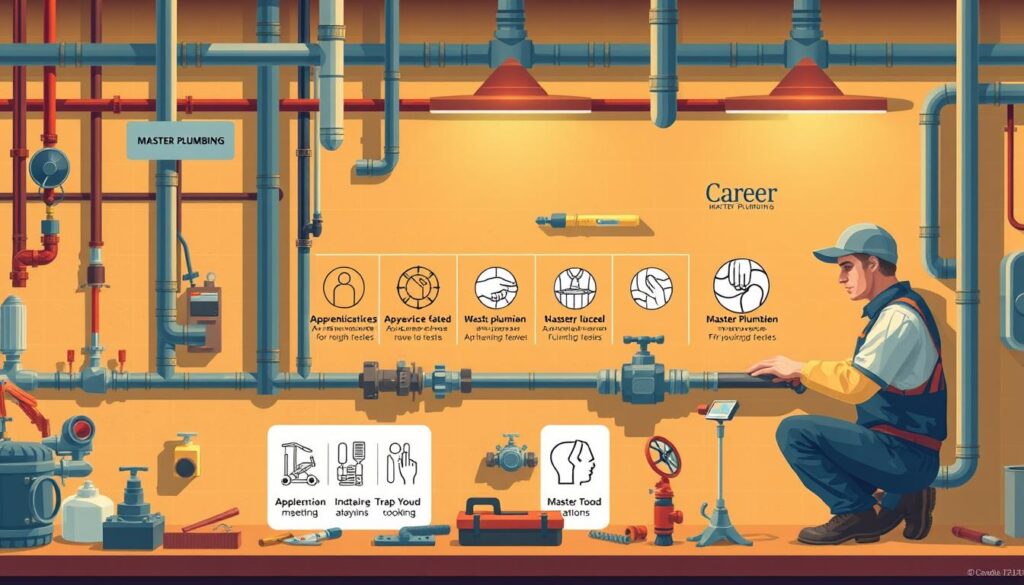
Becoming a master plumber is a tough journey. It needs dedication, time, and constant skill improvement. The training period is usually 7-10 years, making it one of the longest trades in construction.
Your journey to becoming a master plumber has key stages:
- High school education or equivalent
- Technical trade school training
- Apprenticeship program
- Journeyman certification
- Professional experience
- Master plumber licensing exam
The time it takes to become a master plumber varies by state. But most follow a set path. During the apprenticeship, you’ll spend 4-5 years learning by doing and earning a good salary. This way, you learn and earn at the same time.
Each step in your training has its own goals:
- Apprenticeship: 4-5 years of supervised work
- Journeyman Certification: 2-3 years of professional experience
- Master Plumber Exam: Testing your advanced skills
“The journey to becoming a master plumber is as much about practical experience as it is about technical knowledge.”
Investing in this career pays off well. Master plumbers are in high demand, earn great salaries, and have many job options. They work in homes, businesses, and factories.
The Apprenticeship Phase: Building Foundation Skills
Starting a plumbing apprenticeship is a big step towards becoming a professional plumber. It usually lasts 4-5 years. This time is filled with learning the trade skills you need.
During your apprenticeship, you’ll get lots of hands-on experience. You’ll learn by doing and also through classroom lessons. This is your chance to become skilled in plumbing.
On-the-Job Training Components
Your apprenticeship will focus on learning by doing. You’ll work under supervision to improve your skills. You’ll learn about:
- Pipeline installation techniques
- Pipe fitting and measurement
- Safety protocol implementation
- Equipment maintenance
- Reading technical blueprints
Classroom Instruction Requirements
Along with hands-on training, you’ll also learn in the classroom. You’ll study subjects like:
- Mathematics for plumbing calculations
- Building code regulations
- Electrical system fundamentals
- Advanced technical drawing
Duration and Milestones
Your apprenticeship will follow a set path:
| Year | Training Focus | Hours Required |
|---|---|---|
| Year 1 | Basic Skills Introduction | 1,000-1,500 hours |
| Year 2 | Intermediate Technical Training | 1,500-2,000 hours |
| Year 3-4 | Advanced Specialization | 2,000-2,500 hours |
Pro tip: To succeed, you need to be dedicated, keep learning, and work on both practical and theoretical skills.
Journeyman Plumber: The Intermediate Stage

As you move up in your plumbing career, the journeyman stage is a key milestone. It’s the middle step between being an apprentice and becoming a master plumber. This phase usually lasts 2-5 years of professional experience.
During this time, you’ll learn a lot and take on more duties. A journeyman plumber can work on their own, handling tough plumbing jobs with little help.
- Install and repair advanced plumbing systems
- Read and interpret technical blueprints
- Diagnose complex plumbing issues
- Mentor incoming apprentice plumbers
Your main goal is to get more experience and get ready for the master plumber test. Every project you finish makes you more skilled and respected in your field.
Rules about becoming a journeyman vary by state. But most places say you must work as a journeyman for a certain time before you can take the master plumber exam. This makes sure you’re ready to reach the top in plumbing.
Master Plumber Specializations and Career Options
As you move through your master plumber certification, you’ll find many specializations. These options let you shape your career in the plumbing field. The plumbing world offers many chances for those who want to explore and grow.
Master plumbers can pick from many specializations that fit their interests and goals. These areas offer unique challenges and can affect your certification timeline and earnings.
Commercial Plumbing Expertise
In commercial plumbing, you’ll work on big systems for buildings, offices, and institutions. Your tasks might include:
- Designing complex pipe networks
- Installing advanced water systems
- Keeping up large plumbing systems
Residential Services
Residential plumbing focuses on home systems and working with clients. This path needs:
- Knowing residential building codes well
- Being good at customer service
- Knowing how to handle plumbing in home renovations
Industrial Systems
Industrial plumbing is the most challenging area. It deals with:
- High-pressure pipes
- Complex water management in factories
- Installing special equipment
Your choice of specialization can greatly affect your certification timeline. Each path needs different skills and training times.
| Specialization | Average Experience Required | Typical Project Complexity |
|---|---|---|
| Commercial Plumbing | 5-7 years | High |
| Residential Services | 3-5 years | Medium |
| Industrial Systems | 7-10 years | Very High |
Choosing the right specialization can change your plumbing career and open new opportunities.
State-Specific Timeline Variations and Requirements
Getting a master plumber license is a complex journey. Each state has its own rules for professional certification. This makes the qualifications and expectations different across the country.
When you start your journey to become a master plumber, you’ll see big differences between states. These differences affect:
- Total years of required experience
- Specific educational coursework
- Examination protocols
- Continuing education mandates
For instance, California has a tougher path than some midwestern states. Where you live greatly affects the time and steps to get your license.
Understanding your state’s specific requirements is key for a successful plumbing career.
Important things to consider for state requirements for master plumbers include:
- Minimum apprenticeship duration
- Specific technical training hours
- Specialized certification exams
- Proof of practical work experience
Pro tip: Always contact your state’s licensing board directly to get the most current and accurate information about master plumber requirements.
Earning and Career Advancement
Your plumbing career has many chances for growth and making money. Master plumbers can earn a lot by learning new skills and trying different paths.
Plumbers with experience can make a good income. They usually earn between $50,000 and $85,000 a year. The best ones can even make over $100,000.
- Residential plumbing services
- Commercial system installations
- Industrial maintenance contracts
- Business ownership opportunities
There are many ways to make a lot of money in plumbing. If you’re good at it, you might want to:
- Start your own plumbing business
- Offer special consulting services
- Teach apprentices
- Get a job managing a big construction company
Where you live also affects how much you can earn. Cities with lots of building and complex systems pay more to skilled plumbers.
Strategic skill development and continuous learning are key to maximizing your plumbing career advancement path.
Pro tip: Invest in advanced certifications and technology training to stand out in the plumbing job market.
Conclusion
Becoming a licensed master plumber is a tough but rewarding career. It requires dedication, constant learning, and a drive for professional growth. You’ll start with trade school, then move to apprenticeships and certifications.
This journey usually takes 7-10 years, depending on your state’s rules and your effort. You’ll spend a lot of time learning technical skills and understanding plumbing systems. This hard work leads to a stable job with good pay and many opportunities.
Choosing this career can bring you great job satisfaction. Master plumbers are in high demand, earn well, and can even start their own businesses. You’ll gain skills that are valuable in many areas, helping keep our infrastructure safe.
If you’re starting or thinking of changing careers, becoming a licensed master plumber is a great choice. Your dedication to learning and improving will be key to your success in this important trade.