
Affiliate Disclosure
Plumber Guide Guys is a participant in the Amazon Services LLC Associates Program, an affiliate advertising program designed to provide a means for sites to earn advertising fees by advertising and linking to Amazon.
How Long Does It Take to Be a Certified Plumber? Did you know the plumbing industry is growing fast? It’s expected to grow by 5% by 2030. This means over 48,600 new jobs will open up each year in the U.S. Becoming a certified plumber takes hard work, planning, and knowing what’s ahead.

The time it takes to become a certified plumber varies. It usually takes 4 to 7 years. The process includes an apprenticeship, technical classes, and getting a professional license. Each state has its own rules for this.
On your journey to becoming a plumber, you’ll need to be dedicated and skilled. You’ll also need to love solving big problems. Every step you take will teach you more and help you get better at your job.
Key Takeaways
- Plumbing certification typically requires 4-7 years of training
- Multiple stages include apprenticeship and technical education
- State-specific requirements impact certification timelines
- Continuous learning is key in plumbing
- Career opportunities grow with more certifications
Table of Contents
Understanding the Path to Becoming a Licensed Plumber
Starting a career as a plumber needs careful planning. You must understand the basic needs and educational paths. These will shape your future in the skilled trades.
Basic Requirements and Prerequisites
Before starting plumber training, you must meet certain requirements. Most states ask for:
- Being at least 18 years old
- Having a high school diploma or GED
- Passing a background check
- Having a valid driver’s license
Educational Background Needed
Your education is key for plumbing school length and apprenticeships. Technical schools and community colleges offer special courses. These can help you stand out.
| Educational Option | Duration | Key Benefits |
|---|---|---|
| Technical Certificate | 6-12 months | Foundational knowledge, basic skills |
| Associate’s Degree | 2 years | Advanced training, broader understanding |
Initial Steps to Start Your Journey
To begin your plumber training, follow these steps:
- Research local apprenticeship opportunities
- Contact local plumbing unions
- Attend vocational career fairs
- Network with professional plumbers
Remember, your commitment and dedication will be the key to successfully navigating the path to becoming a licensed plumber.
How Long Does It Take to Be a Certified Plumber
Becoming a certified plumber is a journey that needs dedication and planning. Your apprenticeship usually lasts several years. You’ll learn a lot and develop your skills.
The process to get certified takes about 4-5 years. You’ll go through many stages of learning:
- Apprenticeship program (4 years)
- On-the-job training (6,000 hours)
- Technical classroom instruction
- State licensing examinations
Your apprenticeship is split into 12-month periods. Each year builds on what you learned before. Be ready to spend a lot of time learning practical and technical skills.
“The path to becoming a professional plumber is not just about time, but about mastering complex technical skills and safety protocols.” – Professional Plumbing Association
Remember, different states have their own rules for plumbing certification. Some might need extra training or specific exams.
Putting in the time and effort will make you very skilled. You’ll be able to handle complex plumbing systems and solve tough problems.
The Structure of Plumbing Apprenticeship Programs
Understanding the plumbing apprenticeship timeline is key. It shows how training turns an apprentice into a licensed plumber. These programs mix hands-on experience with book learning, making a strong path for growth.
Plumbing apprenticeship programs are made to give you a full learning experience. The path from apprentice to licensed plumber includes two main parts:
- Hands-on workplace training
- Technical classroom instruction
- Structured skill development
On-the-Job Training Components
Your practical training focuses on real-world skills. You’ll work with experienced plumbers, learning how to install, repair, and maintain systems. This hands-on learning is key for mastering plumbing skills.
Technical Classroom Instructions
Classroom learning adds to your practical training. You’ll learn about blueprint reading, math, safety, and plumbing codes. These classes help you grasp the science behind plumbing.
Required Training Hours Breakdown
The typical apprenticeship program needs a lot of time:
| Training Type | Average Hours | Percentage |
|---|---|---|
| On-the-Job Training | 6,000-8,000 hours | 70-80% |
| Classroom Instruction | 144-200 hours annually | 20-30% |
“Success in plumbing comes from mastering both practical skills and theoretical knowledge.” – Master Plumber Association
Your hard work during this apprenticeship will change you. You’ll go from a beginner to a skilled plumber ready for tough challenges.
State-Specific Certification Requirements and Timeframes
Getting a plumbing license can be tricky because each state has its own rules. It’s key for those starting in plumbing to know these rules well. This knowledge helps in building a strong career.
Plumbing licenses vary a lot from state to state. Some states have strict rules, while others are easier to follow.
- California requires 8,000 hours of apprenticeship training
- Texas mandates 4 years of practical experience
- New York demands thorough state exams
- Florida offers various certification levels
Your location affects how long it takes to get a plumbing license. It’s vital to research your state’s specific needs.
| State | Apprenticeship Hours | Exam Requirements | License Timeframe |
|---|---|---|---|
| California | 8,000 hours | State & Local Exams | 4-5 years |
| Texas | 6,000 hours | Journeyman Exam | 4 years |
| New York | 7,500 hours | Multiple Certification Levels | 5 years |
Checking with your state’s licensing board is the best way to get the latest info. They can tell you about plumbing certification needs and how long it might take to get licensed.
The Journey from Apprentice to Journeyman Plumber
Going from apprentice to journeyman plumber is a big step in your plumbing career. It takes hard work, skill growth, and passing certification tests. These tests show you’ve learned a lot from plumber training programs.
On your journey, you’ll learn tough skills and show you’re a pro. Getting your journeyman plumber license usually takes 4-5 years. This time depends on your state’s rules and how fast you learn.
Skills Development Milestones
To get your journeyman plumber license, you’ll hit several important marks:
- Finish a detailed apprenticeship program
- Get the needed work hours with a supervisor
- Learn advanced plumbing skills
- Know local building codes and safety rules
Certification Examinations
Certification tests are key to moving up in your career. They check if you know:
- How to install plumbing systems
- Local and state building codes
- Safety rules
- How to solve tough plumbing problems
“Becoming a journeyman plumber is not just about passing an exam, but demonstrating mastery of your craft.” – Professional Plumbers Association
Passing these tests proves you’re an expert. It also opens more job chances in plumbing.
Advanced Certifications and Specializations
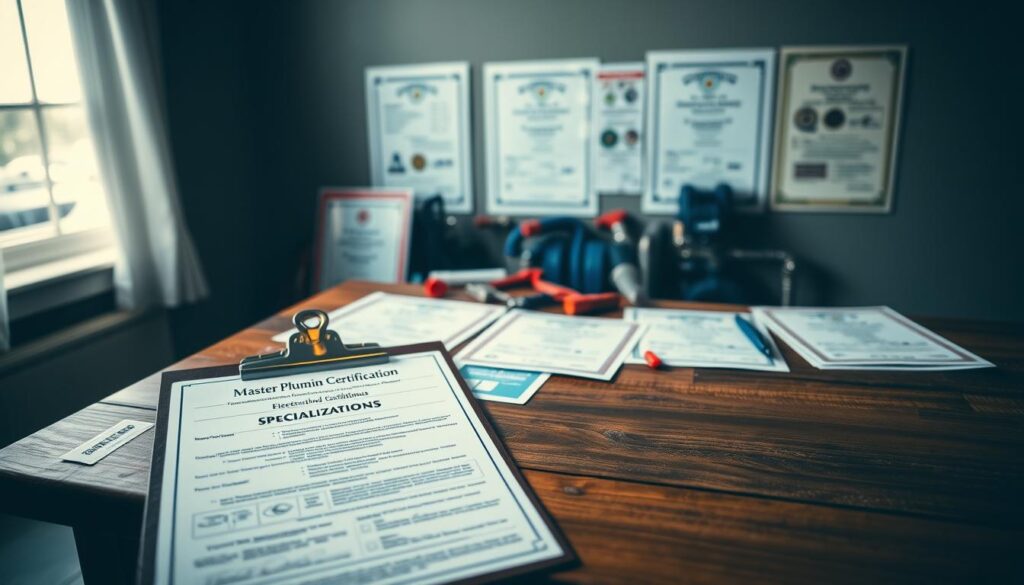
After becoming a journeyman, plumbers can grow their careers with advanced certifications. The master plumber certification is the highest honor in plumbing.
There are many exciting paths for your plumbing career:
- Medical Gas Systems Certification – Training for plumbing in healthcare facilities
- Water Treatment Specialist Credentials
- Green Plumbing Technologies Certification
- Commercial and Industrial Plumbing Specializations
To become a master plumber, you need:
- At least 5-7 years of experience
- Passing written and practical exams
- Keeping up with education credits
- Meeting state licensing rules
| Specialization | Average Additional Earnings | Certification Time |
|---|---|---|
| Medical Gas Systems | $10,000-$15,000/year | 6-12 months |
| Green Plumbing Technologies | $8,000-$12,000/year | 3-6 months |
| Industrial Plumbing | $12,000-$18,000/year | 9-15 months |
Investing in advanced certifications can open up more job opportunities and increase your income in plumbing.
Training Costs and Financial Considerations
Starting a career in plumbing needs careful financial planning. Knowing the costs of plumbing school and training helps you plan your future.
Getting certified as a plumber involves spending money. The total cost depends on education, apprenticeship fees, and tools needed.
Apprenticeship Wages
Plumber training programs let you earn while learning. Apprentices get good wages that grow as they get better:
- First-year apprentices: 40-50% of a journeyman plumber’s wage
- Second-year apprentices: 50-60% of journeyman rate
- Third-year apprentices: 60-70% of journeyman rate
- Fourth-year apprentices: 70-90% of journeyman rate
Educational Expenses
The cost of plumbing school changes based on location and program. Here’s what you might pay:
| Program Type | Estimated Cost | Duration |
|---|---|---|
| Community College Programs | $3,000 – $10,000 | 1-2 years |
| Technical School Programs | $5,000 – $15,000 | 6 months – 2 years |
| Apprenticeship Programs | $0 – $1,000 | 4-5 years |
Available Financial Aid Options
Don’t let money stop you from becoming a plumber. There are ways to help pay for your education:
- Federal student grants
- Vocational training scholarships
- Employer-sponsored training programs
- State workforce development grants
“Investing in your plumbing education is investing in a stable, rewarding career.” – Professional Trades Association
Understanding the costs of plumber training helps you plan your career path.
Career Advancement Opportunities and Timeline

Starting a plumbing career opens doors to many opportunities. Getting a master plumber certification is a big step up. It lets plumbers grow their skills and make more money.
There are several important steps in a plumbing career:
- Apprentice Plumber
- Journeyman Plumber
- Master Plumber
- Specialized Technical Roles
- Business Ownership
With more experience, plumbers can explore different areas. Some might focus on:
- Commercial Plumbing Systems
- Industrial Pipe Installations
- Green Technology Plumbing
- Municipal Water Infrastructure
Getting a master plumber certification opens up big opportunities. You could become a senior technician, a project manager, or even start your own business.
| Career Stage | Typical Duration | Potential Earnings |
|---|---|---|
| Apprentice | 4-5 years | $30,000-$45,000 |
| Journeyman | 2-3 years | $50,000-$70,000 |
| Master Plumber | 5+ years | $75,000-$100,000+ |
Planning your career well can help you reach your full plumbing career. Keep learning, get more certifications, and network to succeed long-term.
Conclusion
Starting a career as a certified plumber is a smart choice for those looking for a stable job. Knowing how long it takes to become a certified plumber helps plan your career. It usually takes 4-5 years, with apprenticeships, technical classes, and hands-on experience.
Plumbing certification rules change by state, but the basics stay the same. Your hard work in learning, mastering skills, and following state rules will lead to success. Investing in your career means more than just time and effort. It opens doors to many jobs in construction, maintenance, and service.
The plumbing field has many career paths and chances for growth. You can work in homes, commercial buildings, or advanced roles. Your first certification is just the start. Keep learning and improving your skills to make your career last and be profitable.
Your career starts with knowing what’s needed, working hard in training, and loving the job. Every step you take gets you closer to being a skilled, certified plumber. This job is key to our infrastructure and daily lives.