
Affiliate Disclosure
Plumber Guide Guys is a participant in the Amazon Services LLC Associates Program, an affiliate advertising program designed to provide a means for sites to earn advertising fees by advertising and linking to Amazon.
How Does Plumbing Work in an Apartment Building? Did you know an apartment building can have over 5 miles of plumbing pipes? It’s important for both residents and property managers to understand how plumbing works. The plumbing system in an apartment is a complex network of pipes for water and waste.
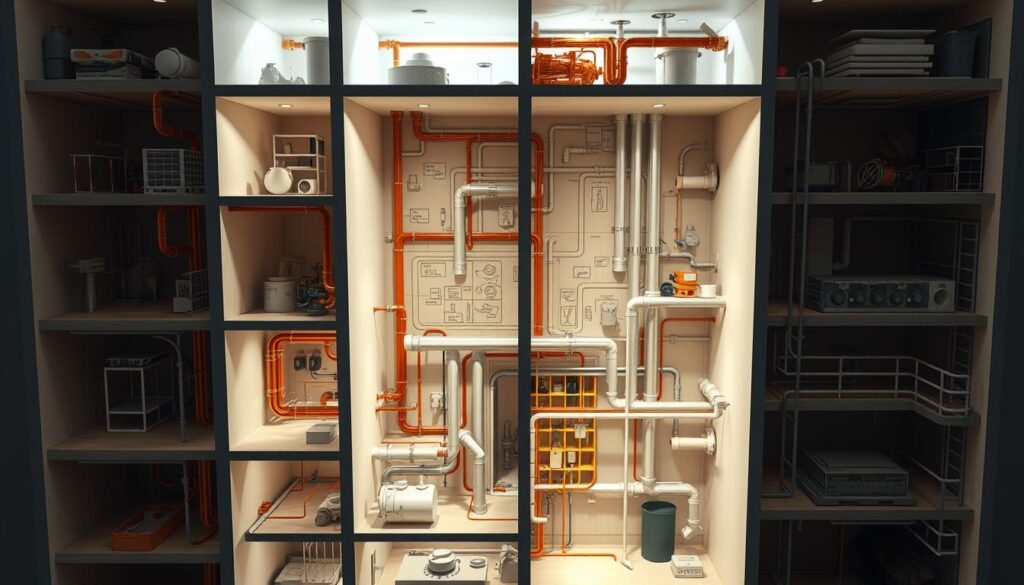
Exploring apartment plumbing reveals a detailed system for clean water and waste removal. It’s different from single-family homes because it needs advanced engineering. This ensures water pressure, temperature, and flow work well across many stories and units.
The plumbing system in an apartment has two main parts: bringing in fresh water and removing wastewater. These systems must work together perfectly. They need to serve every resident reliably while keeping the building safe and efficient.
Key Takeaways
- Apartment buildings have extensive plumbing networks spanning multiple miles
- Plumbing systems must manage water supply for numerous units simultaneously
- Two primary subsystems handle water intake and waste removal
- Vertical pipe stacks are critical for multi-story water distribution
- Complex engineering ensures consistent water pressure throughout the building
Understanding Apartment Building Plumbing Systems
Apartment building plumbing systems are complex. They involve water supply and drainage that’s different from single-family homes. High-rise plumbing needs special engineering for reliable water and waste management across many units and floors.
These systems face unique challenges. They must handle water pressure, distribution, and waste removal across many levels and spaces. This is unlike residential homes.
Multiple Dwelling System Characteristics
Multiple dwelling systems share basic plumbing principles with single-family homes. But they have more complex setups:
- Expanded pipe branching networks
- Centralized water supply connections
- Shared vertical and horizontal pipe routes
- Integrated pressure management mechanisms
Multi-Story Building Plumbing Challenges
High-rise buildings have special plumbing needs. Water pressure changes from floor to floor. This requires unique designs to keep water flow and quality steady.
| Plumbing System Component | Function | Key Considerations |
|---|---|---|
| Vertical Risers | Water Distribution | Pressure regulation |
| Horizontal Branch Lines | Unit Water Connection | Balanced flow management |
| Drainage Stacks | Waste Removal | Gravity-assisted drainage |
Basic Components Overview
Good high-rise plumbing design includes key components for efficient water and waste management. Knowing these parts helps everyone understand the complexity of building infrastructure.
Water Supply Infrastructure in Apartment Buildings
Apartment buildings have a complex water system. It starts with a connection to the city’s water main. This water then flows into the building’s shared plumbing infrastructure.
The pipe layout in apartment buildings is designed with care. It makes sure each apartment gets the right water pressure and quality. Water moves through main lines and then into smaller pipes for each apartment. These pipes are usually made of:
- Copper
- PEX (cross-linked polyethylene)
- Galvanized steel
The water system in your building has important parts. Special valves and meters help control water pressure and track usage. They also help maintenance teams fix problems without affecting everyone.
Hot and cold water lines run side by side. They connect to water heaters, giving you reliable access to both temperatures. This is useful for washing dishes or taking a shower.
Efficient water infrastructure is the hidden backbone of comfortable apartment living.
Good design of the plumbing system helps avoid problems like low water pressure, leaks, and contamination. Building managers must check and fix these systems often. This ensures safe, consistent water for every apartment.
How Does Plumbing Work in an Apartment Building
Plumbing systems in apartment buildings are complex networks. They ensure residents get clean water and manage waste well. Understanding these systems helps us see the engineering behind modern urban living.
Modern apartment buildings have sophisticated infrastructure for water and waste. The plumbing system has many parts that work together. This provides essential services to residents.
Fresh Water Distribution
Fresh water comes into apartment buildings through main supply lines. These lines use special pressure control mechanisms. This ensures water pressure is consistent across floors and units.
- Pressure-boosting pumps for multi-story buildings
- Gravity-fed water supply networks
- Centralized water meter monitoring
Wastewater Management
Apartment waste water management is complex. It involves a network of drainage systems. Vertical and horizontal pipes carry wastewater from units to the main sewer line.
- Soil stacks collect human waste
- Waste stacks handle kitchen and bathroom drainage
- Vent stacks prevent pressure buildup and facilitate proper drainage
Pressure Control Systems
Residential building water pressure needs careful management, more so in high-rise buildings. Special systems manage water flow. They prevent issues like low pressure or pipe stress.
“Effective pressure control is key for comfortable living spaces in apartment buildings.” – Urban Plumbing Association
Advanced technologies like variable speed pumps and pressure-reducing valves regulate water distribution. They ensure each apartment gets consistent and reliable water service.
Vertical Plumbing Stacks and Their Functions
Vertical plumbing stacks are key in high-rise plumbing designs. They run up through apartment buildings. They connect floors and help move waste and air efficiently.
In high-rise plumbing, vertical stacks have three main roles:
- Waste Removal: They carry waste from floors up to the sewer line
- Ventilation: They let air flow, stopping pressure buildup
- Drainage Support: They keep water flowing well and avoid blockages
Apartment buildings use three types of vertical stacks:
- Soil Stacks: Handle solid waste
- Waste Stacks: Manage liquid waste from sinks and showers
- Vent Stacks: Control air pressure in the system
Designing vertical stacks needs careful planning. Architects and plumbers must think about pipe size, slope, and connections. This ensures they work well. If not done right, it can lead to slow drains, bad smells, and damage.
Effective vertical plumbing stacks are vital for keeping multi-story buildings healthy and working well.
Drainage Systems and Waste Management
Knowing how to manage apartment waste water is key to a healthy living space. The drainage system in an apartment complex is a complex network of pipes. It’s designed to remove wastewater efficiently and prevent health hazards.
Your apartment’s drainage system has several important parts. They work together to manage waste well:
- Branch lines collect wastewater from individual units
- Vertical stacks transport waste through multiple floors
- Horizontal underground lines direct waste away from the building
Branch Lines and Collection Points
In an apartment complex pipe layout, branch lines are very important. These smaller pipes connect fixtures like sinks, toilets, and showers to the main system. Each branch line is designed to avoid blockages and ensure waste is removed smoothly.
Horizontal Underground Lines
Beneath the building, horizontal underground lines are the final step in waste management. These large pipes collect waste from vertical stacks. They then send it to the municipal sewer system or an on-site treatment facility.
Ventilation Requirements
Proper ventilation is vital in apartment waste water management. Vent pipes prevent vacuum formation, eliminate odors, and keep air pressure right in the system. Without enough ventilation, you might face slow drains, gurgling sounds, or bad smells.
Effective drainage systems protect both resident health and building infrastructure.
Water Pressure Management in Multi-Story Buildings
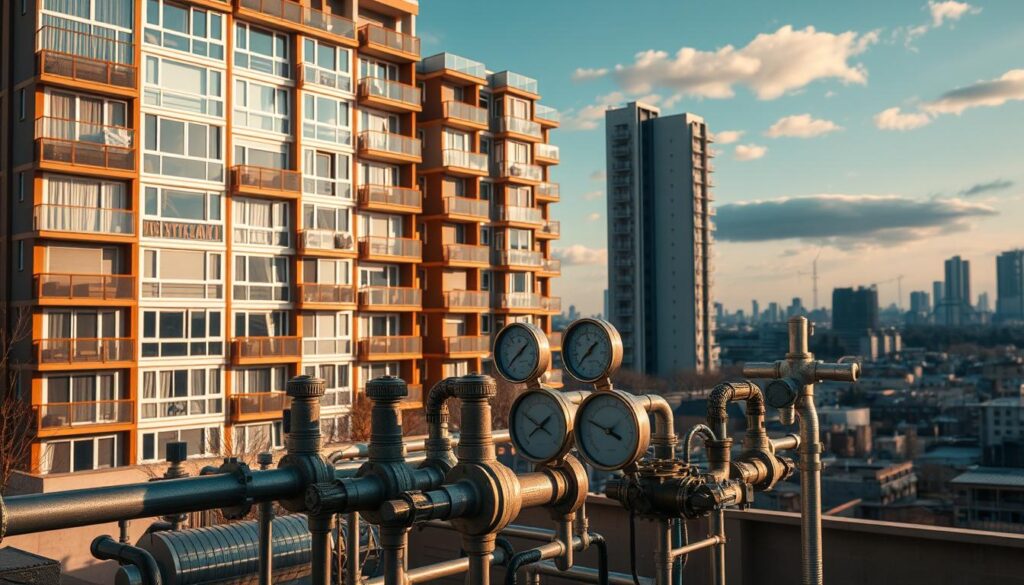
Managing water pressure in high-rise buildings is a big challenge. Property managers and engineers face it head-on. Apartment buildings need special systems to get water to every floor.
There are three main ways to keep water pressure right in tall buildings:
- Gravity-based roof tanks
- Booster pump systems
- Hydro-pneumatic storage tanks
Each method helps solve the problem of getting water to the top floors. Gravity-based systems use water stored high up. Gravity helps push the water down. This works well for buildings that aren’t too tall.
| Pressure Management Method | Optimal Building Height | Water Pressure Consistency |
|---|---|---|
| Gravity-based Roof Tanks | Up to 6 floors | Moderate |
| Booster Pump Systems | 7-20 floors | High |
| Hydro-pneumatic Tanks | 20+ floors | Very High |
For buildings over six floors, booster pumps are key. They push water up through the pipes, keeping pressure steady. Pressure-reducing valves are also important. They help control the water flow, keeping it right for both the top and bottom floors.
The design and height of your building will decide the best water pressure plan. Talking to plumbing experts can help pick the right system for your building.
Control Valves and Water Meters
Managing a shared plumbing system needs advanced tools. Control valves and water meters are key. They keep the plumbing system safe and efficient for everyone.
Individual Unit Controls
Your apartment’s plumbing system uses special control valves. They offer big benefits:
- Isolate individual unit water supply
- Prevent cross-contamination between units
- Enable targeted maintenance without disrupting entire building water service
Building-Wide Monitoring Systems
Modern buildings use advanced water monitoring. It tracks usage and finds problems early. These systems help:
- Track water usage per unit
- Identify possible leaks quickly
- Support sustainable water management practices
Emergency Shut-off Locations
Emergency shut-off valves are placed wisely. Knowing where they are can stop big water damage.
Quick action in emergencies can save thousands in repairs.
Common Plumbing Materials and Components
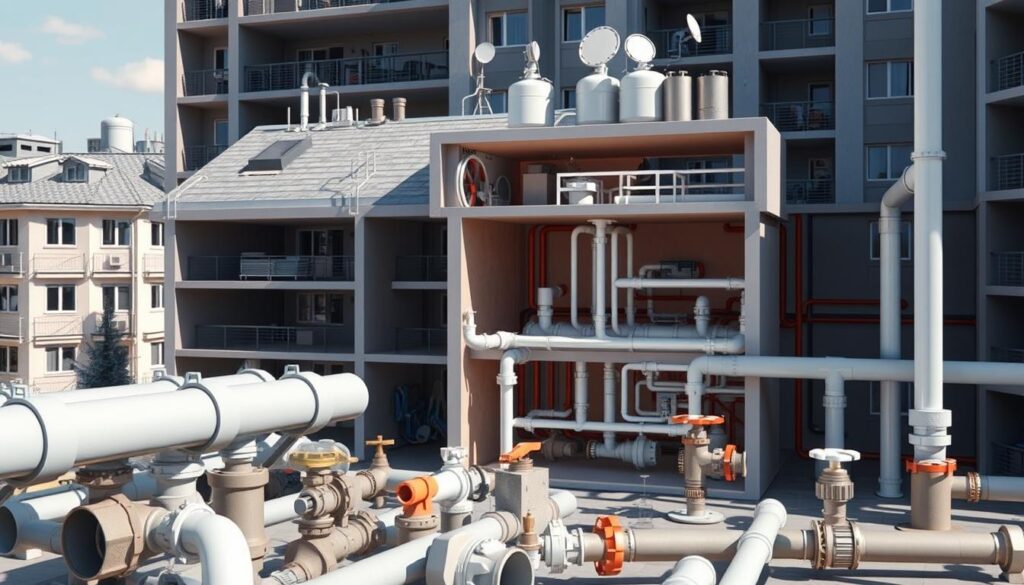
Choosing the right materials is key for a high-rise plumbing design. Different materials have their own benefits for apartment complex pipe layouts.
Modern buildings use several important pipe materials. Each has its own special features:
- Copper Pipes: Durable and resistant to corrosion
- PVC (Polyvinyl Chloride): Lightweight and cost-effective
- CPVC (Chlorinated Polyvinyl Chloride): Heat-resistant option
- PEX (Cross-linked Polyethylene): Flexible and easy to install
Choosing the right material for your apartment complex is important. Consider water pressure, temperature, and building age. These factors help pick the best piping materials.
| Material | Durability | Cost | Best Use |
|---|---|---|---|
| Copper | 50-70 years | High | Hot and cold water lines |
| PVC | 25-40 years | Low | Drainage systems |
| PEX | 30-50 years | Medium | Flexible water distribution |
“The right pipe material can significantly impact the efficiency and reliability of a building’s plumbing system.” – Professional Plumbing Association
Each material has its own benefits for high-rise plumbing. Copper is very durable, while PEX is flexible during installation. Your building’s needs will decide the best choice.
Professional plumbers suggest a detailed assessment before choosing materials for your apartment complex pipe layout.
Building Code Requirements and Compliance
Working with apartment building plumbing systems is complex. You must follow strict building codes and safety standards. This ensures the plumbing is safe and reliable for everyone.
Building codes for multi-unit plumbing set important rules. They protect people and keep buildings strong. These rules cover everything from design to upkeep.
Safety Standards
Safety is the top priority in plumbing design for apartments. Important safety rules include:
- Choosing the right pipe materials
- Using systems to prevent leaks
- Installing backflow prevention systems
- Designing plumbing to withstand earthquakes
Maintenance Regulations
Keeping plumbing systems in good shape is key. Property managers need to follow strict maintenance plans. This includes:
- Checking pipes regularly
- Following set maintenance schedules
- Fixing problems right away
- Testing water quality
Inspection Requirements
Local governments require regular checks to make sure plumbing meets codes. These inspections look at:
| Inspection Focus | Frequency | Primary Objectives |
|---|---|---|
| Structural Integrity | Annually | Detect possible structural issues |
| Water Quality | Semi-Annually | Make sure water is safe to drink |
| System Performance | Quarterly | Check if the system works well |
Knowing and following these rules helps keep residents safe. It also keeps the apartment building valuable for a long time.
Conclusion
Plumbing in an apartment building is complex, with many systems working together. They make sure water is always available and waste is handled properly. This setup is key to modern living, needing careful design and upkeep.
Your building’s plumbing is more than just pipes. It includes advanced pressure control and drainage designs. It also follows strict building codes. It’s important for managers and residents to keep up with maintenance to avoid water problems.
Every part of the plumbing system is important for a safe home. From the vertical stacks to underground lines, they all work together. They need expert care and regular checks to keep everything running smoothly.
Knowing how plumbing works in apartments shows the amazing engineering behind it. It brings us clean water and takes away waste. Keeping up with maintenance and inspections is essential for reliable plumbing in our homes.