
Affiliate Disclosure
Plumber Guide Guys is a participant in the Amazon Services LLC Associates Program, an affiliate advertising program designed to provide a means for sites to earn advertising fees by advertising and linking to Amazon.
Does Plumbing Work Without Power? Ever thought about what happens to your plumbing when the power goes out? Knowing how plumbing works without electricity can be a lifesaver during a blackout.
Power outages can really mess with your plumbing. It depends on your water source and home setup. You might find it hard to get water or keep things clean during an outage.
Handling plumbing during a power outage needs some know-how. Different water systems act differently without electricity. It’s key to know how your home’s plumbing works.
Key Takeaways
- Plumbing functionality depends on water source type
- Some fixtures work differently during power disruptions
- Municipal and well water systems have unique challenges
- Preparation can minimize inconvenience during blackouts
- Understanding your system helps maintain essential services
Table of Contents
Understanding Your Home’s Plumbing System Basics
Your home’s plumbing system is a complex network of pipes and fixtures. It works together to deliver clean water and remove waste. Knowing how it works without electricity helps you prepare for power outages and keep water flowing.
Plumbing systems have two main parts. They ensure water flows well throughout your home. Each part is key to managing water and waste.
Supply System Components
The water supply system brings fresh water into your home. It has important parts like:
- Main water line connecting to municipal or well water source
- Pipe materials like copper, PVC, or PEX
- Shut-off valves for emergency control
- Pressure regulators to manage water flow
Drainage System Elements
Gravity-fed plumbing uses gravity to remove wastewater. Important parts include:
- Drain pipes with downward slope
- Vent stacks for air circulation
- Traps to prevent sewer gases
- Main sewer line connection
Water Pressure Mechanisms
Water pressure is key to how well water moves through your system. Without electricity, gravity is the main force. Understanding this helps you know how your plumbing will work during outages.
Knowing your home’s plumbing basics prepares you for unexpected challenges and helps maintain essential water services.
Does Plumbing Work Without Power: Main Considerations
Knowing how plumbing works without power is key for homeowners facing blackouts. Your plumbing system can act differently based on several important factors during a power outage.
The main things to think about for plumbing during a power outage are:
- Water source type (municipal or well)
- Gravity-fed system availability
- Presence of electric pumps
- Household water pressure mechanisms
When looking into plumbing without power, you’ll see not all parts work the same. Municipal water systems keep pressure up with big tanks and pumps. These can keep working a bit during power cuts.
| Plumbing Component | Power Outage Functionality |
|---|---|
| Gravity-Fed Systems | Fully Operational |
| Electric Water Pumps | Non-Functional |
| Municipal Water Supply | Partially Functional |
Your home’s plumbing setup will decide if you have water during blackouts. Older homes with gravity-fed systems might not have much trouble. But newer homes with electric pumps could face big issues.
Preparedness is key to managing plumbing during unexpected power losses.
Homeowners need to know their plumbing setup to plan well for power cuts. This helps avoid problems during these times.
City Water vs Well Water During Power Outages
When the lights go out, your water supply becomes a critical concern. Knowing how city and well water systems work during blackouts helps you prepare for power outages.
City and well water systems have different challenges during blackouts. Each system has its own issues for homeowners who need reliable water access.
Municipal Water Supply Function
Municipal water systems have strong backup plans. Water treatment facilities often have:
- Emergency generators
- Gravity-fed water storage tanks
- Pressure maintenance systems
“Cities invest heavily in infrastructure to maintain water service during emergencies.” – Water Infrastructure Expert
Well System Limitations
Well water systems face big challenges during power outages. Electric submersible pumps need electricity to work, which means:
- No water pressure
- Complete water supply interruption
- Potential system damage if not properly managed
Emergency Water Access
Preparing for water supply disruptions is key. Homeowners should:
- Store emergency water reserves
- Invest in manual pump alternatives
- Understand local water distribution plans
Proactive preparation can make a big difference in keeping water access during unexpected power failures.
Gravity-Fed Plumbing Systems
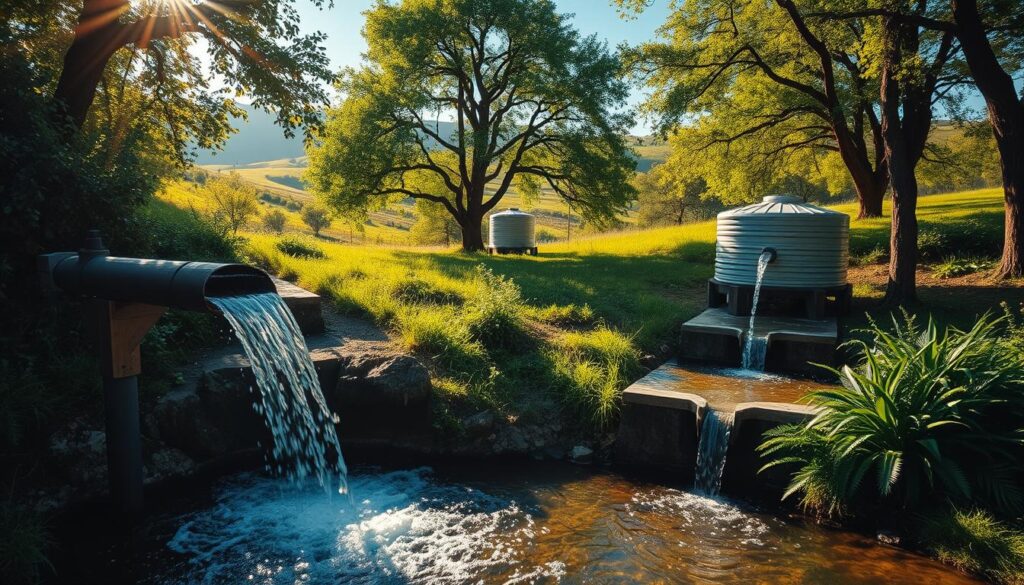
Water systems without electricity are a big help during power outages. Gravity-fed plumbing is a smart solution that uses gravity to move water. It doesn’t need any electrical pumps.
The idea behind gravity-fed plumbing is simple. Water in a high tank flows down through pipes because of gravity. This way, water keeps flowing even when the power is out. These systems work best where there’s a natural slope or a good spot for a water tank.
- Water flows naturally from higher to lower points
- No electrical pumps required
- Reliable during power interruptions
- Works in remote or off-grid locations
Gravity-fed water systems are often found in:
- Rural properties
- Mountain homes
- Camping facilities
- Agricultural settings
But, gravity-fed plumbing has some downsides. The water pressure depends on how high the water source is. If the elevation is low, the water flow might not be steady.
Pro tip: Talk to a professional plumber to see if a gravity-fed system fits your property and water needs.
Impact on Different Plumbing Fixtures During Blackouts
Power outages can cause unexpected problems with your home’s plumbing. Knowing how different fixtures work without power helps you get ready. It also helps you deal with any plumbing issues that might come up.
When the power goes out, how your plumbing works changes a lot. It depends on the type of fixture and your water system. Some parts keep working fine, but others stop working altogether.
Toilet Functionality
Toilets usually work a bit during power outages. You can flush them at least once using the water in the tank. Here are some important points to remember:
- Gravity-fed toilets keep working without power
- Pressure-assisted toilets might need a manual flush
- You can usually get one flush out of most home toilets
Sink and Faucet Performance
How faucets work depends on your water system. If you’re connected to city water, you might have water for a short time. But well water systems might stop working.
- City water systems might give you water for a bit
- Well pumps need electricity to work
- You can use stored water for flushing and basic needs
Water Heater Considerations
Water heaters stop working when the power goes out, mainly for electric ones. Gas water heaters with electric ignition also stop.
- Electric water heaters stop heating
- Gas water heaters with electric parts stop working
- You can use the hot water you have for a little while
Getting ready for plumbing issues during power outages can make things easier. It helps keep your home running smoothly.
Emergency Water Storage Solutions
Having an emergency water supply is key to surviving power outages and unexpected issues. Water systems without electricity can fail quickly, leaving you at risk. Knowing how to store and keep water safe is vital for comfort during emergencies.
Here are important tips for your emergency water storage:
- Store at least one gallon of water per person per day
- Plan for a minimum three-day emergency supply
- Rotate stored water every six months to ensure freshness
Your emergency water containers should be:
- Food-grade plastic
- Opaque to prevent algae growth
- Tightly sealed
- Stored in a cool, dark location
Pro tip: Clean, large soda bottles or dedicated water storage containers work best for long-term emergency water supply. Don’t use containers that held toxic chemicals or milk, as they can harbor harmful bacteria.
For long power outages, consider these extra water sources:
- Water heater reserves
- Melted ice from freezers
- Collected rainwater (with proper filtration)
Always have water purification methods ready, such as water purification tablets or a portable water filter. This ensures your emergency water stays safe to drink during power outages.
Backup Systems and Alternative Power Sources
When power goes out, your plumbing can be at risk. It’s key to know about backup water systems and pressure tanks during power failures. Various power options can keep your water system working during blackouts.
Choosing the right backup power source is important. You need to think about your needs, budget, and home setup. Let’s look at the best ways to keep your water systems running when power is out.
Generator Options for Plumbing Backup
Generators are a solid choice for backup water systems. Consider these factors:
- Portable generators for temporary power needs
- Standby generators with automatic transfer switches
- Fuel type compatibility (propane, natural gas, diesel)
Battery Backup Systems
Modern battery backup systems are advanced. They can:
- Keep well pumps running
- Keep water pressure up
- Work quietly and without emissions
Solar-Powered Solutions
Solar power is a green option for backup systems. Solar setups can:
- Make electricity when it’s sunny
- Store energy in batteries
- Power important water systems
| Backup System | Power Output | Cost Range | Reliability |
|---|---|---|---|
| Portable Generator | 3-10 kW | $500-$2,000 | Good |
| Standby Generator | 8-20 kW | $2,000-$5,000 | Excellent |
| Solar Battery System | 5-15 kW | $3,000-$15,000 | Very Good |
Take time to find the best backup system for your home. Being prepared can really help during power outages.
Maintaining Plumbing During Extended Power Outages
Preparation is key when facing plumbing issues during power outages. Knowing how to keep your plumbing system running without electricity can save you from expensive repairs. It also helps keep basic functions working.
During long blackouts, your main worries will be protecting your pipes and managing water. Does plumbing work without power depends on several things you can control.
- Insulate exposed pipes to prevent freezing
- Minimize water usage to conserve limited resources
- Create emergency drainage strategies
- Monitor water pressure and possible leaks
To avoid pipe damage, you need a solid plan. Cold temperatures can put a lot of stress on your plumbing system. Keeping your home warm is essential. Here are some steps to protect your pipes:
| Action | Purpose |
|---|---|
| Wrap pipes with insulation | Prevent freezing |
| Keep cabinet doors open | Allow warm air circulation |
| Drip faucets | Reduce pipe pressure |
Water conservation is critical during long power outages. Set up strict water rules to meet your family’s basic needs. Focus on drinking water, sanitation, and hygiene.
Preventive Measures and Preparation Tips
Getting your plumbing ready for power outages is key. A good emergency water plan can keep you safe and comfortable when the lights go out.
First, make a detailed plan for your backup water systems. Experts say to store at least one gallon of water per person for emergencies.
- Develop an emergency plumbing kit with essential tools
- Store water in clean, sealed containers
- Maintain a minimum three-day water supply
- Invest in water purification tablets
- Check water containers quarterly for integrity
Regular checks are vital to keep your plumbing working during power cuts. Look over your pipes, valves, and weak spots. Early checks can stop big problems later.
Think about getting backup power for your water needs. Portable generators or batteries can keep water flowing during long outages.
Your preparedness today determines your resilience tomorrow.
Safety Considerations and Common Mistakes
When dealing with plumbing during a power outage, safety is key. Knowing the risks helps you stay safe and protect your home and family.
Electrical safety is very important when your plumbing system loses power. Water and electricity together can be very dangerous. They can cause serious injuries or even death.
- Avoid using electrical equipment near water sources
- Unplug appliances connected to plumbing systems
- Keep generators away from water lines
- Use battery-powered lights instead of electrical devices
Does plumbing work without power? Not always. Homeowners often make mistakes during blackouts. These mistakes can harm their water system.
| Common Mistake | Potential Consequence | Recommended Action |
|---|---|---|
| Flushing toilets repeatedly | Drainage system backup | Limit toilet usage, use alternative waste disposal |
| Ignoring water pressure changes | Potential pipe damage | Monitor system carefully, avoid sudden water releases |
| Using untested backup power | Electrical system failure | Test generators before emergency situations |
Pro tip: Always keep a battery-powered flashlight and emergency water supply near your plumbing fixtures during power outages.
Safety first: Proper preparation can prevent costly and dangerous plumbing mishaps during power disruptions.
Conclusion
Knowing how plumbing works without power is key for homeowners. A good emergency water plan can help a lot during blackouts. Learning about water systems helps keep your home safe and water flowing when the power goes out.
Getting ready for power cuts needs a few steps. Whether you use city water or a well, knowing how to handle plumbing without power is important. Using generators, storing water, and understanding gravity-fed systems can help you stay calm in tough times.
Being prepared can really lower your stress during power cuts. Check your plumbing, get reliable backup power, and make a detailed emergency water plan. Knowing what to do and being ready are your strongest allies when dealing with plumbing without power.
With the right info and planning, your home can stay comfortable and functional during power outages. Take a close look at your systems, make a solid emergency plan, and keep up with your plumbing’s special needs.