
Affiliate Disclosure
Plumber Guide Guys is a participant in the Amazon Services LLC Associates Program, an affiliate advertising program designed to provide a means for sites to earn advertising fees by advertising and linking to Amazon.
Ever wondered who should install your hot water heater? The answer might surprise you. Water heaters mix plumbing and electrical work, causing confusion for homeowners.
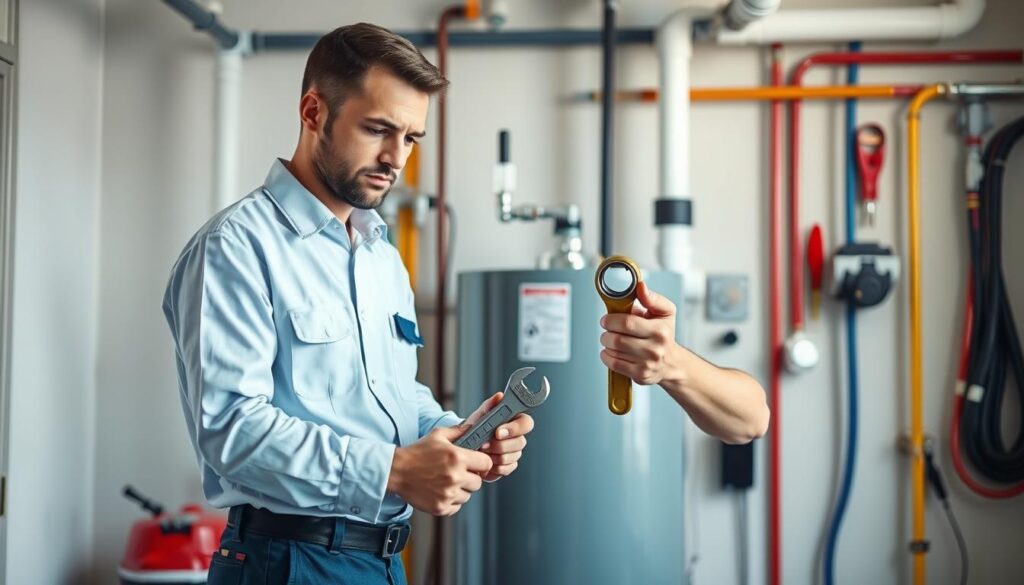
Installing a hot water heater isn’t simple. It needs skills from both plumbing and electrical fields. A wrong move could risk your safety or make the system less efficient.
Choosing the right professional for your water heater is key to your home’s comfort and safety. Knowing the balance between plumbing and electrical is important for making the right choice.
Key Takeaways
- Water heaters require both plumbing and electrical expertise
- Professional installation ensures safety and efficiency
- Different water heater types may require specialized skills
- Licensing and certifications matter in water heater installation
- Improper installation can lead to significant home damage
Table of Contents
Understanding Water Heater Installation Professionals
Getting a professional to install your water heater is key. A licensed plumber knows more than just how to connect pipes. They have the skills and knowledge needed for a job well done.
Water heaters are not simple to install. They need precise technical skills. The debate between electricians and plumbers depends on the type of water heater.
Types of Water Heater Systems
There are many types of water heaters, each with its own needs:
- Tank Water Heaters: Need deep plumbing knowledge
- Tankless Water Heaters: Require both electrical and plumbing skills
- Electric Water Heaters: Need specific electrical knowledge
- Gas Water Heaters: Need skills in gas lines and ventilation
Professional Licensing Requirements
Professionals must meet strict licensing standards. State rules often include:
- Completing technical training
- Passing licensing exams
- Showing practical experience
- Keeping certifications up to date
Installation Safety Considerations
Safety is top priority during installation. Experts must know how to handle electrical and gas connections. They also need to ensure the heater fits safely in your home.
Proper installation protects your home and ensures optimal water heater performance.
Does a Plumber or Electrician Install a Hot Water Heater: The Definitive Answer
Many homeowners wonder who to hire for water heater replacement. The answer is usually a licensed plumber. Plumbers have the skills to work with both water and electrical systems of water heaters.
Plumbers are experts in installing water heaters. They know how to connect water lines, drainage systems, and electrical parts. They handle important steps like checking water line compatibility and ensuring proper water pressure.
- Assessing existing water line compatibility
- Ensuring proper water pressure and flow
- Connecting electrical and gas components safely
- Verifying system compliance with local building codes
While electricians might be needed for some electrical work, they don’t know as much about water systems. It’s best to hire a licensed plumber for the whole job.
Professional tip: Always verify a plumber’s licensing and experience before scheduling a water heater installation.
In some cases, you might need both a plumber and an electrician. This is often true for older homes or special electrical setups. A skilled plumber can bring together the right experts for a smooth installation.
When to Call a Licensed Plumber for Water Heater Issues
Dealing with water heater problems can be frustrating and complex. Knowing when to seek professional help is key for your home’s hot water system. A licensed plumber water heater installation expert can save you time, money, and prevent safety risks.
Your water heater shows signs of trouble through various warning signs. Spotting these signals helps you know when you need a pro.
Common Plumbing-Related Problems
- Persistent strange noises from the water heater
- Rusty or discolored water
- Inconsistent hot water temperature
- Visible water leaks around the tank
- Reduced hot water pressure
Plumber’s Expertise and Tools
Hot water heater installation pros have the skills to tackle tough water heater problems. They use a detailed approach that includes:
- Thorough system diagnostic assessment
- Precision troubleshooting techniques
- Advanced repair and replacement strategies
- Safety compliance verification
Installation and Replacement Services
Professional plumbers offer more than just repairs. They can decide if repair or replacement is better for you, helping you choose wisely for your home’s hot water needs.
Always choose certified pros who know water heater maintenance and installation inside out. Their knowledge protects your investment and ensures your system works its best.
Situations That Require an Electrician’s Expertise
Understanding when to call an electrician is key when dealing with water heater installations. Plumbers handle many tasks, but some electrical issues need an electrician’s touch. Electricians are vital for fixing complex electrical problems that affect your water heater’s performance and safety.
Electrical problems with water heaters can be dangerous and need a pro’s help. Whether to call a plumber or an electrician depends on the electrical issues you face.
- Circuit breaker repeatedly tripping
- Visible signs of electrical damage
- Overheating electrical connections
- Persistent reset button issues
Electric water heaters have unique challenges compared to gas models. Electrical system integrity is key for safe and efficient water heating. Electricians have the skills to tackle complex electrical problems that might affect your water heater’s performance.
| Electrical Issue | Potential Cause | Recommended Action |
|---|---|---|
| Frequent Circuit Breaker Trips | Overloaded Circuit | Electrical System Evaluation |
| Wiring Degradation | Age or Moisture Exposure | Professional Rewiring |
| Thermostat Malfunction | Electrical Component Failure | Component Replacement |
Your safety is the most important thing when dealing with water heater electrical issues. While the debate between electrician and plumber goes on, electrical problems clearly need an electrician’s help for proper installation and maintenance.
Water Heater Components and Professional Requirements
Knowing the parts of a water heater is key for a safe and efficient setup. Installing a water heater needs special skills and knowledge.
Installing a water heater is more than just mechanical work. It involves many important parts that need careful handling and technical know-how.
Tank System Components
Water heater tanks have several essential parts that pros manage with care:
- Insulation materials
- Anode rod for corrosion protection
- Temperature and pressure relief valve
- Tank lining and protective coating
Electrical System Elements
Electrical connections need special skills during installation. Pros know how to handle complex wiring and safety rules.
| Electrical Component | Professional Expertise Required |
|---|---|
| Thermostat | Precise calibration and testing |
| Heating elements | Proper voltage and amperage assessment |
| Electrical connections | Code-compliant installation |
Gas Line Considerations
Gas-powered water heaters need extensive professional knowledge. Wrong installation can cause gas leaks or carbon monoxide dangers.
- Proper gas line sizing
- Leak detection techniques
- Ventilation system verification
- Pressure regulation
Choosing a pro ensures your water heater is installed safely and efficiently. This keeps your home and family safe from harm.
Cost Comparison: Plumber vs Electrician Services
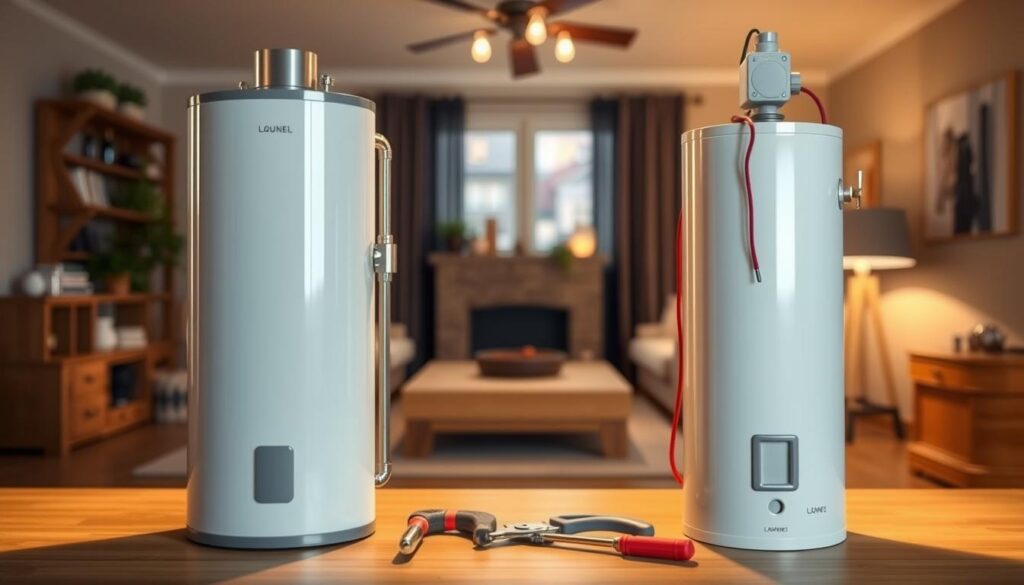
Knowing the costs of water heater installation helps you choose the right person for the job. The price depends on several important factors.
Water heater installation costs can range from $800 to $2,500. Professional fees are a big part of this cost. When picking someone for water heater replacement, look at these key factors:
- Type of water heater (electric, gas, tankless)
- Complexity of installation
- Local labor rates
- Required permits and inspections
Plumbers charge between $45 to $200 per hour. Electricians might cost $50 to $180 per hour. The cost depends on your home and the new system’s needs.
For electric water heaters, you might need an electrician. Gas water heaters require a plumber with gas line knowledge. Some jobs might need both, raising the total cost.
| Professional Type | Average Hourly Rate | Typical Installation Time |
|---|---|---|
| Plumber | $45 – $200 | 2-4 hours |
| Electrician | $50 – $180 | 1-3 hours |
To save on costs, get quotes from different professionals. Make sure they are experts in water heater systems.
DIY vs Professional Installation: What You Need to Know
Choosing between DIY and professional water heater installation is tough for homeowners. Some tasks are easy to do yourself, but installing a water heater needs special skills. You need to know the installation requirements.
Knowing how complex water heater installation is helps you decide. You can either do it yourself or hire a pro.
Safety Considerations
Installing a water heater is risky. It can harm your home and your safety. Professionals know how to:
- Manage electrical connections safely
- Prevent gas line leaks
- Ensure proper ventilation
- Comply with local building codes
Required Tools and Skills
DIY installation needs a lot of tools and skills. But, professionals have the right tools and training.
| DIY Skills Required | Professional Expertise |
|---|---|
| Basic plumbing knowledge | Advanced technical certification |
| Limited tool collection | Professional-grade specialized tools |
| Minimal safety training | Comprehensive safety protocols |
Permit Requirements
Most places need special permits for water heater installs. Professional installers know the local rules and handle permits well. This avoids legal issues for homeowners.
While you can do some maintenance yourself, installing a water heater is best left to the pros. They ensure safety, follow rules, and make sure it works well.
Water Heater Maintenance and Troubleshooting Guide
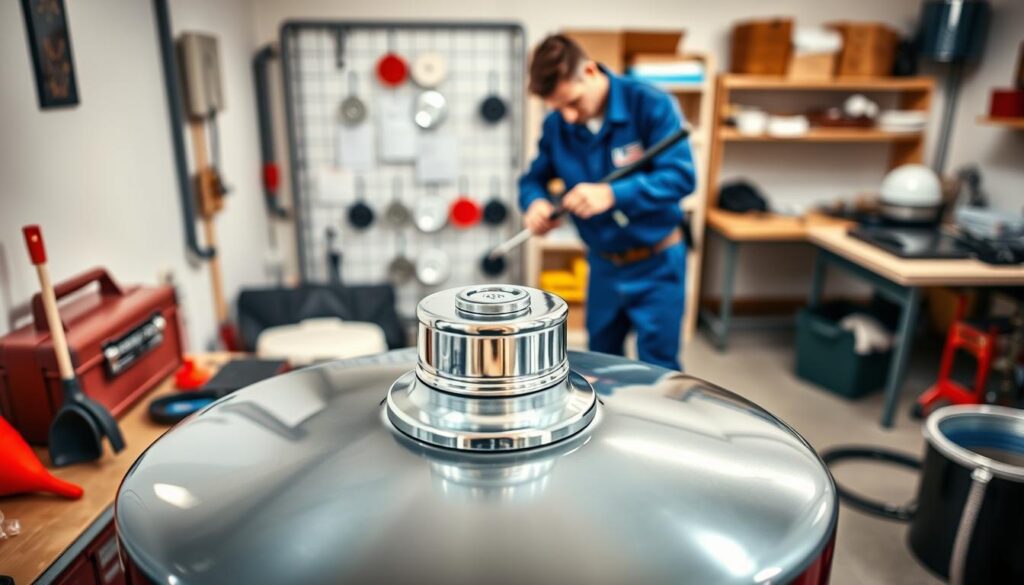
Keeping your water heater in good shape is key to its long life and avoiding sudden failures. Experts say regular upkeep is essential for smooth operation. Knowing how to fix small problems can prevent big ones.
“Prevention is always better than cure when it comes to water heater maintenance” – Professional Plumbing Experts
Here are some important maintenance tips to keep your water heater working well:
- Flush the tank annually to remove sediment buildup
- Check the pressure relief valve every six months
- Inspect the anode rod for corrosion every two years
- Listen for unusual noises that might indicate internal issues
When you’re troubleshooting, some simple steps can fix minor issues. Does it matter if a plumber or electrician installs your hot water heater? Not always. You can handle some problems yourself, but others need a pro.
| Issue | DIY Solution | Professional Help Needed |
|---|---|---|
| No hot water | Check circuit breaker | Complex electrical problems |
| Leaking tank | Tighten connections | Significant structural damage |
| Strange noises | Flush tank | Persistent loud sounds |
Safety tip: Always turn off power and water supply before performing any maintenance.
While you can do some maintenance yourself, complex issues need experts. If unsure, get help from a skilled installer to avoid damage to your system.
Lifespan and Replacement Considerations
Knowing how long your water heater lasts is key to keeping hot water flowing in your home. Different heaters last for different times, affecting costs and who you choose for replacement.
Traditional tank water heaters usually last 8-12 years. Tankless ones can go up to 15-20 years. Spotting when your heater is getting old helps you replace it on time and avoid sudden failures.
- Signs you need water heater replacement:
- Frequent repairs
- Inconsistent water temperature
- Rust-colored water
- Unusual noises from the tank
Looking for a plumber to replace your water heater? Experts can help. They’ll check your current system and suggest the best option. Costs vary based on the system and installation complexity.
Homeowners looking to save money should think about the long-term. Modern units often save money over time because they use less energy.
Pro tip: Regular maintenance can extend your water heater’s lifespan and prevent premature replacement.
Conclusion
Figuring out if a plumber or electrician should install your hot water heater can be tricky. It depends on your system’s needs and any technical issues. Experts suggest checking your situation before calling for help.
Plumbers usually handle water heater installations, focusing on plumbing connections and system integration. If there are electrical issues, an electrician might be needed for wiring or power. Knowing who to call is key for a safe and efficient setup.
Getting professional help is important for your water heater’s performance and life. Regular maintenance and quick fixes can avoid expensive repairs and keep your system running longer. Make sure to check the credentials of the professionals you choose for quality service.
Your home’s water heater setup will guide you on who to call. Talking to experienced technicians helps you make the right choices for installation, repair, and upkeep. This ensures you have reliable hot water for many years.
FAQ
Who is typically responsible for installing a hot water heater?
Do I need both a plumber and an electrician for water heater installation?
What types of water heaters require professional installation?
How much does professional water heater installation typically cost?
Who is typically responsible for installing a hot water heater?
Do I need both a plumber and an electrician for water heater installation?
What types of water heaters require professional installation?
How much does professional water heater installation typically cost?
FAQ
Who is typically responsible for installing a hot water heater?
A licensed plumber is usually the go-to for installing a hot water heater. They know how to handle water and electrical parts. This ensures the job is done right and safely.
Do I need both a plumber and an electrician for water heater installation?
Usually, a plumber can do the whole job. But, if there are complex electrical issues, an electrician might be needed. They help with electrical connections or panel upgrades.
What types of water heaters require professional installation?
All water heaters need a pro to install them. This includes electric, gas, tankless, and traditional tank systems. Each one has special needs for water, electrical, or gas connections.
How much does professional water heater installation typically cost?
Installing a water heater professionally can cost between 0 and
FAQ
Who is typically responsible for installing a hot water heater?
A licensed plumber is usually the go-to for installing a hot water heater. They know how to handle water and electrical parts. This ensures the job is done right and safely.
Do I need both a plumber and an electrician for water heater installation?
Usually, a plumber can do the whole job. But, if there are complex electrical issues, an electrician might be needed. They help with electrical connections or panel upgrades.
What types of water heaters require professional installation?
All water heaters need a pro to install them. This includes electric, gas, tankless, and traditional tank systems. Each one has special needs for water, electrical, or gas connections.
How much does professional water heater installation typically cost?
Installing a water heater professionally can cost between $800 and $1,500. The price depends on the type, installation complexity, and local labor rates. Additional work can also affect the cost.
Can I install a water heater myself?
Some people try to install water heaters themselves. But, it’s best to hire a pro. DIY installation can cause safety issues, code problems, damage, and void warranties.
What are the signs I need a new water heater?
Look out for these signs: your water heater is over 10-15 years old, water is rust-colored, you hear strange noises, it needs frequent repairs, water temperature is off, or you see leaks or corrosion.
How long does a professional water heater installation take?
A pro can install a water heater in 2-3 hours. But, it might take longer if the system is complex or needs extra work.
Do I need a permit for water heater installation?
Yes, most places need a permit for water heater installation. A licensed pro will get the permit for you. They make sure the job meets local codes and safety standards.
How often should a water heater be maintained?
Get your water heater checked annually by a pro. They’ll flush the tank, check valves, inspect connections, and make sure it’s working well.
What warranties typically cover water heater installation?
Water heaters usually come with 6-10 year warranties from the manufacturer. Professional installation often includes a workmanship warranty. This can last from 90 days to a year, depending on the service provider.
,500. The price depends on the type, installation complexity, and local labor rates. Additional work can also affect the cost.
Can I install a water heater myself?
Some people try to install water heaters themselves. But, it’s best to hire a pro. DIY installation can cause safety issues, code problems, damage, and void warranties.
What are the signs I need a new water heater?
Look out for these signs: your water heater is over 10-15 years old, water is rust-colored, you hear strange noises, it needs frequent repairs, water temperature is off, or you see leaks or corrosion.
How long does a professional water heater installation take?
A pro can install a water heater in 2-3 hours. But, it might take longer if the system is complex or needs extra work.
Do I need a permit for water heater installation?
Yes, most places need a permit for water heater installation. A licensed pro will get the permit for you. They make sure the job meets local codes and safety standards.
How often should a water heater be maintained?
Get your water heater checked annually by a pro. They’ll flush the tank, check valves, inspect connections, and make sure it’s working well.
What warranties typically cover water heater installation?
Water heaters usually come with 6-10 year warranties from the manufacturer. Professional installation often includes a workmanship warranty. This can last from 90 days to a year, depending on the service provider.