

Affiliate Disclosure
Plumber Guide Guys is a participant in the Amazon Services LLC Associates Program, an affiliate advertising program designed to provide a means for sites to earn advertising fees by advertising and linking to Amazon.
Do You Lose Shower Water Pressure With Plumbing in Ceiling? Ever thought about how plumbing above your head might affect your shower? The idea that plumbing in the ceiling could lower your shower’s water pressure is more complicated than it seems.
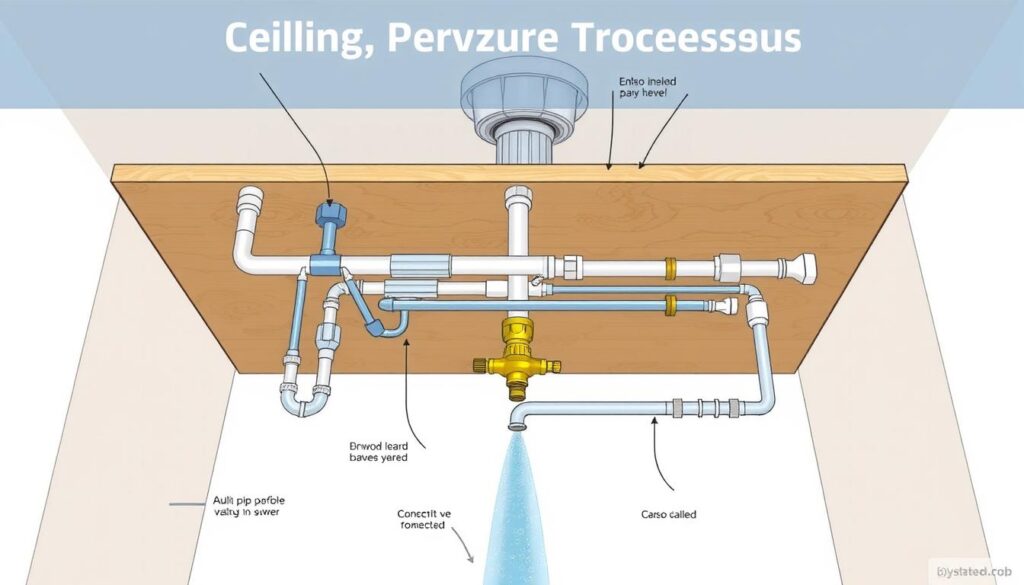
Ceiling plumbing is common in modern homes. It sends water supply lines through overhead spaces before reaching your fixtures. Overhead plumbing water pressure loss isn’t a sure thing, but knowing the details can help keep your shower flowing well.
Many homes and businesses use ceiling plumbing for space-saving and design reasons. But, it’s a myth that it always lowers your shower’s water pressure. If installed right, ceiling plumbing won’t cut down your water pressure.
Key Takeaways
- Ceiling plumbing doesn’t automatically cause water pressure loss
- Proper installation is key to keeping water pressure up
- Many things can affect your shower’s water pressure
- Getting a pro to check can find pressure problems
- Keeping up with maintenance stops sudden pressure drops
Table of Contents
Understanding How Ceiling Plumbing Works
Ceiling plumbing is a complex system that plays a key role in water distribution in your home. It’s important to know how water pressure gets to your shower. The network of pipes above your head is critical.
Different buildings use ceiling plumbing in unique ways. The setup depends on the building’s design and infrastructure needs. Let’s look at the main features of these systems:
- Slab-on-grade homes with ground-level plumbing
- Multi-story residential buildings
- Commercial structures with complex water distribution networks
Gravity’s Impact on Water Distribution
Many people don’t understand how gravity affects ceiling plumbing. Gravity helps water flow, but it’s not the only factor. Modern plumbing systems use several factors to ensure water is distributed evenly.
Pressure Systems in Modern Plumbing
Ceiling plumbing affects shower pressure through advanced pressure management. Water pressure is controlled by:
| Pressure Source | Characteristics |
|---|---|
| Municipal Water Supply | Centralized pressure regulation |
| Private Pressure Tanks | Localized pressure management |
| Pump Systems | Enhanced pressure control |
Knowing about these systems helps homeowners fix water pressure issues in their ceiling plumbing.
Do You Lose Shower Water Pressure With Plumbing in Ceiling?
Many homeowners worry about losing water pressure with ceiling plumbing. The good news is that well-designed ceiling plumbing usually doesn’t cause big problems. Modern plumbing systems are made to keep water flowing well, no matter where the pipes are.
Your shower head pressure with ceiling pipes depends on a few important things:
- Pipe installation quality
- Municipal water supply pressure
- Home pressure tank performance
- Pipe material and condition
Water pressure isn’t about height. Pressurized plumbing systems push water through pipes, keeping the flow steady. Professional plumbers use special methods to keep water pressure right during ceiling pipe setups.
Water flows with equal strength whether pipes run horizontally, vertically, or through the ceiling.
Getting a pro to install your plumbing is key to avoiding water pressure issues. Skilled plumbers know how to set up piping systems that keep water pressure steady. This means you’ll get a strong shower every time.
Common Causes of Low Shower Pressure
Low water pressure can be really frustrating, making it hard to enjoy your shower. Knowing why it happens helps fix the problem fast.
Many things can make your shower water flow weak. This affects the pressure in your plumbing system, even if it’s high up.
Mineral Deposit Buildup
Hard water has calcium and magnesium that stick to your pipes and showerheads. These deposits make narrow passages that block water flow. This greatly lowers your shower pressure.
- Calcium scale blocks pipe openings
- Showerhead nozzles become clogged
- Gradual pressure reduction occurs over time
Water Heater Issues
Your water heater is key to keeping water pressure steady. Problems like sediment buildup, faulty valves, or old equipment can hurt your shower’s performance.
- Check pressure relief valve functionality
- Inspect for sediment buildup
- Consider professional water heater maintenance
Municipal Supply Problems
Sometimes, low water pressure comes from outside your home. Issues like main line breaks or changes in the municipal supply can cause pressure drops.
Consistent low pressure might indicate a broader infrastructure issue requiring municipal investigation.
Impact of Pipe Materials and Corrosion on Water Pressure
Your home’s plumbing system is key to keeping shower pressure steady. The type of pipes used can greatly affect water flow and pressure, more so in older homes.
Galvanized steel pipes were common in homes from the early 1900s to the 1970s. They have a zinc coating to stop rust. Unfortunately, they deteriorate over time, making it hard to improve shower pressure.
- Zinc coating breaks down after 30-60 years
- Internal pipe diameter becomes restricted
- Rust particles accumulate and block water flow
Corrosion really hurts your plumbing’s performance. As pipes get older, rust and minerals narrow the inside, cutting water pressure. This slow narrowing makes your shower’s water flow weaker, making it hard to get a strong stream.
| Pipe Material | Lifespan | Pressure Impact |
|---|---|---|
| Galvanized Steel | 30-60 years | High corrosion risk |
| Copper | 50-70 years | Moderate corrosion |
| PEX | 40-50 years | Low corrosion |
Modern materials like copper and PEX last longer and corrode less. Upgrading to these can solve long-term pressure issues with overhead pipes.
The Role of Proper Pipe Sizing in Ceiling Installations
Knowing how pipe size affects your shower’s water pressure is key. It helps keep your plumbing system running well. The size of your pipes is important for water flow and pressure.
Many think smaller pipes mean higher water pressure. But, they actually lower the pressure in your shower. Here’s why:
- Smaller pipe diameters create increased water velocity
- Higher velocity leads to more friction inside the pipes
- Friction causes significant pressure loss in ceiling plumbing
Optimal Pipe Diameter Requirements
Choosing the right pipe size is vital to avoid losing water pressure in your shower. Plumbers suggest specific sizes based on water flow and building needs.
Effects of Pipe Length on Pressure
The length of your ceiling pipes affects water pressure. Longer pipes can lower pressure due to more friction and gravity. Shorter pipes and the right size help keep water flow steady in your shower.
Proper pipe sizing is not just about preventing pressure loss—it’s about ensuring a comfortable and reliable shower experience.
Importance of Proper Installation and Support
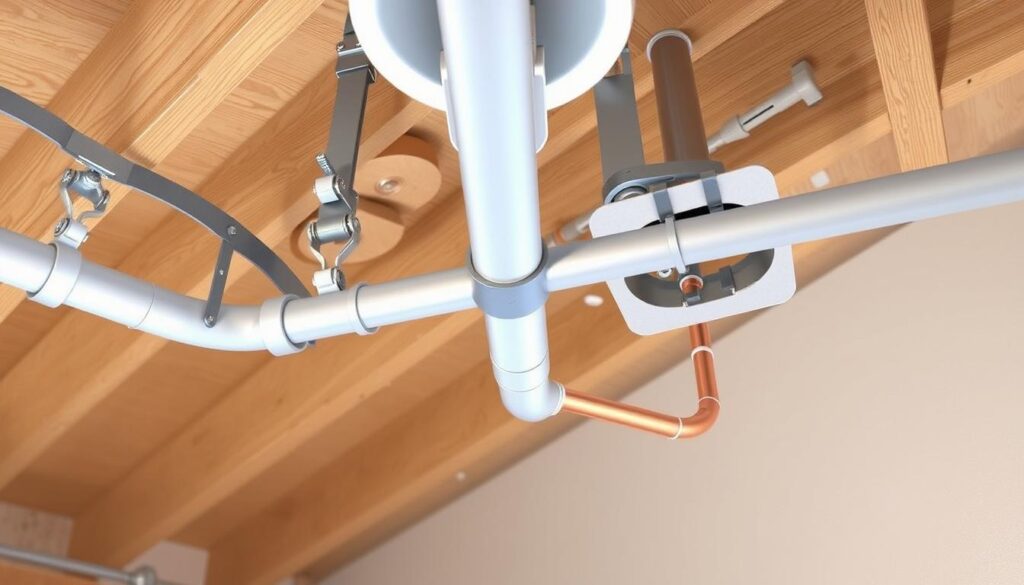
Proper installation and support are key for your ceiling plumbing system. They help keep your water system running smoothly. Your overhead pipes need careful handling to avoid problems that could lower your shower’s water pressure.
Professional plumbers know how to tackle ceiling plumbing challenges. They pay attention to several important details to ensure your system works well:
- Secure pipe mounting to prevent sagging
- Minimizing unnecessary pipe bends
- Strategic pipe routing to maintain consistent water flow
- Proper insulation in temperature-sensitive areas
To improve shower pressure, focus on the installation details. Unsupported pipes can lead to issues like:
- Increased vibration during water flow
- Potential structural stress
- Risk of future leaks
- Reduced overall system efficiency
Cold climate regions require extra precautions. Proper insulation is essential to prevent pipe freezing. This can severely affect water pressure and might even cause pipe damage.
Investing in professional installation is key to maintaining long-term plumbing system integrity and consistent shower performance.
By choosing expert installation and support, you can avoid many ceiling plumbing problems. This ensures reliable water pressure in your home.
Diagnosing Pressure Issues in Overhead Plumbing
Finding water pressure problems in your ceiling plumbing can be tough. The shower head pressure with ceiling pipes needs a careful look. Your home’s water system might have unexpected pressure drops that need to be checked.
To find water pressure drops in ceiling installations, follow a smart plan. First, check different fixtures to see if the problem is just in one place or everywhere.
Professional Inspection Techniques
- Do a full pressure test with special gauges
- Use video pipe inspections to find hidden blockages
- Measure water flow at different plumbing points
- Look for pipe corrosion or mineral buildup
Signs of Possible Pressure Loss
Warning signs can help you spot pressure issues early. Keep an eye out for these important signs:
- Weak water flow from many fixtures
- Unstable shower water pressure
- Strange sounds in water pipes
- Sudden increases in water bills
Professional plumbers have the skills and tools to deeply check your ceiling plumbing. They can quickly tell if you have a small pressure problem or a big water system issue.
Solutions for Improving Ceiling Plumbing Pressure
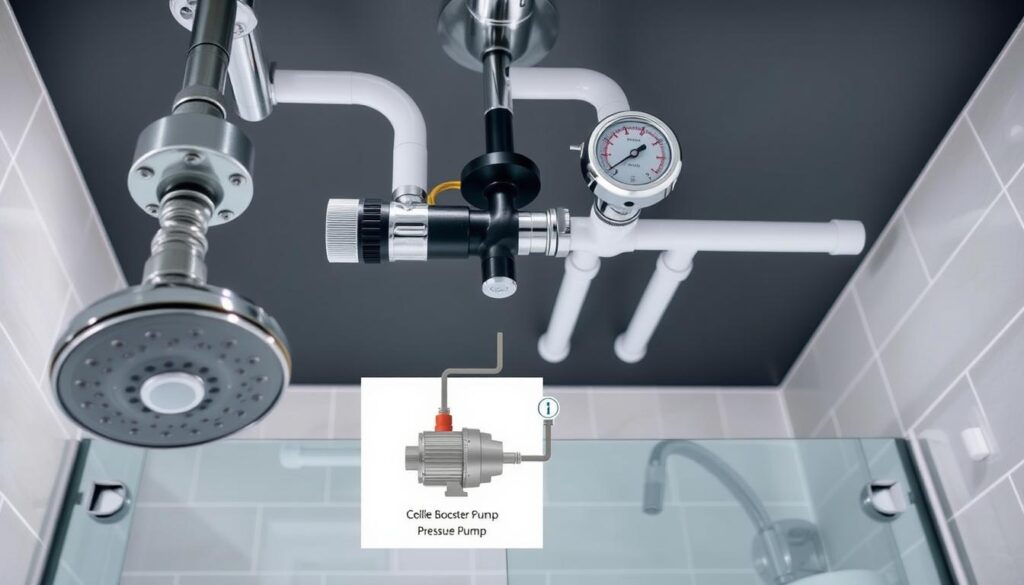
High ceiling plumbing pressure issues need a smart plan to boost your shower’s water flow. Your overhead pipes greatly affect water pressure. But, there are many ways to make your shower better.
First, look at your plumbing setup. To improve shower pressure with overhead pipes, you need to try a few things:
- Inspect pipe diameter and configuration
- Clean showerheads and valves regularly
- Check water pressure at the main supply
- Consider pressure-boosting systems
Pipe diameter is very important for water pressure. Small pipes can limit water flow, leading to low pressure in ceiling plumbing. A professional plumber can check your pipes and suggest changes.
“The right pipe configuration can transform your shower experience from frustrating to fantastic.” – Professional Plumbing Expert
Keeping your plumbing clean is essential to avoid high ceiling plumbing pressure issues. Regular cleaning stops mineral buildup that blocks water flow. Use vinegar to remove calcium deposits in showerheads and check valve function often.
For ongoing pressure problems, you might need:
- Installing pressure-regulating valves
- Upgrading to more efficient fixtures
- Partial or complete plumbing system redesign
Some fixes you can do yourself, but complex overhead plumbing systems need a pro. They can find and fix the pressure problems.
When to Contact a Professional Plumber
Dealing with vertical plumbing and water pressure can be hard. Sometimes, you might not fix ceiling plumbing problems on your own. Knowing when to call a professional plumber can prevent water damage and expensive fixes.
Professional help is key in many situations with ceiling plumbing issues:
- Persistent low water pressure despite basic troubleshooting
- Visible water stains or dampness on ceiling surfaces
- Unusual sounds within wall or ceiling pipes
- Suspected pipe corrosion or possible leaks
Emergency Situations Requiring Immediate Attention
Certain plumbing problems need quick professional help:
- Major water leaks that could harm the building’s structure
- Complete loss of water pressure
- Signs of pipe rupture or significant water damage
- Potential mold growth around plumbing fixtures
Maintenance Requirements
Regular checks by professionals can stop plumbing disasters. Experts suggest getting ceiling plumbing inspections every 1-2 years. This is more important in older buildings with complex plumbing systems.
“An ounce of prevention is worth a pound of cure” – this is true for your home’s plumbing too.
Professional plumbers have tools and skills beyond what homeowners can do. They can find hidden problems in ceiling plumbing that you can’t see.
Conclusion
Understanding overhead plumbing water pressure loss is complex. Your home’s ceiling plumbing system can provide steady water pressure if set up right. Gravity affects water flow, but it doesn’t always mean low pressure in showers.
Getting a professional to check your plumbing is key. Things like pipe materials, how well they’re installed, and upkeep matter a lot. Working with skilled plumbers ensures your water pressure stays good.
Even with ceiling plumbing, you don’t have to give up on water pressure. The right pipe sizes, stopping corrosion, and checking your system often can help. If you’re having trouble with pressure, getting help from experts is the best move.
Your plumbing system’s success comes from good design, quality materials, and regular care. Knowing how overhead plumbing works helps you fix water pressure issues. This way, you can have steady, reliable water flow in your home.