
Affiliate Disclosure
Plumber Guide Guys is a participant in the Amazon Services LLC Associates Program, an affiliate advertising program designed to provide a means for sites to earn advertising fees by advertising and linking to Amazon.
Can You Put Liquid Plumber in Garbage Disposal? Ever thought about using Liquid Plumber to fix your garbage disposal? Before you do, think twice. Chemical drain cleaners might seem like a quick solution, but they can harm your disposal.
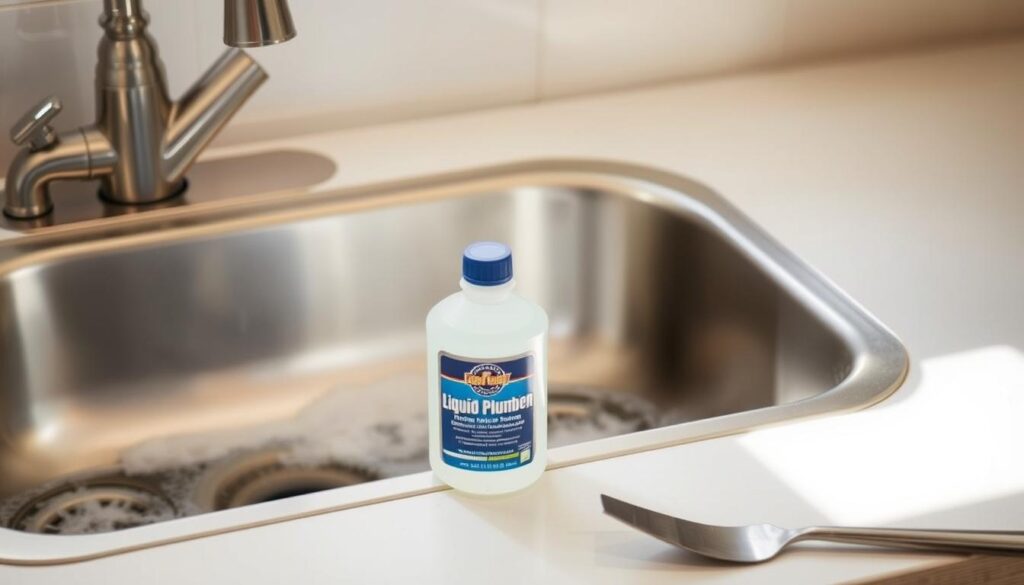
Is liquid plumber safe for garbage disposals? The answer is no. These cleaners can damage your disposal’s parts, leading to expensive repairs. Many people think they work for all kitchen sink clogs.
Using chemical cleaners in your disposal is risky. They can corrode metal, damage rubber seals, and even cause harmful reactions. This can harm your entire plumbing system.
Key Takeaways
- Chemical drain cleaners can damage garbage disposal components
- Liquid Plumber is not recommended for use in garbage disposals
- Alternative safe methods exist for unclogging disposals
- Professional plumbers can provide expert solutions
- Regular maintenance prevents most garbage disposal issues
Table of Contents
Understanding Your Garbage Disposal System
Your garbage disposal is a key part of your kitchen. It helps with garbage disposal maintenance. It sits under your sink, breaking down food waste into small pieces.
It works by using rotating impellers and a stationary grind ring. When you turn it on, these parts work together to quickly grind food scraps.
Key Components of Your Disposal
Knowing the parts of your garbage disposal helps with maintenance. The main parts are:
- Motor: The main power source
- Impellers: Metal fins that push food against the grind ring
- Grind Ring: Sharp edges that break down waste
- Splash Guard: A rubber seal to keep water and food in
Disposal Functionality Breakdown
| Component | Function | Maintenance Tip |
|---|---|---|
| Motor | Provides power for grinding | Keep electrical connections dry |
| Impellers | Break down food waste | Clean regularly to prevent buildup |
| Grind Ring | Pulverizes food particles | Avoid hard objects that might damage surface |
Signs of a Healthy Disposal
A good garbage disposal should:
- Operate quietly with minimal vibration
- Grind food waste quickly and completely
- Have no unusual odors
- Drain water efficiently after grinding
Pro tip: Regular maintenance can make your disposal last longer and save you money. Run cold water while using it and clean it weekly to keep it working well.
Can You Put Liquid Plumber in Garbage Disposal
Many homeowners wonder if they can use chemical drain cleaners for disposals. The answer is simple: never put liquid plumber in a garbage disposal. These strong chemicals can harm your kitchen’s key cleaning tool.
Chemical drain cleaners have harsh ingredients that can damage pipes and your disposal’s parts. Using liquid plumber in a garbage disposal can lead to:
- Corroding metal components
- Damaging rubber seals
- Compromising the disposal’s mechanical parts
- Creating safety hazards
The chemicals in these cleaners can also cause your disposal’s parts to warp or crack. Professional plumbers strongly advise against using any chemical drain cleaners for disposals. While they might seem like a quick solution, they can lead to bigger, more costly problems.
Safety first: Protect your garbage disposal from chemical damage by using alternative cleaning methods.
Instead of risking damage, try safer options like removing debris by hand or using a plunger. You can also make a natural cleaner with baking soda and vinegar. These methods can clear clogs without harming your disposal’s delicate parts.
Why Chemical Drain Cleaners Are Harmful to Your Disposal
Chemical drain cleaners can seriously harm your kitchen’s garbage disposal. It’s important to know the risks to keep your disposal working well for a long time.
Chemical Reactions and Heat Generation
Chemical drain cleaners cause dangerous reactions in your disposal. They produce extreme heat that can damage parts. The chemicals can also break down metal and plastic parts.
- Generates temperatures up to 250°F
- Causes rapid metal corrosion
- Weakens plastic seals and connections
Long-term Effects on Disposal Components
Is liquid plumber safe for garbage disposals? No, it’s not. Using chemical cleaners often can wear down your disposal. This can make it less efficient and might even break it.
| Component | Potential Damage | Repair Cost |
|---|---|---|
| Grinding Blades | Corrosion and Dulling | $100-$250 |
| Motor Seals | Degradation | $150-$300 |
| Internal Mechanisms | Complete Breakdown | $250-$500 |
Impact on Pipe Infrastructure
Chemical cleaners can also harm your plumbing system. They can damage pipe linings, leading to leaks and costly repairs.
Protecting your disposal means avoiding chemical shortcuts that promise quick fixes but deliver long-term destruction.
Common Causes of Garbage Disposal Clogs
Knowing what not to put down your garbage disposal is key to keeping your kitchen’s plumbing working well. Many people unknowingly harm their disposals by throwing in the wrong foods and materials.
Several common items can turn your disposal into a problem. Knowing these items can help you avoid expensive fixes and kitchen headaches.
- Starchy foods like pasta, rice, and potato peels create a sticky paste that clogs disposal blades
- Fibrous vegetables such as celery, corn husks, and artichoke leaves wrap around grinding mechanisms
- Grease and cooking oils solidify inside pipes, creating stubborn blockages
Your garbage disposal isn’t made for every kitchen scrap. Some materials can really hurt your appliance’s parts.
| Material Type | Disposal Risk | Recommended Action |
|---|---|---|
| Fats and Oils | High Clog Risk | Dispose in trash, not disposal |
| Stringy Vegetables | Blade Entanglement | Discard in compost or trash |
| Expandable Grains | Pipe Blockage | Avoid putting in disposal |
Keep your garbage disposal safe by watching what you throw down the drain. A bit of care can make your appliance last longer and save you from expensive plumbing fixes.
Safe Methods for Unclogging Your Garbage Disposal
Chemical drain cleaners aren’t the only way to fix a clogged garbage disposal. Professional plumbers suggest safe DIY methods. These can clear blockages without harming your kitchen’s plumbing.
Plunging Techniques for Disposal Clearing
Learning to unclog your disposal can save money and avoid damage. First, gather these tools:
- A sink-specific plunger (not a toilet plunger)
- Clean, wet rag
- Protective gloves
Here’s how to plunge:
- Remove standing water from the sink
- Cover the disposal opening with a wet rag or plunger
- Fill sink with 2-3 inches of water
- Plunge vigorously for 2-3 minutes
- Run cold water to check drainage
Boiling Water Method
Hot water is another effective method. Pour boiling water slowly into the disposal. It helps dissolve grease and minor clogs.
Natural Cleaning Solutions
Try these eco-friendly DIY methods:
| Ingredient | Purpose | Application |
|---|---|---|
| Baking Soda | Deodorize | 1/2 cup, followed by vinegar |
| White Vinegar | Dissolve Buildup | 1 cup, let sit 10 minutes |
| Ice Cubes | Sharpen Blades | 2 cups, run disposal |
“Prevention is always better than cure when maintaining your kitchen’s garbage disposal.” – Professional Plumbing Association
Remember to always disconnect power before attempting any manual cleaning or unclogging methods.
Preventive Maintenance Tips for Your Disposal
To keep your garbage disposal in great shape, you need regular maintenance and smart cleaning methods. Taking care of it can make it last longer and save you money on repairs.
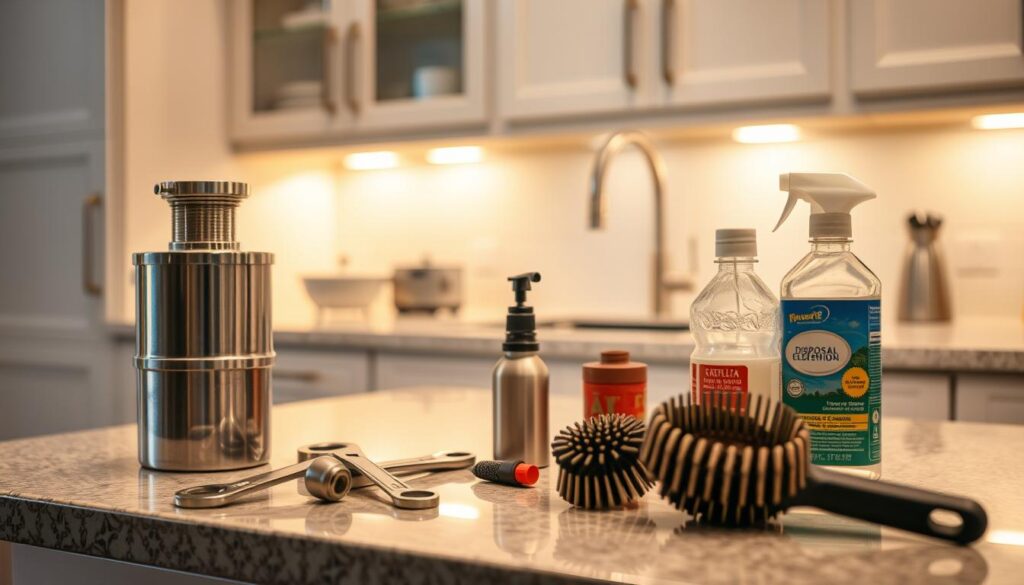
- Clean your disposal weekly with natural cleaners
- Run cold water for 15-20 seconds after each use
- Don’t put hard or fibrous stuff down the drain
- Sharpen blades with ice cubes and rock salt now and then
Experts suggest a few easy DIY cleaning methods for your disposal:
| Cleaning Method | Frequency | Benefits |
|---|---|---|
| Citrus Peel Rinse | Weekly | Eliminates odors, freshens disposal |
| Baking Soda Flush | Bi-weekly | Removes buildup, neutralizes smells |
| Ice and Salt Scrub | Monthly | Sharpens blades, removes residue |
“Prevention is always better than cure when it comes to kitchen appliances.” – Home Maintenance Expert
Remember, consistent care is the best way to avoid big problems with your garbage disposal. By following these easy maintenance tips, you’ll keep your kitchen appliance running smoothly for years.
What Should Never Go Down Your Disposal
Knowing what not to put down your garbage disposal is key. It helps avoid expensive repairs and kitchen problems.
Your garbage disposal is powerful but has limits. Some items can harm your appliance and plumbing.
Problematic Food Items
Some foods can damage your disposal’s parts. Watch out for these:
- Banana peels and stringy vegetables
- Hard fruit pits and bones
- Coffee grounds
- Potato peels and pasta
- Eggshells
Non-Food Items to Avoid
Don’t put these non-food items in your disposal:
- Paper scraps
- Cigarette butts
- Plastic materials
- Metal objects
- Fabric or cloth pieces
Harmful Substances List
Some substances can harm your disposal. Don’t pour these down your drain:
- Grease and cooking oils
- Chemical drain cleaners
- Harsh cleaning chemicals
- Paint
- Toxic substances
By avoiding these items, you can keep your disposal working well. This saves you from expensive plumbing fixes.
When to Call a Professional Plumber
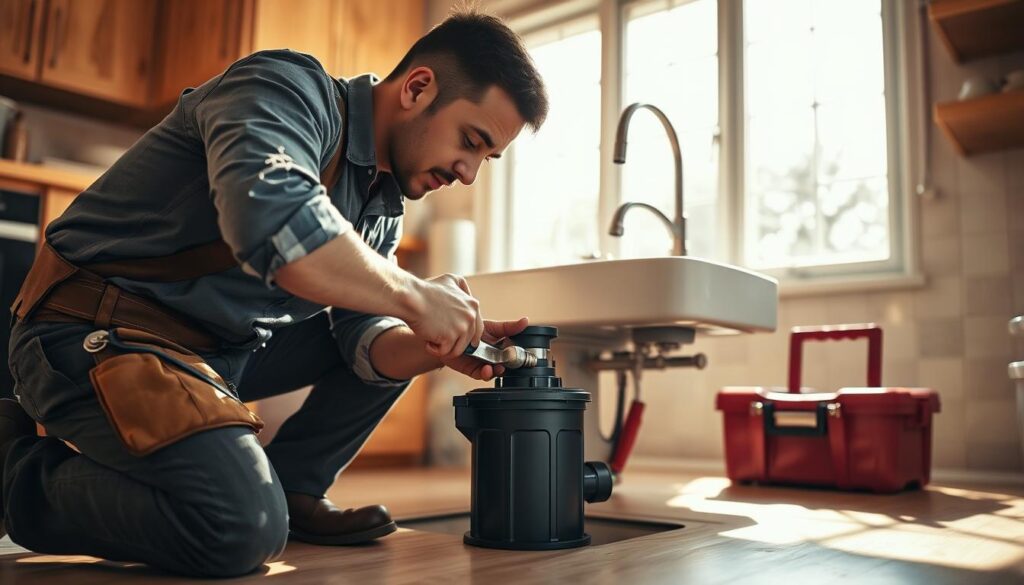
Fixing a clogged garbage disposal can be tricky. Knowing when to call a pro can save you from big problems and expensive fixes.
You might need a professional plumber in several critical scenarios:
- Persistent clogs that resist multiple unclogging attempts
- Unusual grinding noises or complete disposal failure
- Water leaking around the disposal unit
- Electrical issues with the disposal system
Professional plumbers have the skills to tackle tough disposal problems. They use advanced tools to find issues you can’t see.
When picking a plumber, look at these key points:
- Check for proper licensing and insurance
- Read customer reviews and ratings
- Request detailed cost estimates
- Verify experience with garbage disposal repairs
Pro tip: Annual professional inspections can prevent major garbage disposal problems before they escalate.
A skilled plumber can diagnose and resolve complex disposal issues efficiently, potentially saving you money in the long run.
Don’t wait until a small problem turns into a big kitchen disaster. Calling a professional early can save your disposal and your home’s plumbing.
Conclusion
Knowing why you can’t use Liquid Plumber in your garbage disposal is key. Chemical cleaners can harm your disposal’s parts, leading to expensive fixes or needing a new one.
Looking for safer alternatives to Liquid Plumber is a good idea. Try using baking soda and vinegar, or try manual plunging. Regular maintenance also helps keep your disposal in top shape. Plumbers suggest these methods to keep your appliance working well.
Your garbage disposal needs regular care to last longer. Avoid harsh chemicals and learn how to use it right. Also, get it checked by a pro now and then. This way, you avoid costly repairs later.
Learning about your disposal’s needs can save you money and headaches. Use gentle cleaning, be careful with what you flush, and ask for help when needed. This approach keeps your kitchen running smoothly.