

Affiliate Disclosure
Plumber Guide Guys is a participant in the Amazon Services LLC Associates Program, an affiliate advertising program designed to provide a means for sites to earn advertising fees by advertising and linking to Amazon.
Can Plumbing Be Installed in SIPs? Ever thought about adding plumbing to your structural insulated panels (SIPs)? You might be surprised at the answer.
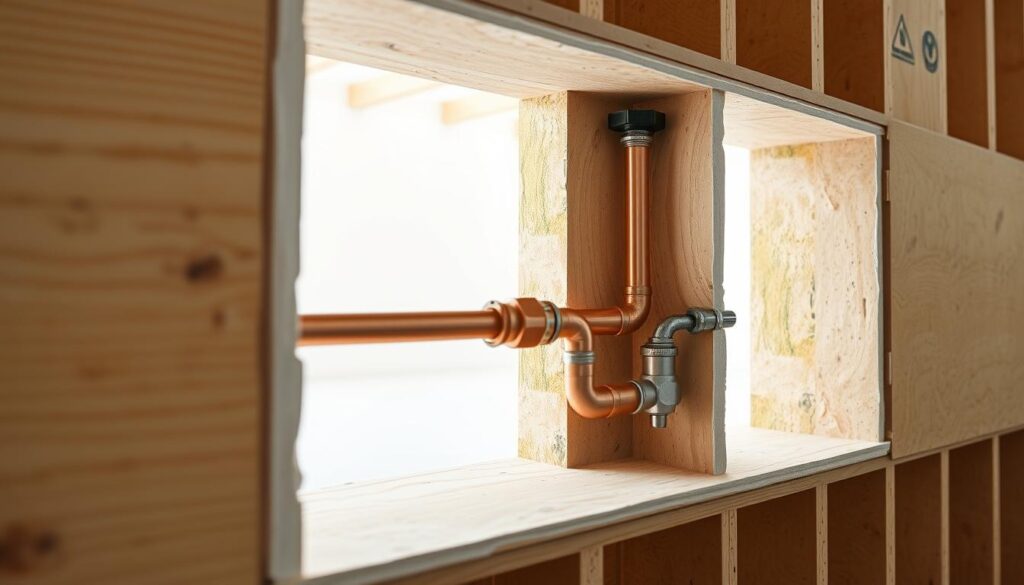
SIPs are a new way to build homes. They mix modern plumbing with energy-saving design. Architects and builders are looking into how to add plumbing to SIPs without losing their benefits.
This guide will explain how to add plumbing to SIPs. You’ll learn about expert methods, challenges, and solutions. It’s all about making sure plumbing works well with SIPs.
Key Takeaways
- SIPs offer unique challenges and opportunities for plumbing installation
- Proper planning is key for plumbing in SIPs
- Special techniques help keep panel performance high
- Get expert advice for complex plumbing jobs
- Managing moisture is vital in SIP plumbing projects
Table of Contents
Understanding Structural Insulated Panels (SIPs) Basics
Structural Insulated Panels (SIPs) are changing the game in building. They make structures more efficient and sustainable. This new material has also changed how we install plumbing and build houses.
- Structural facing layers (usually oriented strand board)
- A high-performance insulating foam core
This design gives SIPs great thermal performance and strength. They are a complete solution for building energy-efficient homes.
Core Components of SIPs Construction
The basic parts of SIPs are:
- Structural facing layers (typically oriented strand board)
- High-performance insulating foam core
Benefits of SIP Panel Building Systems
There are many reasons why SIPs are popular:
- They save a lot of energy
- Building with SIPs is faster
- They are very strong
- They keep buildings warm or cool better
Common Applications in Modern Construction
SIPs are used in many types of buildings:
| Building Type | SIP Panel Usage |
|---|---|
| Residential Homes | Walls, Roofs, Floors |
| Commercial Structures | Exterior Walls, Partitions |
| Agricultural Buildings | Entire Structural Envelope |
Knowing about SIPs is key for successful plumbing installation in your project.
Can Plumbing Be Installed in SIPs
Plumbing in Structural Insulated Panels (SIPs) is doable but needs careful planning. Contractors must tackle the unique challenges of plumbing in SIPs. This ensures the panel’s structure and thermal performance stay intact.
When thinking about plumbing in SIPs, focus on a few key steps:
- Plan pipe routes early in design
- Make plumbing chases
- Use special cutting and sealing methods
- Keep panel damage to a minimum
Effective plumbing in SIPs means using smart strategies. These protect the panel’s insulation and structure. Experts often suggest:
- Plan pipe routes before installing panels
- Use few penetrations
- Apply strong sealing methods
- Check with manufacturers for guidelines
Important: Keep thermal efficiency in mind while setting up plumbing. Doing it right keeps your SIPs performing well and strong.
Professional insight: Precision and careful planning are essential when installing plumbing in Structural Insulated Panels.
Essential Planning for SIP Plumbing Integration
Adding plumbing to structural insulated panels (SIPs) needs careful planning. Your plumbing solutions in SIP homes must be thought out from the start. This ensures a smooth installation and top performance.
Good plumbing in SIPs comes from planning well before construction starts. This way, you can avoid problems before they happen.
Pre-Construction Design Considerations
When planning your plumbing, focus on key design points:
- Panel thickness and material specs
- Exact pipe routes
- How plumbing affects the structure
- Keeping the panel’s thermal performance
Coordination with Trades
Good communication among experts is key for SIP plumbing success. Your project needs teamwork from:
- Architects
- Plumbing contractors
- SIP makers
- Structural engineers
Blueprint and Layout Requirements
| Planning Aspect | Key Considerations |
|---|---|
| Pipe Routing | Keep panel damage low |
| Waterproofing | Seal all entry points |
| Thermal Integrity | Keep insulation effective |
Your detailed blueprint must cover all plumbing connections. It must also keep the SIP panels strong.
Best Practices for Running Pipes Through SIPs
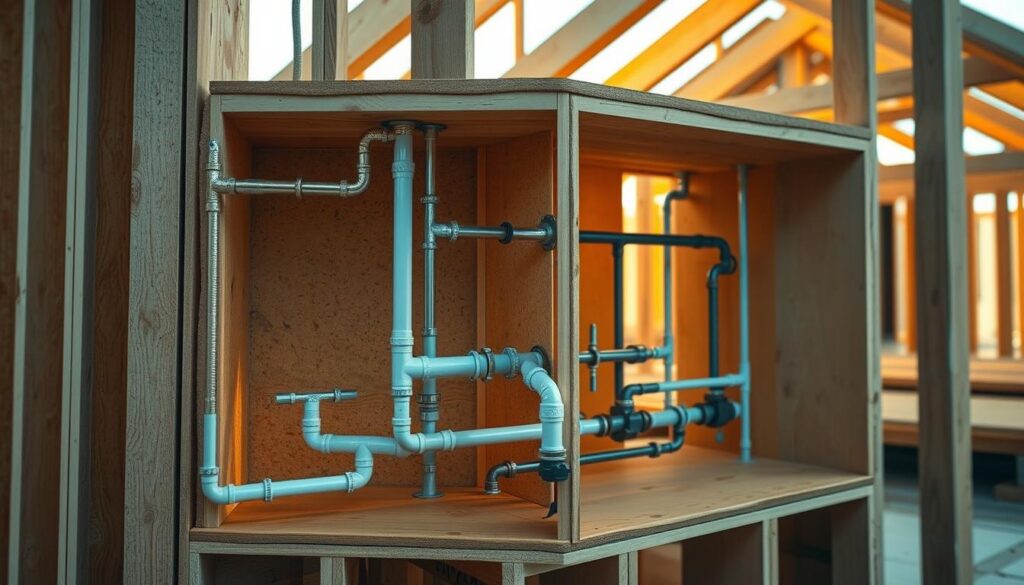
When you add plumbing to SIPs, you must follow special steps. This keeps the panel strong and energy-efficient. Running pipes through SIPs needs careful planning and exact execution.
Start by making special paths for pipes that don’t harm the panel. These paths help install pipes well and keep the panel’s design intact.
- Prioritize vertical pipe runs whenever possible
- Avoid cutting large horizontal channels through panel cores
- Use pre-planned chase locations during initial design
- Select appropriate sealing methods for pipe penetrations
Experts suggest using special foam sealants for SIPs. These sealants keep the panel’s energy-saving features and block moisture.
Precision in plumbing installation is key to keeping SIPs energy-efficient.
To run pipes through SIPs well, work closely with your plumbing and building teams. Good planning before starting helps find the best routes for pipes. This keeps the panel strong and efficient.
Plumbing Chase Design in SIP Construction
Designing plumbing chases is key for successful SIP wall plumbing. These paths let you run pipes through the panels without harming their strength or heat control.
When planning your SIP wall plumbing, you’ll face two main chase types:
- Vertical chases running through panel sections
- Horizontal chases crossing floor and wall systems
Strategic Vertical Chase Installation
Vertical chases need careful planning. Experts say to keep them under 1200mm vertically. Your plumbing should connect through service risers, often in utility areas like pantries or downstairs toilets.
“Precision in chase design ensures minimal disruption to the SIP panel’s structural performance.” – Construction Engineering Quarterly
Horizontal Chase Considerations
Horizontal plumbing needs a detailed approach. Waste water pipes can go through exterior walls to the sewer system. Make sure to keep the panel’s vapor barrier intact.
Seal all holes with expanding foam and use vapor checks in wet spots to avoid moisture issues.
Common Challenges and Solutions in SIP Plumbing
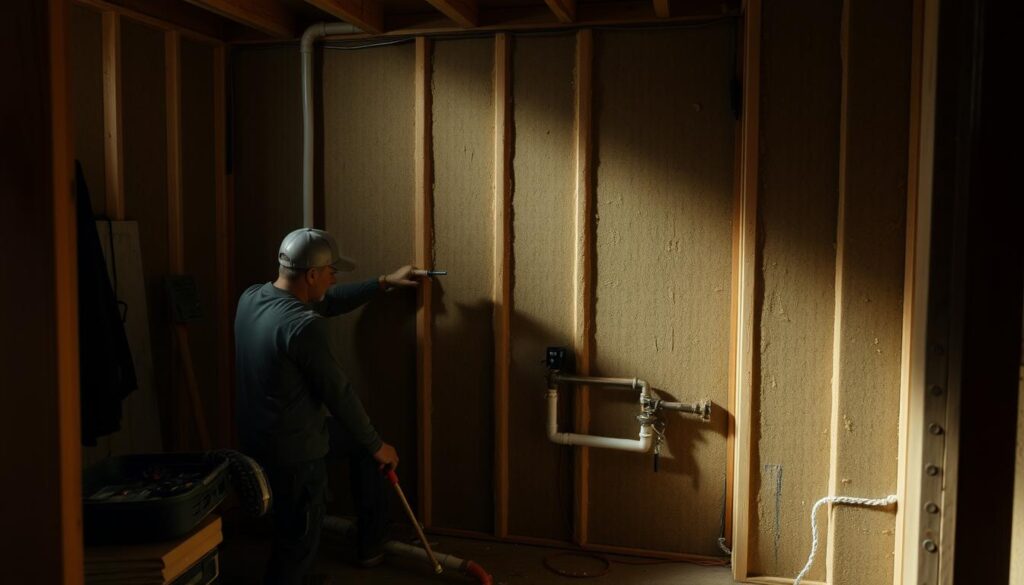
When working with SIPs, contractors face unique challenges. These require special knowledge and careful techniques. Structural Insulated Panels (SIPs) have specific issues during plumbing installation that need expert solutions.
The main problems in SIP plumbing are keeping the panel strong and avoiding moisture issues. Plumbers must work in tight spaces without harming the panel’s insulation.
- Maintaining panel structural strength during pipe penetrations
- Preventing moisture intrusion around pipe connections
- Managing thermal bridging
- Preserving continuous insulation performance
To succeed in SIP plumbing, you need a solid plan. Special sealing and precise cutting help avoid damage. Contractors often use foam sealants and precise tools for this.
Proper planning and execution are critical when installing plumbing within Structural Insulated Panels.
Key solutions include making special plumbing chases and using small pipes. Also, using strong waterproofing is essential. Knowing these challenges helps create a reliable plumbing system in SIPs.
Advanced Techniques for Plumbing Installation
Installing plumbing in structural insulated panels (SIPs) needs special skills and care. Contractors must know how to keep the panel strong while adding plumbing systems.
Essential Tools for SIP Plumbing Integration
Your toolkit for plumbing in SIPs should have tools that won’t hurt the panel:
- Hot wire foam cutters
- Specialized foam sealants
- Precision cutting tools
- High-density insulation repair kits
Professional Installation Process
For SIPs plumbing, careful planning and doing are key. Follow these steps for the best results:
- Measure and map the panels well
- Plan the pipe routes carefully
- Make small cuts in the panels
- Use special foam sealants
- Check that all connections are tight
| Installation Stage | Key Considerations | Recommended Technique |
|---|---|---|
| Panel Preparation | Minimal structural disruption | Precision cutting with hot wire |
| Pipe Routing | Optimal pathway selection | Pre-planned chase design |
| Sealing | Maintaining thermal efficiency | High-density foam sealants |
Learning these advanced methods helps keep your SIPs strong and ready for plumbing.
Moisture Management and Waterproofing
Keeping your structural insulated panels (SIPs) dry is key when you run pipes through them. Water can harm the structure and insulation of your home.
To manage moisture well, you need a solid plan. This plan helps avoid damage and keeps your home’s plumbing system working right.
- Install robust vapor barriers around plumbing penetrations
- Use high-quality flashing techniques
- Implement proper ventilation in moisture-prone areas
- Seal all possible water entry points
“Preventing moisture infiltration is not just about protection—it’s about preserving your home’s structural performance.” – Building Science Expert
Here are some important moisture management strategies:
| Strategy | Purpose | Implementation |
|---|---|---|
| Vapor Barrier Sealing | Block moisture transmission | Use specialized tapes and sealants |
| Ventilation Design | Reduce condensation risks | Install proper exhaust systems |
| Regular Inspections | Early detection of possible issues | Annual professional checks |
Learning these moisture management techniques is vital. They help safeguard your investment and keep your SIP home performing well.
Building Code Compliance and Regulations
Understanding building codes is key when adding plumbing to SIP construction. Your project’s success relies on following specific rules for safety and structure.
Plumbing in structural insulated panels (SIPs) needs careful attention to national and local standards. Each area has its own rules for SIP wall plumbing that affect your project.
National Code Requirements
The main national building codes cover important plumbing in SIPs:
- Fire resistance ratings for penetrations
- Insulation performance standards
- Vapor barrier continuity requirements
- Structural integrity preservation
Local Inspection Guidelines
Local building inspectors check plumbing in SIPs by looking at:
- Proper pipe routing through panel walls
- Sealed penetration points
- Compliance with thermal efficiency standards
- Moisture management techniques
Talking to local building departments early can make compliance easier and avoid expensive changes.
SIP Panel Repairs and Maintenance Around Plumbing
Keeping Structural Insulated Panels (SIPs) with plumbing in good shape is key. You need to know how to handle the special care they need. This is important when you’re thinking about installing plumbing in SIPs.
Looking after your SIP panel plumbing is a must to avoid problems. It’s important to check the plumbing areas often. This helps spot any damage early on.
Here are some maintenance tips:
- Do annual checks on plumbing areas
- Look for any moisture or water damage
- Make sure sealants around pipes are good
- Watch out for pests getting in
Fixing plumbing issues in SIPs needs to be done carefully. Special methods are needed to keep the SIP system working right. It’s wise to get help from experts for big repairs to keep the panel’s insulation and strength up.
Important repair steps include:
- Use special patch kits for SIPs
- Make sure all penetration points are sealed well
- Fix moisture problems right away
- Get help from SIP experts for big fixes
Keeping your SIP structure in top shape needs regular care. By following these steps, you can handle plumbing issues well. This helps keep your building efficient for a long time.
Conclusion
Adding plumbing to structural insulated panels needs careful planning and exact steps. How you handle SIP home plumbing can greatly affect your building’s performance. Knowing how to run pipes through these systems ensures they last long and work well.
Getting plumbing right in SIPs means thinking about design, moisture, and following building codes. Experts in SIPs know each job has its own set of challenges. They use their skills and knowledge to overcome these. Your dedication to doing it right will make your plumbing work well.
The future of building is all about being energy-efficient, like with structural insulated panels. Learning about SIP plumbing puts you ahead in building innovation. Keep learning, stay current with new tech, and work with experienced pros to handle modern building’s complexities.
Remember, plumbing in SIPs is not just about the technical side. It’s also about seeing the big picture of modern building design. Investing in knowledge and precision leads to strong, efficient, and green buildings that meet today’s high standards.