

Affiliate Disclosure
Plumber Guide Guys is a participant in the Amazon Services LLC Associates Program, an affiliate advertising program designed to provide a means for sites to earn advertising fees by advertising and linking to Amazon.
Can I Transfer My Plumbing License to Another State? Are you a licensed plumber thinking about moving to a new state? You might wonder if your plumbing license can go with you. The rules for moving your plumbing license from one state to another can be tricky.
Every state has its own rules for plumbing licenses. This means you’ll need to learn about the new state’s laws if you want to work there. Luckily, some states have agreements that make it easier for plumbers to move their licenses.
Knowing how to move your plumbing license is important. It can help you start working in a new state without too much trouble. Whether you’re moving for a job or a new home, understanding the rules for moving your plumbing license is key.
Key Takeaways
- Plumbing license transfer varies by state regulations
- Reciprocity agreements can simplify licensing processes
- Each state has unique requirements for professional licensing
- Documentation and experience play critical roles in license transfer
- Professional preparation is key to successful license migration
Table of Contents
Understanding Plumbing License Portability Across States
For professional plumbers, understanding state plumbing license rules can be tough. Each state has its own rules that affect your work across different areas. Knowing these differences is key to keeping your career moving.
State rules for plumbing licenses vary a lot, making it hard for plumbers to work in other states. Your ability to get a plumbing license in another state depends on several things:
- State-specific regulatory standards
- Professional experience verification
- Examination qualification requirements
- Local licensing municipal regulations
It’s important to remember that not all licenses transfer easily. Some states make it easier to get a license, while others are stricter. You might need to show more proof or pass extra tests to work in a new state.
When you want to work in another state, doing your homework is the best thing to do. Reach out to state licensing boards to learn about their rules. Each place looks at your skills in its own way, so it’s important to check each one yourself.
“Preparation and proactive communication are key to successful license transfer.” – Professional Contractors Association
To get a plumbing license in another state, you need to collect all the right documents. You also need to make sure your current license is valid. And you have to know what each state expects. Getting through this process takes time, effort, and planning.
What is Plumbing License Reciprocity?
Plumbing license reciprocity lets skilled plumbers move their certification from one state to another easily. It makes it simple to transfer plumbing certification across states by accepting qualifications from one state in another.
When states agree to reciprocal licensing, plumbers can grow their careers without going through a lot of extra training or tests. This aims to make it easier for experienced plumbers to work in different states.
Benefits of Reciprocal Agreements
- Reduces bureaucratic hurdles for professional plumbers
- Saves time and money on redundant licensing procedures
- Enables faster career mobility across state lines
- Recognizes professional skills and experience
States with Reciprocity Programs
Some states have strong plumbing license reciprocity networks. Areas like the Western United States and Northeastern states often have better agreements for transferring plumbing certification.
Limitations of Reciprocity
Even with its benefits, reciprocity isn’t available everywhere. Each state has its own rules, so some extra steps might be needed when moving your plumbing license.
- Some states require supplemental examinations
- Continuing education credits may need updating
- Background checks might be mandatory
- Specific work experience verification could be required
Knowing these details helps plumbers move through interstate licensing better. It helps them plan their career moves wisely.
States That Don’t Require State-Level Plumbing Licenses
Understanding state plumbing license rules can be tricky. Some states have their own ways of handling licenses. This makes it interesting for plumbers to work in these places.
States without state-level plumbing license requirements include:
- Kansas
- Missouri
- Nebraska
- New York
- Pennsylvania
- Wyoming
Even without state licenses, plumbers can’t just start working. Local areas often have their own rules. Plumbers must follow these to work legally.
| State | State License | Local Requirements |
|---|---|---|
| Kansas | No | Some cities require local permits |
| Missouri | No | Local licensing in major cities |
| Nebraska | No | Municipal registration needed |
Before starting work, always check local rules. Contact city or county officials. They can tell you about plumbing licenses and permits.
Not having a state license can make it hard to move to another state. Plumbers need to know local laws well. This keeps them in good standing and compliant.
Can I Transfer My Plumbing License to Another State?
Transferring a plumbing contractor license to another state is not simple. Each state has its own rules for moving a plumbing license. This makes the process more than just a formality.
To move your plumbing license, you must follow specific steps that differ by state. Knowing these details can make the process easier.
Factors Affecting License Transfer
Several things can affect your ability to move a plumbing license:
- Years of professional experience
- Current license classification
- Passing scores on previous licensing exams
- State-specific reciprocity agreements
Documentation Requirements
Getting the right documents is key when moving your plumbing license. You’ll need:
- Proof of current state license
- Verified work history
- Examination transcripts
- Professional references
- Completed state transfer application
Processing Times and Fees
How long it takes and what it costs to transfer a license can vary. Most states take 30 to 90 days to process. Fees range from $50 to $250, based on state rules.
Pro tip: Contact the destination state’s licensing board directly for the most accurate and up-to-date transfer information.
Common Requirements for Interstate License Transfer
When you move your plumbing certification to another state, you need to know a few key things. Understanding the process can make it easier to deal with the complex rules.
Every state has its own rules for recognizing plumbing certifications from other states. These rules usually include:
- Proof of current active licensure in your original state
- Verification of professional work experience
- Passing state-specific background checks
- Demonstrating continuing education credits
The process of transferring a license can be different for each state. You’ll likely need to provide:
- Original state license verification
- Detailed work history documentation
- Examination scores from previous certification
- Professional references
Different levels of plumbing licenses have different transfer rules. Master plumber licenses often demand more rigorous transfer criteria compared to journeyman plumber certifications.
| Requirement Type | Typical Documentation | Verification Method |
|---|---|---|
| License Verification | State Board Confirmation | Direct State Board Communication |
| Work Experience | Employment Records | Employer Verification |
| Continuing Education | Training Certificates | State Board Review |
Keep in mind, while these are common needs, each state has its own rules for moving plumbing certifications. Always check with the state licensing board for the latest and most accurate info.
State-Specific Reciprocity Agreements
Getting a plumbing license in different states can be tricky. Each area has its own rules. Knowing these helps plumbers find new jobs and move their licenses smoothly.
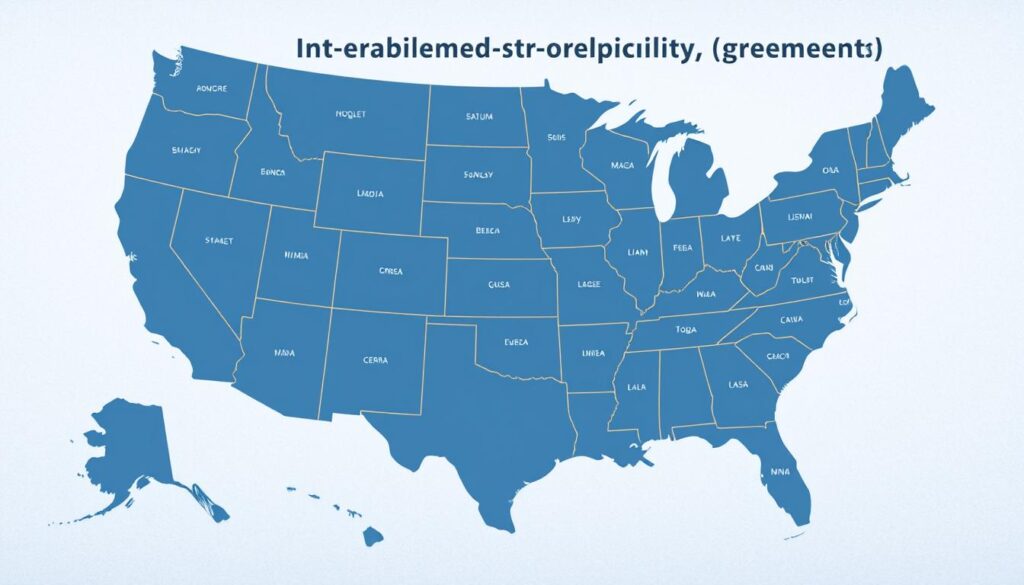
Many things affect plumbing license reciprocity. These include state laws, how long you’ve worked, and any agreements between states. Each area has its own way of accepting licenses from other places.
Western States Agreements
Western states are often more open to letting plumbers work there. Places like California, Oregon, and Washington make it easier for professionals to move around.
- California lets you transfer your license if the rules are similar
- Nevada accepts licenses if the tests are the same
- Arizona speeds up the process for experienced plumbers
Eastern States Agreements
In the East, the rules are stricter. States check your credentials closely. This is to keep quality and safety high.
| State | Reciprocity Status | Key Requirements |
|---|---|---|
| Massachusetts | Limited Reciprocity | 10+ years professional experience |
| New York | Strict Evaluation | Comprehensive credential review |
| Pennsylvania | Conditional Acceptance | Additional state-specific examination |
Southern States Agreements
In the South, like Florida, the rules have changed. Now, Florida lets plumbers with 10+ years of experience work there without extra tests.
- Texas makes it easy to transfer your license
- Georgia wants you to take extra training
- Florida is more open to experienced plumbers
Costs Associated with License Transfer
When you move your plumbing contractor license to a new state, you’ll face several costs. These can affect your budget. The price to move your license can be between $50 and $400. This depends on a few important factors.
License types have different prices. A master plumber or commercial license will cost more than a journeyman’s. Your total cost will include several parts:
- Application processing fees
- State-specific background check costs
- Examination fees (if required)
- License verification charges
When planning to move your license, make sure to budget well. Some states offer fee waivers or reduced rates for experienced professionals. It’s important to check with each state’s licensing board. This way, you’ll know their fees and any ways to save money.
Here’s a typical breakdown of costs for license transfer:
| License Type | Average Transfer Cost |
|---|---|
| Journeyman Plumber | $75 – $150 |
| Master Plumber | $200 – $400 |
| Commercial Plumbing License | $250 – $450 |
Getting a proper license transfer is key to keeping your professional reputation safe. It also lets you work legally in your new state. Do your research and plan your budget well. This will help make your license relocation smooth and affordable.
Alternative Options When Reciprocity Isn’t Available
Getting a plumbing license in a new state can be tough without full reciprocity. But, there are other ways for licensed plumbers to work in a new place.
When you can’t just transfer your license, you have a few options. You can:
- Look into temporary licensing options
- Check out state-specific endorsement programs
- Try expedited application processes
Temporary Licensing Solutions
Many states give out temporary work permits. These permits let experienced plumbers work while they get their full license. To get one, you’ll need to:
- Show proof of your current license from another state
- Verify your professional experience
- Submit all the necessary documents
Expedited Application Strategies
Some states have fast tracks for qualified plumbers. These quick paths can make getting your license faster and easier.
| State | Temporary Permit Duration | Application Processing Time |
|---|---|---|
| California | 90 days | 4-6 weeks |
| Texas | 180 days | 3-5 weeks |
| Florida | 60 days | 2-4 weeks |
It’s best to talk directly to the state’s licensing board. Being persistent and well-prepared can really help you get your new plumbing license.
Required Documentation for License Transfer
Getting ready to move your plumbing license to another state? You’ll need to prepare a detailed set of documents. These documents prove you’re qualified to work as a plumber.
Here’s what you’ll need to gather:
- Proof of current active plumbing license
- Verified work experience documentation
- Official exam score reports
- Professional references
- Educational transcripts
Your current state license verification is the most important document. Many boards need an official verification form from your current state’s licensing board. This form shows you’re a licensed plumber and helps with interstate recognition.
“Accurate and complete documentation is the key to a smooth license transfer process.” – Professional Licensing Experts
Be ready to pay small fees and wait a few weeks for review. Some states might ask for more checks or extra proof of your skills.
Pro tip: Get official copies of your documents early. This helps avoid delays in your licensing process.
Timeline for License Transfer Process
Understanding the timeline for moving your plumbing contractor license is key. Each state has its own way of handling license transfers. This means the time it takes can vary a lot.
The process of moving your license involves several important steps:
- Initial application submission
- Document verification
- Background check processing
- Potential examination requirements
- Final license approval
The time it takes to move your plumbing contractor license can be anywhere from 4 to 12 weeks. Some states work faster, while others might need more steps.
| Stage | Typical Duration | Potential Delays |
|---|---|---|
| Application Submission | 1-2 weeks | Incomplete documentation |
| Document Verification | 2-4 weeks | Background check complexities |
| Examination (if required) | 2-3 weeks | Scheduling conflicts |
| Final Approval | 1-3 weeks | State bureaucratic processes |
To speed up your plumbing contractor license move, make sure all your documents are ready and correct. Send them in quickly. Also, reach out to the licensing board in your new state for advice that fits their rules.
State-by-State Licensing Requirements Overview
For plumbers wanting to work in different places, understanding state plumbing license rules is key. Each state has its own rules for moving a master plumber license or transferring a journeyman plumber license. This makes it hard for plumbers to move their careers around.
Knowing the different rules helps plumbers plan their career moves better. The rules on getting new licenses or moving old ones vary a lot.
License Types and Classifications
There are three main types of plumbing licenses:
- Apprentice Plumber: This is for beginners who need to work under supervision.
- Journeyman Plumber: This is for those with more experience but not yet at the top level.
- Master Plumber: This is for the most experienced plumbers, showing they know a lot.
Experience Requirements
The amount of experience needed varies by state. Most states want plumbers to have a certain number of work hours before moving up.
| License Level | Typical Experience Requirement | Examination Needed |
|---|---|---|
| Apprentice | 0-2 years | Basic skills test |
| Journeyman | 4-5 years | Comprehensive practical exam |
| Master Plumber | 7-10 years | Advanced technical examination |
Examination Requirements
Plumbers must pass tough state-specific licensing exams. These tests check their technical skills, safety knowledge, and practical abilities. They make sure plumbers meet high standards everywhere.
Pro tip: Always check the latest state rules with local licensing boards. Rules can change often.
Conclusion
Transferring your plumbing license to another state can be tricky. It depends on the state’s rules, agreements, and licensing board rules. You need to know these to succeed.
To figure out if you can move your plumbing license, you must prepare well. Each state has its own rules, documents needed, and possible hurdles. These can affect your ability to move your license smoothly.
If you’re a plumber looking to work in another state, talk directly to the state’s licensing board. You’ll need to gather all the right documents, check if your experience is valid, and possibly take extra exams. This is to meet the state’s standards.
The rules for professional licenses are changing, with more states considering reciprocity. Keep up with new laws, keep your certifications current, and plan carefully for license transfers. This way, you can use your skills in different states.