
Affiliate Disclosure
Plumber Guide Guys is a participant in the Amazon Services LLC Associates Program, an affiliate advertising program designed to provide a means for sites to earn advertising fees by advertising and linking to Amazon.
Can a Plumber Fix Frozen Pipes? Have you ever wondered what happens when winter gets too cold? It can turn your home’s plumbing into a disaster zone. Frozen pipes can be scary, threatening water damage and expensive repairs.
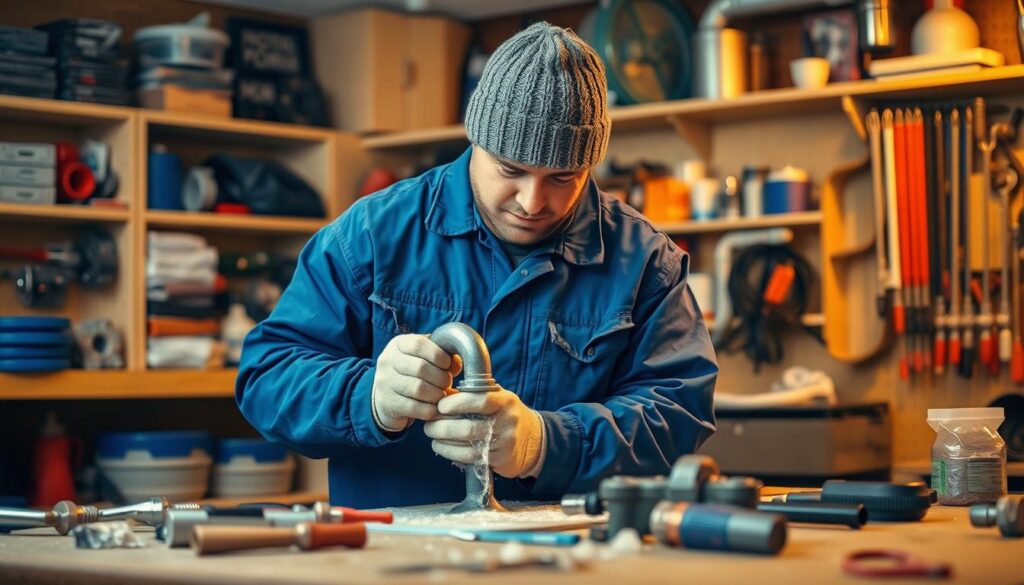
When winter temperatures drop, a big question comes up: can a plumber fix frozen pipes? Yes, they can. Professional plumbing services are a lifeline during winter emergencies.
Frozen pipes are more than just a hassle. They can seriously damage your home, leading to thousands of dollars in water damage. Plumbers have the tools and know-how to fix frozen pipes safely and quickly.
Key Takeaways
- Professional plumbers can effectively resolve frozen pipe issues
- Frozen pipes can cause significant water damage if left untreated
- DIY methods often risk further pipe damage
- Timely professional intervention prevents costly repairs
- Specialized plumbing service for frozen pipes offers complete solutions
Table of Contents
Understanding Why Frozen Pipes Are a Serious Winter Problem
Winter plumbing issues can become very costly if you don’t know why pipes freeze. Water acts differently when it gets cold, leading to big problems for your plumbing.
How Water Expansion Creates Dangerous Pipe Pressure
Water changes a lot when it freezes. It expands by about 9%. This happens inside your pipes, causing a lot of pressure.
- Water volume increases by 9% during freezing
- Enclosed pipes cannot accommodate this expansion
- Pressure builds up against pipe walls
The Risk of Burst Pipes and Water Damage
The pressure from frozen pipes can be too much for pipes. This can cause them to burst. Burst pipes can spill hundreds of gallons of water, damaging your home and belongings.
| Potential Damage | Estimated Cost |
|---|---|
| Wall Repairs | $500 – $1,500 |
| Floor Replacement | $1,000 – $5,000 |
| Mold Remediation | $500 – $6,000 |
To protect your home from winter plumbing issues, you need to know the risks. Getting help from professionals can prevent big damage and save you money.
What Temperature Do Pipes Freeze and Which Pipes Are Most Vulnerable
It’s important to know when pipes might freeze to avoid expensive repairs. Pipes usually freeze at 20 degrees Fahrenheit or below. The location of your home and where your pipes are can affect the risk.
Some pipes are more likely to freeze than others. Pipes in these areas are at higher risk:
- Pipes running through exterior walls
- Uninsulated attics and crawl spaces
- Unheated basement areas
- Garage utility lines
- Outdoor plumbing fixtures
Where you live also matters. Homes in southern states might not be as ready for cold as those in the north. Pipes in southern areas can get damaged more easily during cold weather.
“Prevention is always cheaper than repair” – Professional Plumbing Wisdom
Things that make pipes more likely to freeze include:
| Risk Factor | Freezing Potencial |
|---|---|
| Wind Chill | High |
| Duration of Cold Exposure | Medium to High |
| Lack of Insulation | Very High |
| Exterior Wall Placement | High |
Keep an eye on your pipes during winter and take steps to protect them. Knowing which pipes are at risk helps you focus on keeping them safe. This way, you can avoid costly repairs and prevent water damage.
Can a Plumber Fix Frozen Pipes
Frozen pipes can be a big problem for homeowners in the cold winter. Professional pipe thawing services have the right tools and skills to fix this issue. Plumbers use advanced equipment to safely thaw frozen pipes.
Professional Tools and Expertise Plumbers Use
Plumbers use top-notch equipment to thaw frozen pipes. Their toolkit includes:
- Infrared thermometers for precise temperature detection
- Thermal imaging cameras to locate frozen sections
- Industrial-grade heat guns with controlled temperature settings
- Professional pipe heating cables
- High-temperature steamers for severe freezing cases
These tools help plumbers fix frozen pipes safely. They can quickly find the problem and choose the best thawing method. This way, they avoid damaging your plumbing system.
Why DIY Methods May Not Be Enough
Homeowners might try to fix frozen pipes themselves. But, professional services have big advantages:
| DIY Limitations | Professional Advantages |
|---|---|
| Lack of diagnostic tools | Advanced detection equipment |
| Risk of pipe damage | Controlled, safe thawing techniques |
| Inability to detect hidden damage | Comprehensive system inspection |
| Potential safety hazards | Professional risk management |
Professional plumbers know how to thaw pipes safely. They make sure your plumbing works well even on the coldest days.
How Plumbers Identify and Locate Frozen Sections in Your Pipes
When winter hits, your pipes might freeze. Plumbers use special techniques to find where the problem is. They need to know exactly where to start to thaw your pipes.
Plumbers use several key methods to find frozen pipes:
- Check water flow at multiple faucets throughout your home
- Use infrared thermometers to detect temperature differences
- Scan pipes with thermal imaging cameras
- Look for visual indicators like frost or pipe deformation
They figure out if the freeze is in one pipe or the whole system. Knowing where the freeze is helps them thaw your pipes safely and right.
Thermal imaging lets plumbers spot temperature changes that are hard to see. They find cold spots to know where to thaw. This method saves time and prevents damage.
Professional pipe diagnosis is an art that combines technology and expert knowledge to protect your home’s plumbing system.
By finding where the freeze is, plumbers can choose the best way to thaw. They also check if there’s a risk of pipe damage.
Professional Pipe Thawing Services: Safe Methods Plumbers Use
When winter hits and your pipes freeze, getting help from professionals is key. Skilled plumbers know how to safely fix the problem without harming your pipes.
Experts use special methods to thaw frozen pipes. They have the right tools and know-how to avoid damage and leaks.
Heat Guns and Pipe Heating Cables
Plumbers use advanced tools to thaw pipes safely:
- Industrial heat guns with precise temperature controls
- Electric pipe heating cables with thermostatic regulation
- Methodical warming from the faucet toward the frozen section
These services ensure the pipes are warmed up slowly and safely. This prevents damage and leaks.
Hot Towels and Warm Water Techniques
For easy-to-reach pipes, plumbers use gentler methods:
- Hot towels wrapped around frozen pipe segments
- Warm water application in controlled drainage areas
- Consistent temperature monitoring
| Thawing Method | Pros | Potential Risks |
|---|---|---|
| Heat Guns | Precise heating | Potential pipe material damage |
| Heating Cables | Even heat distribution | Electrical safety concerns |
| Hot Towels | Gentle warming | Limited effectiveness |
Professional plumbers always put safety first. They avoid using open flames and use electrical tools carefully. Their careful method ensures pipes are thawed safely and effectively.
Inspecting for Damage After Thawing Frozen Pipes
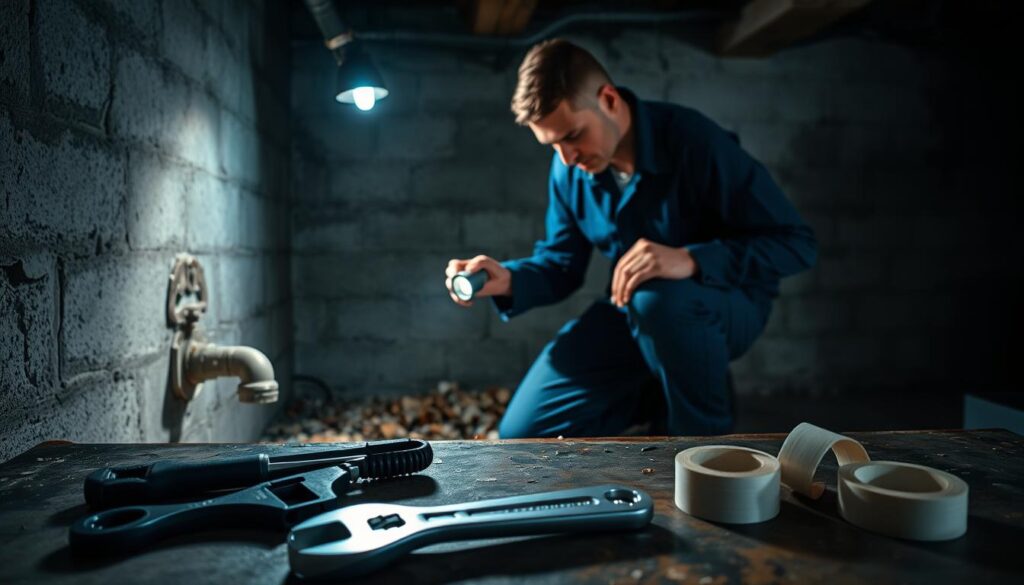
After thawing frozen pipes, it’s important to check for damage. Plumbers know that freezing can hide weaknesses. These might need repair later.
Inspectors look for signs of damage during the check-up. They look for:
- Visible cracks or hairline fractures
- Bulging or distorted pipe sections
- Discoloration or unusual surface texture
- Compromised pipe joints and connections
The repair process for burst pipes is detailed. Plumbers do:
- Partially restore water flow
- Check for immediate leaks
- Gradually increase water pressure
- Monitor pipe performance for several minutes
Professional moisture meters help detect hidden leaks behind walls or in hard-to-reach areas. These tools make sure no damage is missed. They protect your home from water damage and costly repairs.
Not all damage is easy to see. Some cracks or weaknesses might show up weeks or months later. That’s why a detailed check by a pro is key to avoiding plumbing problems.
Emergency Plumber for Frozen Pipes: When to Call Immediately
Winter can turn your home’s plumbing into a disaster zone. Knowing when to call an emergency plumber for frozen pipes can save you thousands. This includes avoiding water damage and costly repairs.
Frozen pipes are a critical situation that needs immediate help. Your home’s plumbing system is at risk during extreme cold. Some situations require urgent help from an emergency plumber for frozen pipes.
Signs Your Pipes Have Already Burst
Spotting a burst pipe early can prevent major damage. Look out for these warning signs:
- Unexplained water stains on ceilings or walls
- Sound of running water when all fixtures are off
- Sudden drop in water pressure
- Visible water spraying from pipe connections
- Musty odors suggesting hidden water accumulation
Situations Requiring Professional Intervention
Professional plumbers are key in several high-risk situations:
- Complete water loss during freezing temperatures
- Frozen pipes inside walls or under concrete slabs
- Pipes near electrical panels or gas lines
- Recurring freeze problems indicating systemic issues
“Every minute counts when dealing with frozen pipes. Immediate professional help can prevent extensive water damage.” – Professional Plumbing Association
While waiting for your emergency plumber for frozen pipes, take these steps:
- Shut off the main water supply
- Turn off electricity in affected areas
- Document possible damage with photos
- Remove valuable items from water-risk zones
Remember, professional emergency plumbers are available 24/7. They help because frozen pipe situations can get worse fast. Your quick action and their help can stop major home damage.
Cost to Repair Frozen Pipes and What Affects Pricing
Knowing how much it costs to fix frozen pipes is key for homeowners in winter. The price can change a lot based on several important factors. These factors affect your total repair cost.
The cost to fix frozen pipes can be from a few hundred to several thousand dollars. The price depends on several key things:
- Location of frozen pipes
- Extent of damage
- Accessibility of pipe sections
- Time of service
When figuring out the cost to fix frozen pipes, you’ll see different prices. A professional plumber’s assessment can help you understand your specific costs.
| Repair Type | Estimated Cost Range |
|---|---|
| Basic Pipe Thawing | $200 – $500 |
| Minor Repairs with Thawing | $500 – $1,500 |
| Major Burst Pipe Repair | $1,000 – $4,000 |
| Extensive Damage Restoration | $5,000 – $10,000 |
Remember, emergency services and weekend calls might cost more. Preventing problems is always cheaper than fixing them. Some insurance might cover pipe bursts, so keep good records.
Understanding these costs helps you make smart choices about fixing frozen pipes fast and well.
Burst Pipe Repair: How Plumbers Fix Cracked or Ruptured Lines
When a pipe bursts in your home, it’s important to act fast. This helps prevent water damage and gets your plumbing working again. Fixing burst pipes needs special skills and methods that DIY fixes can’t handle.
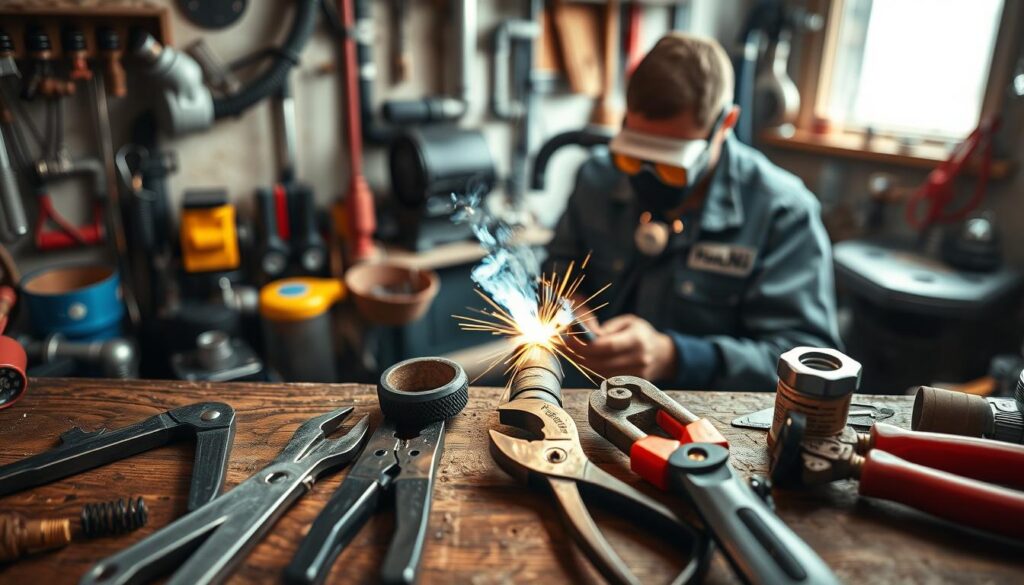
Professional plumbers use a detailed plan to fix burst pipes. They aim to fix your pipes and stop future problems. Their goal is to get your plumbing system back to normal.
Temporary Solutions for Emergency Situations
First, plumbers take quick steps to stop water damage:
- Pipe repair clamps to seal immediate leaks
- High-strength epoxy putty for small crack repairs
- Specialized rubber patches with secure hose clamps
Permanent Pipe Replacement Strategies
For a lasting fix, plumbers take these steps:
- Identify the full extent of pipe damage
- Cut out compromised pipe sections
- Select appropriate replacement materials
- Install new pipe segments with precise connections
| Pipe Material | Repair Method | Durability |
|---|---|---|
| Copper | Soldered Joint Replacement | High |
| PEX | Compression Fitting | Excellent |
| Galvanized Steel | Threaded Coupling | Moderate |
Professional burst pipe repair keeps your plumbing strong. Plumbers use advanced methods and top-notch materials. This ensures your home’s water system is in top shape.
Preventing Pipes from Freezing: Long-Term Protection Strategies
Keeping your home’s plumbing safe from freezing needs a solid plan. It’s not just about quick fixes. You need long-term strategies to protect your entire plumbing system.
First, fix your home’s weak spots. Look for and seal any cracks or openings in walls, attics, basements, and crawl spaces. These small gaps can let cold air in and harm your pipes.
- Inspect foundation walls for cracks and seal them completely
- Apply weather stripping around crawl space doors and basement windows
- Add insulation to walls and spaces near pipe locations
Protecting your pipes is key. Here are some effective ways to do it:
- Install foam pipe insulation sleeves on exposed pipes
- Use heat tape or heat cables with thermostat controls
- Wrap pipes in unheated spaces with specialized insulation
- Consider relocating vulnerable pipes to interior walls
Professional upgrades can also help a lot. Think about getting frost-free hose bibs, using flexible PEX piping in cold spots, and improving your home’s insulation. These steps might cost more at first but save you from costly repairs and water damage later.
Remember: Preventing pipes from freezing is always more cost-effective than repairing freeze damage.
Winter Plumbing Issues: Short-Term Steps to Protect Your Pipes
Winter plumbing problems can quickly become very costly if you’re not ready. When it gets cold, your pipes can freeze and get damaged. But, there are easy ways to stop your pipes from freezing without spending a lot.
Quick steps can help avoid big repair bills and water damage. Here are some simple ways to keep your plumbing safe during the cold:
Insulating Exposed Pipes and Blocking Cold Drafts
- Install foam faucet covers on outdoor spigots
- Wrap exposed pipes in foam sleeves or old towels
- Seal gaps around pipe entry points with insulation
- Use draft stoppers against doors leading to unheated spaces
- Close foundation vents during extreme cold
Maintaining Consistent Heat and Water Flow
To protect your pipes, manage your home’s heat and water well. Keep your home warm, even when you’re not there. A small investment in heating can prevent costly pipe repairs.
- Set thermostat no lower than 55°F
- Open cabinet doors under sinks to allow warm air circulation
- Let faucets drip slowly to prevent freezing
- Keep garage doors closed if water lines are present
- Maintain same temperature day and night during cold snaps
These easy steps can greatly lower your chance of frozen or burst pipes. Remember, it’s always cheaper to prevent problems than to fix them later.
Conclusion
Frozen pipes are a big problem for homeowners in the US during winter. Knowing how to prevent and handle frozen pipes can save you a lot of money and avoid water damage. Professional plumbers have the skills to fix frozen pipes with methods that go beyond what you can do yourself.
Being proactive is key during the cold months. Use insulation, keep your home at a steady temperature, and seal drafts to lower the risk of pipes freezing. If you’re unsure about your plumbing, getting help from a professional plumber can give you peace of mind.
If you think you have frozen pipes, act fast. Plumbers can quickly check for damage, thaw pipes safely, and stop big problems. Getting help early can save you money and stress later on. Stay informed, prepare ahead, and rely on experts to protect your plumbing during winter.
Winter doesn’t have to mean plumbing problems. With the right knowledge and help from professionals, you can handle frozen pipes and keep your home safe. Focus on prevention, stay alert, and talk to trusted local plumbers.