

Affiliate Disclosure
Plumber Guide Guys is a participant in the Amazon Services LLC Associates Program, an affiliate advertising program designed to provide a means for sites to earn advertising fees by advertising and linking to Amazon.
How to Plumb Floor Drain? Ever thought about how a simple plumbing feature can keep your home safe from water damage? Floor drains are the quiet heroes, managing water flow and stopping moisture disasters.
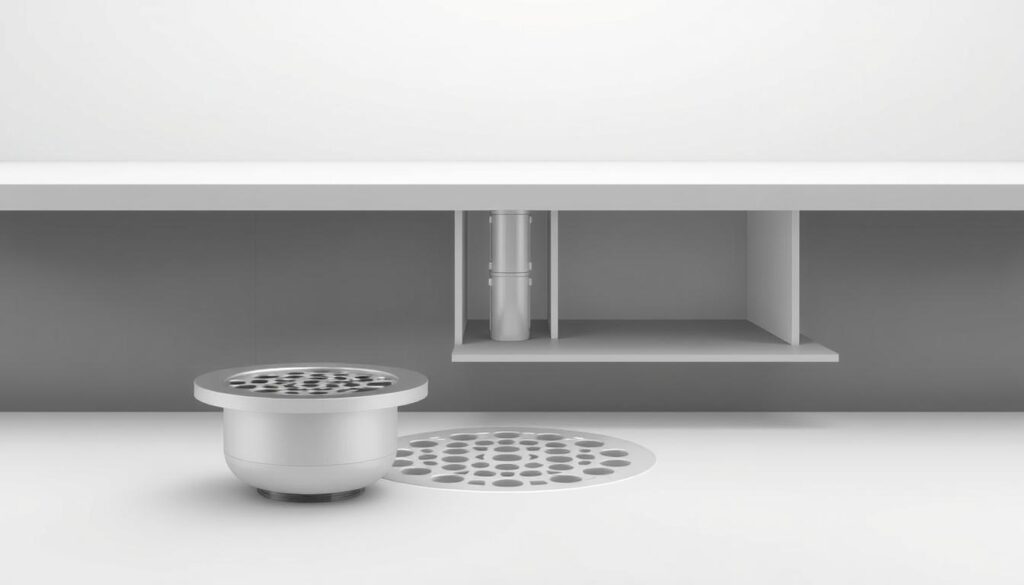
Knowing how to plumb a floor drain is key for homeowners and DIY fans. It’s vital when you’re redoing a bathroom, setting up a utility room, or improving your basement. Learning the steps can save you a lot of time and money.
This guide will simplify floor drain installation. You’ll get expert tips and hands-on advice for a plumbing job well done.
Key Takeaways
- Understand the critical role of floor drains in water management
- Learn essential tools and techniques for floor drain installation
- Discover how proper drainage prevents water damage
- Gain confidence in tackling DIY plumbing projects
- Master floor drain installation steps for various home spaces
Table of Contents
Understanding Floor Drain Basics and Their Importance
Floor drains are key to any good basement drainage system. They help prevent water damage and dangers. These fixtures are vital for managing water and keeping areas clean and safe.
Looking into shower floor drain plumbing, you’ll find different types for various needs. Let’s check out the most common ones:
- Point Drains: Traditional circular drains usually found at a floor’s center
- Trench Drains: Long, narrow channels great for big spaces
- Linear Drains: Sleek, modern design for water collection along walls or edges
Key Components of a Floor Drain System
A floor drain system has important parts for good water management:
| Component | Function |
|---|---|
| Drain Body | Collects and channels water into the drainage pipe |
| Grate | Keeps big debris out of the drainage system |
| P-Trap | Blocks sewer gases and keeps odors out |
Benefits of Proper Floor Drainage
A well-designed floor drain system offers many benefits. It protects your property from water damage and mold. It also keeps your space clean and safe.
This is true for homes, businesses, and industrial areas. Good drainage is key for safety and cleanliness.
Effective drainage is not just about water removal—it’s about protecting your space and ensuring long-term structural integrity.
Essential Tools and Materials for Floor Drain Installation
Before starting a DIY floor drain installation, it’s important to gather the right tools and materials. This preparation can make a big difference in the success of your project.
Your DIY floor drain installation toolkit should include several key components. This will help you achieve a professional-quality result. Here’s a list of essential tools and materials you’ll need:
- Power drill with masonry bit
- Reciprocating saw or wet saw
- Measuring tape
- Level
- Safety glasses and work gloves
- Plumber’s putty
- Silicone sealant
- Adjustable wrench
- Pipe cutter
- Pipe thread sealant
When choosing materials for your DIY floor drain installation, focus on quality and compatibility. Choosing the right drain components is key for long-term performance and preventing water damage.
“Invest in quality tools and materials upfront to save time and prevent costly repairs later.” – Professional Plumbing Expert
Here are some specialized materials you’ll need:
- PVC or ABS drain pipes
- Floor drain assembly
- P-trap
- Waterproof membrane
- Concrete anchors (if installing in concrete)
Remember, proper preparation is essential for a successful DIY floor drain installation. Taking the time to gather the right tools and materials will make your project smoother and more efficient.
Planning Your Floor Drain Layout and Location
Installing a basement floor drain needs careful planning and precision. The success of your drainage system depends on good preparation and knowing key installation requirements. The right floor drain slope and strategic placement are key to effective water management.
Before starting, consider several important factors that affect your drainage system’s performance.
Determining Proper Floor Drain Slope
The slope of your floor drain is essential for its function. Experts say a minimum slope of 1/4 inch per foot is needed for good water drainage. This slope helps water flow smoothly to the drain, avoiding standing water and moisture problems.
- Measure existing floor elevation
- Calculate precise slope requirements
- Use a level to confirm accurate gradient
Measuring and Marking Installation Points
Accurate measurements are key when installing basement floor drains. Take time to map out your drainage area carefully. Consider these steps:
- Identify low points in the floor
- Mark where drains can go
- Check distance from walls and obstacles
Considering Building Codes and Regulations
Local building codes are important for floor drain installations. Different places have their own rules for drainage systems.
| Consideration | Requirement |
|---|---|
| Minimum Drain Size | 2 inches for homes |
| Slope Requirement | 1/4 inch per foot minimum |
| Permit Necessity | Check local rules |
Pro tip: Always check with local building authorities before starting your floor drain installation to ensure you follow regional guidelines.
By planning your floor drain layout well, you’ll have a strong drainage solution. This protects your basement from water damage and ensures it works well for a long time.
How to Plumb Floor Drain: Step-by-Step Process
Installing a floor drain needs careful planning and precise steps. The process involves several key stages. Each step requires attention to detail and the right technique.
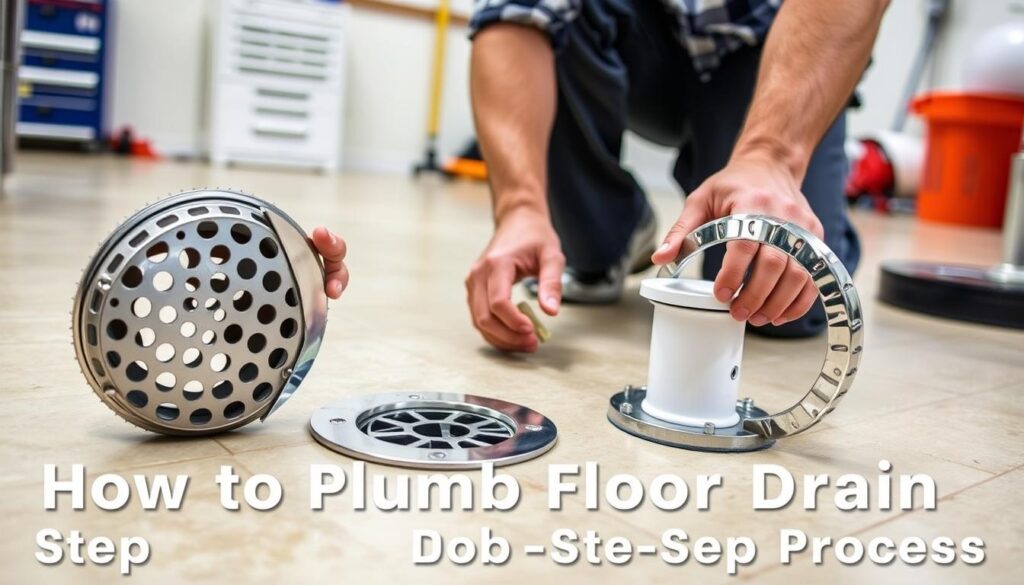
Before starting, gather all the tools and materials you need. You’ll require specific equipment for a successful installation:
- Concrete saw or circular saw
- Measuring tape
- Level
- Drain assembly kit
- Waterproof sealant
- PVC pipe and connectors
First, mark the exact spot for your floor drain. Accurate measurement is key to avoid future problems. Make sure the area slopes enough for water to flow, at least 1/4 inch per foot.
- Cut the concrete or flooring carefully using your saw
- Create a clean, precise opening for the drain
- Install the drain body into the prepared opening
- Connect drainage pipes securely
- Apply waterproof sealant around the drain edges
Proper alignment is vital during installation. Use a level to ensure the drain is perfectly flush. Misalignment can lead to water pooling and damage.
| Installation Stage | Key Considerations | Potential Issues |
|---|---|---|
| Cutting Opening | Precise measurements | Uneven edges |
| Drain Placement | Correct slope | Poor water drainage |
| Pipe Connection | Secure fittings | Potential leaks |
Local building codes may have specific rules for floor drain installations. Always check local regulations before starting. This ensures you follow the rules and avoid fines.
Selecting the Right Drain Size and Material
Choosing the right floor drain size and material is key for a good drainage system. It affects how well your system works and lasts. The right choice helps manage water better in your space.
When picking pvc floor drain connections, think about a few important things. The best choice depends on your project needs, the environment, and how you plan to use it.
PVC vs ABS Drain Options
PVC and ABS materials have their own benefits for floor drain pipe sizing:
- PVC: It’s light, doesn’t corrode, and is affordable.
- ABS: It’s strong against impacts and works well in cold places.
- It’s good with different chemicals for drainage.
Understanding Flow Rate Requirements
Figuring out the right flow rate is key for good drainage. The size and capacity of your pipes depend on your specific needs.
| Drain Type | Typical Flow Rate | Recommended Pipe Size |
|---|---|---|
| Residential Bathroom | 5-7 GPM | 2 inches |
| Commercial Kitchen | 10-15 GPM | 3-4 inches |
| Industrial Application | 20-30 GPM | 4-6 inches |
Choosing Appropriate Pipe Dimensions
When picking floor drain pipe sizing, remember these important points:
- Total drainage area
- Expected water volume
- Slope and pipe gradient
- Local building codes
Pro tip: Always check local plumbing rules and get expert advice for the right installation and compliance.
Installing the P-Trap and Drainage Connections
Installing a drain trap is key to a good plumbing system in your home. The P-trap stops sewer gases from getting in while letting water flow smoothly.
To start, you need to know the parts and where they go. A right P-trap keeps bad smells and gases out of your home.
- Gather necessary tools: pipe wrench, hacksaw, measuring tape
- Inspect drain pipe connections
- Check alignment and slope requirements
- Ensure proper sealing techniques
“A correctly installed P-trap is your first line of defense against unpleasant sewer gases and possible health hazards.” – Professional Plumbing Association
Here’s how to install your drain trap:
- Measure the drain pipe diameter accurately
- Cut pipes to the correct length
- Apply plumber’s tape to threaded connections
- Secure P-trap with appropriate fittings
| P-Trap Material | Pros | Cons |
|---|---|---|
| PVC | Lightweight, corrosion-resistant | Less durable in extreme temperatures |
| Chrome | Aesthetic appeal, durable | More expensive |
| ABS | Cost-effective, easy to install | Limited color options |
Pro tip: Always check local building codes before completing your drain trap installation to ensure compliance with regional plumbing regulations.
Waterproofing and Sealing Techniques
Keeping your floor drain safe from water damage is key. A strong basement drainage system needs good waterproofing and sealing. These steps stop moisture and prevent damage to your basement.
Good waterproofing starts with knowing what protects your drain. The right choice depends on the surface and where the drain is. This helps keep water out.
Proper Membrane Application
Choosing the right waterproofing membrane is very important. You need to think about:
- Choosing liquid-applied or sheet membranes
- Ensuring complete surface coverage
- Checking membrane compatibility with existing materials
- Verifying thickness requirements
Sealing Methods for Different Surfaces
Each surface needs its own sealing method. Here are some options:
| Surface Type | Recommended Sealing Method |
|---|---|
| Concrete | Epoxy-based sealants |
| Tile | Silicone-based waterproof sealers |
| Wood | Polyurethane waterproofing treatments |
Prevention of Water Damage
Preventing water damage is important. Regular inspections and prompt repairs help a lot. They keep your basement safe from moisture.
Proper waterproofing is not an expense, but an investment in your property’s long-term integrity.
Using these waterproofing and sealing methods makes your basement strong. It keeps your floor drain safe and your basement in good shape.
Floor Drain Cover Selection and Installation
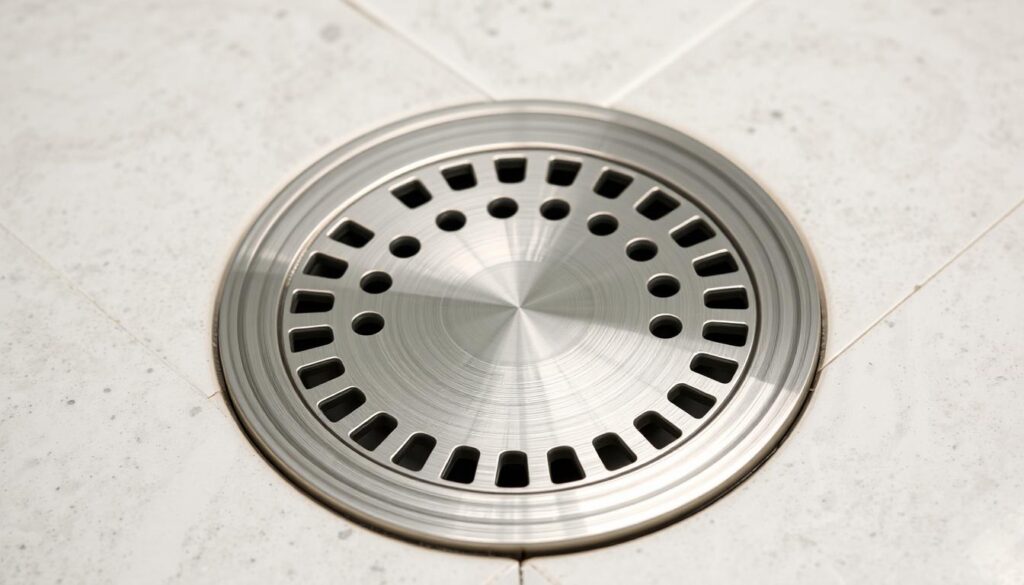
Choosing the right floor drain cover is key for both looks and function in your shower. It’s not just about hiding the drain. It also helps manage water and fits with your room’s design.
When picking a drain cover for your shower, think about these important points:
- Material durability
- Aesthetic compatibility with bathroom design
- Water flow efficiency
- Ease of cleaning
Each material has its own benefits for shower drain covers:
| Material | Pros | Best Used For |
|---|---|---|
| Stainless Steel | Rust-resistant, modern look | Contemporary bathrooms |
| Brass | Classic appearance, corrosion-resistant | Traditional design spaces |
| Plastic | Lightweight, affordable | Budget-friendly renovations |
Installing the cover needs care. Make sure it fits well and lines up with your shower floor. This stops leaks and keeps it looking clean.
“A well-selected drain cover transforms a functional element into a design statement.” – Professional Plumbing Design Expert
Always measure your drain opening before buying a cover. Some covers have adjustable frames. This makes installing your shower drain plumbing easier and more professional.
Testing and Troubleshooting Your Floor Drain System
After you’ve installed your floor drain, it’s important to test it well. This ensures it works right and avoids water damage. Checking it carefully helps find any problems that might affect its performance.
For a successful floor drain installation, you need to test and fix it right. Knowing the common issues helps keep your drainage system working well at home or work.
Common Installation Issues
- Improper slope alignment
- Inadequate sealing around drain edges
- Incorrect pipe connections
- Insufficient drain capacity
Performance Testing Methods
To check if your floor drain works, follow these steps:
- Pour several gallons of water near the drain
- Watch how fast the water flows and where it goes
- Look for leaks around the pipe connections
- Make sure all water drains away in 30 seconds
Solutions for Drainage Problems
If you face drainage issues, try these fixes:
- Recalibrate drain slope to better water flow
- Replace any broken pipe parts
- Use more waterproof sealant
- Clean the drain well to avoid blockages
Keep your floor drain in good shape with regular checks. This stops water damage and saves you from expensive fixes.
Maintenance and Cleaning Guidelines
Keeping your basement drainage system in top shape is key. Regular care stops costly repairs and keeps your floor drains working well.
Here are important maintenance steps for your basement drainage system:
- Inspect floor drains monthly for signs of blockages or debris
- Clean drain covers and remove accumulated dirt
- Use enzymatic drain cleaners to prevent organic buildup
- Check for possible water leaks around drain connections
Cleaning methods depend on your basement’s drainage system. Professional plumbers suggest specific ways to keep drains efficient.
“A well-maintained drain prevents expensive water damage and possible structural issues.” – Professional Plumbing Association
For good maintenance, follow these cleaning schedules:
| Maintenance Task | Frequency | Purpose |
|---|---|---|
| Visual Inspection | Monthly | Detect early signs of blockage |
| Deep Cleaning | Quarterly | Remove stubborn debris |
| Professional Evaluation | Annually | Comprehensive system check |
Your basement drainage system needs regular care. By following these tips, you’ll keep your home safe from water damage and ensure good drainage.
Conclusion
Learning to plumb floor drains is key to protecting your property from water damage. This guide has given you the knowledge to install floor drains with confidence. You now know how to manage water drainage effectively.
Every step in installing a floor drain is important. By following this guide, you can set up a reliable drainage system. This system will help prevent water-related problems. For more complex projects, check out plumbing industry’s installation guidelines.
Success in plumbing floor drains comes from knowing the technical stuff and applying it. While DIY fans can do many jobs, some tasks need a pro. Now you can make smart choices about your property’s water management.
A good floor drain system is an investment in your property’s safety. By using the techniques from this guide, you can remove water efficiently. This reduces damage risks and keeps your place dry in homes and businesses.