
Affiliate Disclosure
Plumber Guide Guys is a participant in the Amazon Services LLC Associates Program, an affiliate advertising program designed to provide a means for sites to earn advertising fees by advertising and linking to Amazon.
Does HOA Cover Plumbing? Ever wonder who’s on the hook for plumbing problems in your HOA community? Figuring out who’s responsible can be a real challenge. It’s like trying to find your way through a maze of rules and regulations.
HOAs handle shared spaces and systems, but it’s not always clear what they cover for plumbing. Knowing what your HOA covers can help avoid a lot of stress and unexpected costs.
In this detailed guide, we’ll explore the complex world of plumbing responsibilities. You’ll learn what your HOA does and doesn’t cover. From shared systems to what you’re responsible for, we’ll help you protect your property and wallet.
Key Takeaways
- HOA plumbing responsibilities vary by community type
- Understanding your governing documents is key
- Shared vs. private property affects plumbing coverage
- Insurance is important for plumbing issues
- Good documentation and communication solve plumbing disputes
Table of Contents
Understanding HOA Basics and Plumbing Responsibilities
Homeowners associations (HOAs) are important in managing homes across the United States. Knowing how your community works helps you deal with plumbing issues and upkeep.
HOAs help keep shared areas nice and set rules to keep property values up. The plumbing duties can change a lot, based on your community.
What Defines a Homeowners Association?
An HOA is a group of homeowners in a certain area. They work to:
- Keep common areas nice
- Follow community rules
- Manage shared things like pipes
- Collect fees for upkeep
Role in Property Maintenance
The plumbing tasks of an HOA depend on many things. They handle plumbing for many homes or shared systems. This means some repairs are the HOA’s job, while others are yours.
Types of HOA Communities
There are different kinds of HOAs, each with its plumbing rules:
- Condominiums: Have complex shared plumbing
- Townhouses: Mix individual and shared plumbing duties
- Single-family home communities: Have clear individual upkeep tasks
Knowing your HOA’s setup helps figure out who’s responsible for plumbing problems.
Common vs. Private Property in HOA Communities
Knowing where property lines are is key in HOA communities. Not all property is the same. Who fixes plumbing depends on if it’s common or private property.
Condo association plumbing work falls into two main areas:
- Common Property: Shared by everyone
- Private Property: Belongs to individual homeowners
Common property includes:
- Building exteriors
- Shared water lines
- Main drainage systems
- Structural plumbing
Private property includes:
- Inside plumbing fixtures
- Water heaters
- Appliance connections
- Internal pipes in personal spaces
“Knowing your property boundaries can save you significant time and money during plumbing emergencies.”
Check your HOA’s rules to know who does what. Reviewing these documents helps you understand your duties and who pays for repairs.
Does HOA Cover Plumbing: Breaking Down Coverage Areas
Understanding who handles plumbing in a homeowners association (HOA) can be tricky. The answer depends on where you live and your plumbing setup. It’s important for homeowners to know what the HOA covers and what they must handle themselves.
Figuring out who is responsible for plumbing in an HOA requires a close look at different areas. Generally, the HOA is in charge of plumbing that serves many units or properties.
Shared Plumbing Systems
Shared plumbing systems usually belong to the HOA. These include:
- Vertical pipe stacks that run through multiple units
- Underground sewer lines connecting multiple properties
- Main water supply lines for the entire community
Individual Unit Plumbing
For plumbing inside individual units, the owner is usually responsible. Most HOAs say that plumbing inside a unit is the owner’s job. This includes:
- Pipes inside walls of individual units
- Fixtures like sinks, toilets, and showers
- Appliance connections
Limited Common Elements
Some plumbing systems are in a middle ground called limited common elements. These are areas that serve one unit but are maintained by the HOA. A thorough look at your HOA’s rules will help clarify these cases.
| Plumbing Area | Typical Responsibility |
|---|---|
| Main Sewer Lines | HOA |
| Interior Unit Pipes | Unit Owner |
| Shared Vertical Pipes | HOA |
Always check your HOA’s documents to know what plumbing they cover. Each HOA has its own rules that affect who does what.
Plumbing Systems in Multi-Unit Buildings
Dealing with plumbing in condo associations can be tough. Plumbing in multi-unit buildings is often complex. Knowing about townhouse HOA pipes is key to avoid disputes and unexpected costs.
Multi-unit buildings have two main plumbing setups:
- Shared Plumbing Systems
- Independent Plumbing Networks
Shared plumbing systems pose big challenges. These networks connect through many units, making upkeep and fixes harder. Vertical plumbing stacks are very important, affecting many units at once.
| Plumbing System Type | Maintenance Responsibility | Typical Coverage |
|---|---|---|
| Shared Vertical Stacks | HOA Management | Building-Wide Infrastructure |
| Individual Unit Pipes | Individual Homeowner | Internal Unit Plumbing |
| Common Area Systems | HOA Collective Responsibility | Communal Drainage Networks |
Good communication between homeowners and HOA management is vital to solve plumbing issues.
Homeowners need to check their HOA documents to know plumbing upkeep rules. Each building has its own rules for who fixes what.
HOA Plumbing Coverage by Property Type
Plumbing duties in homeowners associations change a lot based on your property type. Knowing these differences helps you deal with townhouse HOA pipe coverage issues. It also helps you prepare for plumbing problems in HOA properties.
Different types of properties in HOA communities have their own plumbing upkeep rules. Your living situation greatly affects who pays for repairs and who is in charge.
Condominiums and Shared Walls
Condominiums face the most complicated plumbing coverage situations. Because of shared walls, HOAs usually handle:
- Main water line repairs
- Vertical plumbing stacks
- Building-wide drainage systems
Townhouses and Individual Units
Townhouse HOA pipe coverage is more detailed. Owners might share the cost for:
- Internal unit plumbing
- Connection points between units
- Exterior pipe maintenance
Single-Family Homes in HOA Communities
Single-family homes in HOAs usually have more individual plumbing upkeep. Homeowners are usually in charge of:
- Complete internal plumbing systems
- Individual pipe repairs
- Fixture replacements
“Knowing your HOA’s plumbing coverage can save you thousands in repair costs.”
To avoid surprises, carefully read your HOA’s rules. Each community has its own plumbing maintenance and repair rules.
| Property Type | HOA Plumbing Coverage | Owner Responsibilities |
|---|---|---|
| Condominiums | Extensive shared system coverage | Interior fixture maintenance |
| Townhouses | Partial system coverage | Connection point repairs |
| Single-Family Homes | Minimal coverage | Complete plumbing system |
Understanding Your HOA’s Governing Documents
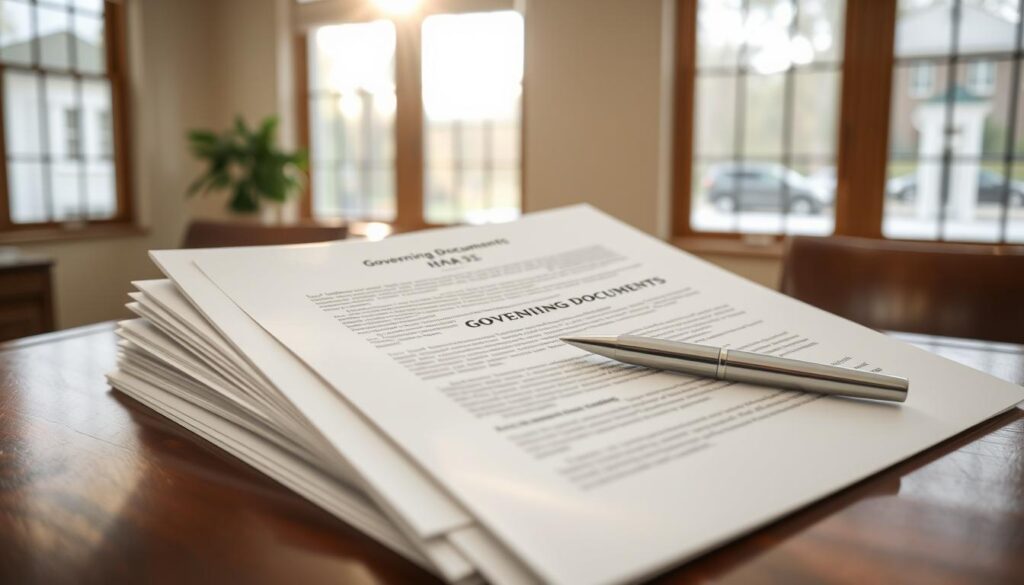
Your HOA’s governing documents are key to knowing who’s responsible for plumbing. They clearly state what your community association covers and what you’re on your own for.
It might seem hard to understand these documents, but they’re vital. They help you know your rights and duties. You’ll usually find:
- Declaration of Covenants
- Bylaws
- Community Rules
- Maintenance Responsibility Chart
“Knowledge of your HOA documents can save you thousands in unexpected plumbing repairs.” – Real Estate Expert
Each document has its own role in plumbing duties. The declaration sets general property rules. Bylaws, on the other hand, give detailed rules on maintenance and repairs.
| Document Type | Plumbing Responsibility Coverage |
|---|---|
| Declaration | Broad property maintenance guidelines |
| Bylaws | Specific repair and maintenance protocols |
| Community Rules | Detailed maintenance expectations |
To keep yourself safe, carefully review these documents. Look for parts that talk about plumbing duties, repair rules, and who pays for what.
State-Specific HOA Plumbing Regulations
Plumbing rules for homeowners associations vary by state. Knowing these rules helps protect your property. It also clarifies who is responsible for hoa insurance plumbing damage.
State laws are key in deciding who handles plumbing upkeep and fixes in community homes. Understanding your local rules can avoid expensive plumbing problems in hoa properties.
California Plumbing Laws
California has strong laws to protect homeowners in community groups. The state makes it clear who is in charge of:
- Common area plumbing systems
- Individual unit plumbing duties
- How to maintain and fix plumbing
“Knowing local plumbing rules is essential to avoid unexpected repair costs.” – California HOA Legal Association
Florida HOA Requirements
Florida’s plumbing rules are different from other states. They focus on:
- Accurate records of plumbing systems
- What insurance covers
- Need for regular maintenance reports
New York State Guidelines
New York has strict rules for plumbing in multi-unit buildings. Homeowners must follow detailed regulations. These rules balance individual and group responsibilities.
Even with these state guidelines, always check your HOA documents. They have specific rules for plumbing upkeep and insurance claims.
Insurance Coverage and HOA Plumbing Issues
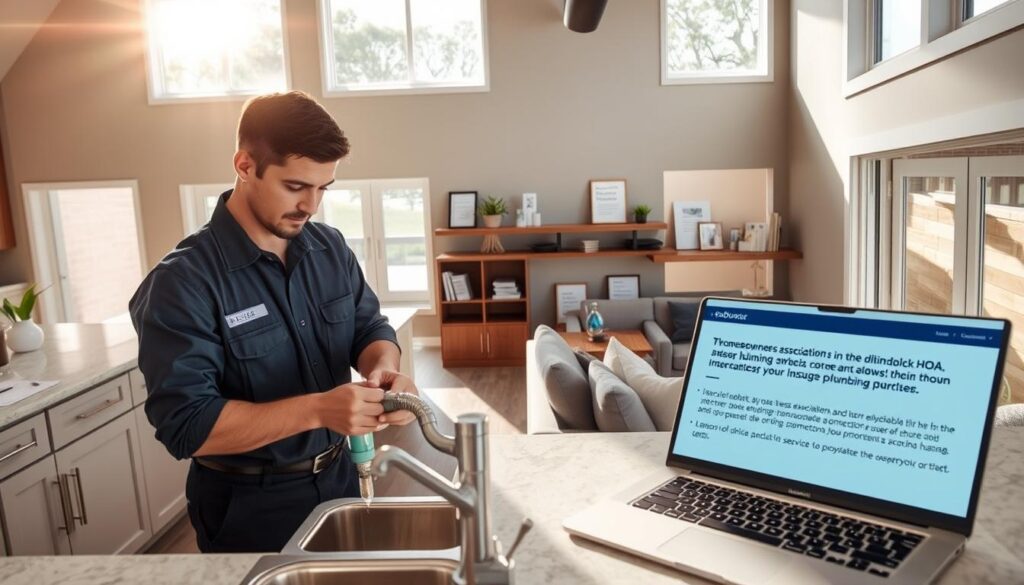
Understanding hoa insurance plumbing damage can be complex. Your HOA’s insurance policy usually protects shared plumbing systems and common areas. But, the details can vary a lot based on your community’s plumbing liability rules.
Most HOA master insurance policies cover damage to shared infrastructure. This includes:
- Main water lines
- Sewer system connections
- Pipe systems in common areas
- Structural plumbing within multi-unit buildings
Crucial tip: Always review your HOA’s specific insurance documents to understand exact coverage limits.
Your personal homeowner’s insurance is key in protecting your unit’s plumbing. Make sure your policy covers:
- Internal unit pipe damage
- Water backup scenarios
- Potential repair costs not covered by HOA insurance
“Knowledge of your insurance coverage prevents unexpected financial surprises” – Real Estate Insurance Expert
Homeowners should talk to their HOA board and insurance provider about plumbing damage coverage. By doing this, you can avoid unexpected costs. Keeping records of maintenance and reporting issues quickly can also save you money and stress.
Maintaining Documentation and Communication with HOA
Good communication is key when dealing with plumbing issues in HOA properties. Keeping proper records can protect homeowners and help solve disputes about plumbing responsibility.
To communicate well with your HOA about plumbing problems, follow these steps:
- Document the issue right away with detailed photos
- Write a clear, concise incident report
- Send a formal written notice to HOA management
- Keep copies of all your messages
Your documentation should include:
- Date and time you found the problem
- Where exactly the issue is
- What might be causing the plumbing problem
- Any damage you see right away
Pro tip: Make a digital and physical file for all HOA plumbing communications. This way, you can track repair timelines and protect yourself in future disputes.
Keeping accurate records is your strongest defense against plumbing maintenance problems.
Remember, quick and professional communication is vital for fixing plumbing issues in your HOA community. By keeping detailed records, you show you’re responsible and help make the problem-solving process smoother.
Conclusion
Figuring out if your HOA covers plumbing can be tricky. Each place has its own rules, and knowing your community’s is key. Whether your HOA covers plumbing often depends on where the problem is and what kind of property you have.
Talking to your HOA board early can help with plumbing issues. Check your community’s rules, ask about coverage, and keep talking to management. Knowing how your HOA handles plumbing repairs can save you money and stress.
Being informed and ready is your best defense. Check your place often, note any maintenance issues, and know the difference between shared and private plumbing. Even though HOAs handle plumbing differently, knowing your stuff helps manage problems.
Prevention and clear talk are your best friends with HOA plumbing issues. Knowing your rights and duties helps protect your home and keeps things good with your HOA.