

Affiliate Disclosure
Plumber Guide Guys is a participant in the Amazon Services LLC Associates Program, an affiliate advertising program designed to provide a means for sites to earn advertising fees by advertising and linking to Amazon.
Which Five Tools Are Most Common to Plumbing? Did you know the average homeowner faces three plumbing emergencies each year? Knowing the five key tools in a plumber’s kit can save you time, money, and prevent water damage. Having the right plumbing tools is key to fixing problems quickly and avoiding expensive repairs.
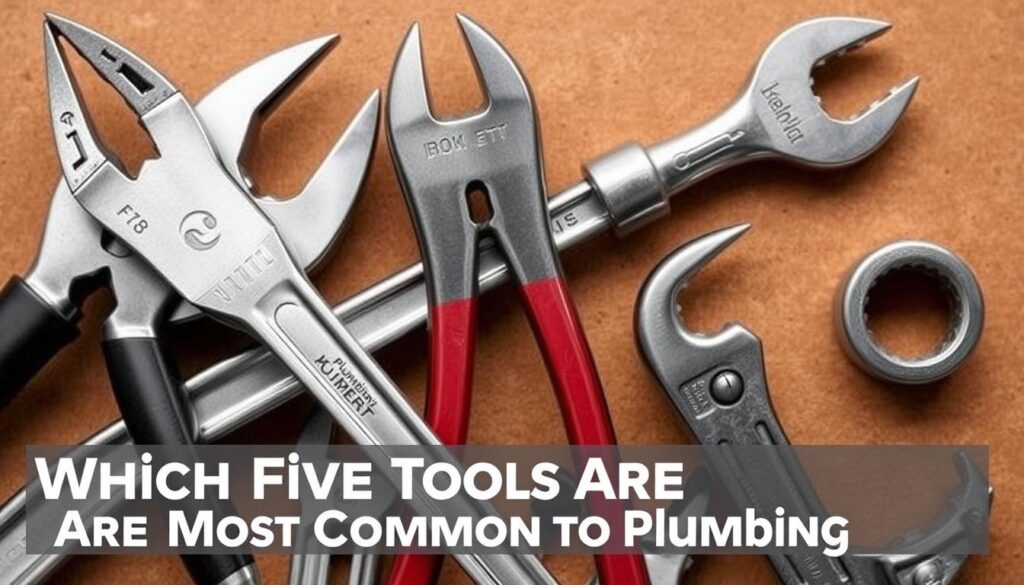
Your plumber’s toolbox is not just a bunch of random tools. Each tool has a specific role in solving plumbing issues. Whether you’re a DIY fan or a professional, knowing these five tools will help you handle most home maintenance tasks confidently.
Plumbing tools are heroes in both homes and commercial buildings. They help professionals fix and keep our water systems running smoothly. We often overlook how important they are.
Key Takeaways
- Understanding essential plumbing tools is key for home upkeep
- The right tools can stop costly water damage
- Both pros and DIYers need a good toolkit
- Choosing the right tool depends on the plumbing problem
- Keeping tools in good shape is important for their long-term use
Table of Contents
Understanding Essential Plumbing Tools for Beginners
Getting into plumbing is more than just wanting to help. Whether you love DIY projects or are fixing your home, the right tools are key. Your plumbing tools will be your biggest helpers in fixing your home.
Safety Equipment and Basic Requirements
First, you must protect yourself. Your DIY plumbing kit should have important safety items:
- Safety glasses to protect your eyes
- Waterproof work gloves
- Non-slip work boots
- Protective knee pads
Getting Started with Your First Toolkit
Creating a full plumbing toolkit takes time. Begin with these basic tools every beginner needs:
| Tool Category | Essential Items | Estimated Cost |
|---|---|---|
| Wrenches | Adjustable wrench, Pipe wrench | $30-$60 |
| Cutting Tools | Pipe cutter, Hacksaw | $25-$45 |
| Sealing Tools | Plumber’s tape, Caulking gun | $15-$25 |
Quality vs. Cost Considerations
When picking your plumbing tools, remember that quality is more important than price. Choose durable tools that will last. Cheap tools might seem good at first but can cost more in the long run.
“Buy the best tools you can afford, and they’ll never let you down.” – Professional Plumbing Advice
Your DIY plumbing toolkit is an investment in your home and skills. Start small, keep learning, and add to your tools as you get better.
The Role of Wrenches in Professional Plumbing
Wrenches are key in plumbing, helping plumbers fix problems fast. The right wrench can turn a simple fix into a quick one.
There are many types of wrenches for different plumbing tasks. Having the right ones in your toolkit is essential.
- Pipe Wrenches: Ideal for gripping and turning metal pipes
- Adjustable Wrenches: Versatile for multiple pipe sizes
- Basin Wrenches: Perfect for tight spaces under sinks
Professional plumbing tools need to be precise and strong. High-quality wrenches help avoid damaging pipes and fixtures.
| Wrench Type | Primary Use | Recommended Size |
|---|---|---|
| Pipe Wrench | Gripping and rotating pipes | 10-14 inches |
| Adjustable Wrench | Versatile pipe and fixture work | 6-12 inches |
| Basin Wrench | Tight space plumbing repairs | 10-14 inches |
Knowing which wrench to use changes how you do plumbing repairs. Look for wrenches that are easy to hold, strong, and the right size for your job.
Which Five Tools Are Most Common to Plumbing
Plumbing pros use a set of essential tools for different jobs. Knowing the top five tools helps both pros and DIY folks get ready for repair and maintenance.
Learning these tools is key for plumbers to work well and fast. Each tool has its own job and can make a big difference in fixing things.
Pipe Wrench Fundamentals
The pipe wrench is a must-have for plumbers. It has serrated jaws for a strong grip on pipes and fittings. You should pick between aluminum and steel based on your project.
- Aluminum pipe wrenches: Lightweight, great for small jobs
- Steel pipe wrenches: Strong, best for big projects
Plumber’s Tape Applications
Plumber’s tape, or PTFE tape, seals threaded pipe connections. Wrap it clockwise to stop leaks and ensure tight connections.
Plunger Types and Uses
| Plunger Type | Best Used For |
|---|---|
| Cup Plunger | Flat surfaces like sinks and bathtubs |
| Flange Plunger | Toilets with extended rubber lip |
| Accordion Plunger | Tough clogs needing extra pressure |
Basin Wrench Techniques
Basin wrenches are great for tight spots, letting you tighten fixtures behind sinks. Their design lets you work in places standard wrenches can’t.
Pipe Cutter Essentials
Pipe cutters make clean cuts in different pipe materials. Pick between manual and rotary cutters based on your plumbing needs.
Advanced Plumbing Equipment for Professionals
Professional plumbing tools have changed how plumbers work on tough jobs. Today’s tools are more than just the old stuff. They offer new ways to work more precisely and quickly.
The latest tools include advanced tech for finding problems and making connections:
- Pipe inspection cameras for non-invasive diagnostics
- Press fitting systems for quick pipe connections
- Digital leak detection equipment
- Thermal imaging devices
Pipe inspection cameras are a big deal in plumbing. These cameras let plumbers see inside pipes without damaging them. They can spot blockages, cracks, and other issues with great detail.
Press fitting systems have changed how pipes are connected. Old methods took a lot of time and effort. Now, plumbers can make strong connections fast, saving time and money.
Getting these advanced tools might seem pricey at first. But, they pay off in the long run. They help plumbers work better, faster, and with less strain.
“Technology transforms trades, and plumbing is no exception.” – Professional Plumbing Association
Pipe Work and Cutting Tools
Cutting pipes is a key skill in plumbing that needs precision and the right tools. Knowing the different cutting tools and methods helps you get clean, professional results in your projects.
Both pros and DIY folks must learn various cutting methods based on the pipe type and project needs. Choosing the right tool and method is key to success.
Manual vs. Power Cutting Tools
There are two main types of cutting tools for pipes:
- Manual Cutting Tools
- Hacksaws
- Tube cutters
- Handheld pipe cutters
- Power Cutting Tools
- Electric pipe cutters
- Reciprocating saws
- Portable band saws
Proper Cutting Techniques
Each pipe material needs a specific cutting method. Precision is key to preventing leaks and ensuring proper connections.
| Pipe Material | Recommended Cutting Tool | Key Technique |
|---|---|---|
| Copper | Tube cutter | Rotate smoothly, apply consistent pressure |
| PVC | PVC pipe cutter | Use clean, straight cuts at 90-degree angles |
| Steel | Hacksaw or reciprocating saw | Use sharp blades, steady motion |
Maintenance of Cutting Equipment
Keeping your cutting tools in good shape is important. Clean blades after each use, store them in dry places, and replace old cutting edges quickly.
Modern Plumbing Technology and Innovation
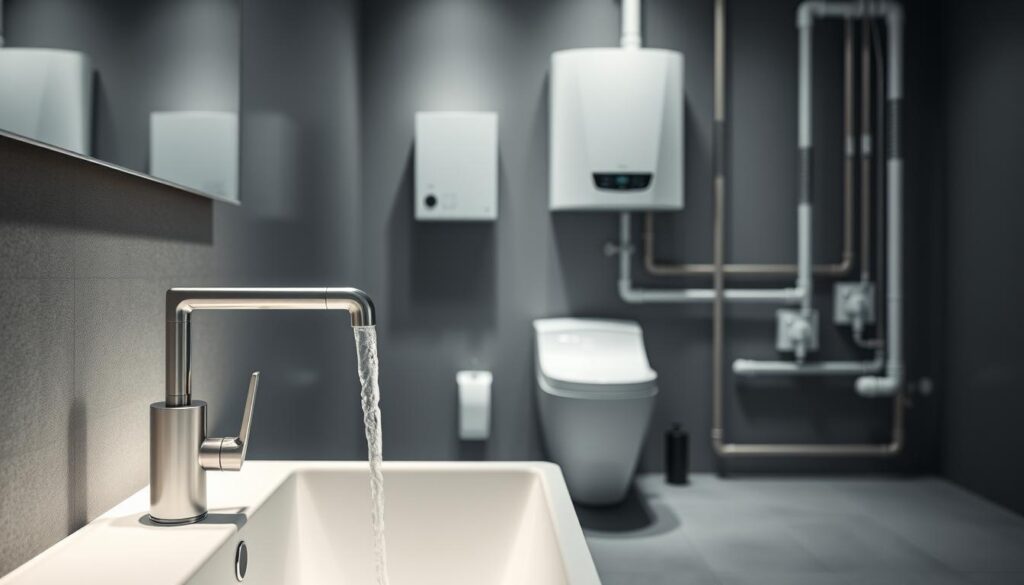
The plumbing world has changed a lot with new technologies. Now, plumbers use advanced tools that make their work easier and more precise. These tools are all about digital solutions.
New software has changed the game for plumbers. It helps with scheduling, billing, and keeping track of. This tech makes plumbing businesses run smoother and offer better service.
- PEX pipe expanders make installing pipes better
- Digital tools help find plumbing problems more accurately
- Cloud-based systems make running a business easier
New tools like thermal cameras and leak detectors have changed how plumbers find problems. They can spot issues fast without having to dig deep. This saves time and keeps properties safe.
| Technology | Function | Impact |
|---|---|---|
| Digital Diagnostics | Precision Leak Detection | Reduces Repair Time |
| Management Software | Business Operations | Improves Efficiency |
| Thermal Imaging | Hidden Problem Detection | Minimizes Invasive Repairs |
“Technology is reshaping the plumbing industry, making complex tasks simpler and more precise.” – Professional Plumbing Association
As tech keeps getting better, plumbers who use these new tools lead the way. They offer top-notch service with unmatched speed and accuracy.
Essential Hand Tools for Daily Plumbing Tasks
Every professional plumber knows a well-stocked toolbox is key. The right tools can turn a simple fix into a breeze. Knowing which tools to carry can boost your work’s speed and accuracy.
Choosing the right tools means looking at quality, versatility, and task needs. Your toolkit should cover all bases but be easy to carry. This way, you can face any plumbing challenge with confidence.
Pliers and Grip Tools
Pliers are a must-have in any plumber’s toolbox. Each type has its own role:
- Needle-nose pliers for tight spots
- Slip-joint pliers for adjustable grip
- Channel-lock pliers for many uses
- Locking pliers for steady pressure
Measurement and Marking Tools
Accuracy is vital in plumbing. Your toolkit should have:
- Tape measure for precise lengths
- Carpenter’s pencil for marking
- Level for straight installs
- Angle finder for complex pipes
Specialty Hand Tools
Special tools can make your work easier. Consider adding:
- Stubby screwdrivers for tight spots
- Deburring tools for smooth edges
- Pipe threading tools for custom fits
- Drain snake for small blockages
Investing in quality tools is investing in your success. A well-stocked toolbox with these essentials will get you ready for any plumbing job.
Drain Cleaning and Maintenance Equipment
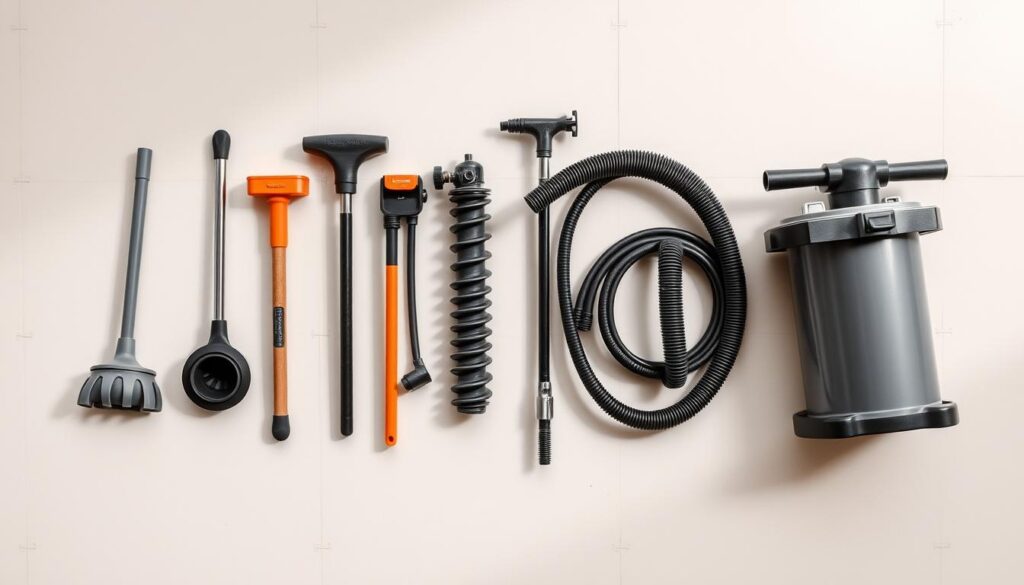
Keeping your drains clear is key to home maintenance. Both pros and DIY folks need the right tools for this job. Knowing what plumbing equipment to use can save you time and money, and prevent water damage.
For drain maintenance, you’ll need a few important tools:
- Plungers: The most basic and essential drain cleaning tool
- Hand augers for moderate clogs
- Motorized drain snakes for deeper blockages
- Hydro-jetters for thorough pipe cleaning
Each tool is best for different types of clogs. A standard cup plunger works for simple sink and shower clogs. For kitchen sink issues, a flange plunger offers more power. Powered drain snakes are needed for tough, deep clogs.
Experts suggest regular maintenance to avoid big repairs. Using the right tools can prevent costly problems. Choose quality drain cleaning tools that fit your home’s needs.
“An ounce of prevention is worth a pound of cure” – this is true for plumbing maintenance too.
Each tool has its own role. Choosing the right one depends on the clog type, pipe material, and blockage severity. Learning how to use these tools well keeps your plumbing system running smoothly.
Safety Tools and Personal Protection
Plumbing essentials are more than just tools. They include vital safety gear to keep workers safe. Your safety is key in every plumbing job.
Knowing the right protective gear is important. It helps you work safely and with confidence. Professional tools are only good if you can use them safely.
Essential Protective Gear Requirements
- Safety goggles to protect eyes from debris and chemical splashes
- Heavy-duty work gloves for hand protection
- Steel-toed boots to prevent foot injuries
- Waterproof aprons or protective clothing
- Hearing protection for loud equipment
Workplace Safety Standards
Following safety standards is key in plumbing. Your work area needs specific safety steps to reduce risks.
| Safety Category | Key Requirements |
|---|---|
| Personal Protection | Complete protective gear |
| Equipment Handling | Proper training and technique |
| Work Area Management | Clear workspace, organized tools |
Remember: No job is so urgent that you can compromise your personal safety. Always prioritize protection when working with professional plumbing tools.
Professional Inspection and Diagnostic Tools
Professional plumbing tools have changed how experts fix complex pipe issues. Modern tools let plumbers find problems fast and right, without needing to dig into pipes.
Pipe inspection cameras are a big leap in plumbing repair needs. These tools let pros see inside pipes with great detail. By putting a small camera into pipes, plumbers can spot:
- Hidden cracks
- Potential blockages
- Corrosion risks
- Structural damage
Tools like flow rate calculators and pipe volume measurers help plumbers make smart choices. They use data to decide on repairs or replacements.
| Diagnostic Tool | Primary Function | Key Benefit |
|---|---|---|
| Pipe Inspection Camera | Visual pipe assessment | Non-invasive problem detection |
| Flow Rate Calculator | Measure water movement | Precise system performance analysis |
| Digital Pipe Locator | Underground pipe mapping | Accurate repair planning |
Using these tools well takes a lot of training. Plumbers spend a lot of time learning to understand complex data. This ensures they solve problems quickly and correctly.
Having top-notch diagnostic tools makes a big difference. It sets professional plumbers apart from those who are not. These tools save time and give clients clear, dependable service.
Conclusion
Knowing the top five plumbing tools is key for anyone getting into home repair or professional plumbing. Your DIY plumbing kit is more than tools—it’s your way to fix home problems quickly and safely. Each tool, from pipe wrenches to plungers, is vital for solving plumbing issues.
Buying quality tools doesn’t have to cost a lot. Smart plumbers and DIY fans choose tools that are both affordable and effective. Your kit should grow with your skills, starting with basic tools and adding more as you learn.
Plumbing tech keeps getting better, with new tools and methods coming out. Keeping up with these changes can make you better at your job. Always wear safety gear and use tools correctly. Whether you’re a DIYer or a pro, learning and keeping your tools up-to-date is key to success.
Starting your plumbing journey means learning about key tools and practicing. Be patient, prepared, and use the right tools for the best results.