

Affiliate Disclosure
Plumber Guide Guys is a participant in the Amazon Services LLC Associates Program, an affiliate advertising program designed to provide a means for sites to earn advertising fees by advertising and linking to Amazon.
What is a Chase in Plumbing? Ever wondered how buildings hide their plumbing systems? They use a special feature called a plumbing wall chase.
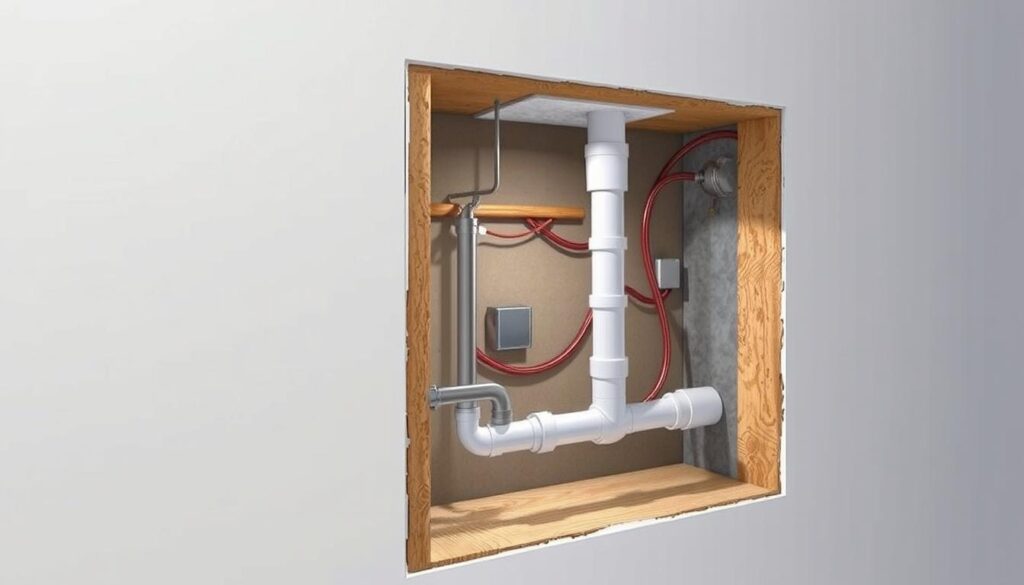
A plumbing chase is a hidden space in walls for pipes and utility lines. Even in modern homes, these hidden spaces keep everything neat and tidy.
Knowing about plumbing chases helps in designing buildings better. It ensures maintenance is easy and spaces look good. These hidden cavities are key for water and drainage systems.
Key Takeaways
- Plumbing chases are concealed spaces within walls for utility lines
- They protect pipes and maintain interior aesthetic appeal
- Chases can be vertical or horizontal in building design
- Essential for modern construction and renovation projects
- Facilitate easier maintenance and future pipe replacements
Table of Contents
Understanding What is a Chase in Plumbing
A plumbing chase is a key part of building design. It’s a space for pipes and utilities to run through buildings. This makes plumbing systems work well without being seen.
The plumbing chase is more than just a passageway. It’s a smart design that helps buildings in many ways.
Basic Definition and Purpose
A plumbing chase does more than hide pipes. It has many important roles:
- Conceals pipe networks from view
- Protects plumbing infrastructure
- Provides easy access for maintenance
- Supports efficient vertical and horizontal pipe routing
Common Terminology in Plumbing Chases
Experts have special names for these important parts of buildings. The names can vary based on the building type:
| Setting | Common Term | Description |
|---|---|---|
| Residential | Wet Wall | Vertical chase in homes |
| Commercial | Wet Column | Vertical utility passage in larger buildings |
Where You’ll Find Plumbing Chases
Plumbing chases are placed in key spots in buildings. They help keep things running smoothly and look good. You can find them in:
- Between bathroom walls
- Kitchen interior walls
- Utility room partitions
- Multi-story building cores
“A well-designed plumbing chase is the hidden hero of modern construction, ensuring seamless utility distribution.” – Architectural Design Quarterly
Types of Plumbing Chases in Modern Construction
When building modern homes, knowing about plumbing chases is key. They help make space more efficient and functional. There are many types of plumbing chases, each with its own role in design and function.
The main types of plumbing chases are:
- Built-in wall chases
- Freestanding chases
- Soffit-style chases
- Vanity cabinet pipe chases
A bathroom vanity pipe chase is a simple cut-out in a cabinet. It’s made for plumbing connections. When you compare plumbing chase vs soffit, you see big differences in how they look and work.
Plumbing chases fit into various parts of the home:
- Bathrooms
- Kitchens
- Utility rooms
- Laundry spaces
Soffits are more about looks, hiding plumbing in a stylish way. But, plumbing chases give better access and pipe protection. Your choice depends on your home’s design and what you like.
Professional tip: Pick a plumbing chase that works well with your home’s look and needs.
Essential Components of a Plumbing Chase System
Understanding the key parts of a plumbing chase is vital for a good system. A well-made chase makes fixing pipes easier for everyone. It’s great for homeowners and professionals.
Good plumbing chase systems need a few important parts. These parts make sure the system works well and lasts a long time.
Wall Structure Requirements
Your plumbing chase needs strong walls to hold pipes and stay stable. Important things to think about include:
- Strong framing like pressure-treated lumber
- Enough thickness for the pipes
- Reinforcement at important connection spots
Pipe Support Systems
Good pipe support stops pipes from sagging and reduces damage. Good support systems have:
- Adjustable pipe hangers
- Cushioned mounting brackets
- Supports both up and down
“A well-supported pipe is a long-lasting pipe.” – Professional Plumbing Experts
Access Points and Maintenance Features
Having easy access to your plumbing chase is key for future checks and fixes. Make your chase with panels or doors that can be removed. This lets you easily get to important plumbing parts.
Pro tip: Always include measurement markings and create clear pathways for future maintenance work.
Vertical vs Horizontal Plumbing Chases
Knowing the difference between vertical and horizontal plumbing chases is key for good home design and planning. A vertical plumbing chase is special in multi-story buildings. It lets pipes connect floors smoothly.
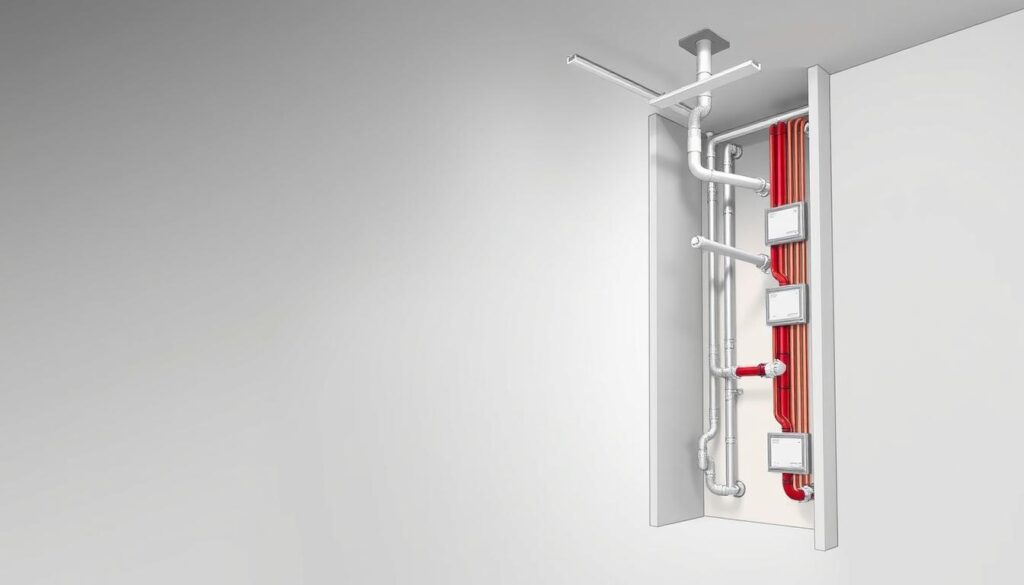
- Direct routing of water and waste pipes between floors
- Minimized pipe length and possible connection points
- Easier maintenance and access for building experts
- Boosted building structure strength
On the other hand, horizontal plumbing chases are different. They’re used in single-story buildings or for long pipe runs. These chases need careful planning to keep pipes flowing right.
A typical bathroom uses a single 3-inch pipe. It can go up to 25 feet horizontally before going vertical. This design lets plumbers create efficient systems that fit building needs.
Good design of vertical and horizontal plumbing chases boosts a building’s plumbing performance and life span.
When planning your vertical plumbing chase, think about pipe size, material, and future maintenance. The right design means a reliable plumbing system for years.
Dimensions and Space Requirements for Plumbing Chases
Knowing the right size for plumbing chases is key for any building project. The correct size ensures pipes are installed right, allows for easy access, and meets building codes.
When looking at plumbing chase sizes, several important factors come into play. A standard chase is usually 6 to 8 inches thick. Eight inches is best for piping systems. Experts say following specific sizes is important for the chase to work well.
Standard Chase Sizes for Different Applications
- Residential walls: 4″ x 4″ typical chase dimensions
- Commercial installations: Up to 8″ x 8″ recommended
- Vertical carrier systems: Minimum 4″ width required
Minimum Clearance Requirements
Enough space around pipes is vital for installation and future upkeep. You need room for repairs or replacements. The Zurn technical resources outline the needed clearances for various plumbing setups.
Building Code Considerations
Local building codes set rules for plumbing chase sizes. These rules change by area but usually require a certain amount of space. Always check with local building officials for the exact sizes needed for your project.
Remember, exact plumbing chase dimensions greatly affect your project’s quality and maintenance ease.
Installing a Plumbing Chase in Your Home
Creating a plumbing wall chase needs careful planning and precise execution. Whether you’re renovating or building a new home, knowing the installation process can save you time and headaches.
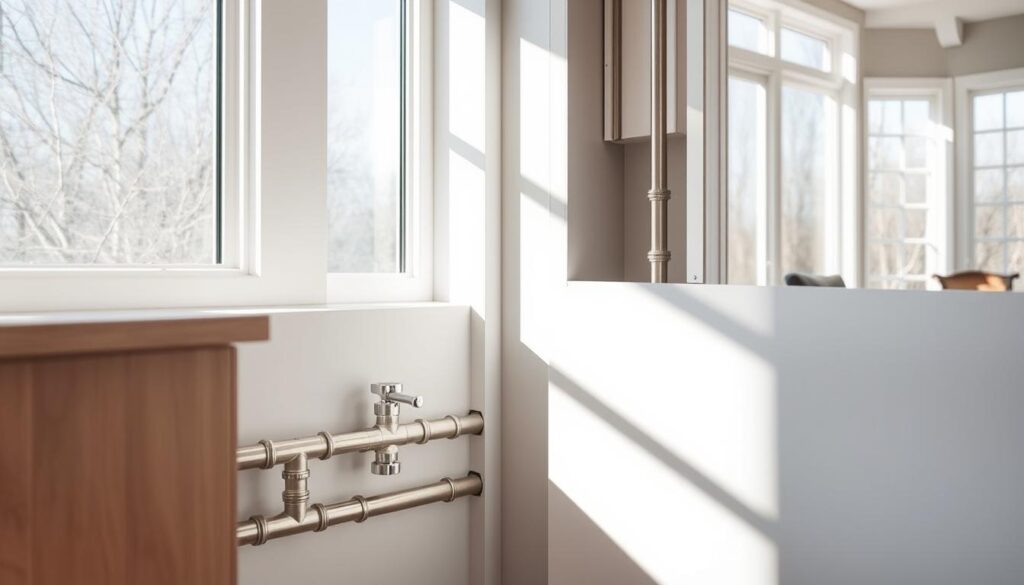
Before starting your plumbing wall chase project, gather essential tools and materials. The right preparation makes the installation smoother and more efficient.
- Powerful drill with multiple drill bit sizes
- Stud finder
- Level
- Measuring tape
- Protective safety gear
Your first step is to map out the plumbing wall chase location. Precision is key when deciding where pipes will run through your walls. Identify existing plumbing lines and electrical conduits to avoid conflicts.
| Installation Step | Key Considerations |
|---|---|
| Marking Chase Area | Use stud finder to locate wall studs and avoid structural damage |
| Cutting Wall Opening | Use appropriate saw for clean, precise cuts |
| Pipe Placement | Ensure proper alignment and support for plumbing pipes |
Professional help is recommended for complex plumbing wall chase installations. While DIY enthusiasts can handle simpler projects, complex setups need expert knowledge. This ensures proper functionality and meets local building codes.
Remember: A well-executed plumbing wall chase can improve your home’s efficiency and prevent future maintenance issues.
Always prioritize safety and check local building regulations before starting your plumbing wall chase project. Proper installation protects your home’s infrastructure and ensures long-term performance of your plumbing system.
Common Problems with Plumbing Chases
Plumbing chases can face many challenges that homeowners and contractors need to tackle. Knowing about plumbing chases helps avoid problems that could harm your home’s structure and comfort.
Dealing with plumbing chase issues requires attention to detail and regular upkeep. These hidden paths for pipes can have serious problems that need quick action.
Freezing Pipes in External Chases
External plumbing chases are at high risk in cold areas. Pipes in exterior walls can freeze easily. To avoid this, homeowners can take a few steps:
- Add extra insulation around pipe routes
- Install heat tape on vulnerable pipe sections
- Seal any external wall gaps that allow cold air penetration
- Maintain minimal indoor temperatures during winter months
Access Difficulties
Poor chase design can make maintenance hard. Hard-to-reach access points complicate inspections and repairs, leading to hidden problems.
| Access Challenge | Potential Consequence | Recommended Solution |
|---|---|---|
| Narrow Chase Dimensions | Limited Maintenance Access | Install Removable Access Panels |
| Obstructed Entry Points | Delayed Repairs | Create Multiple Inspection Points |
| Complex Pipe Routing | Increased Repair Time | Simplify Pipe Configuration |
Structural Issues
Long-term water exposure can weaken plumbing chases. Water leaks can damage walls, cause mold, and lead to structural harm if ignored.
Regular checks and early maintenance are key to managing plumbing chases and avoiding structural damage.
Bathroom and Kitchen Chase Applications
Plumbing chases are key in bathroom and kitchen design. They provide the needed setup for water and drain systems. A bathroom plumbing chase fits well with vanities and walls, making it easy for pipes and utilities to flow.
In kitchens and bathrooms, plumbing chases have many important roles:
- Concealing water supply lines
- Protecting drain pipes
- Providing easy access for maintenance
- Maximizing usable space
Your kitchen plumbing chase is usually hidden behind cabinets or in wall cavities. This setup helps manage complex plumbing systems neatly. Designers plan these areas to fit many pipes while keeping things looking good.
| Location | Typical Chase Components | Purpose |
|---|---|---|
| Bathroom Vanity | Sink drain, water supply lines | Conceal plumbing, provide structural support |
| Kitchen Sink Area | Dishwasher lines, garbage disposal pipes | Organize complex utility connections |
| Shower/Tub | Hot/cold water lines, drain pipes | Protect pipes from external damage |
When designing plumbing chases, think about pipe size, material, and future upkeep needs. Good planning keeps your plumbing working well and looking nice.
Maintenance and Inspection of Plumbing Chases
Keeping your plumbing chase in good shape is key to avoiding expensive fixes. Regular checks can spot problems early, saving you a lot of trouble.
Your plumbing chase needs regular care to work right and avoid damage. Here are some important steps:
- Do visual checks every six months
- Watch for moisture or water damage signs
- Check pipe connections and seals
- Look for corrosion or wear signs
When you maintain your chase plumbing, focus on a few key spots:
| Maintenance Area | Key Inspection Points |
|---|---|
| Pipe Connections | Check for loose fittings, possible leaks |
| Insulation | Make sure it’s covering right, no gaps or damage |
| Structural Integrity | Look for cracks, water stains, or shifts |
Pro tip: For PVC or ABS pipes, add sound-deadening insulation around them. Do this after leak tests to cut down noise and boost system performance.
Experts say making your plumbing chase easy to get to is smart. Think about putting in panels or doors that let you check things without tearing up walls.
Regular upkeep can save you thousands on repairs and make your plumbing last longer.
Remember: Being proactive with your chase plumbing maintenance is the best way to avoid plumbing surprises.
Alternative Solutions to Traditional Plumbing Chases
Homeowners have many creative options for exposed plumbing. The debate between plumbing chases and soffits offers design solutions. These can make utility spaces look good in your home.
Innovative solutions can turn functional areas into design highlights. You’ll find many ways to hide pipes while keeping your home looking great.
Soffits: A Versatile Concealment Option
Soffits are a great choice instead of traditional plumbing chases. These dropped ceiling sections can:
- Hide plumbing and electrical lines
- Create architectural interest
- Offer additional storage
- Maintain room flexibility
Decorative Coverings and Creative Solutions
Your plumbing doesn’t have to be ugly. Try these creative ways to hide it:
- Built-in shelving around pipes
- Custom cabinetry with pipe access
- Decorative wall panels
- Corner pipe chase with balanced design
Choose a solution that fits your home’s style. It should also give you easy access to plumbing.
Professional tip: Always ensure proper ventilation and maintenance access when implementing alternative plumbing chase solutions.
Conclusion
Plumbing chases are key in modern homes, giving pipes a safe path. Knowing what a plumbing chase is helps you see how it keeps your home’s water and drainage systems working well.
Designing your home’s plumbing chase needs careful planning and expert help. Good chases help pipes flow right, avoid damage, and make upkeep easier. It’s important to work with skilled pros who know how to install chases right.
Choosing the best plumbing chase setup depends on your home’s structure, climate, and needs. Learning about plumbing chases helps you make smart choices for your home’s future.
A well-made plumbing chase boosts your home’s performance, saving on repair costs and keeping systems running smoothly. Getting expert advice is essential for the best plumbing setup for your home.