
Affiliate Disclosure
Plumber Guide Guys is a participant in the Amazon Services LLC Associates Program, an affiliate advertising program designed to provide a means for sites to earn advertising fees by advertising and linking to Amazon.
How to Vent a Basement Bathroom Plumbing? Are you confused about basement bathroom venting? Proper plumbing ventilation is key to a working bathroom. Without it, your home could face serious issues.
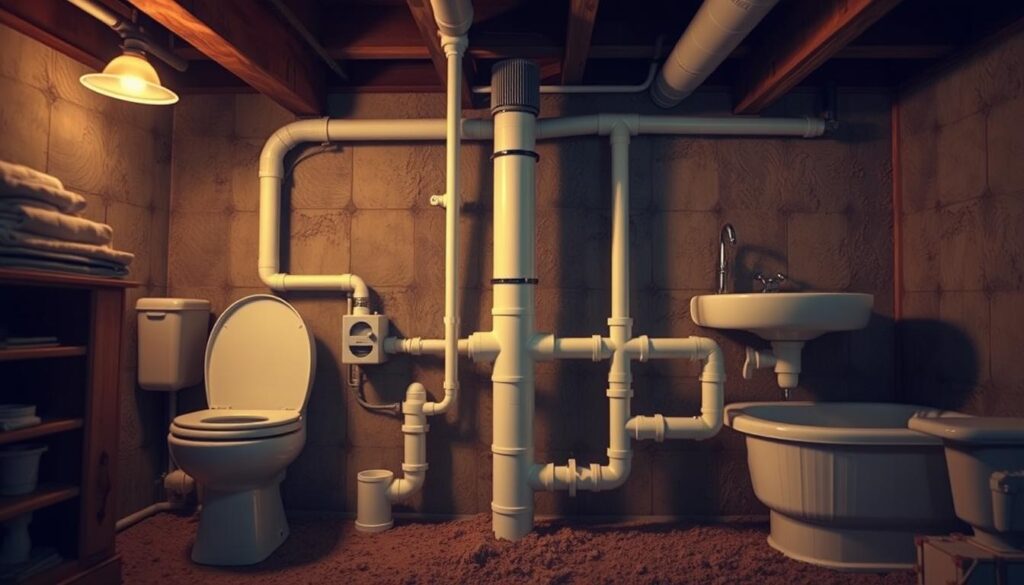
Venting a basement bathroom needs careful planning and technical skills. Your basement poses unique challenges for plumbing. It’s important to know how to vent your basement bathroom plumbing system to avoid sewer gas buildup and ensure proper drainage.
Basement bathroom venting is more than just following rules. It’s about making your home safe and functional. This guide will help you set up a reliable ventilation system. It will meet local building codes and protect your home.
Key Takeaways
- Understand the critical role of plumbing vents in basement bathrooms
- Learn how to prevent sewer gas and drainage problems
- Discover methods for effective basement bathroom ventilation
- Know the importance of following local building codes
- Recognize the challenges of below-grade bathroom installations
Table of Contents
Understanding Basement Bathroom Ventilation Basics
Proper ventilation is key when installing plumbing vents below grade in basement bathrooms. Your home’s plumbing system needs a network of pipes and vents to work well and safely.
Basement bathrooms have special needs for ventilation. You must plan carefully to avoid problems and ensure good drainage.
The Primary Purpose of Plumbing Vents
Plumbing vents are very important in your home’s drainage system:
- Equalize air pressure within drain pipes
- Prevent trap siphoning
- Remove sewer gases
- Ensure smooth water flow
Types of Pressure Forces in Plumbing Systems
Knowing about pressure is vital for basement toilet ventilation. Plumbing systems face two main pressure types:
| Pressure Type | Description | Potential Impact |
|---|---|---|
| Negative Pressure | Suction effect that can drain trap seals | Potential sewer gas entry |
| Positive Pressure | Pushes air through plumbing system | Can force water out of trap seals |
The Role of P-Traps in Ventilation
P-traps are very important in basement bathroom ventilation. These curved pipe sections create a water seal that blocks sewer gases from entering your living space. Without proper venting, P-traps can fail, which can harm your home’s air quality and sanitation.
By understanding these basics, you can create a better and safer basement bathroom plumbing system. It will meet both functional and safety needs.
Essential Components of a Basement Bathroom DWV System
A basement bathroom dwv system is key for proper drainage and waste management. It’s important to know the main parts to design a good plumbing system. This system must follow local building codes and avoid problems.
The basement plumbing vent options include several important parts. They work together to handle wastewater and keep sewer gases out of your home:
- Drain pipes for removing wastewater
- Waste pipes for transporting solid waste
- Vent pipes for maintaining proper air pressure
- P-traps to block sewer gases
Your basement bathroom dwv system needs careful engineering to work well. The main parts are:
| Component | Function | Key Consideration |
|---|---|---|
| Main Vent Stack | Vertical pipe connecting to roof | Allows air circulation |
| Horizontal Drain Lines | Collect wastewater from fixtures | Proper slope is key |
| Cleanout Fittings | Provide access for maintenance | Essential for system cleaning |
When planning your basement plumbing, think about the challenges of below-grade setups. Gravity and air pressure are vital for your dwv system’s success. A well-designed system ensures waste is removed efficiently and prevents backups or drainage issues.
Proper ventilation is the key to a functional basement bathroom plumbing system.
How to Vent a Basement Bathroom Plumbing: Step-by-Step Guide
Venting a basement bathroom plumbing needs careful planning and precise steps. It ensures your plumbing works well and meets code requirements. This guide will help you set up a good venting system.
Learning how to vent a basement bathroom plumbing can prevent drainage and pressure problems. It involves several important parts and methods.
Planning Your Vent Layout
First, you need to plan your vent layout. Think about these important points:
- Measure the distances between fixtures
- Find the most direct route for vent pipes
- Check local building codes for specific requirements
- Determine the optimal pipe diameter for your system
Connecting Vent Lines to Fixtures
Each fixture in your basement bathroom needs proper venting. Every P-Trap needs an approved venting method to avoid drainage issues. Here’s what to do:
- Find each fixture’s drain point
- Measure the needed vent pipe length
- Cut pipes to exact measurements
- Make sure connections are tight and leak-free
Installing the Main Vent Stack
The main vent stack is key for your basement bathroom’s plumbing. It connects your basement fixtures to the home’s main ventilation. To install it right, follow these steps:
- Choose the right pipe material
- Keep the pipe sloped and aligned correctly
- Use the right fittings for secure connections
- Make sure it meets local plumbing codes
Pro Tip: Always check local building regulations before starting your basement bathroom plumbing ventilation project.
Common Venting Methods for Below-Grade Bathrooms
Creating basement bathroom venting solutions needs careful thought. Plumbing experts know several good ways to handle ventilation in these areas.
Wet venting basement bathrooms is tricky. It requires special techniques to avoid drainage and air pressure problems.
- Conventional Venting: Traditional approach using separate vent pipes
- Wet Venting: Combines waste and vent functions in a single pipe
- Circuit Venting: Connects multiple fixtures through a shared vent line
- Combination Waste and Vent: Streamlined approach for compact spaces
Each venting method has its own benefits for basement bathrooms. The choice depends on your layout, local rules, and plumbing setup.
| Venting Method | Best For | Complexity |
|---|---|---|
| Conventional Venting | Traditional basement layouts | High |
| Wet Venting | Compact spaces | Medium |
| Circuit Venting | Multiple fixture areas | Low |
“Proper venting is key for good drainage and avoiding plumbing issues.” – Professional Plumbing Association
When planning your basement bathroom ventilation, check local building codes. Also, get expert advice to make sure your system works well and meets standards.
Air Admittance Valves: A Solution for Basement Ventilation
Basement bathrooms can be tricky for ventilation. Air admittance valves (AAVs) are a smart choice for basement plumbing. They make installation easier.
AAVs are a clever alternative to traditional vents. They allow air into the drainage as one-way mechanical vents. This is great when a roof vent is hard to install.
Benefits of AAVs in Basement Plumbing
- Reduce the need for multiple roof penetrations
- Simplify complex plumbing installations
- Lower overall installation costs
- Minimize possible roof leak points
Proper Installation Techniques
When installing AAVs in your basement bathroom, keep these tips in mind:
- Ensure proper vertical positioning
- Maintain recommended clearance from fixtures
- Follow manufacturer’s specific guidelines
- Check local building code compliance
Code Requirements for AAV Installation
Not all places allow AAVs, so check local rules. Some areas need a traditional stack vent, even with AAVs. Always talk to local building inspectors before finishing your basement plumbing design.
Understanding air admittance valves helps you create a good ventilation system. It meets both practical and legal needs.
Wet Venting Techniques for Basement Bathrooms
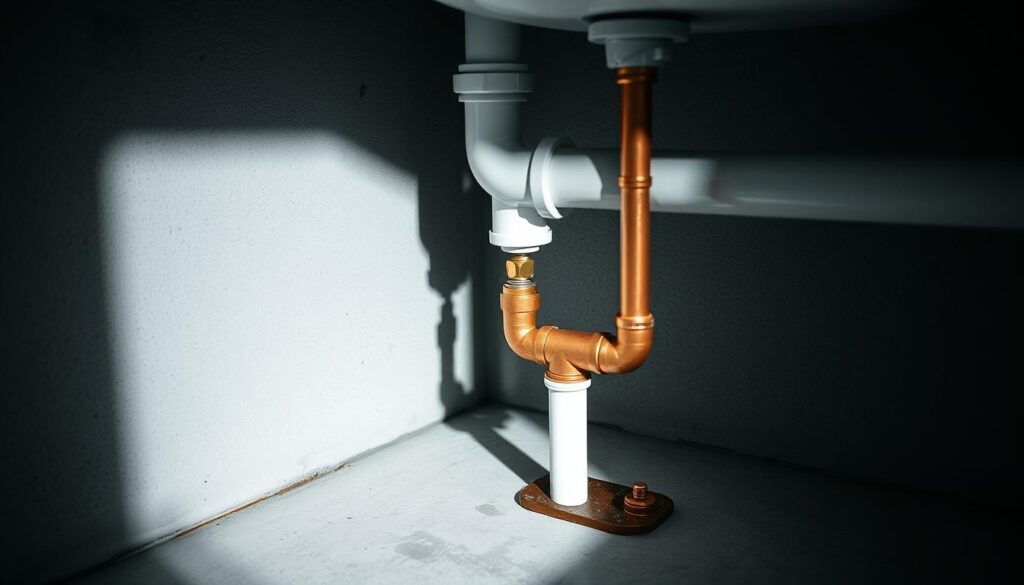
Setting up wet venting for basement bathrooms needs careful planning. It’s about using one pipe for both draining water and venting sewer gases. Done right, it makes plumbing easier and follows local building rules.
Experts say wet venting is best for basement bathrooms. It has many benefits:
- It cuts down on material costs
- It makes plumbing simpler
- It ensures good drainage and ventilation
- It saves space in small basements
To use wet venting for basement bathrooms, you must think about a few important things. The size of the pipe is key. It needs to be big enough for both drainage and ventilation. Usually, a 2-inch pipe is enough for most homes.
Your plan for wet venting should include:
- Mapping out where fixtures will go
- Choosing the right pipe size
- Making sure the pipe slopes correctly
- Keeping vents at the right distance
Professional tip: Always check local building codes to make sure your wet venting plan follows the rules.
Code Requirements and Compliance for Basement Venting
Understanding basement plumbing codes can be tricky. The U.S. has two main codes: the International Plumbing Code (IPC) and the Uniform Plumbing Code (UPC). Knowing these rules is key for a safe and legal basement bathroom setup.
Every area has its own building codes. It’s vital to check local rules before starting your project. Your basement bathroom’s ventilation system must follow strict standards for safety and workability.
IPC vs UPC Guidelines
The two main plumbing codes have some differences:
- Vent sizing requirements
- Distance limits for fixtures
- Material rules
- How to install
Local Building Code Considerations
Local areas often add extra rules beyond national codes. Important factors include:
- Minimum vent pipe size
- Material restrictions
- Inspection rules
- Need for professional certifications
Permit Requirements
You’ll need the right permits for your basement bathroom’s ventilation system. This usually means:
- Submitting detailed plumbing plans
- Paying fees
- Getting professional inspections
- Getting final approval
Talking to a local licensed plumber can guide you through these complex rules. They ensure your project follows all needed regulations.
Troubleshooting Common Basement Vent Issues
Fixing basement bathroom venting can be a challenge. It takes sharp problem-solving skills to understand how to vent a basement bathroom plumbing system. Catching ventilation problems early can avoid big plumbing issues.
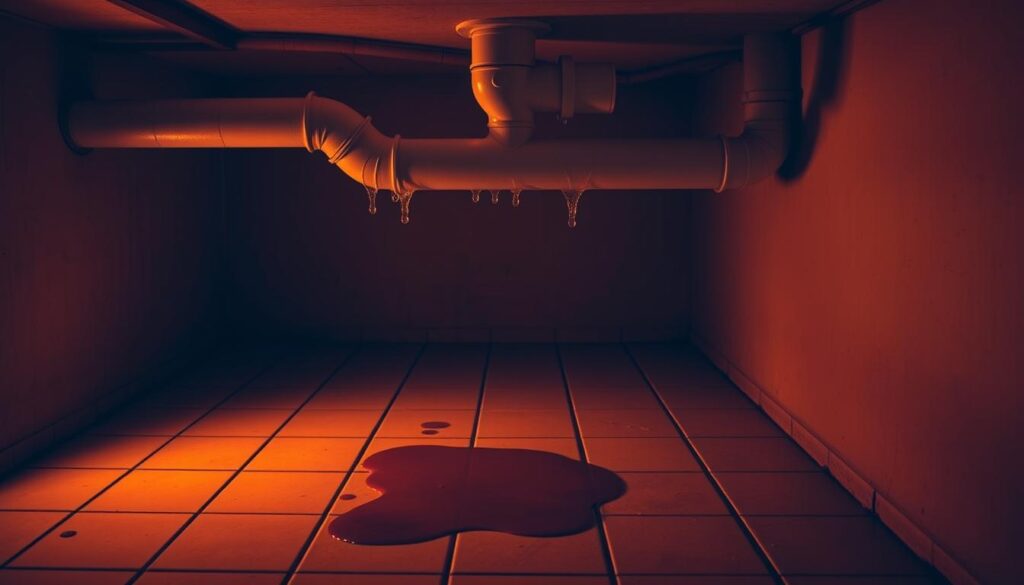
Homeowners often notice several signs of basement bathroom venting problems:
- Slow draining fixtures
- Gurgling sounds from pipes
- Unpleasant sewer gas odors
- Water backing up in drains
To diagnose basement bathroom plumbing vent issues, start by checking these key areas:
- Inspect vent pipe slopes for proper drainage
- Check for possible blockages
- Examine air admittance valve functionality
- Verify proper pipe connections
Common fixes for basement bathroom venting problems include:
- Clearing pipe obstructions with specialized plumbing tools
- Adjusting vent pipe angles to improve drainage
- Replacing damaged air admittance valves
- Resealing pipe connections
If DIY fixes don’t work, you might need a pro. Complex venting issues can mean deeper plumbing system problems. These need expert diagnosis and repair.
Remember: Proper maintenance prevents most basement bathroom venting complications.
Regular checks and proactive maintenance are essential. They keep your basement bathroom plumbing system running well. This prevents expensive repairs later on.
Maintaining Your Basement Bathroom Ventilation System
Keeping your basement plumbing vent in good shape is key for your bathroom’s long-term health. Regular checks and care can avoid expensive fixes and keep your system working well.
Begin by checking your basement bathroom’s ventilation system often. Look for these important signs:
- Check for any visible signs of blockages in vent pipes
- Inspect pipe connections for leaks or damage
- Ensure proper ventilation for basement toilets
- Listen for unusual sounds that might indicate venting problems
Seasonal care is vital for your plumbing vent system. In winter, watch out for freezing issues that could harm your bathroom’s ventilation. Clean vent openings and check for ice that might block airflow.
For the best results, follow these maintenance tips:
- Clean vent pipes annually with special tools
- Make sure vent pipes slope right for drainage
- Check air admittance valves for proper function
- Seal any gaps around vent pipe entries
Professional inspections every two to three years can spot issues early. If you smell bad odors, notice slow drains, or hear gurgling, it’s time for a pro to check your system.
Proactive maintenance is the key to a reliable and efficient basement bathroom plumbing system.
Conclusion
Setting up a basement bathroom plumbing system needs careful planning and precise steps. Knowing about ventilation, building codes, and the right techniques is key. The right venting solutions can greatly improve your home’s plumbing.
Choosing the right venting methods and understanding Air Admittance Valves (AAVs) are important. You also need to follow local building rules. Each step helps avoid drainage problems, manage sewer gases, and protect your plumbing.
Investing in good ventilation techniques will save you time and money in the long run. By following expert advice and keeping up with plumbing standards, you can have a reliable and safe basement bathroom. This meets both practical and safety needs.
For complex setups, getting professional help might be a good idea. Make sure to get the right permits, know the local codes, and consider hiring licensed plumbers. This ensures the best results for your basement bathroom project.