
Affiliate Disclosure
Plumber Guide Guys is a participant in the Amazon Services LLC Associates Program, an affiliate advertising program designed to provide a means for sites to earn advertising fees by advertising and linking to Amazon.
How Close Can Plumbing Be to Electrical Panel? Did you know a water pipe near your electrical panel could be deadly? It’s important to know the safe distance between plumbing and electrical panels. This knowledge helps keep your home safe from electrical dangers.
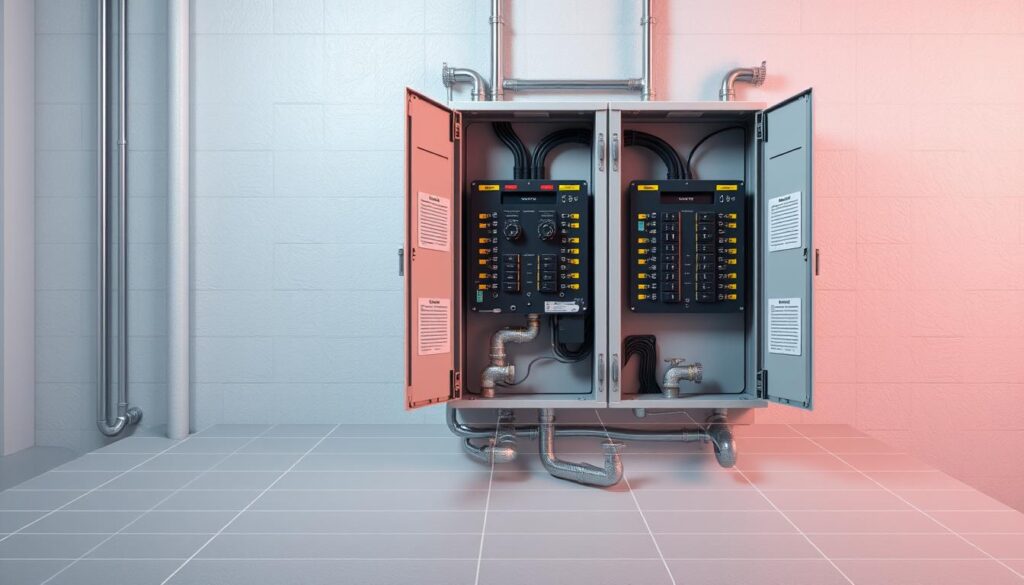
Homeowners and contractors must follow safety rules when placing plumbing near electrical panels. The National Electrical Code sets clear guidelines to avoid water-related electrical risks.
Keeping your electrical system safe means keeping it away from water. If plumbing is too close to electrical panels, it can cause serious problems. These include short circuits, fires, and even electrocution.
Key Takeaways
- Electrical panels need a safe distance from water sources
- The National Electrical Code sets strict safety rules
- Wrong plumbing placement can lead to big electrical dangers
- Getting a pro to install ensures it’s done right
- Regular checks keep your electrical system safe
Table of Contents
Understanding Electrical Panel Safety Standards
Keeping your home and family safe is key. The National Electrical Code (NEC) sets rules for safe electrical setups. This helps avoid risks from electrical systems.
Knowing the electrical code for plumbing clearance is vital. The NEC has rules to keep electrical and plumbing systems safe from each other.
Basic Panel Safety Requirements
Here are the basic safety rules for electrical panels:
- Keep space clear around the panel
- Ensure good ventilation
- Protect the panel from moisture and objects
- Use the right circuit protection
National Electrical Code (NEC) Guidelines
The NEC has strict rules for plumbing near electrical panels. It requires a special area around panels that must stay clear. Here’s what it says:
- 30 inches wide in front of the panel
- At least 36 inches of clear space
- No plumbing or non-electrical items near the panel
Importance of Proper Panel Installation
Installing electrical panels right is more than just following rules. It’s about making a safe space for your home. By following NEC rules, your electrical system works well and safely.
Safety isn’t expensive, it’s priceless – when it comes to electrical installations.
Minimum Distance Requirements Between Plumbing and Electrical Panels
Knowing the right distance between plumbing and electrical panels is key for home safety. The National Electrical Code (NEC) sets rules to keep your electrical systems safe from water damage.
When it comes to water pipes and electrical panels, safety is a top priority. Electrical panels need a clear space to avoid contact with plumbing. This helps prevent electrical shorts, corrosion, and other dangers.
- Maintain a minimum clearance of 36 inches in front of electrical panels
- Ensure no direct water pipe connections within the immediate panel area
- Protect electrical equipment from possible condensation or leaks
The NEC says it’s okay to have plumbing above electrical panels if you take the right precautions. These precautions include:
- Installing waterproof barriers
- Using materials that won’t corrode
- Setting up drainage systems to keep water away
Electricians suggest checking your electrical panel often to keep it safe from water risks. By following these rules, you can lower the risk of electrical problems and water damage.
How Close Can Plumbing Be to Electrical Panel: Essential Guidelines
Understanding the rules for electrical panel clearance can be tough for homeowners. Knowing the right distance for plumbing near the breaker box is key. It keeps your home safe and follows building codes.
When you install plumbing near an electrical panel, you must follow certain rules. These rules help keep your home safe and your plumbing and electrical systems working right. The National Electrical Code (NEC) gives detailed rules for this.
Vertical Clearance Requirements
Your electrical panel needs enough space above it to work safely. The NEC suggests:
- At least 36 inches of space above the panel
- No water lines directly above the panel
- Make sure water can’t drip on electrical parts
Horizontal Distance Specifications
Keeping the right distance horizontally is also important. The NEC says:
- Plumbing lines should be at least 12 inches from the panel sides
- Don’t run water lines right next to the breaker box
- Make sure there’s a clear path for maintenance and emergencies
Working Space Considerations
The space for plumbing near the breaker box must be enough for work. The NEC requires:
- At least 30 inches wide in front of the panel
- At least 36 inches deep for working space
- No things that could block access in emergencies
These rules are in place to protect your home’s electrical and plumbing systems. They also keep technicians safe during maintenance and repairs.
Dedicated Space Requirements for Electrical Panels
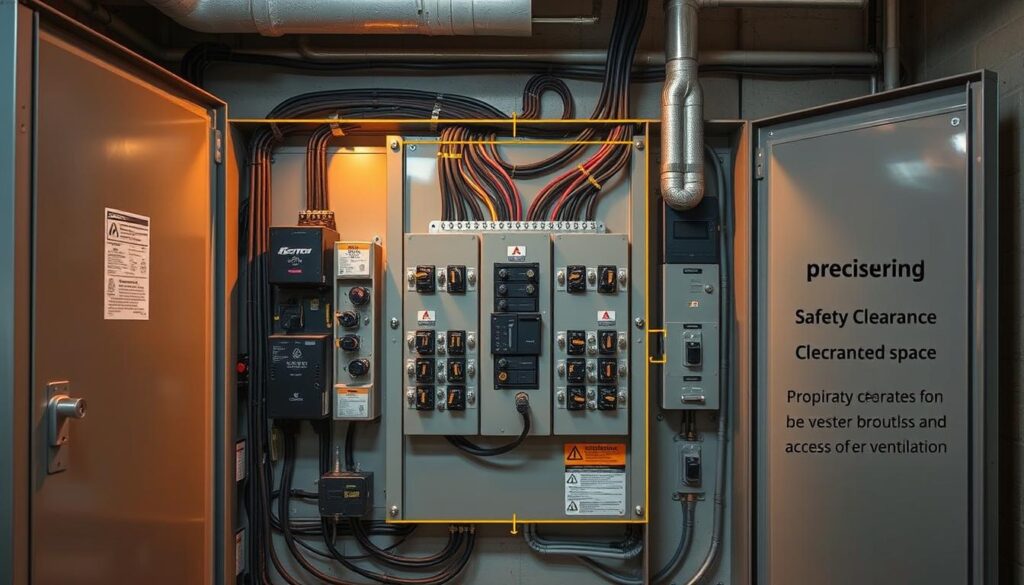
Electrical safety near water pipes is key to protecting your home. The National Electrical Code (NEC) sets rules for clearance and access around electrical panels. This is to keep your electrical system safe.
Rules for electrical panel water hazards require a clear space around the panel. This area is vital for several reasons:
- Prevent accidental contact with live electrical components
- Ensure safe maintenance and repair access
- Minimize risks from water damage
- Maintain proper ventilation around the electrical panel
The space needed is 6 feet vertically above the panel or to the ceiling, whichever is lower. Homeowners must keep this area free from obstructions. This includes plumbing pipes, storage items, or other building systems.
| Clearance Requirement | Minimum Specification |
|---|---|
| Vertical Clearance | 6 feet or ceiling height |
| Horizontal Clearance | 3 feet in front of panel |
| Obstruction Restrictions | No pipes, storage, or equipment allowed |
Pro tip: Always consult a licensed electrician to ensure your electrical panel meets all safety requirements and local building codes.
Safety first: Proper dedicated space is not just a recommendation—it’s a critical protection measure for your home and family.
Understanding Foreign Systems Near Electrical Panels
When you install electrical panels, you need to watch out for nearby plumbing and gas lines. These systems can be a big risk to electrical safety if not handled right. It’s important to plan carefully to avoid water damage to your electrical panel.
Foreign systems include various utility lines close to your electrical setup. You must pay extra attention to electrical safety near water pipes to avoid dangers.
Definition of Foreign Systems
Foreign systems are external utility setups near electrical panels. They include:
- Water supply lines
- Drainage pipes
- Gas transmission lines
- Heating and cooling conduits
Safety Measures for Water Lines
To keep electrical panels safe from water risks, you need a good plan. Here are some key steps:
- Install waterproof barriers around electrical panels
- Ensure proper drainage away from electrical infrastructure
- Use waterproof sealants on possible entry points
- Do regular checks for leaks
Gas Line Considerations
Gas lines near electrical panels bring their own set of challenges. It’s best to get a pro to install to reduce risks.
| Foreign System | Potential Risk | Recommended Protection |
|---|---|---|
| Water Lines | Moisture Damage | Waterproof Barriers |
| Gas Lines | Potential Explosion | Professional Separation |
| Drainage Pipes | Corrosion | Protective Coatings |
Getting a professional to check your setup is the best way to ensure electrical panel safety with foreign systems.
Common Code Violations in Panel Installation
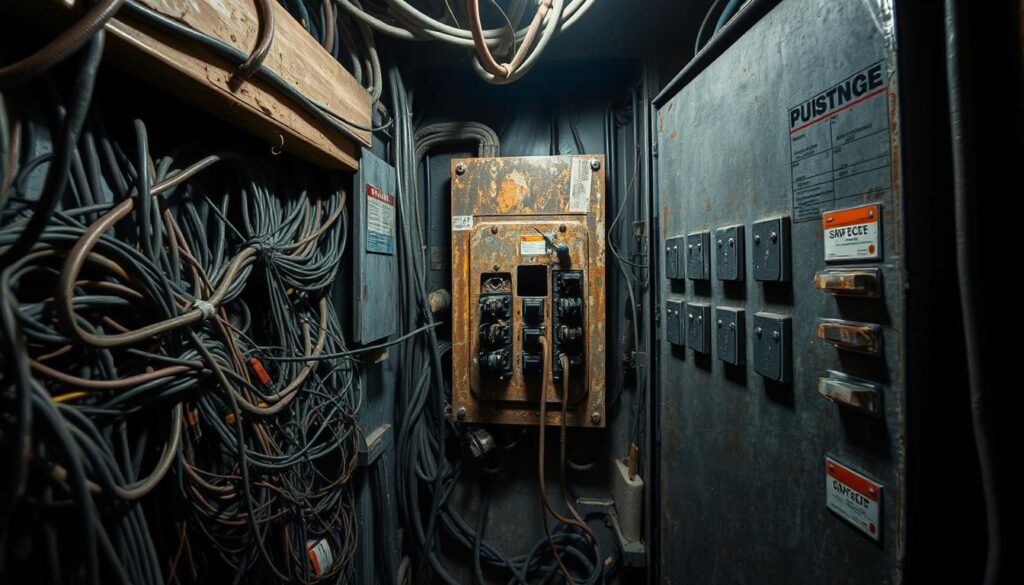
Electrical panel installations must follow strict safety rules. Many people, including homeowners and contractors, unknowingly break these rules. This can lead to serious electrical safety issues.
The National Electrical Code (NEC) sets clear rules for where electrical panels can be placed. Common mistakes include:
- Inadequate clearance around electrical panels
- Proximity to water sources
- Blocked access to electrical components
- Improper working space considerations
NEC rules for how close plumbing can be to electrical systems are very important. They help prevent electrical dangers. Installers must follow these rules to keep everyone safe.
| Common Violation | Potential Risk | Recommended Solution |
|---|---|---|
| Water pipes near panel | Electrical short circuit | Maintain minimum 3-foot clearance |
| Obstructed panel access | Emergency shutdown difficulty | Keep 30-inch wide clear space |
| Improper panel height | Safety and accessibility issues | Install between 48-76 inches from floor |
Professional inspection can help identify and rectify these critical code violations before they become serious safety risks.
Always consult a licensed electrician to ensure your electrical panel meets all current safety standards and local building codes.
Protection Methods for Electrical Panels Near Plumbing
Keeping your electrical panel dry is key for safety and avoiding dangers. Water can harm your electrical system, leading to expensive fixes and risks.
To stop water damage to your electrical panel, several strategies are important:
- Waterproofing sealants
- Protective barriers
- Moisture-resistant enclosures
- Elevated panel installations
Waterproofing Solutions
Using top-notch waterproofing solutions is vital for electrical safety. Professional waterproof coatings can protect your electrical parts from moisture.
“Prevention is always better than repair when it comes to electrical system protection.” – Electrical Safety Experts
Barrier Installation Options
Putting barriers between plumbing and electrical panels can lower water damage risks. These barriers might include:
- Waterproof panels
- Protective metal or plastic shields
- Specialized enclosures
- Water-diversion systems
It’s wise to talk to a licensed electrician to find the best protection for your panel. Each setup has its own challenges that need a pro’s eye.
While these methods can lessen risks, they’re not a full replacement for correct setup and care. Regular checks and upkeep are essential to avoid water damage to your electrical panel.
Professional Installation and Inspection Requirements
Keeping your home’s electrical panel safe is a big job. It needs a pro. Electricians are key to making sure your electrical system is safe. They follow strict rules to keep your home safe from electrical dangers.
Electrical safety near water pipes is even more critical. Only trained electricians know the rules for where to put electrical panels. They make sure your panel is far enough from your plumbing.
- Certified electricians must have deep knowledge of electrical safety codes
- They do detailed checks on electrical panel setups
- They make sure everything meets the National Electrical Code (NEC)
Inspectors look closely at where your electrical panel is. They check:
- If there’s enough space around the panel
- If plumbing isn’t too close
- If it follows local building codes
- If the electrical system is safe overall
It’s wise to have your electrical panel checked every 3-5 years. Or when you make big changes to your electrical or plumbing. A pro can spot problems early. This keeps your home and family safe from electrical dangers.
Your safety is the most important thing. Always get a certified pro for electrical panel jobs and checks.
Emergency Situations and Risk Management
Water near electrical panels is a big safety risk for your home. Knowing the rules about electrical panel water hazards is key to avoiding disasters. Taking steps ahead of time can protect your electrical system from water damage.
If water gets near your electrical panel, act fast. To stop water damage, you need to detect problems early and have a plan ready.
Leak Detection Systems
Modern leak detection systems are a big help for your electrical systems. They watch for leaks and send alerts right away to keep risks low.
- Wireless water sensors near electrical panels
- Smart moisture detection technology
- Automated alert systems
Emergency Shutdown Procedures
Knowing how to shut down power quickly is vital when water threatens your electrical system. Here are important steps to follow:
- Cut power at the main breaker right away
- Don’t touch wet electrical equipment
- Call professional electricians
- Take photos of any damage for insurance
| Emergency Action | Recommended Response |
|---|---|
| Minor Water Exposure | Dry area, contact electrician |
| Significant Water Intrusion | Shut down power, evacuate area |
| Electrical Panel Flooding | Professional inspection required |
Remember, electrical safety is more important than convenience. If unsure, always ask a licensed electrician to check for water damage risks.
Conclusion
Knowing how close plumbing can be to electrical panels is key for a safe home. The National Electrical Code sets clear rules to keep your home and family safe. By following these rules, you lower the chance of electrical accidents caused by water.
Your safety near water pipes depends on careful planning and expert help. Electrical panel installations need to be done to avoid water damage or electrical dangers. Always talk to licensed electricians and plumbers who know how to keep things safe.
Regular checks are important for keeping electrical safety standards. You should get professionals to check your electrical panels to make sure they meet safety rules. This way, you can catch any problems early and keep your home and family safe.
Investing in proper electrical panel and plumbing setup is cheaper than fixing safety issues later. By getting expert advice, following codes, and staying safe, you can make your home a safer place. This reduces the risks of electrical problems near water systems.