
Affiliate Disclosure
Plumber Guide Guys is a participant in the Amazon Services LLC Associates Program, an affiliate advertising program designed to provide a means for sites to earn advertising fees by advertising and linking to Amazon.
Does Plumbing Work When Power is Out? Ever thought about your water systems when the power goes out? Many people worry about electricity, but plumbing often keeps working. This might surprise you.
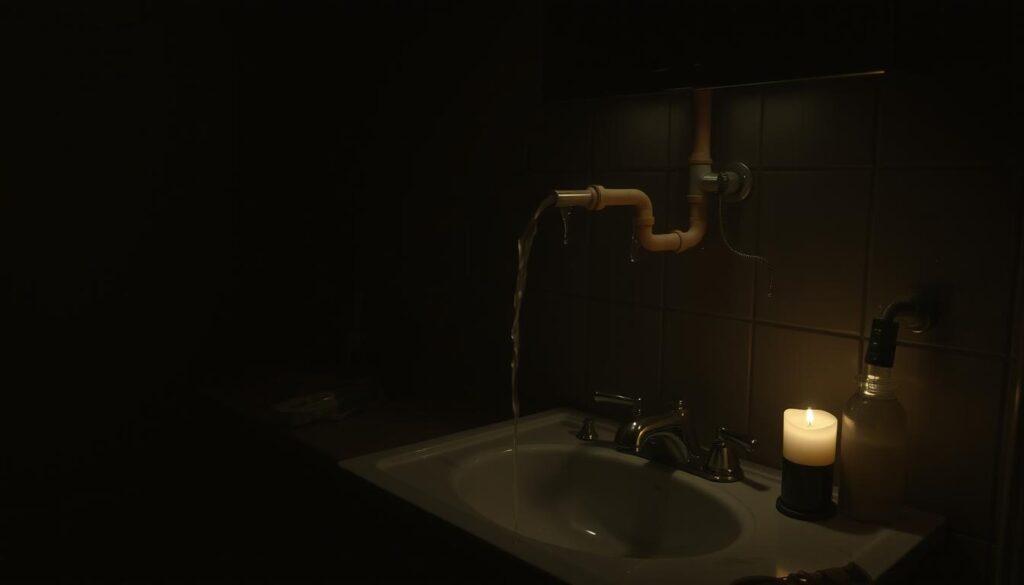
Knowing how your plumbing works during blackouts can ease your mind. Most home plumbing doesn’t need electricity for simple tasks. This includes flushing toilets and running cold water.
Your plumbing’s response to power outages depends on your water source. If you’re on municipal water or have a private well, things might differ. Some parts might work fine, while others could face big problems.
Key Takeaways
- Most basic plumbing functions continue during power outages
- Municipal water systems typically maintain water pressure
- Well water systems are more vulnerable to power interruptions
- Toilets and cold water faucets generally work without electricity
- Hot water availability depends on your water heater type
Table of Contents
Understanding Plumbing Systems During Power Outages
When the lights go out, your home’s water system might behave differently. This depends on its specific infrastructure. Power outages can significantly impact how water flows through your pipes, creating unique challenges for residential plumbing.
Types of Plumbing Systems Vulnerable to Power Loss
Not all plumbing systems react the same during a municipal water supply power failure. Your water access depends on two primary system types:
- Gravity-fed plumbing systems
- Electrically-powered water distribution networks
Municipal Water Supply Performance in Blackouts
City water systems typically maintain pressure through elevated storage tanks. During a power outage, these gravity-fed plumbing configurations can continue delivering water for several hours. Water pressure relies on tank elevation, not electric pumps.
“Water infrastructure is designed with resilience in mind, allowing temporary service during unexpected interruptions.” – Urban Water Management Expert
Well Water Systems During Power Failures
Well water systems face more significant challenges during power outages. Most well pumps require electricity, so your water supply will likely stop when the power goes out. Without electrical intervention, water cannot be drawn from underground sources.
- Electric submersible pumps cease functioning
- No water pressure in well-dependent homes
- Alternative power sources might provide temporary relief
Understanding these system variations helps you prepare for water access disruptions during unexpected power failures.
Does Plumbing Work When Power is Out?
Whether your plumbing works during a power outage depends on several key factors. The way your water system works changes a lot based on where you live and your water source.
For city folks, there’s a silver lining. Most city water systems keep water pressure up during blackouts. They use gravity-fed reservoirs and backup generators. So, your home’s plumbing usually works fine, letting you flush toilets and get running water.
- City water systems often have emergency power mechanisms
- Water pressure during blackouts remains relatively stable
- Basic plumbing functions remain operational
Rural homeowners with well water systems face unique hurdles. Electric well pumps need electricity to work, so you might lose water during long power outages.
| Water System Type | Plumbing Functionality During Power Outage |
|---|---|
| Municipal Water | High functionality |
| Well Water Systems | Limited or no functionality |
| Apartment Complex | Depends on building’s backup systems |
Apartment dwellers should talk to their building management about emergency water plans. Some high-rise buildings use electric pumps, which can stop working during power cuts.
To be ready, think about getting emergency water storage. Also, learn about your water system’s specifics. Knowing how your plumbing behaves without power can help you handle surprises better.
City Water vs. Well Water Systems in Power Outages
When a power failure hits, your water supply changes a lot. It depends on your home’s water system. Knowing how city and well water systems work during blackouts is key for being ready.
Power cuts affect water systems in different ways. Your home’s water source decides if you can use water when the power is out.
Municipal Water Supply Functionality
City water systems keep water flowing through gravity-fed water towers. These tanks store water high up, letting it flow to homes even when power fails. Most city folks can keep using water pretty easily.
- Water towers store lots of water
- Gravity helps water flow without needing to pump
- Little trouble during short power outages
Well Pump Systems and Power Dependencies
Well water systems face big problems when power goes out. Electric well pumps need power to work. So, your water access gets cut off right away.
| Water System Type | Power Outage Performance |
|---|---|
| Municipal Water | Relatively Stable |
| Well Water Systems | Completely Dependent on Power |
Apartment Building Water Systems
High-rise buildings use electric pumps in basements. Without power, water can’t reach upper floors. People living there might lose all water access during power outages.
Knowing your water system helps you get ready for any disruptions. It’s important for making good emergency plans.
Toilet Function During Power Failures
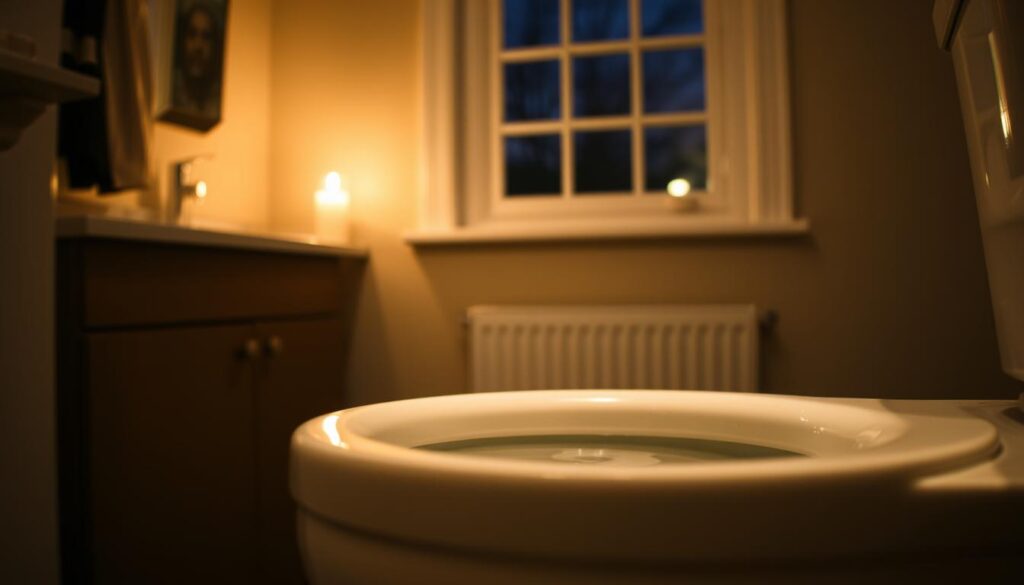
When the power goes out, your toilet will likely keep working. Most toilets use gravity and water pressure, not electricity, to flush. Knowing how toilets flush without power can help you get ready for blackouts.
Gravity-fed plumbing works by using water pressure and gravity. When you flush, water from the tank goes into the bowl. This creates enough force to clear waste, without needing electricity.
- Standard toilets use water pressure and gravity for flushing
- No electrical components are typically required for basic toilet operation
- Water must be available in the pipes to enable flushing
Even though most toilets work without power, remember your water supply. When power outages hit, your water might run low.
“In an emergency, conserve your water resources and flush only when absolutely necessary.” – Emergency Preparedness Expert
Some toilets, like those in high-rise buildings, might not work without power. If you live in an apartment or complex with special plumbing, ask your building management about toilet use during blackouts.
To make sure your toilet flushes without power, keep buckets of water ready. Pouring water from a bucket into the toilet bowl can manually flush it when water pressure is low.
Water Heaters and Hot Water Availability
When the power goes out, having hot water is key for comfort and cleanliness. Knowing how water heaters work without power helps you get ready for any plumbing issues.
Tank-Style Water Heaters: A Temporary Hot Water Solution
Traditional tank-style water heaters can give you hot water for a bit when the power is out. They usually keep water hot for one to two hours after the power goes off. Here’s what you should do:
- Take a hot shower quickly after power loss
- Save the remaining hot water for important uses
- Know how long you’ll have hot water
Tankless Water Heater Challenges
Tankless water heaters face a big problem during blackouts. Without power, they can’t work, so you won’t have hot water. This makes it very important to be ready for emergencies if you have one.
Emergency Hot Water Solutions
Here are some ways to get hot water when there’s a plumbing emergency during a blackout:
- Use camping stoves to heat water safely
- Prepare insulated containers with pre-heated water
- Have emergency water heating gear ready
Being prepared can really help keep your hot water going during unexpected power cuts.
Plumbing Appliances That Stop Working
When a power outage hits, many important household appliances stop working. Knowing which ones are affected can help you get ready and manage your home’s needs.
Power outages can make many plumbing appliances useless. These appliances need electricity to work right:
- Sump pumps can’t remove water
- Water heaters (both tankless and tank-style) stop making hot water
- Pump-powered septic systems shut down
- Electric toilets become inoperable
- Dishwashers and washing machines can’t function
Your home’s water system depends on electricity. When the power goes out, these appliances stop working. This can cause big problems at home.
Each appliance has its own risks. Sump pumps can’t keep basements dry, and septic systems might back up without power. Knowing these risks helps you find ways to deal with power outages.
Proactive homeowners know they need backup plans for their plumbing systems.
To avoid problems, think about manual or portable power solutions. These can help your plumbing appliances during blackouts.
Critical Plumbing Risks During Blackouts
Power outages can turn your home’s plumbing into a disaster zone. It’s key to know the risks to protect your property and avoid expensive damage.
When the power goes out, your plumbing faces big challenges. These need quick action and smart planning.
Frozen Pipe Prevention Strategies
Cold weather during blackouts is bad for your pipes. The need for electricity to run septic systems raises the risk of frozen pipes. Here are some key steps to protect your plumbing:
- Drain water from exterior pipes and outdoor faucets
- Insulate exposed pipes with foam sleeves
- Keep interior temperatures steady with alternative heat
- Let faucets drip slowly to stop freezing
Sewer Backup Concerns
Without power, your home’s waste systems can fail. Homes with electric sump pumps or septic systems face big risks during long power outages.
“A single power outage can turn your plumbing system from working to potentially disastrous.” – Plumbing Safety Expert
Basement Flooding Risks
Power outages can shut down key water removal systems. This leaves your basement at risk of flooding. You’ll need backup power or manual methods to remove water.
- Install battery-powered backup sump pumps
- Keep emergency water removal tools ready
- Create drainage paths away from your foundation
Being prepared is your best defense against plumbing emergencies during power outages.
Emergency Preparedness for Plumbing Systems
Getting ready for a plumbing emergency during a power outage is key. Your home’s plumbing can be at risk without power. So, having backup systems for plumbing is vital to keep water flowing.
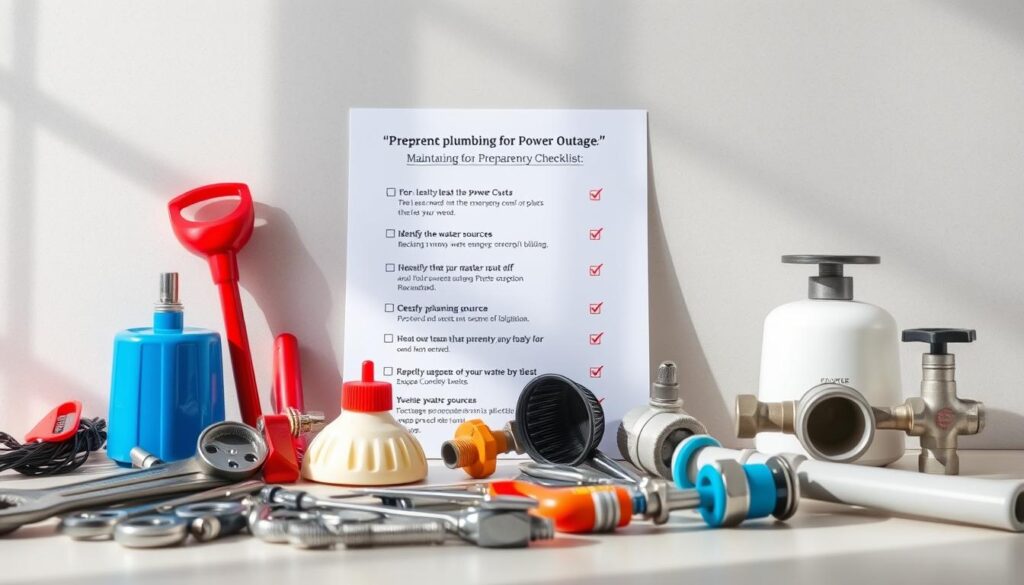
Good emergency planning means taking several steps to safeguard your water system. Here are some important steps to take:
- Install a portable generator to power critical plumbing components
- Create a detailed plan for storing emergency water
- Find ways to protect your pipes from damage
- Set up ways to talk to local utility services
Your emergency kit should have a few important things:
| Item | Purpose | Recommended Quantity |
|---|---|---|
| Water Containers | Emergency Water Storage | 1 gallon per person per day |
| Portable Water Filter | Water Purification | 1-2 per household |
| Battery-Powered Pump | Backup Water Movement | 1 unit |
Keeping your plumbing safe during power outages needs smart planning. Check your backup systems often. Keep emergency supplies ready. Know your home’s water system well to avoid big problems.
“Preparation is the key to managing unexpected plumbing challenges during power failures.” – Professional Plumbing Association
With these detailed backup systems for plumbing, your home will stay safe and comfy even when power goes out.
Backup Solutions and Alternative Water Sources
Getting ready for water systems during blackouts needs careful planning and key backup solutions. Your emergency prep can greatly help keep plumbing working when power goes out.
Key backup systems for plumbing include several strategies to keep water flowing and sanitation basic during emergencies:
- Store emergency water in clean containers
- Get portable water filtration systems
- Buy battery-powered or manual water pumps
- Think about portable generators for well water systems
Water storage is key during long power cuts. Experts say keep at least one gallon of water per person per day for emergencies. You can store water in:
| Storage Method | Capacity | Duration |
|---|---|---|
| Large Water Containers | 30-50 Gallons | 1-2 Weeks |
| Bathtub Water Bladders | 100 Gallons | 2-3 Weeks |
| Commercial Water Jugs | 5-7 Gallons | 3-5 Days |
Alternative toilet solutions help manage sanitation during blackouts. Portable camping toilets or composting toilets offer reliable waste management when regular plumbing fails.
Community resources like local emergency centers can offer water during long power outages. Keep up with nearby water supply spots to meet your household’s hydration and basic needs.
Conclusion
Learning how plumbing works without power can really help during blackouts. Your home’s water system depends on many things. This includes the water source, pump type, and local infrastructure.
Knowing the risks and preparing ahead can help you handle plumbing emergencies. This is true for any unexpected power outage.
Different homes need different plans to keep water flowing. City water users might face fewer issues. But, those with well systems in rural areas could have bigger problems.
Checking your plumbing setup is key to a good emergency plan. It’s important for every home.
Regular maintenance and inspections are vital. They keep your plumbing system strong during power cuts. Think about getting backup power, storing water, and knowing your water system.
Being ready can turn a big problem into a smaller one. It’s all about being prepared and knowing your systems.
Knowing what to do and keeping your systems in check is your best defense. This way, you can keep your home’s water flowing smoothly, even without power.