

Affiliate Disclosure
Plumber Guide Guys is a participant in the Amazon Services LLC Associates Program, an affiliate advertising program designed to provide a means for sites to earn advertising fees by advertising and linking to Amazon.
What Is A Drum Trap In Plumbing? Ever wondered about the hidden plumbing parts in older homes? The drum trap is a key piece that keeps your home safe from sewer gases and plumbing issues.
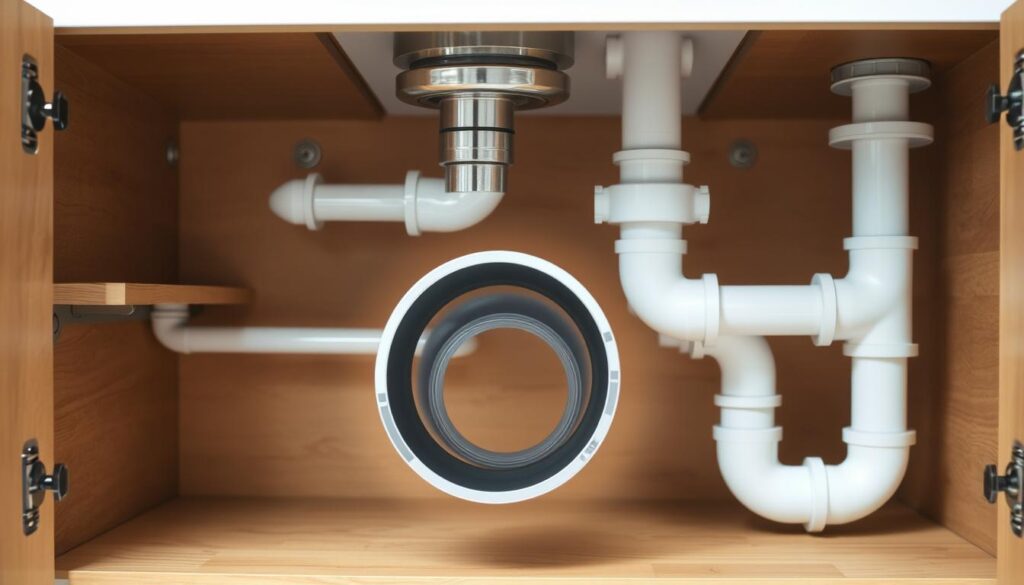
A drum trap is a special plumbing device that stops sewer gases from getting into your home. It’s bigger and shaped like a cylinder, unlike today’s P-traps. It creates a water seal to keep odors out and protect your health.
Drum traps were common in old homes but are now mostly replaced by P-traps. Knowing about drum traps helps homeowners with older homes take better care of their plumbing.
Key Takeaways
- Drum traps are older plumbing fixtures used to block sewer gases
- They differ significantly from modern P-traps in design and functionality
- Commonly found in homes built before current plumbing codes
- Prone to possible clogging and maintenance issues
- Understanding drum traps aids in home maintenance and renovations
Table of Contents
Understanding What Is A Drum Trap In Plumbing
A drum trap in plumbing is a special drainage solution used in older homes for decades. It helps homeowners understand these historic fixtures and how they work.
Drum traps are cylindrical devices that keep sewer gases out and catch debris. Their design is different from today’s plumbing.
Basic Components and Design
The typical drum trap has several parts:
- Cylindrical metal or cast iron body
- Inlet pipe from the fixture
- Outlet pipe for waste water
- Removable access cap for cleaning
How Drum Traps Function
Drum traps were once a common plumbing solution. They work by:
- Collecting water in the cylindrical chamber
- Creating a water seal to block sewer gases
- Trapping debris before it reaches the main sewer line
Common Installation Locations
Drum traps were often found in certain areas of older homes:
| Location | Typical Fixture |
|---|---|
| Bathrooms | Bathtubs |
| Kitchens | Utility sinks |
| Laundry Areas | Washing machine drains |
Nowadays, P-traps have replaced drum traps. They are more efficient and easier to maintain.
History and Evolution of Plumbing Drum Traps
Drum traps have a rich history in home plumbing, mainly in older homes. They were introduced in the late 19th and early 20th centuries. They were a clever way to keep sewer smells out of living areas.
The need for drum traps came from several important factors in early plumbing:
- Limited understanding of fluid dynamics
- Primitive drainage system technologies
- Need for better sanitation methods
In older homes, drum traps were a common feature. Their big, round shape made them easy to clean and collect debris. Plumbers found them simple to maintain because of their size.
| Era | Plumbing Characteristic | Drum Trap Significance |
|---|---|---|
| 1880-1920 | Emerging Urban Infrastructure | Primary Drainage Solution |
| 1920-1950 | Transitional Plumbing Design | Gradually Replaced by P-Traps |
| 1950-Present | Modern Plumbing Codes | Mostly Obsolete |
Despite their historical importance, drum traps had their downsides. They often clogged with sediment, making cleaning hard. Now, P-traps are preferred for their efficiency.
Knowing how drum traps evolved helps us see how plumbing has improved. It also highlights the challenges in older homes.
Drum Trap vs P-Trap: Key Differences
It’s important for homeowners and plumbers to know the differences between drum traps and P-traps. These designs have unique features that affect how well they work, how they’re installed, and how they’re maintained.
Looking at drum traps and P-traps, we see why P-traps are now the preferred choice. They offer better performance and easier installation.
Design Variations
P-traps have a modern design that beats traditional drum traps. Their shape brings several benefits:
- Easier to clean and maintain
- More compact and streamlined
- Better water seal prevention
- Allows for more flexible installation
Installation Requirements
Drum traps are no longer allowed in many places. Building codes now favor P-traps for good reasons:
- Improved drainage efficiency
- Better prevention of sewer gases
- Simpler maintenance process
- More standardized fitting connections
Maintenance Considerations
P-traps are easier to maintain than drum traps. Their design makes quick and easy cleaning possible. You can access and clean parts without messing with the whole system.
Modern plumbing standards prioritize functionality, efficiency, and ease of maintenance.
When deciding between drum traps and P-traps, check local building codes and talk to a professional plumber. This ensures you follow the rules and get the best results.
Benefits and Drawbacks of Drum Traps
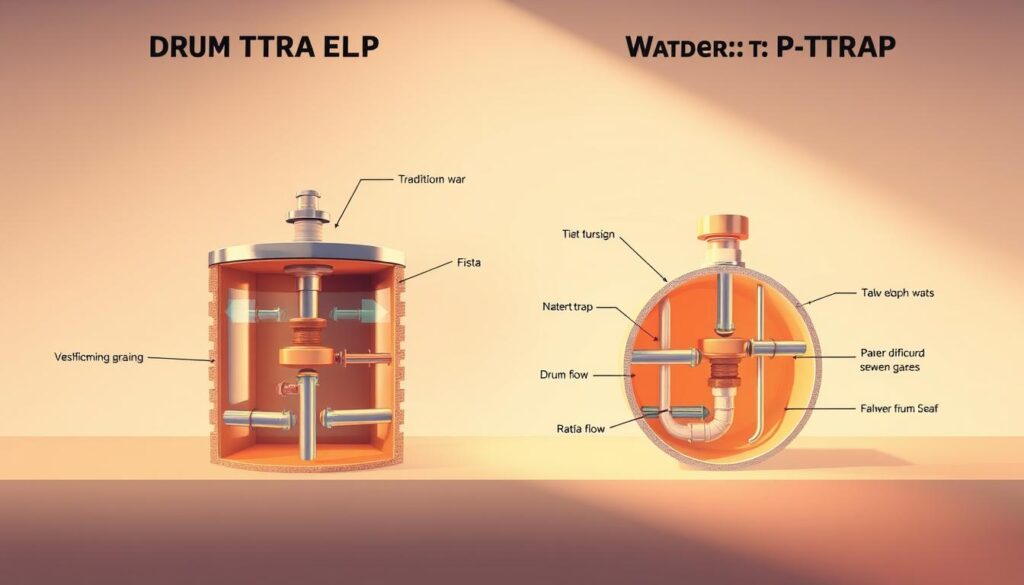
Drum traps in plumbing are complex and have unique features. They were once common in homes, bringing both benefits and challenges.
Looking into old house drum trap problems, we find a few key points:
- They help prevent sewer gas from getting into homes.
- They can collect a lot of debris.
- They are hard to maintain.
The main advantage of drum traps is their ability to block sewer gases. These plumbing parts create a water seal. This seal keeps out bad smells and harmful gases from your home.
But, there are big downsides. Drum traps are known for:
- Often getting clogged with debris.
- Being hard to clean.
- Possible rust and wear.
Homeowners with old plumbing should think hard about their drum traps. Modern options like P-traps might be better for today’s homes. They offer easier maintenance and fewer repair needs.
Common Problems with Drum Trap Systems
Drum traps in older homes can be a big problem for homeowners. These old plumbing parts are known for causing ongoing issues. These problems can affect your whole drainage system. Knowing the common issues with drum traps helps you make better choices for your plumbing.
Drum trap clog cleaning is a unique challenge. Old house drum trap problems are complex. This is because of the trap’s outdated design and possible wear over time.
Persistent Clogging Challenges
Drum traps often face severe clogging problems. Their design leads to several issues that can block your home’s drainage:
- Narrow internal passages restrict water flow
- Sediment accumulates more quickly than in modern traps
- Difficult to access for traditional cleaning methods
Cleaning Complications
Cleaning these traps needs special techniques. Homeowners often face:
- Removing rusted access lids
- Navigating tight internal spaces
- Preventing additional damage during cleaning
Structural Deterioration Concerns
| Problem Type | Potential Consequences | Recommended Action |
|---|---|---|
| Rust Buildup | Structural weakness | Professional inspection |
| Lead Trap Degradation | Potential water contamination | Complete replacement |
| Seal Deterioration | Water leakage | Immediate repair |
When facing old house drum trap problems, getting a professional’s opinion is key. Trying DIY fixes can often make things worse. Expert plumbers can offer detailed solutions to safeguard your plumbing.
Modern Plumbing Code Requirements
It’s key for homeowners and plumbers to know about drum trap plumbing code. Today’s building rules have changed a lot. They now focus on better drainage systems.
In most of the U.S., installing drum traps is not allowed anymore. This change is because of new building codes. They look for more efficient and clean ways to drain water.
- Poor self-cleaning capabilities
- Potential for debris accumulation
- Increased risk of plumbing system blockages
- Reduced overall drainage efficiency
Now, plumbing codes say traps must be self-scouring. This means they can clean themselves while water flows. Drum traps don’t meet this rule.
When inspectors or plumbers check your system, they’ll spot drum traps. They won’t pass the test.
| Plumbing Code Requirement | Drum Trap Status |
|---|---|
| Self-scouring design | Not compliant |
| Efficient debris removal | Inadequate performance |
| Modern drainage standards | Does not meet current regulations |
If you have drum traps, talk to a pro plumber. They can replace them with new, code-approved traps. This will improve your drainage and meet today’s building rules.
Replacing an Old Drum Trap
Replacing a drum trap might seem scary, but it’s doable with the right tools and knowledge. It can make your bathroom’s drainage better and meet today’s plumbing standards.
Before you start, gather the tools and materials you need for a smooth replacement.
Essential Tools for Drum Trap Removal
- Reciprocating saw
- Adjustable wrench
- Pipe cutter
- New P-trap assembly
- Plumber’s tape
- Protective gloves
Step-by-Step Replacement Process
- Turn off water supply and clear the area beneath the sink
- Remove existing drain covers and disconnected pipe connections
- Cut out the old drum trap carefully using a reciprocating saw
- Clean the surrounding pipe areas thoroughly
- Install new P-trap using appropriate connectors
- Apply plumber’s tape to ensure tight, leak-free connections
- Test the new installation for proper drainage
Pro tip: Always double-check local building codes before replacing your drum trap to ensure compliance with current plumbing regulations.
Proper installation is key to preventing future drainage issues and maintaining a healthy plumbing system.
Drum Trap Maintenance and Cleaning
Keeping your drum trap in good shape is key to avoiding plumbing problems and ensuring water flows well. Regular checks on your bathtub drum trap can help avoid expensive fixes and annoying clogs. Drum traps, being old, tend to collect debris and are hard to clean.
To clean your drum trap, follow these important steps:
- Find the drum trap’s clean-out plug
- Get a bucket and gloves for protection
- Remove the plug carefully to get to the trapped stuff
- Use a plumber’s snake or a special cleaning tool
- Flush the trap with hot water after you’ve cleaned it
Experts say annual maintenance is a must to stop big buildup. Rust can make it hard to remove the trap lid, which might damage it during cleaning. If you’re not sure about doing it yourself, think about getting a pro who knows old plumbing systems well.
Pro Tip: Always wear protective gear and have the right tools before you start on drum trap maintenance.
Look out for these signs that your drum trap needs help right away:
- Slow drainage
- Unusual smells
- Visible rust or corrosion
- Water backing up in fixtures
Drum traps were common before, but now, newer plumbing is more efficient. If you keep having problems, it might be time to replace it.
When to Keep vs Replace a Drum Trap
Deciding whether to keep or replace your drum trap is important. Your bathtub’s plumbing system is key for good drainage and keeping sewer gases out. Knowing when to check your drum trap can help avoid expensive fixes.
Think about these points when deciding to replace your drum trap:
- Age of the existing drum trap
- How often you get plumbing blockages
- Any visible corrosion or damage
- What the local plumbing codes say
Here’s a detailed guide to help you decide on replacing a drum trap:
| Condition | Recommendation | Action Required |
|---|---|---|
| Minor corrosion | Monitor closely | Professional inspection |
| Significant rust | Replace immediately | Full trap replacement |
| Frequent clogs | Consider modern alternative | P-trap installation |
Pro tip: Older homes with original drum traps might need a professional plumbing check. While some old drum traps work fine, modern P-traps are more efficient and follow current building codes.
“Not all drum traps need immediate replacement, but regular inspection is key for your home’s plumbing.” – Professional Plumbing Association
If you’re not sure about your drum trap’s state, talk to a licensed plumber. They can do a detailed check and tell you the best action for your plumbing.
Conclusion
Knowing about drum traps in plumbing helps homeowners make better choices for their homes. Drum traps were once common but are now less favored due to new building codes and technology. P-traps are now the preferred choice for better efficiency.
When deciding between drum traps and P-traps, it’s important to look at your home’s plumbing. Plumbers suggest checking your home’s age, plumbing condition, and needs. If your home is older, it might have drum traps that need maintenance or replacement.
Being informed helps homeowners protect their plumbing investments. Knowing about drum traps’ history, limitations, and modern alternatives helps make smart decisions. This ensures your home’s drainage system works well and avoids water problems.
Regular checks and maintenance are essential for any plumbing system. Whether you keep or replace your drum trap, getting advice from a licensed plumber is wise. They can offer advice that fits your home’s plumbing needs.