

Affiliate Disclosure
Plumber Guide Guys is a participant in the Amazon Services LLC Associates Program, an affiliate advertising program designed to provide a means for sites to earn advertising fees by advertising and linking to Amazon.
How to Plumb an Air Compressor? Ready to make your workshop’s air system better? Plumbing an air compressor might look hard, but it’s doable with the right help. You can set up a smooth and effective air system that works well and avoids problems.
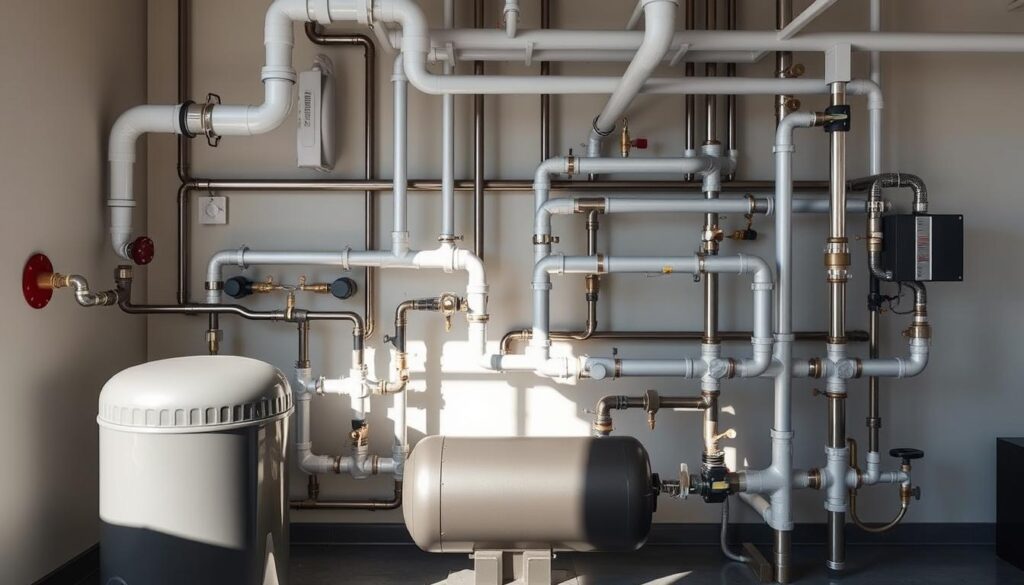
Learning to plumb an air compressor needs careful planning, technical skills, and accurate steps. This guide will show you how to build a strong air system that fits your needs.
Whether you’re experienced or just starting, knowing air compressor plumbing saves time and money. We’ll make complex ideas simple, so you can easily follow the installation steps.
Key Takeaways
- Learn how to plumb an air compressor the right way
- Know what your system needs to work well
- Find out the tools and materials you’ll need
- Learn safety tips for air systems
- Get better at making your air compressor work its best
Table of Contents
Understanding Air Compressor Basics and Components
Air compressors are key machines for many industrial and home uses. To design a good compressed air system, you must know the basic parts and how they work.
Designing a compressed air system means looking at different compressor types and what they can do. Each system has its own needs that affect how well it works.
Types of Air Compressors
Choosing the right air compressor means knowing the main types:
- Rotary Screw Compressors: Great for constant industrial use
- Reciprocating Compressors: Best for smaller, occasional jobs
- Centrifugal Compressors: Good for lots of air needed all the time
Essential Components and Their Functions
The materials used in air compressor plumbing are very important for system performance. Key parts include:
| Component | Primary Function |
|---|---|
| Motor | Provides mechanical power to compress air |
| Pump | Creates compressed air pressure |
| Air Tank | Stores compressed air for steady supply |
Power Requirements and Specifications
It’s important to know your electrical system’s strength. Compressors need different power levels, from common 120V home circuits to special industrial three-phase power.
“Proper power management ensures optimal compressor performance and longevity.” – Industrial Engineering Experts
When picking an air compressor, think about your power needs, what you need it for, and your electrical setup. This helps you make a smart choice.
Pre-Installation Planning and Requirements
Getting ready for an air compressor installation needs careful planning. Your success depends on a detailed pre-installation check. This check looks at many important factors that affect your air compressor pipe setup and system performance.
Before you start connecting air compressor lines, you must look at a few key things. These include your workspace and what equipment you need:
- Calculate total air demand in cubic feet per minute (CFM)
- Determine appropriate compressor type for your specific needs
- Verify electrical power availability and specifications
- Assess ambient environmental conditions
- Plan workspace access and equipment clearance
Knowing how much air you need is key to picking the right compressor. Different jobs need different amounts of compressed air volume and pressure.
| Application Type | Typical CFM Requirements | Recommended Compressor Size |
|---|---|---|
| Small Workshop | 5-10 CFM | 1-2 HP Compressor |
| Auto Repair Shop | 10-20 CFM | 3-5 HP Compressor |
| Industrial Manufacturing | 20-50 CFM | 7-10 HP Compressor |
When setting up your air compressor pipe, think about ventilation, noise, and space. Good planning helps avoid problems and makes your equipment last longer.
Take time for pre-installation planning to make sure your compressed air system works well.
How to Plumb an Air Compressor
Plumbing an air compressor needs careful planning and the right tools. Whether you’re a DIY fan or a pro, knowing how to install it right is key. It ensures the system works well and safely.
Selecting the Right Plumbing Materials
Choosing the right materials for your air compressor plumbing is very important. Each material has its own benefits:
- Copper pipes: Great for resisting corrosion and lasting long
- Galvanized steel: Strong and affordable for big projects
- Black iron: Perfect for systems that need high pressure
- PVC: Light and cheap for systems with low pressure
Essential Tools and Equipment
To properly plumb an air compressor, you’ll need certain tools:
- Pipe cutter
- Thread sealant
- Adjustable wrench
- Teflon tape
- Pipe threading tool
Safety Considerations
When working with compressed air, safety is top priority. Wear safety glasses and gloves. Make sure the compressor is turned off and all air is out before starting.
Pro Tip: Double-check all connections and use proper thread sealants to prevent air leaks.
Choosing the Perfect Location for Your Compressor
Choosing the right spot for your air compressor is key for a good setup. Where you place it affects how well it works, keeps you safe, and lasts longer.
Think about these important points when picking a spot:
- Ventilation needs
- Keeping the area cool
- Reducing noise
- Easy access for upkeep
- Being close to power outlets
Your work area is important for picking the best spot for your compressor. Good airflow helps avoid overheating and keeps things running smoothly. Look for a spot with lots of air, not too much dust or dirt.
Here are some key things to remember:
- Make sure there’s 3-4 feet of space around the compressor
- Keep it away from direct sunlight and moisture
- It should sit on a stable, flat surface
- Don’t put it in busy areas
Keeping the temperature right is also important. The best spot is between 40-90 degrees Fahrenheit. This helps your compressor work better and last longer.
Pro tip: Always prioritize safety and performance when selecting your compressor’s location.
Foundation and Support System Setup
Creating a solid foundation is key for your air compressor’s performance and life span. A good support system keeps things stable, cuts down on vibration, and guards your equipment from harm during setup.
When getting ready for your air compressor plumbing setup, remember these important points for a strong foundation:
- Choose a level surface with enough structural strength
- Make sure the base can handle the compressor’s total weight
- Pick materials that offer the best stability
Creating a Stable Base
Your air compressor needs a strong base to work well. Concrete pads are usually the top choice, giving a solid and even surface. Look for a pad that’s at least 6 inches bigger than the compressor’s base.
Vibration Control Methods
Lower equipment stress and noise with vibration control methods. Rubber isolation mounts can greatly cut down on mechanical vibrations during setup. These special mounts soak up shock and stop unnecessary movement.
Clearance Requirements
Having enough space is vital for top performance and upkeep. Keep areas around your compressor clear for:
- Ventilation
- Easy maintenance access
- Quick emergency shutdowns
By focusing on these foundational elements, you’ll build a dependable setup. This setup will support your air compressor’s long-term performance and efficiency.
Installing the Main Air Lines and Fittings

Installing air compressor lines needs careful planning and precision. The performance of your compressed air system depends on how well you connect the lines and install fittings. Using high-quality materials is key to a reliable and efficient setup.
When you start, keep these important factors in mind:
- Pipe material compatibility
- Proper sizing for optimal air flow
- Secure connection techniques
- Pressure rating requirements
Galvanized steel and copper are common choices for air lines. Copper is great for resisting corrosion, and galvanized steel is durable. Choose based on your specific needs.
Here are the main steps for installing air compressor fittings:
- Measure and cut pipes precisely
- Clean pipe ends thoroughly
- Apply thread sealant carefully
- Use the right wrenches for tight connections
- Check for air leaks
Professional tip: Always use high-quality fittings rated for compressed air systems to prevent future maintenance issues.
Make sure to keep the pipe diameter right to avoid air flow problems. Small pipes can lower system efficiency and raise energy use.
Setting Up Pressure Regulators and Safety Valves
Pressure control is key to a reliable compressed air system. Your air compressor’s performance depends on precise pressure management. This requires careful installation of regulators and safety valves. Knowing about air line configuration for compressors helps avoid system failures and ensures it works well.
Pressure Control Systems Overview
Effective pressure regulation means choosing the right components for your system. You need to think about several important factors:
- Maximum operating pressure
- Required downstream pressure
- System volume and air consumption
- Environmental conditions
Emergency Shutoff Installation
Safety is a top priority in any pneumatic system. Your emergency shutoff keeps equipment safe from over-pressurization. Proper installation requires precise calibration and strategic placement.
| Component | Function | Recommended Setting |
|---|---|---|
| Pressure Regulator | Controls output pressure | Match equipment requirements |
| Safety Valve | Prevents over-pressurization | 10-15% above max operating pressure |
Testing Procedures
After installation, thorough testing is essential. It ensures your air line configuration for compressors is safe. Do pressure tests, check for leaks, and make sure all safety mechanisms work right.
Always prioritize safety and precision when setting up your compressed air system.
Connecting Secondary Lines and Drop Points
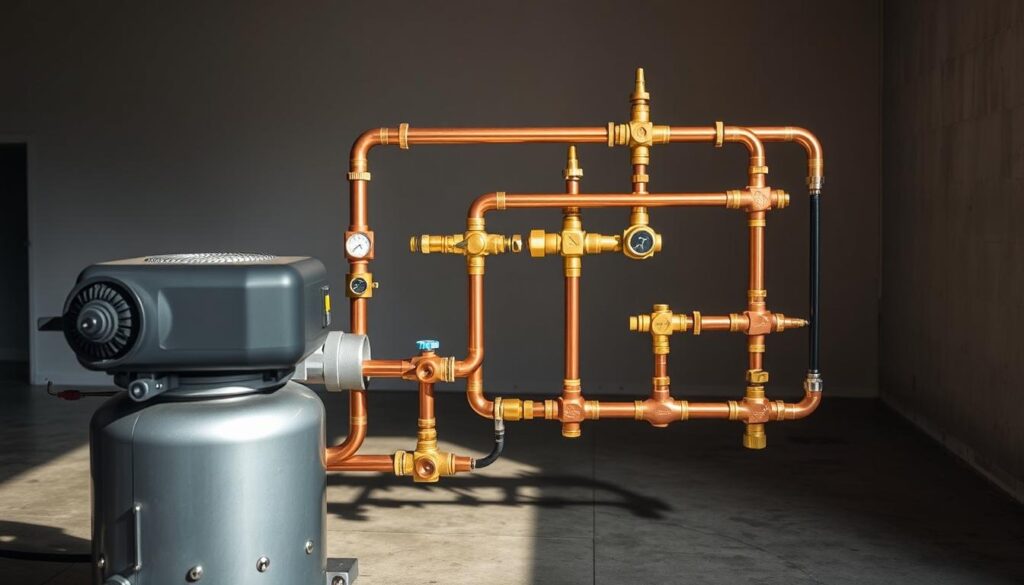
Expanding your compressed air system needs careful planning. When setting up secondary lines, aim for efficiency and flexibility. The right air line setup can change how you use pneumatic tools and equipment.
First, find out where you’ll need compressed air. Aluminum manifolds are great for making multiple air outlets. You can usually set up two manifolds for full coverage:
- One manifold at each end of your workshop
- Place them near main work areas
- Think about how you use your tools
When running secondary lines, remember a few key things:
- Keep lines slightly sloped for water to drain
- Put drain valves at low points to stop moisture
- Choose the right pipe size for steady air pressure
Pro tip: Always use high-quality fittings and ensure tight connections to prevent air leaks and maintain system efficiency.
A well-designed compressed air distribution system can significantly improve your workspace productivity and tool performance.
By planning your secondary lines and drop points well, you’ll have a strong and flexible compressed air network. It will meet all your workshop needs.
System Testing and Leak Detection
After setting up your air compressor plumbing, it’s important to test it fully. This ensures it works well and safely. Testing early can catch problems before they cost a lot.
Knowing how to test your air compressor is key. It keeps your system working right and avoids sudden breakdowns.
Pressure Testing Methods
Pressure testing checks if your air system is reliable. Here’s how to do it right:
- Begin with a low-pressure test at 43.5 PSI
- Slowly raise the pressure to its full level
- Watch the pressure gauges for steady readings
- Look for any drops in pressure
Common Leak Points
Finding where leaks might happen is important. Look at these common spots:
| Leak Location | Detection Method | Potential Solution |
|---|---|---|
| Pipe Connections | Soap Solution Test | Tighten Fittings |
| Valve Seals | Ultrasonic Detector | Replace Worn Seals |
| Pressure Regulator | Pressure Gauge Monitoring | Adjust or Replace |
Performance Verification
To make sure your air compressor works best, do a full check:
- Make sure airflow is steady
- Check if pressure stays the same
- Listen for odd sounds
- Look for too much vibration or heat
“A thorough system test can prevent 90% of possible compressed air system failures.” – Industrial Compressed Air Experts
Pro tip: Regular testing and upkeep are vital for your air compressor’s long-term performance and dependability.
Conclusion
Plumbing an air compressor needs careful planning and precise steps. You’ve learned how to create an efficient system that fits your needs. This guide has been your roadmap.
Regular maintenance is essential for a smooth-running system. Check your system every year. Look for tube damage, air leaks, and parts that need replacing. This keeps your system running well and saves you money.
Your investment in proper installation and maintenance will pay off. A well-designed system saves money and ensures reliable operation. It’s a smart choice for your industrial or workshop needs.
Now you know how to create, maintain, and optimize a compressed air system. Your hard work and dedication to understanding compressed air technology will serve you well. Enjoy the benefits of your efficient system for years to come.