

Affiliate Disclosure
Plumber Guide Guys is a participant in the Amazon Services LLC Associates Program, an affiliate advertising program designed to provide a means for sites to earn advertising fees by advertising and linking to Amazon.
How Long to Become Plumber? Did you know the plumbing industry is growing faster than most jobs by 2030? Knowing how long it takes to become a plumber can help you plan your career well.

Getting a plumbing license is a journey that needs hard work, technical skills, and training. It usually takes 4-5 years. This includes education, apprenticeship, and getting certified.
This guide will show you each important step to become a professional plumber. You’ll learn the exact steps, what you need, and how long it takes. It’s all about turning an aspiring tradesperson into a skilled plumber ready for big plumbing challenges.
Key Takeaways
- Plumbing career requires 4-5 years of training
- It has many stages like education, apprenticeship, and licensing
- You need a high school diploma or GED
- Apprenticeship gives you vital hands-on experience
- Licensing rules differ in each state
Table of Contents
Understanding the Plumbing Career Path
Exploring a plumbing career path offers exciting opportunities for those interested in a stable and rewarding profession. Plumbers play a critical role in maintaining infrastructure and providing essential services across residential and commercial settings.
Aspiring professionals must understand the foundational requirements and the path of progression within this skilled trade. The licensed plumber requirements vary by state but typically follow a structured path of education, training, and certification.
Basic Requirements and Prerequisites
To start your plumbing career path, you’ll need to meet several key prerequisites:
- High school diploma or GED
- Minimum age of 18 years
- Physical fitness and strength
- Basic math and problem-solving skills
Different Types of Plumbing Licenses
| License Level | Requirements | Typical Duration |
|---|---|---|
| Apprentice | High school diploma, vocational training | 4-5 years |
| Journeyman | Complete apprenticeship, pass licensing exam | 2-3 years after apprenticeship |
| Master Plumber | Journeyman experience, advanced exam | 5-7 years total experience |
Career Advancement Opportunities
Your plumbing career path can lead to numerous exciting opportunities. With dedication and continuous learning, you can progress from entry-level positions to specialized roles or even start your own plumbing business.
- Specialization areas: Commercial, residential, industrial plumbing
- Leadership roles: Project manager, supervisor
- Entrepreneurial options: Business ownership
Each step in your licensed plumber requirements brings new challenges and rewards, making plumbing an attractive career for those seeking hands-on, meaningful work.
How Long to Become Plumber: Complete Timeline Breakdown
Understanding the plumber training duration is key for those thinking about this career. Becoming a professional plumber takes several years of learning and hands-on experience.
The path to becoming a plumber has many stages. Each stage builds your skills and knowledge. Here’s a detailed look at how long it takes:
- High School Preparation: 4 years (recommended)
- Technical Education: 1-2 years
- Apprenticeship Program: 4-5 years
- Journeyman Certification: Additional 2-3 years
- Master Plumber Qualification: 6-8 years of total experience
Your total training time can be 7 to 10 years, depending on your path and local rules. The apprenticeship is key, giving you real-world experience under experts.
“Success in plumbing comes from patience, continuous learning, and dedication to mastering your craft.” – Professional Plumbing Association
Different states might have small changes in the timeline, but the main steps stay the same. Each step teaches you from basic skills to solving complex plumbing problems.
Aspiring plumbers should see this timeline as an investment in a rewarding career. Your hard work will lead to professional skills and many opportunities in plumbing.
Educational Requirements and Training Programs
Starting a plumbing career means knowing the key educational steps. You’ll begin with foundational training that sets you up for success in the skilled trades.
Trade schools for plumbing teach you essential technical skills and hands-on experience. These programs mix classroom learning with real-world practice. This gives you an edge in the plumbing field.
High School Diploma or GED Requirements
Most jobs and apprenticeships need a high school diploma or GED. Your education shows you have basic skills in:
- Basic mathematics
- Reading comprehension
- Problem-solving abilities
- Technical understanding
Trade School Options
The time it takes to become a plumber varies by program. Most trade schools take 6 months to 2 years. They offer a detailed curriculum that includes:
- Pipe system design
- Safety protocols
- Blueprint reading
- Installation techniques
- Modern plumbing technologies
Vocational Training Programs
Vocational programs focus on practical, career-specific education for plumbing. They often work with local businesses to give you current, relevant training.
Investing in quality education is your first step toward a successful plumbing career.
The Apprenticeship Journey
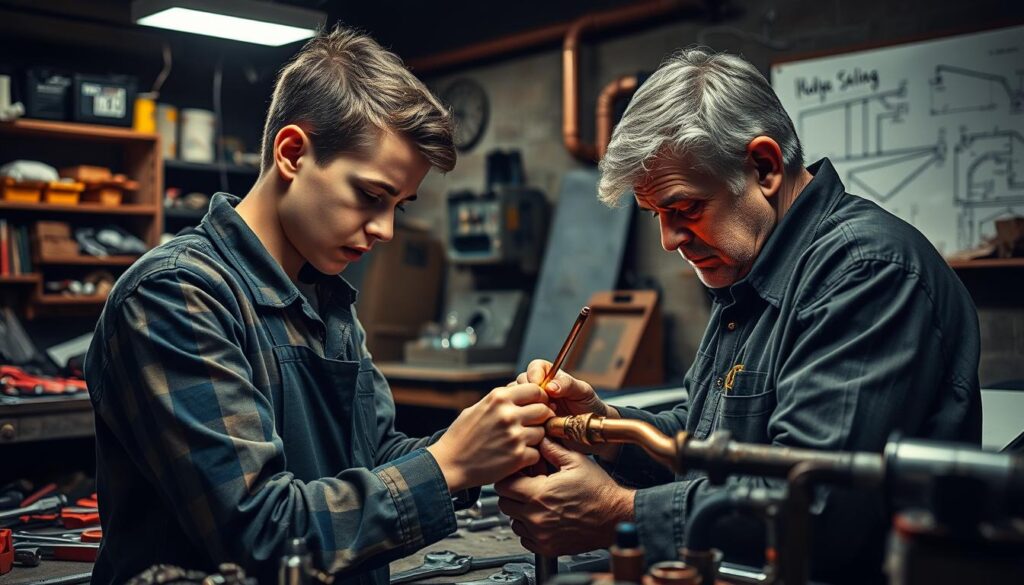
Starting a plumbing apprenticeship is a big step toward becoming a pro plumber. This journey usually takes 4-5 years. You’ll get hands-on experience and classroom lessons.
During your apprenticeship, you’ll learn a lot. Here’s how:
- Complete about 2,000 hours of on-the-job training
- Go to technical education classes
- Learn from skilled plumbers
- Get both practical and theoretical plumbing skills
You’ll learn key skills like installing pipes and reading blueprints. You’ll also learn about local building codes and safety. Apprentices start with a part of a journeyman plumber’s pay. As you get better, your pay will go up.
| Apprenticeship Stage | Training Hours | Wage Percentage |
|---|---|---|
| First Year | 1,000 hours | 40-50% |
| Second Year | 1,500 hours | 50-60% |
| Third Year | 2,000 hours | 60-70% |
| Fourth Year | 2,500 hours | 70-80% |
To begin your plumbing apprenticeship, look for programs at local unions, trade schools, or contractor groups. Preparation and dedication are key to successfully navigating your apprenticeship journey.
State-by-State Licensing Requirements
Getting a plumbing license can be tough because each state has its own rules. It’s important for those starting in plumbing to know these differences. This knowledge helps in building a successful career in the trade.
Plumbing licenses vary across the U.S. The steps to get a professional license change from state to state. Several factors play a role in this complexity.
Common State Variations in Licensing
Every state has its own rules for becoming a licensed plumber. Some key differences include:
- Minimum required apprenticeship hours
- Specific educational prerequisites
- Work experience documentation
- Background check requirements
Examination Process
The plumber certification process includes a detailed exam. It tests both knowledge and skills. Most states require candidates to show:
- Understanding of local plumbing codes
- Safety protocols
- Technical problem-solving abilities
- Practical installation and repair techniques
License Renewal Requirements
To keep your plumbing license, you need to keep learning. Most states require:
- Continuing education courses
- Periodic skill assessments
- Renewal fees
- Proof of active work in the field
Knowing your state’s specific licensed plumber requirements helps. It makes it easier to navigate the plumber certification process. This way, you can build a strong career in plumbing.
Journeyman Plumber Certification Process
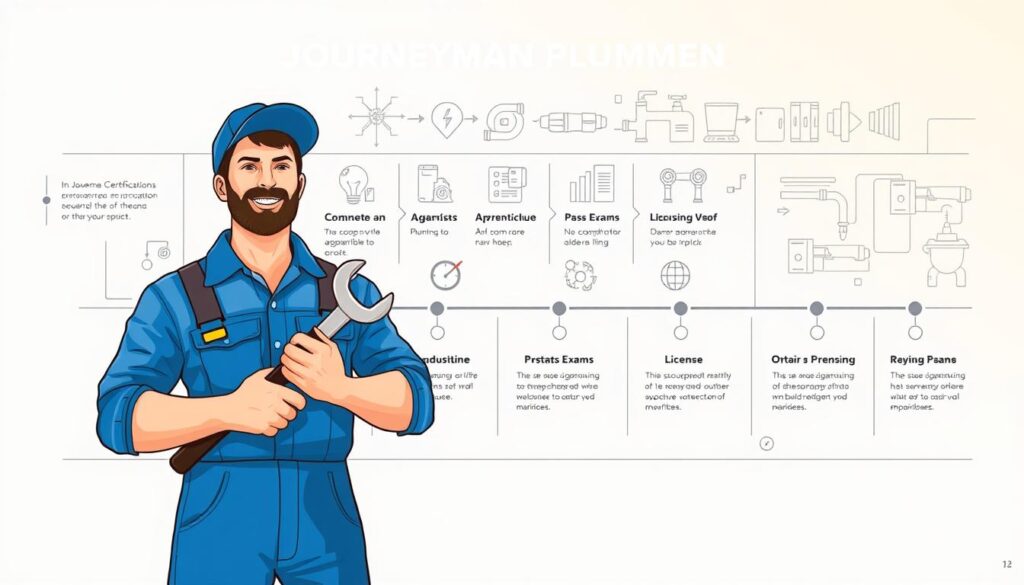
Becoming a journeyman plumber is a big step in your plumbing career. The certification process shows you’re skilled and knowledgeable. You’ll need to meet several requirements to prove your abilities.
Your training includes:
- Completing a 4-5 year apprenticeship program
- Gaining at least 8,000 hours of work experience
- Passing a tough state licensing exam
- Showing you know local plumbing rules
After your apprenticeship, you start the certification process. Each state has its own rules, but most want you to have both education and experience. You’ll need to know about:
- How to install pipes
- Safety rules
- Reading blueprints
- Working with electrical and mechanical systems
Your state will check if you’re ready and give you a big exam. Getting ready is essential for the journeyman plumber certification.
Professional Tip: Always check your state’s rules, as they can change a lot.
Master Plumber Requirements and Timeline
Becoming a master plumber is the top achievement in plumbing. It shows you’re an expert, skilled, and know a lot about plumbing systems.
To become a master plumber, you need to work hard and meet certain requirements. Your path includes several important steps to reach this level.
Advanced Certification Requirements
To get master plumber certification, you must meet strict standards:
- At least 4-5 years as a licensed journeyman plumber
- Proven experience in different plumbing jobs
- Deep knowledge of plumbing codes
- Proof of skills in both commercial and home systems
Experience and Testing Standards
The certification process includes a tough test. It checks your advanced knowledge. The test covers:
- Designing complex pipe systems
- Using advanced installation methods
- Understanding detailed code rules
- Solving tricky problems
Continuing Education Requirements
To keep your master plumber status, you must keep learning. You’ll need to take continuing education courses on:
- New plumbing technologies
- Current building codes
- Safety rules
- New industry practices
By growing professionally, you’ll keep your skills sharp and your certification valid.
Salary Progression and Career Outlook
Your plumbing career offers great financial chances and steady growth. Plumbers in the U.S. make a median of $62,970 a year. The highest earners can make over $105,000.
How much you earn depends on a few things:
- Experience level
- Geographic location
- Specialization
- Union membership
- Additional certifications
The job outlook for plumbers is strong, with a 6% growth rate by 2033. This means more jobs in homes, businesses, and factories.
| Career Stage | Average Annual Salary | Potential Earnings Range |
|---|---|---|
| Apprentice Plumber | $35,000 – $45,000 | Entry-level positions |
| Journeyman Plumber | $55,000 – $75,000 | Mid-career professionals |
| Master Plumber | $80,000 – $105,000+ | Advanced expertise and specializations |
“Investing in your plumbing skills today means building a secure and prosperous future tomorrow.” – Professional Trades Association
Strategic career development can really boost your earnings. Getting advanced certifications, focusing on in-demand areas, and keeping up with new tech can increase your income.
Specialization Options and Additional Certifications
Your plumbing career path offers exciting opportunities to develop specialized skills. These skills can significantly boost your professional value. By pursuing additional certifications, you can turn your standard plumber certification into a more lucrative and diverse career.
Plumbers can explore various specialization areas that open new professional doors:
- Medical Gas Systems – Critical certification for healthcare facility plumbing
- Fire Protection Sprinkler Installation
- Green Plumbing Technologies
- Water Supply Protection Specialist
- Commercial Plumbing Systems
Each specialization requires unique training and additional examinations. These advanced certifications typically involve:
- Targeted technical coursework
- Specialized hands-on training
- Comprehensive skill assessments
- State-approved certification exams
Investing in specialized certifications can dramatically increase your earning power. Professionals with advanced credentials often earn more and have more job opportunities across various industries.
Professional growth in plumbing is about continuous learning and skill development.
Conclusion
Starting a plumbing career needs dedication, skill, and planning. It usually takes 4-6 years to become a professional plumber. This includes training, apprenticeship, and getting certified. Your hard work and commitment will shape your journey and success in this field.
The plumbing career is full of growth and financial stability. You’ll move from apprentice to master plumber, facing new challenges and rewards at each step. You’ll gain technical skills, problem-solving abilities, and practical knowledge. These skills are always in demand in homes, businesses, and industries.
Getting the right licenses, keeping up with education, and specializing can boost your career. Plumbers in the U.S. can earn good salaries, have job security, and even start their own businesses. Investing in your training and certification will lead to a rewarding career that helps communities.
If you’re starting or thinking of switching careers, plumbing is a great choice. Dive into learning, keep up with new technologies, and love what you do. Your plumbing career is waiting, with a path full of opportunities.
FAQ
How long does it typically take to become a licensed plumber?
Do I need a high school diploma to become a plumber?
What are the different levels of plumbing certification?
How much does plumbing training and apprenticeship cost?
How long does it typically take to become a licensed plumber?
Do I need a high school diploma to become a plumber?
What are the different levels of plumbing certification?
How much does plumbing training and apprenticeship cost?
FAQ
How long does it typically take to become a licensed plumber?
Becoming a licensed plumber takes about 4-5 years. This includes classroom training, apprenticeship, and certification. You’ll spend 2-4 years as an apprentice and more time for exams and licenses.
Do I need a high school diploma to become a plumber?
Yes, you need a high school diploma or GED to start. Most programs require this before you can begin training.
What are the different levels of plumbing certification?
There are Apprentice, Journeyman, and Master Plumber levels. Each level needs more experience, training, and exams to move up.
How much does plumbing training and apprenticeship cost?
Costs range from
FAQ
How long does it typically take to become a licensed plumber?
Becoming a licensed plumber takes about 4-5 years. This includes classroom training, apprenticeship, and certification. You’ll spend 2-4 years as an apprentice and more time for exams and licenses.
Do I need a high school diploma to become a plumber?
Yes, you need a high school diploma or GED to start. Most programs require this before you can begin training.
What are the different levels of plumbing certification?
There are Apprentice, Journeyman, and Master Plumber levels. Each level needs more experience, training, and exams to move up.
How much does plumbing training and apprenticeship cost?
Costs range from $1,000 to $15,000. Trade schools are pricier, but apprenticeships offer paid training, saving you money.
Can I become a plumber through online training?
Some theory can be done online, but hands-on training is key. You’ll need in-person training and apprenticeship hours for skills and licenses.
What are the physical requirements for becoming a plumber?
Plumbing is tough, needing strength, stamina, and fitness. You’ll lift heavy, work in tight spots, and stand for hours in various conditions.
How much can I earn as a plumber?
Earnings vary by experience and location. Apprentices start low, journeymen earn mid-range, and master plumbers make the most, often running their own businesses.
Are there specialization options in plumbing?
Yes, you can specialize in commercial, residential, green tech, pipe fitting, steamfitting, and HVAC. Specializing can increase your earnings and career options.
What states have the best opportunities for plumbers?
California, Texas, New York, Florida, and Illinois offer great opportunities. They have ongoing construction and strong demand for skilled plumbers.
Do I need to continue my education after becoming a licensed plumber?
Yes, most states require ongoing education to keep your license. This keeps you updated on new tech, codes, and best practices.
,000 to ,000. Trade schools are pricier, but apprenticeships offer paid training, saving you money.
Can I become a plumber through online training?
Some theory can be done online, but hands-on training is key. You’ll need in-person training and apprenticeship hours for skills and licenses.
What are the physical requirements for becoming a plumber?
Plumbing is tough, needing strength, stamina, and fitness. You’ll lift heavy, work in tight spots, and stand for hours in various conditions.
How much can I earn as a plumber?
Earnings vary by experience and location. Apprentices start low, journeymen earn mid-range, and master plumbers make the most, often running their own businesses.
Are there specialization options in plumbing?
Yes, you can specialize in commercial, residential, green tech, pipe fitting, steamfitting, and HVAC. Specializing can increase your earnings and career options.
What states have the best opportunities for plumbers?
California, Texas, New York, Florida, and Illinois offer great opportunities. They have ongoing construction and strong demand for skilled plumbers.
Do I need to continue my education after becoming a licensed plumber?
Yes, most states require ongoing education to keep your license. This keeps you updated on new tech, codes, and best practices.