

Affiliate Disclosure
Plumber Guide Guys is a participant in the Amazon Services LLC Associates Program, an affiliate advertising program designed to provide a means for sites to earn advertising fees by advertising and linking to Amazon.
What Causes Pinhole Leaks in Copper Plumbing? Did you know that up to 70% of copper pipes in homes fail due to corrosion? Pinhole leaks can quickly turn into a big problem. It’s important to know why they happen to protect your home’s water system.
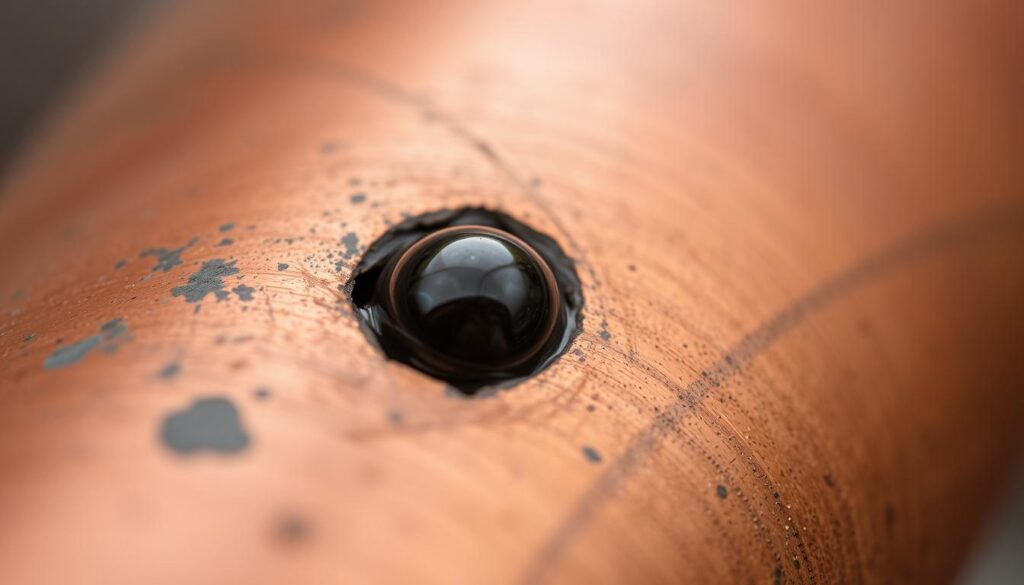
Copper pipe corrosion is a hidden danger in your walls. These small leaks can grow slowly, often without being noticed until it’s too late. If ignored, they can cause serious damage, mold, and costly repairs.
Your plumbing system is more at risk than you think. Things like water chemistry, the environment, and how well the pipes were installed can lead to leaks. Spotting problems early can save you a lot of money in repairs.
Key Takeaways
- Pinhole leaks can occur in pipes less than 10 years old
- Water chemistry plays a critical role in pipe corrosion
- Regular inspection can prevent extensive water damage
- Multiple factors contribute to copper pipe deterioration
- Professional assessment is recommended for persistent issues
Table of Contents
Understanding Copper Plumbing Systems and Their Vulnerabilities
Copper plumbing has been a key part of homes and businesses for many years. It’s known for being strong and reliable. Knowing how copper pipe systems work is important for keeping your home’s water system in good shape.
Copper pipes usually last 50 to 70 years if everything goes right. Pitting corrosion in plumbing can cut down on this time, so it’s key to know where problems might start.
Components of Copper Plumbing
Copper plumbing systems have a few main parts:
- Main water supply lines
- Branch lines
- Fixture connections
- Valves and fittings
Life Expectancy of Copper Pipes
How long copper pipes last depends on several things:
- Water chemistry
- How well they were installed
- The environment they’re in
- How well they’re taken care of
Common Weak Points in Copper Plumbing
Some big risks in copper plumbing systems are:
- Thin wall sections that can corrode easily
- Joints and connections
- Areas with high water pressure
- Places where the water is very aggressive
Knowing about these parts and weak spots helps you take care of your plumbing. This can stop expensive problems caused by corrosion.
What Causes Pinhole Leaks in Copper Plumbing
Pinhole leaks in copper plumbing can be a big problem for homeowners. They quietly damage your water system. It’s important to know what causes these leaks to protect your plumbing.
Erosion corrosion is the main reason for these leaks. It happens when several factors work together to weaken your pipes from the inside.
- Water chemistry plays a critical role in pipe degradation
- Internal pipe surface breakdown happens gradually
- Microbial activities accelerate corrosion processes
The main factors that lead to pinhole leaks in copper plumbing are:
| Factor | Impact on Pipes |
|---|---|
| Water pH Levels | Acidic water speeds up pipe corrosion |
| Mineral Content | High mineral levels damage pipes internally |
| Water Velocity | Fast water flow raises erosion risk |
“Pinhole leaks are like silent predators, slowly compromising your plumbing system without immediate detection.” – Plumbing Experts Network
The erosion corrosion process is sneaky. Microscopic pits form on the pipe’s interior surface, growing and weakening the pipe. These small holes can cause big problems over time.
Your home’s water quality, how pipes are installed, and maintenance all affect leak risk. Regular checks and good water treatment can help prevent leaks and keep your copper pipes working longer.
The Role of Water Chemistry in Pipe Corrosion
Knowing about water chemistry is key to keeping your copper pipes safe. The way water interacts with copper can affect how long your pipes last and how well they work.
Water chemistry is very important for copper pipe health. Various factors can make pipes corrode faster, leading to costly fixes and poor water quality.
pH Level Effects on Copper Pipes
The pH of your water affects copper pipe damage. Extreme pH levels can harm your plumbing system a lot:
- Acidic water (pH below 7) can quickly damage copper pipes
- Alkaline water (pH above 8.5) may lead to mineral buildup
- The best water pH is between 6.5 and 8.5
Mineral Content Impact
Minerals in water can harm copper pipes. Hard water with lots of minerals poses special challenges for your plumbing.
| Mineral | Impact on Copper Pipes | Potential Damage |
|---|---|---|
| Calcium | Scale Formation | Reduced Water Flow |
| Magnesium | Mineral Deposits | Pipe Wall Degradation |
| Iron | Corrosion Acceleration | Pinhole Leak Risk |
Chlorine and Copper Interaction
Chlorine can harm copper pipes. Chlorine and copper react to form copper chloride, speeding up corrosion.
- Chlorine breaks down copper pipe protective layers
- Repeated exposure increases corrosion risk
- Water treatment chemicals can also harm pipes
Protecting your copper pipes means understanding water chemistry and taking care of them.
Identifying Early Signs of Pinhole Leaks
Finding pinhole leaks early can save you a lot of money on repairs. Testing the water quality is key to stopping leaks before they get worse. Homeowners should keep an eye out for signs that might mean trouble in their copper pipes.
Visual signs are your first warning of pinhole leaks. Watch for these important signs:
- Green or bluish-green spots around pipe connections
- Dimpled or pitted appearance on copper pipes
- Unexplained moisture on walls or ceilings
- Sudden increases in water bills
- Subtle dripping sounds near plumbing fixtures
Experts say regular water quality tests can spot corrosion early. A detailed check can find tiny changes that might cause leaks.
| Warning Sign | Potential Severity | Recommended Action |
|---|---|---|
| Green spots on pipes | High | Immediate professional inspection |
| Increased water bill | Medium | Leak detection test |
| Wall discoloration | Critical | Emergency plumbing assessment |
Remember, catching leaks early is your best defense against big pipe damage and expensive fixes. Keeping an eye on things and taking care of your pipes can make them last longer.
Impact of Water Pressure and Velocity on Copper Pipes
Your home’s plumbing system is a delicate network. Water velocity and pressure are key to keeping pipes healthy. Knowing how they work can help prevent damage and make your copper plumbing last longer.
Water moving too fast or with too much force can harm your copper pipes. This can make them deteriorate faster.
High Water Pressure Challenges
Too much water pressure can be a big problem for your plumbing. Copper pipes are at risk of erosion corrosion when pressure gets too high.
- Typical safe water pressure range: 40-80 PSI
- Pressures above 85 PSI can cause pipe damage
- Potential risks include pipe wall thinning and premature failure
Flow Rate Dynamics
The speed and volume of water in your pipes affect their performance. Turbulent water flow can cause tiny scratches that weaken copper pipe walls over time.
Turbulence Impact
Water turbulence makes water move unpredictably, increasing friction and pipe wear. Sharp turns, narrow passages, and uneven pipe sizes can make these problems worse.
Proper water system design minimizes turbulence and protects your plumbing infrastructure.
By watching water pressure, keeping flow rates right, and understanding these key factors, you can lower the risk of leaks. This can also make your copper plumbing last longer.
Environmental Factors Affecting Copper Pipe Deterioration
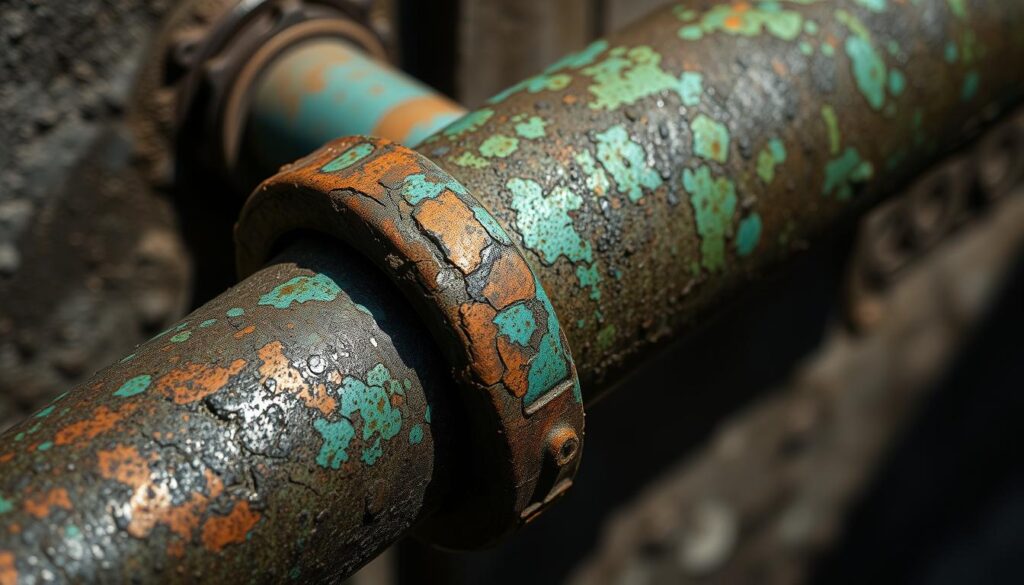
Your copper plumbing system faces many environmental challenges. These can speed up copper pipe corrosion. Knowing these factors helps protect your home’s water system from damage.
Soil conditions are key in pitting corrosion, mainly for underground pipes. Acidic or alkaline soils can quickly damage pipes. Different soils cause electrochemical reactions that harm copper pipes.
- Acidic soils with low pH levels increase corrosion risk
- Clay-rich environments trap moisture, promoting pipe degradation
- Mineral-dense soils can create electrolytic reactions
Temperature changes also stress copper piping systems. Fast changes in temperature can weaken pipes. This creates small holes that lead to leaks. Extreme temperatures can damage the pipe’s structure over time.
External pollutants and environmental contaminants also harm copper pipes. Industrial emissions, groundwater chemicals, and water treatment practices can erode pipe walls. These aggressive compounds slowly damage the pipes.
Homeowners should get professional advice on their local environment. This helps develop strategies to protect copper plumbing systems.
Prevention Strategies for Pinhole Leaks
To keep your copper plumbing safe, you need to act early. Testing your water quality is key to keeping your pipes in good shape. This helps avoid expensive fixes later on.
Understanding risks and using smart solutions is the first step. This protects your home’s water system from harm.
Water Treatment Solutions
Fixing water chemistry is vital to stop pinhole leaks. Here are some important steps:
- Install a whole-house water softener to cut down mineral buildup
- Use pH-balancing filters
- Apply treatments that stop corrosion
Regular Maintenance Tips
Regular care can make your copper pipes last longer:
- Do water quality tests every year
- Look for corrosion signs on pipe connections
- Watch your water pressure and add regulators if it’s too high
- Flush your pipes to get rid of sediment
Professional Inspection Guidelines
While you can do some maintenance yourself, experts offer deeper checks. Get a professional to:
- Check every 2-3 years for new plumbing
- Inspect annually for older or riskier pipes
- Look at your pipes after big changes in your water quality
Acting early to prevent pinhole leaks can save you a lot of money. It avoids costly water damage and pipe replacement.
Repair Options and When to Replace Copper Pipes
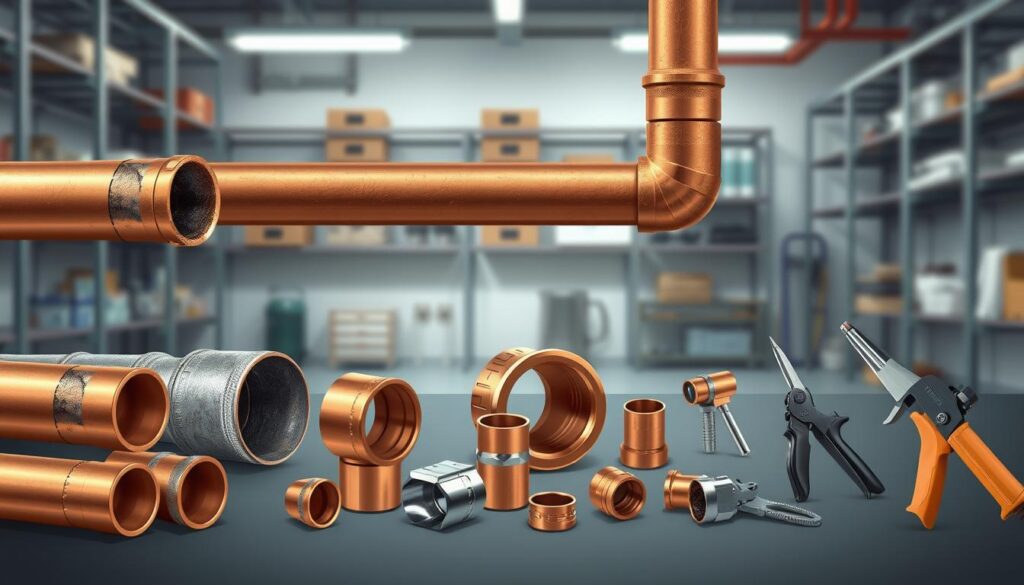
Dealing with pinhole leaks in copper plumbing can be tough. Knowing when to fix or replace pipes is key to keeping your home’s water system working well. It also helps prevent more damage to your copper pipes.
When you face pinhole leaks, you have a few repair options:
- Epoxy Pipe Lining: A gentle method for sealing small leaks
- Spot Repairs: Fixing just the damaged parts
- Pipe Coupling: Replacing short parts of damaged pipe
Choosing to repair or replace depends on a few important factors:
| Repair Indicator | Replacement Recommendation |
|---|---|
| Few isolated leaks | Multiple widespread leaks |
| Pipes less than 20 years old | Pipes over 50 years old |
| Minor corrosion | Significant pipe wall deterioration |
Professional plumbers suggest you carefully look at your situation. Preventing pinhole leaks begins with knowing your pipes’ state and taking steps to maintain them.
Early detection and smart action can save you a lot of repair costs later on.
If you’re seeing a lot of leaks or notice big corrosion, replacing the pipes might be the best choice. It’s a way to protect your home’s water system.
Choosing Between Repair and Replacement
Deciding whether to repair or replace your copper plumbing can be tough. The lifespan of your copper pipes is key in this choice. Plumbers suggest looking at several important factors before deciding what’s best.
Consider these main points when checking your plumbing:
- Age of existing copper pipes
- How often you get pinhole leaks
- Water quality test results
- Corrosion damage extent
- How well the system works
Replacing might be better if your copper pipes are:
- More than 50 years old
- Getting leaks often
- Showing a lot of mineral buildup
- Failing water quality tests
Modern options like PEX or cross-linked polyethylene pipes are durable and resist corrosion. They can be a lasting fix for homes with ongoing plumbing problems.
Pro tip: Always get a licensed plumber to do a full check before you decide.
The right choice between repair and replacement can save you thousands in water damage and future repair costs.
Conclusion
Knowing what causes pinhole leaks in copper plumbing is key for homeowners. Water chemistry, environmental factors, and pipe conditions all play a part. By spotting early signs and taking care of your pipes, you can keep your plumbing system running well.
To stop pinhole leaks, you need a few steps. Get regular checks from pros, test your water, and watch your home’s water pressure. Also, think about using water treatments to cut down on corrosive elements and lower pipe damage risk.
Being involved in your plumbing’s health is important. While experts are great, your quick action can save a lot of money. Keep up with maintenance, schedule checks, and call pros if you see any signs of trouble.
Copper pipes are a big investment in your home. By knowing their weak spots and taking steps to prevent problems, you can keep your water flowing well. This also helps protect your home from costly water damage.