

Affiliate Disclosure
Plumber Guide Guys is a participant in the Amazon Services LLC Associates Program, an affiliate advertising program designed to provide a means for sites to earn advertising fees by advertising and linking to Amazon.
How Thick is a Plumbing Wall? Did you know that about 15% of home costs go to plumbing? Knowing how thick a plumbing wall should be is key for homeowners and contractors. The thickness depends on the building type, pipe setup, and local codes.
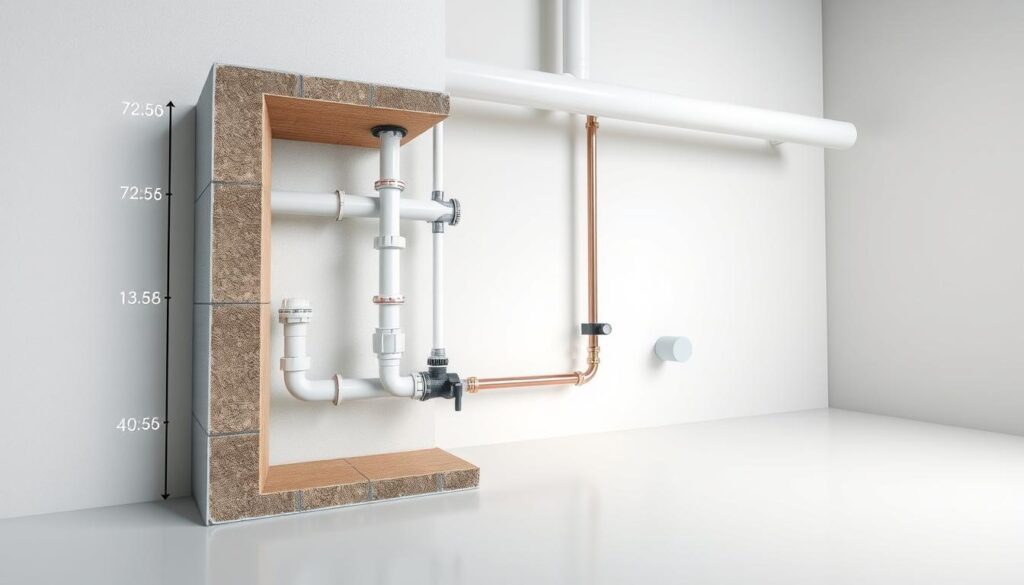
Plumbing walls aren’t the same for everyone. Homes and businesses need different wall sizes. The wall’s thickness is vital for pipe protection, correct installation, and keeping the structure strong.
Planning the right wall thickness can save you a lot of time and money. Every pipe, from water lines to drainage, needs the right space and support to work well.
Key Takeaways
- Plumbing wall thickness varies by building type and purpose
- Local building codes significantly influence wall dimensions
- Proper wall thickness protects pipe infrastructure
- Residential and commercial spaces have different requirements
- Strategic planning prevents future plumbing complications
Table of Contents
Understanding Standard Plumbing Wall Thickness
Plumbing wall thickness is key in building homes and infrastructure. Knowing the standard plumbing wall requirements can greatly improve your home’s piping system quality and function.
The thickness of plumbing walls depends on several important factors. Usually, plumbing walls are between 4 and 6 inches thick. This size allows for pipes, insulation, and room for future changes.
Residential vs. Commercial Wall Requirements
Building types need different wall sizes. Homes often have more flexible wall thickness than commercial buildings.
- Residential walls: 4-6 inches thick
- Commercial walls: 6-8 inches thick
- Multi-unit buildings: Potentially thicker walls for complex piping systems
Building Code Specifications
Local building codes are essential for plumbing wall construction. They ensure safety, function, and quality in homes.
| Building Type | Minimum Wall Thickness | Typical Pipe Accommodation |
|---|---|---|
| Single-Family Home | 4 inches | 2-3 standard pipes |
| Duplex | 5 inches | 4-5 standard pipes |
| Multi-Story Residential | 6 inches | 6-8 standard pipes |
Common Wall Configurations
Knowing about wall setups helps plan plumbing better. Pipe size, material, and building layout affect wall thickness and design.
- Standard stud walls with 2×4 or 2×6 framing
- Reinforced walls for complex piping systems
- Walls with integrated chase spaces
By thinking about these details, you can create a strong and efficient plumbing system. It will meet current needs and allow for future growth.
Minimum Wall Dimensions for Different Pipe Types
Knowing the minimum wall thickness for plumbing is key for any project. Different materials need specific space in walls for proper installation and performance.
Pipe types vary a lot in what they need. The wall space needed depends on several important factors:
- Pipe material (PVC, copper, PEX)
- Pipe diameter
- Water pressure needs
- Building code rules
For homes, here are common minimum wall thickness guidelines:
- PVC Pipes: Usually need 2-4 inches of wall space
- Copper Pipes: Generally require 3-5 inches for good installation
- PEX Tubing: Can be more flexible, often needing 2-3 inches
Experts say to leave extra space for future changes. Your wall setup should also consider insulation, vapor barriers, and access for maintenance.
Pro tip: Always check local building codes for exact minimum wall thickness needs in your area.
When setting up your plumbing, remember that enough space and the right wall thickness are vital. They help avoid water damage and ensure the system works well.
How Thick is a Plumbing Wall: Essential Measurements
Knowing the exact measurements for a plumbing wall is key for home building and updates. The wall’s thickness depends on several important factors. These factors affect your wall’s design and how well it works.
To figure out a plumbing wall’s thickness, you must consider a few key things. The space needed for water pipes is a big part of this.
Standard Stud Sizes and Their Impact
Residential walls often use standard stud sizes. These sizes greatly affect the wall’s thickness. Common stud sizes include:
- 2×4 inch studs (typical in residential construction)
- 2×6 inch studs (preferred for better insulation)
- Advanced framing techniques using 24-inch on-center spacing
Accounting for Insulation and Vapor Barriers
Your plumbing wall needs more space than just for pipes. Insulation and vapor barriers are vital. They make the wall thicker and more energy-efficient.
Space Requirements for Multiple Pipes
Complex plumbing systems need careful planning. When you have to fit multiple pipes, make sure there’s enough space. You should also think about future needs.
It’s best to space pipes 4 to 6 inches apart. This depends on your plumbing setup and local building rules.
Bathroom Plumbing Wall Construction Guidelines
When designing bathroom plumbing walls, you must focus on specific dimensions. These dimensions are key for the right installation and use of your fixtures.
Planning the plumbing rough-in wall is important. Most homes need walls for standard fixture spots and pipe setups. The wall’s thickness depends on several things:
- Pipe diameter and material
- Number of fixtures being installed
- Local building code requirements
- Specific bathroom layout
Standard bathroom walls are usually 4 to 6 inches thick. This size gives enough room for water lines, drain pipes, and other necessary parts. Proper wall dimensions are vital for avoiding plumbing problems later on.
When planning your bathroom plumbing wall, keep these tips in mind:
- Make sure there’s enough space around fixtures
- Think about possible future changes
- Follow the maker’s advice for plumbing fixtures
- Check if your plans meet local building codes
Experts say to leave space between pipes and make walls easy to access for upkeep. Your wall should work well now and in the future.
Plumbing Chase Wall Requirements
Plumbing chase walls are key in modern buildings. They hide pipes and utilities. Knowing the depth and specifications helps design better plumbing systems.
When planning your plumbing chase, consider important factors. These impact the design and how well it works. Contractors often suggest specific sizes for the best results.
Vertical Chase Dimensions
Vertical chase walls need careful planning. They must fit different pipes and building styles. Here are some common sizes:
- Standard depth: 3-4 inches [76.2-101.6 mm]
- Width range: 4-9 inches [101.6-228.6 mm]
- Recommended clearance for multiple pipes
Horizontal Chase Specifications
Horizontal chases are different from vertical ones. The Zurn technical resources provide dimensions for various walls. This includes metal stud and block walls.
Access Panel Considerations
Your plumbing chase wall needs access panels. These panels make maintenance and repairs easy. They also allow for future changes.
Pro tip: Always check local building codes. This ensures your plumbing chase wall meets all standards and safety rules.
Space Requirements for Water Supply Lines
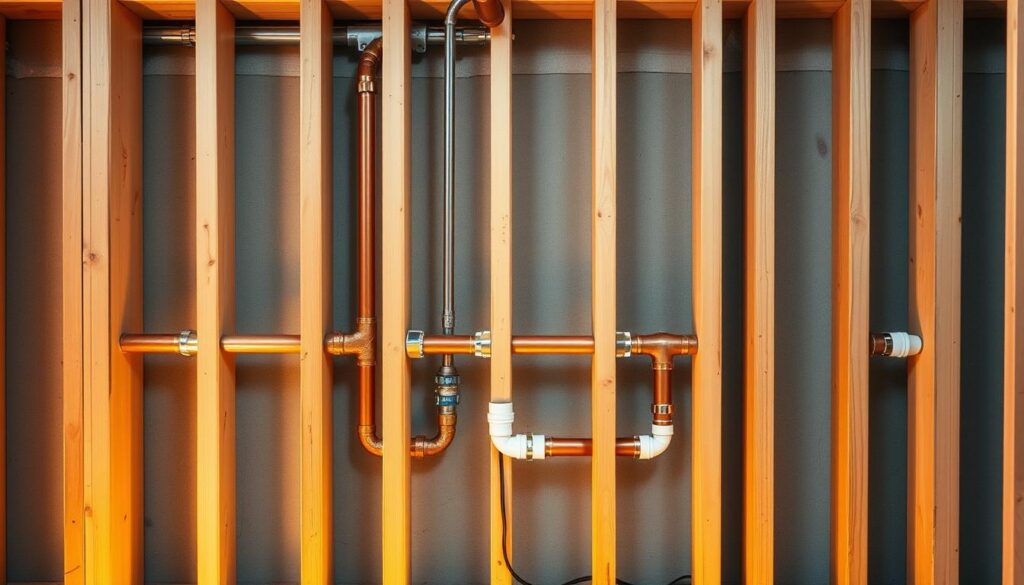
Knowing how much space water pipes need in walls is key for good plumbing. Each type of water supply line has its own space needs. This ensures they are installed right and work well.
Planning is important for water supply lines to use wall space well. Copper and PEX pipes need different sizes. This affects how your walls are set up. Here are some important points for spacing water supply lines:
- Cold water lines usually need 1/2 to 3/4 inches in diameter
- Hot water lines often need 3/4 to 1-inch spaces
- Minimum wall depth for water pipes: 3.5 inches
When planning plumbing walls, think about different pipe paths. Standard 2×4 wall framing gives about 3.5 inches of depth. This fits most water supply lines. But bigger homes or complex plumbing might need deeper walls.
Experts say to leave at least 1 inch of space around water pipes. This helps with repairs or replacements later. It also keeps pipes from getting damaged and ensures they stay insulated.
Proper spatial planning for water supply lines ensures long-term plumbing system reliability and performance.
Your water supply line needs might change based on local codes, home design, and plumbing needs. Talking to a professional plumber can help figure out the best space setup for your home’s water system.
Shower Wall Construction and Plumbing Specifications
Building a reliable shower wall needs careful planning and precise construction. The size of your bathroom plumbing wall is key. It ensures a watertight and durable installation. This prevents moisture damage and structural problems.
When designing your shower, several key elements must be considered. They ensure optimal performance and longevity:
- Proper structural support for water fixtures
- Robust waterproofing methods
- Appropriate backing material selection
- Precise pipe and fixture placement
Backing Material Requirements
Choosing the right backing material is essential for shower plumbing wall construction. Cement board and specialized waterproof panels are the best choices. They provide a solid foundation for tile installation and protect against moisture.
| Backing Material | Water Resistance | Installation Difficulty |
|---|---|---|
| Cement Board | High | Moderate |
| Waterproof Foam Panels | Very High | Easy |
| Green Board | Low | Easy |
Waterproofing Considerations
Your bathroom plumbing wall dimensions must support thorough waterproofing strategies. Liquid waterproofing membranes and specialized shower pan liners are vital. They create a strong barrier against water infiltration.
Proper waterproofing is not an option—it’s a necessity for preventing costly water damage.
Experts suggest using multiple layers of protection. This includes:
- Waterproof membrane application
- Sealed joint connections
- Slope considerations for drainage
- Consistent sealant maintenance
Investing time in meticulous shower wall construction pays dividends through long-lasting, leak-free performance.
Drywall Thickness and Installation Around Plumbing
Knowing the right drywall thickness for plumbing is key to making strong and useful walls. When you plan your plumbing wall, think about a few important things. These factors affect how well your wall is built and works.
Standard drywall thickness is usually between 1/2 inch and 5/8 inch for most home plumbing walls. The thickness you pick depends on a few important things:
- Pipe size and where it’s placed
- How deep the wall cavity is
- If you need to protect against moisture
- What your local building codes say
When figuring out how thick your plumbing wall should be, make sure there’s enough room for pipes, insulation, and future changes. Experts say to leave 3-4 inches of space behind finished walls for the best plumbing setup.
Here are some tips for installing drywall around plumbing:
- Use drywall that can handle moisture in wet spots
- Make sure pipes are well-insulated before closing the wall
- Put in panels that are easy to get to for maintenance
- Seal all joints and connections well
Remember, the right drywall thickness and how you install it are vital. They help avoid water damage, keep your walls strong, and make sure your plumbing works well for a long time.
Common Plumbing Wall Configurations and Their Dimensions
Knowing the right plumbing wall setups is key for efficient homes and businesses. Different buildings need specific wall thickness and designs. This ensures they work well and meet building codes.
Plumbing wall designs change a lot between single-family homes and tall buildings. The needs of these setups depend on several important factors. These factors affect how well the system works.
Single-Family Home Standards
In single-family homes, plumbing walls follow certain rules:
- Standard wall thickness ranges between 4-6 inches
- Typically uses 2×4 or 2×6 wood framing
- Accommodates primary water supply and drainage lines
- Allows for easier maintenance and future modifications
Multi-Story Building Requirements
Multi-story buildings need more complex plumbing walls:
- Increased wall thickness up to 8-12 inches
- Requires vertical chase systems for efficient pipe routing
- Must support multiple water and drainage lines
- Needs robust structural support for complex plumbing networks
Choosing the right plumbing wall setup is vital. It ensures long-term reliability and meets important building codes for homes and businesses.
Building Code Compliance and Regulations
Understanding building code requirements for plumbing walls can be tricky. It’s key to ensure your plumbing is safe and meets standards in your home or business.
Building codes set strict rules for plumbing wall thickness. These rules help keep homes safe by ensuring plumbing is installed right.
- International Residential Code (IRC) sets standard plumbing rough-in wall specifications
- Local municipalities may have additional specific requirements
- Inspection processes verify compliance with established standards
When planning a plumbing project, you need to think about a few important things:
- Pipe material specifications
- Minimum clearance requirements
- Structural support considerations
- Insulation and vapor barrier regulations
Professional plumbers know these complex rules well and can guide you through them. Not following building codes can lead to expensive fixes, failed inspections, and safety hazards.
Always check with your local building authorities to make sure you’re following the latest plumbing rules.
Different places have their own ways of understanding plumbing wall specs. Your local building department can give you the latest and most accurate advice for your plumbing project.
Conclusion
When you’re planning a construction or renovation project, knowing the right wall thickness is key. The thickness of a plumbing wall can change based on several things. These include the type of building, the size of the pipes, and local building rules.
Building your plumbing walls right means getting the measurements right, insulating well, and following local rules. Experts say to think about stud sizes, pipe setups, and how much space you need. This helps you design your walls correctly.
Getting your plumbing right takes careful planning and detail. By following the tips in this article, you can make sure your plumbing walls are up to standard. They’ll protect your space and help water flow well in homes and businesses.
Spending time to learn about plumbing wall thickness can save you money and headaches later. Talking to local building experts can also give you tips for your specific project.