
Affiliate Disclosure
Plumber Guide Guys is a participant in the Amazon Services LLC Associates Program, an affiliate advertising program designed to provide a means for sites to earn advertising fees by advertising and linking to Amazon.
How Do You Plumb in a Washing Machine? Are you ready to tackle washing machine installation plumbing without calling a professional? What if you could confidently connect your washer’s water supply and drain system in just a couple of hours?
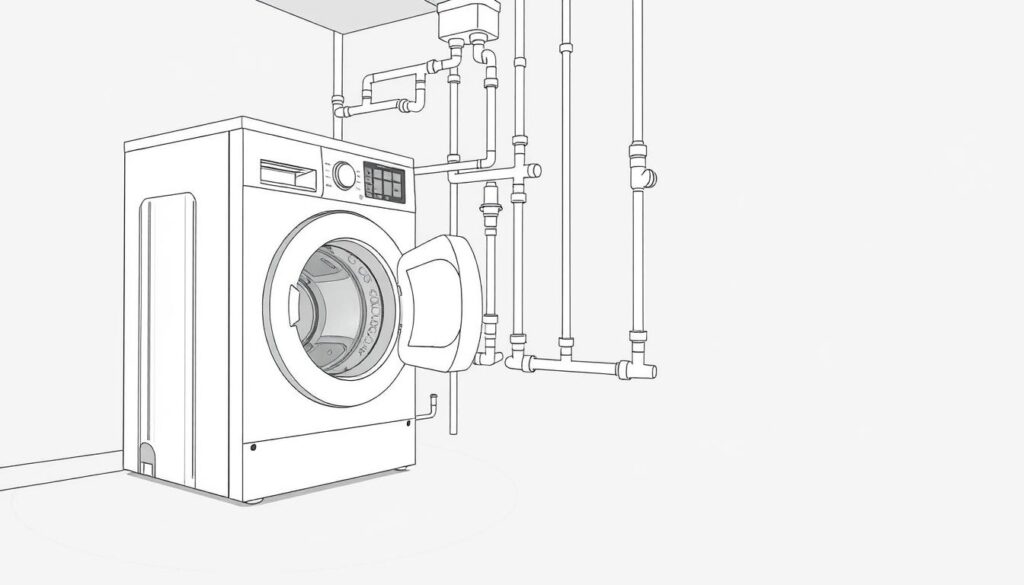
Installing a washing machine might seem intimidating, but with the right guidance, it becomes a straightforward DIY project. This guide will walk you through every critical step. You’ll learn to complete the installation safely and efficiently.
Whether you’re replacing an old washer or setting up a brand new one, understanding the proper plumbing techniques is key. You’ll learn how to connect water lines, position drain hoses, and ensure a leak-free installation. This protects your home from water damage.
Key Takeaways
- Washing machine installation is a manageable home project
- Proper preparation prevents water damage
- Basic tools and careful technique are essential
- Safety always comes first during installation
- Following manufacturer guidelines ensures optimal performance
Table of Contents
Gathering Essential Tools and Materials for Washing Machine Installation
Getting ready for a DIY washing machine hookup needs careful planning and the right tools. Knowing what plumbing you need is key before you start. This guide will help you get everything ready for a smooth setup.
Required Plumbing Components and Hardware
Having the right parts is essential for your washing machine installation. Here are the plumbing materials you’ll need:
- 2 water supply hoses (hot and cold)
- Drain hose with the right diameter
- Rubber washers for tight connections
- Hose clamps or clips
- Drain pan (optional but a good idea)
Safety Equipment and Preparation Checklist
When you’re working on your DIY washing machine hookup, safety comes first. Make sure you’re protected with these items:
- Work gloves
- Safety glasses
- Bucket for catching water
- Measuring tape
- Level
- Adjustable wrench
- Pliers
Before you start, check that you have:
- Access to hot and cold water lines
- A good drain point
- A grounded electrical outlet
- Enough time, about 1-2 hours
Pro Tip: Always check your materials before starting to avoid delays.
Getting everything ready is the secret to a successful washing machine installation. By preparing all your tools and materials ahead of time, you’ll make your DIY project easier and faster.
Selecting the Perfect Location for Your Washing Machine
Choosing the right spot for your washing machine is key for smooth installation. The location must meet several important requirements. This ensures your appliance works well and lasts long.
When planning your washing machine installation, consider these key factors:
- Proximity to water supply lines
- Access to electrical outlets
- Proper drainage connection
- Stable and level floor surface
- Adequate room temperature
Before you start, take precise measurements. Measure the space you have, including:
- Width of the area
- Depth for the machine
- Height clearance
- Doorway and hallway sizes
Strategic placement is key for a successful installation. Make sure to leave at least six inches between the washer and wall for connections and air flow. The floor must also support the weight of a fully loaded machine.
| Location Requirement | Recommended Specification |
|---|---|
| Minimum Space Around Washer | 6 inches |
| Minimum Floor Support | Solid, level surface |
| Temperature Range | Above 32°F |
Choosing the right location prevents water damage and ensures your machine works efficiently. It also helps extend your washing machine’s life.
Preparing Your Space and Removing the Old Washer
Before you install a new washing machine, you need to prepare and remove the old one safely. This ensures proper drainage and prevents damage to your home or the new machine.
- Adjustable wrench
- Bucket for water collection
- Protective gloves
- Towels or rags
Disconnecting Water Supply Lines Safely
Start by safely disconnecting your old washing machine. This is key to avoid water damage and protect your home. Here’s how to do it right:
- Unplug the washing machine from the electrical outlet
- Find the hot and cold water shut-off valves
- Turn valves clockwise to stop water flow
- Put a bucket under the supply line connections
- Use pliers to loosen the water supply hoses
Proper Removal Techniques to Prevent Damage
When removing an old washing machine, handle it carefully to avoid scratches or injury. Always have a helper assist you with heavy appliances. Make sure to disconnect the drain hose and collect any water in your bucket.
Check the area for debris, water damage, or wear that could affect your new machine. Clean the space well before installing the new unit.
How Do You Plumb in a Washing Machine: Step-by-Step Water Connection Process
Learning to plumb in a washing machine starts with the right setup. First, remove your new washer from its packaging. Make sure to get rid of all protective materials like tape and brackets.
Before you start connecting water, do these important steps:
- Remove all packaging materials from inside the drum
- Locate and remove transportation carriage bolts using a wrench
- Position the machine with 12-18 inches of clearance behind it
- Inspect water supply hoses for any visible damage
Connecting water supply to your washer needs careful attention. Look for the hot and cold water inlet valves on the back. They are usually marked with red (hot) and blue (cold) colors.
When attaching water hoses, remember these tips:
- Hand-tighten connections to prevent damage
- Attach hot water hose to red inlet
- Connect cold water hose to blue inlet
- Ensure hoses are not kinked or stretched
Pro tip: Replace water supply hoses every five years to prevent leaks and water damage.
Installing Water Supply Hoses to Hot and Cold Connections
Connecting your washing machine’s water supply hoses is key for a leak-free setup. The process needs careful attention and precision for the best results.
- Adjustable wrench
- Plumber’s tape
- Rubber washers
- New supply hoses
Preventing Leaks with Proper Hose Attachment
Start by checking your rubber washers. Damaged or missing ones can cause leaks.
| Hose Connection Step | Key Technique |
|---|---|
| Initial Connection | Begin with hand-tight threading |
| Final Tightening | Quarter-turn with wrench |
| Leak Prevention | Apply plumber’s tape to threads |
Understanding Water Pressure Requirements
Water pressure is vital for your washing machine’s performance. Most machines need pressure between 20-100 PSI. Use a gauge on an outdoor faucet to check your home’s pressure.
- Low pressure: Install a booster pump
- High pressure: Use a pressure regulator
- Check manufacturer’s specific recommendations
Right water pressure keeps your machine safe and working well during each cycle.
Setting Up the Washing Machine Drain Hose System
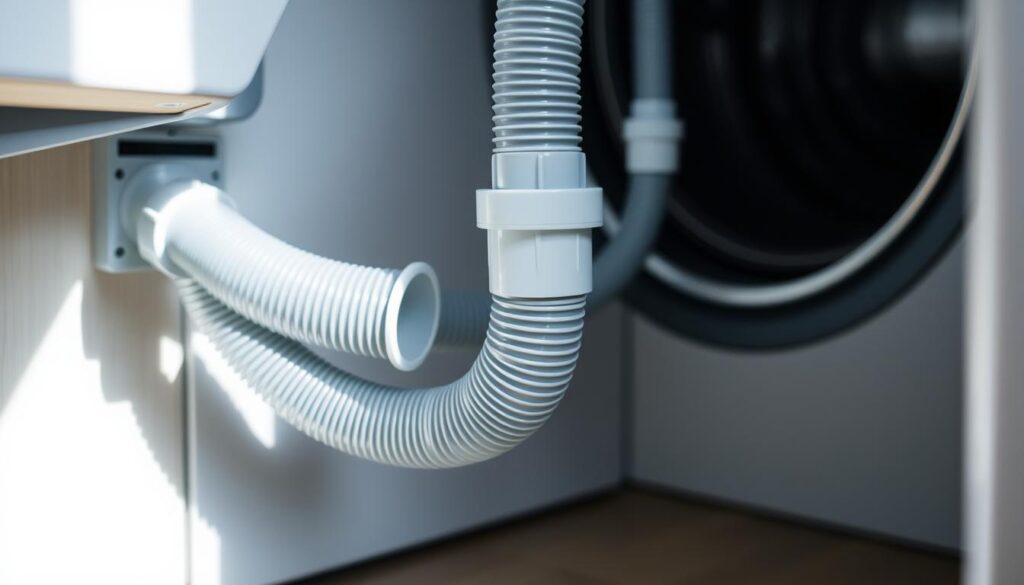
Your washing machine drain hose setup is key to avoiding water damage and ensuring smooth drainage. You need to pick the right drainage method for your home’s plumbing. The main options are standpipe, laundry sink, and floor drain.
When setting up your washing machine drain hose, remember these important placement tips:
- Position the drain hose between 18-96 inches above the floor
- Ensure the hose diameter matches your drainage system
- Avoid creating kinks or tight loops in the hose
- Secure the hose with plastic guides or clips
Pro tip: When installing your drain hose, don’t push it too far into the standpipe. This can create an airtight seal that prevents proper water drainage and might cause plumbing issues.
Proper washing machine drain hose setup needs careful attention. Use hose clips or zip ties to keep the hose from falling or becoming disconnected during the wash cycle. Make sure the drain point is easy to access and the hose has enough slack to move freely without stretching.
By following these guidelines, you’ll set up a reliable drainage system. This will protect your home from water damage and ensure your washing machine works well.
Leveling Your Washer and Testing for Proper Operation
Finishing your diy washing machine hookup needs focus on leveling and first tests. A well-set washing machine avoids damage and boosts performance. Taking the time to level your washer can prevent expensive fixes later.
Your washing machine’s stability relies on exact placement. Uneven surfaces can lead to big issues like too much vibration and harm to the structure.
Adjusting Leveling Feet for Optimal Performance
To get the perfect balance during your diy washing machine hookup, follow these steps:
- Use a carpenter’s bubble level to check machine alignment
- Find the adjustable feet at each corner of the washer
- Turn feet clockwise to lower, counterclockwise to raise
- Make sure all four feet touch the floor firmly
Running Your First Test Cycle
After leveling, do a test cycle to confirm it’s installed right. Start with an empty load to spot any problems:
- Choose a short wash cycle
- Look for unusual vibrations
- Check all connections for leaks
- Make sure it runs smoothly through all stages
Pro tip: Always check your washer’s level every few months, as home foundations can shift slightly over time.
| Leveling Indicators | Potential Issues |
|---|---|
| Machine rocks or wobbles | Uneven feet need adjustment |
| Excessive vibration during spin | Potential misalignment |
| Water pooling around machine | Possible installation error |
Best Practices for Maintaining Your Washing Machine Plumbing
Keeping your washing machine’s plumbing in good shape is key. It helps your appliance last longer and saves you from expensive fixes. By following a few easy steps, you can make sure your washer works well and saves energy.
Here are some important maintenance tips for your washing machine plumbing:
- Check water supply hoses every month for damage or wear
- Clean the inlet screens and filters once a year to avoid sediment buildup
- Swap out water supply hoses every five years to prevent leaks
- Run a maintenance cycle every three months
But there’s more to washing machine plumbing than just cleaning. Here are some advanced tips:
- Turn off the water supply valves when you’re away for a while
- Keep the washer door open after use to stop mold
- Use a washing machine cleaner or white vinegar for a deep clean
- Check drain pump filters every three months to remove debris
Preventive care can really save you money and trouble. Always spray down dirty items before washing to avoid clogs. And don’t overload your machine more than two-thirds full. By taking care of your washing machine’s plumbing, you’ll keep it running great for years.
Pro Tip: Regular maintenance is the key to preventing unexpected breakdowns and expensive repairs.
Conclusion
Learning to plumb in a washing machine is a DIY project that can save you money. It also boosts your home maintenance skills. The installation usually takes 1-2 hours and needs careful attention to detail. Most homeowners can do it with the right preparation and tools.
Important points from this guide include understanding water connections and drainage setup. Make sure your machine is level for the best performance. Always prioritize safety by checking water pressure and electrical connections. Follow the manufacturer’s guidelines closely.
While most installations are easy, some might need a professional. If you face complex plumbing, electrical issues, or local code problems, get a plumber. Your aim is a safe, efficient washing machine that will last for years.
By following this guide, you now know how to install your washing machine confidently. Take your time, check connections twice, and ask for help if unsure about any step.