

Affiliate Disclosure
Plumber Guide Guys is a participant in the Amazon Services LLC Associates Program, an affiliate advertising program designed to provide a means for sites to earn advertising fees by advertising and linking to Amazon.
Is Becoming a Plumber Worth It? Did you know the plumbing industry will create over 25,000 new jobs by 2029? This shows the big chance in a plumbing career. If you’re thinking about plumbing, you’re looking at a job that’s stable, pays well, and has great opportunities.
Plumbing is a great choice instead of going to college for four years. Is it worth it to become a plumber? With salaries from $62,970 to $66,330, and some making up to $100,000, it’s a strong option for a good job.
Starting in plumbing means entering a field with lots of demand. The Bureau of Labor Statistics says there will be a 4% job growth from 2024 to 2034. This means a strong job market for skilled workers.
Key Takeaways
- 25,000+ new plumbing positions expected by 2029
- Median annual salary between $62,970 and $66,330
- No four-year college degree required
- 4% projected job growth through 2034
- Opportunities for entrepreneurship and business ownership
Table of Contents
Understanding the Plumbing Profession and Career Path
The plumbing profession is dynamic and rewarding. It’s perfect for those interested in skilled trades. Plumbers are key in keeping our water systems safe and working well in homes, businesses, and government buildings.
- Installing complex piping systems
- Assembling and repairing fixtures
- Maintaining heating and water distribution networks
- Diagnosing and solving complex plumbing problems
What Professional Plumbers Really Do
Plumbers solve big problems. They check plumbing systems, find issues, and fix them. Plumbing pros keep us safe by making sure our water is clean and waste is handled right.
Education and Training Requirements
Apprenticeships are very valuable in plumbing. They mix hands-on learning with classroom work. Your path usually includes:
- Finishing a plumbing program
- Doing a 4-5 year apprenticeship
- Getting about 2,000 hours of real-world experience
- Passing licensing tests
Becoming a Licensed Professional
The demand for plumbers is always there. To become a licensed plumber, you need hard work, knowledge, and a commitment to learning. Keeping up with new tech and rules is key.
“Success in the plumbing trade comes from combining technical expertise with practical problem-solving skills.” – Master Plumber
Investing in your training and staying up-to-date can lead to a rewarding and stable career in plumbing.
Job Security and Market Demand for Plumbers
Plumbing is a recession-proof career with great job security. The need for skilled plumbers keeps growing, opening up many job opportunities. The Bureau of Labor Statistics predicts about 44,000 new plumber jobs each year until 2034.
Choosing a career in plumbing has many benefits:
- There’s always work available in different areas.
- Plumbing services are vital and can’t be automated.
- Keeping buildings and homes in good shape is a constant need.
The plumber job market is strong for several reasons. Old buildings need repairs, new ones are being built, and homes and businesses always need fixes. You can work in homes, offices, or public buildings, making plumbing a reliable career.
| Job Market Indicator | Projection |
|---|---|
| Annual Job Openings | 44,000 |
| Job Growth Rate | 4% (2024-2034) |
| Retirement Openings | Significant opportunities for new professionals |
Plumbing jobs are secure, even when other jobs aren’t. Plumbing is always needed, thanks to emergencies. With many experienced plumbers retiring, it’s a great time to start your career.
Plumbing: A career that keeps flowing, regardless of economic challenges.
Your plumbing career will offer stability, good pay, and chances to grow and specialize.
Is Becoming a Plumber Worth It? Analyzing Financial Benefits
Thinking about a plumbing career? The money is a big draw. Plumbers can earn a lot, more than many people think. It’s all about knowing the plumbing job market.
Median Salary and Earning Potentials for Plumbers
Plumbers make good money. They earn between $62,970 and $66,330 a year. Your earnings can grow a lot:
- Apprentice (0-1 year): $31,000 – $42,000
- Early Career (1-4 years): $42,000 – $55,000
- Mid-Career (5-9 years): $55,000 – $70,000
- Experienced Professionals (10+ years): $70,000 – $100,000+
How Location Affects Plumber Income
Your salary can change a lot based on where you work. The best places for pay are:
- Alaska
- New Jersey
- Massachusetts
In these states, experienced plumbers can make over $90,000 a year. Cities usually pay more than rural areas.
Comparing Plumbing Earnings to College-Degree Careers
Plumbing is a great job that doesn’t need a college degree. It’s one of the top-paying jobs without a degree. Plumbers in certain fields can make over $100,000 a year.
The beauty of a plumbing career lies not just in its financial potentials, but in the ability to earn while learning through paid apprenticeships.
The Advantages of Choosing a Plumbing Career
Plumbing is a unique career with many benefits. It offers financial stability and chances to start your own business. This trade helps you grow professionally and personally.
Earning While Learning Through Apprenticeships
One big plus of plumbing is the paid apprenticeship. You can start making money right away while learning. This is a smarter choice than college, as it saves you from big student loans.
- Start earning $31,000-$42,000 during apprenticeship
- Avoid massive student loan debt
- Gain practical work experience simultaneously
- Receive structured professional training
Entrepreneurship Opportunities and Business Ownership
Plumbing is more than a job; it’s a chance to own your own business. The apprenticeship model offers more than just training. It sets you up for long-term career growth.
| Career Stage | Potential Opportunities | Estimated Income Range |
|---|---|---|
| Apprentice | Learning & Earning | $31,000 – $42,000 |
| Licensed Plumber | Employment or Independent Contractor | $50,000 – $85,000 |
| Business Owner | Own Plumbing Company | $75,000 – $150,000+ |
Your plumbing career can grow from apprentice to business owner. This path lets you shape your career. You can build a successful business that brings both money and happiness.
Physical Demands and Safety Considerations in Plumbing
Plumbing is a tough job that needs a lot of physical fitness and safety knowledge. It’s not like office work. You need strength, flexibility, and endurance to handle the job sites.
Your day will be filled with physical challenges. These tests your body’s limits. Plumber safety risks include:
- Lifting heavy equipment weighing 50-100 pounds
- Working in cramped spaces like crawl spaces and attics
- Maintaining awkward body positions for long times
- Climbing ladders and navigating unstable surfaces
Occupational hazards in plumbing are real and need constant attention. You’ll face risks like:
- Sharp metal edges causing cuts and puncture wounds
- Potential chemical exposure from cleaning agents
- Burns from hot pipes and soldering equipment
- Electrical shock risks during installations
Protecting yourself means investing in high-quality safety gear. Always wear protective eyewear, sturdy gloves, knee pads, and steel-toed boots. Regular exercise and proper lifting can reduce injury risks.
Knowing and respecting these physical demands is key to a successful plumbing career. Your body is your most important tool. So, take care of it and stay prepared.
Work-Life Balance and Schedule Flexibility as a Plumber

Being a plumber comes with unique challenges for work-life balance. Unlike regular 9-to-5 jobs, plumbers have flexible schedules. This requires being adaptable and flexible.
Knowing how on-call plumbing duties work is key. Plumbers deal with emergencies that can happen anytime. This means their personal time and work life often mix.
Managing Emergency Service Commitments
Plumbers often face unexpected problems that change their work hours. A typical day might include:
- Fixing urgent water leaks
- Dealing with sewer line issues
- Repairing heating system failures
- Handling emergency calls from homes and businesses
Navigating Irregular Work Hours
Weekends and evenings are common for plumbers. Your schedule might include:
- Rotating on-call shifts
- Working when clients need you
- Being flexible with your schedule
- Learning to manage your time well
“In plumbing, your most important tool isn’t a wrench—it’s your ability to adapt to unexpected situations.”
Despite the challenges, many plumbers enjoy the variety and freedom of their work. Planning ahead and talking to employers can help manage the unpredictability of plumbing emergencies.
The Challenging Realities of Plumbing Work
Plumbing is tough. It’s a job that tests your limits. You’ll face situations that are uncomfortable and require a lot of mental strength.
Some of the toughest plumbing jobs include:
- Sewage backups with direct exposure to human waste
- Flooded basements with mysterious and foul odors
- Crawl spaces infested with rodents and insects
- Mold-ridden drainage systems
- Tight, dirty spaces under buildings
Plumbing isn’t just hard physically. It’s also stressful. You’ll deal with emergencies and clients who are upset. When their bathroom breaks or basement floods, it can be tough.
“Plumbing is 90% problem-solving and 10% getting dirty – but that 10% is really dirty.” – Anonymous Plumber
To succeed, plumbers need to solve problems and stay clean. They take pride in fixing issues that others can’t.
| Challenging Condition | Potential Psychological Impact | Coping Strategy |
|---|---|---|
| Sewage Exposure | Disgust, Possible Health Worries | Wearing Right Protective Gear |
| Tight Spaces | Claustrophobia, Physical Strain | Getting Mentally Ready, Staying Fit |
| Client Stress | Feeling Overwhelmed | Talking Clearly and Professionally |
Don’t let these challenges scare you off. If you’re up for the challenge, plumbing can be a fulfilling career.
Training Investment and Time Commitment for Plumber Certification
Becoming a professional plumber takes a lot of dedication and planning. Your journey to becoming a plumber involves a lot of hard work. It turns you from an aspiring technician into a skilled professional. Knowing the certification process helps you choose the right career path.
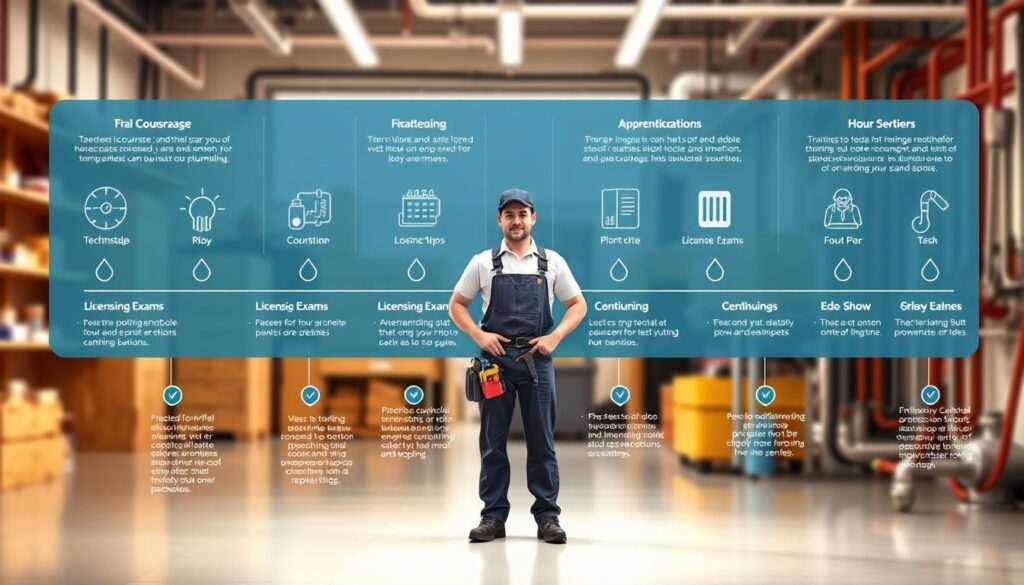
Apprenticeship Duration and Classroom Hours
The journey to becoming a licensed plumber takes 4-5 years. It includes a lot of classroom learning and hands-on training. This structured approach shows the value of your investment:
- Approximately 2,000 hours of classroom learning
- Extensive on-the-job training under licensed professionals
- Paid apprenticeship opportunities
“Your apprenticeship is an investment in your future, not just an expense.” – Professional Plumbing Association
Licensing Exams and Continuing Education
Getting licensed involves many steps, including exams and ongoing learning. Each state has its own rules, but most require:
| Certification Level | Exam Requirements | Continuing Education Hours |
|---|---|---|
| Apprentice | Basic Skills Test | Not Required |
| Journeyman | Technical Knowledge Exam | 8-16 hours annually |
| Master Plumber | Advanced Practical & Theory Exam | 16-24 hours annually |
Your investment in plumbing training doesn’t stop after you get certified. Continuous learning keeps you competitive and up-to-date with industry standards. While it takes time and effort, the rewards make it a great career choice.
Career Growth and Long-Term Opportunities in the Plumbing Trade
Your plumbing career is full of exciting paths for growth and making money. It’s not just about fixing pipes. It’s about starting a strong and changing career journey. From apprentice to master plumber, there are many chances to grow and succeed.
As you get more experience, you’ll find many long-term opportunities:
- Specialized Technical Roles
- Medical gas system installation
- Fire suppression system design
- Industrial pipefitting
- Leadership Positions
- Crew supervisor
- Project manager
- Technical instructor
- Entrepreneurial Paths
- Independent contractor
- Small business owner
- Plumbing company founder
Experienced plumbers can make a lot more money. Specialized professionals often earn over $100,000 annually. Your career will grow if you keep learning, adapting, and staying updated.
The world needs skilled plumbers, so you can work anywhere. Your skills can take you around the globe. Plumbing is a flexible and exciting career.
Conclusion
Choosing a plumbing career means looking at both the good and the tough sides. The plumbing trade is a great way to make money without college debt. It offers good pay, job security, and chances to start your own business.
To be a plumber, you need to be strong, mentally tough, and always learning. The job is stable and offers many different experiences. But, it can be unpredictable and sometimes hard to work in.
Before you decide, look into apprenticeships, talk to plumbers, and think if you’re good with your hands. The plumbing trade is rewarding for those who are dedicated and always learning.
So, is being a plumber a good choice? It depends on what you want, how hard you’re willing to work, and your career dreams. For those looking for a solid, well-paying job with growth, plumbing is a great option.