
Affiliate Disclosure
Plumber Guide Guys is a participant in the Amazon Services LLC Associates Program, an affiliate advertising program designed to provide a means for sites to earn advertising fees by advertising and linking to Amazon.
Can You Use Liquid Plumber in a Toilet? Ever faced a tough toilet clog and thought about using Liquid Plumber? It might seem like a quick fix, but it’s not that simple. Plumbers say using Liquid Plumber in your toilet can be risky, and many homeowners don’t realize it.
Before trying to clear a clog, it’s important to know about chemical drain cleaners. Yes, you can use Liquid Plumber in a toilet. But, the risks might make you think again before grabbing that bottle.
Key Takeaways
- Liquid Plumber can technically be used in toilets, but it’s not recommended
- Chemical drain cleaners pose serious risks to your plumbing system
- Toilets have unique drainage characteristics different from sink drains
- Safety should always be your primary concern when dealing with clogs
- Alternative methods are often more effective and less damaging
Table of Contents
Can You Use Liquid Plumber in a Toilet?
Chemical drain cleaners might seem like a quick fix for stubborn toilet clogs. But, it’s important to understand how these products work before using them. Not all drain cleaning solutions are the same. What works for your sink might not be good for your toilet.
Understanding Chemical Drain Cleaner Mechanics
Chemical drain cleaners for toilets work through a complex chemical reaction. They are designed to break down organic matter. But, these powerful solutions can be risky for toilets.
- Chemical compounds attack organic materials
- Ingredients include sodium hydroxide and bleach
- Designed to liquefy different types of clogs
Toilet Drains vs. Sink Drains: Critical Differences
Toilet drains are different from standard sink drainage systems. Your toilet’s curved P-trap or S-trap makes it hard for chemical drain cleaners. Water in the bowl can also dilute the chemicals, making them less effective.
Unlike straight sink pipes, toilet drainage has complex water pressure and siphoning. This makes using chemical drain cleaners in toilets challenging and risky for your plumbing system.
Why Liquid Plumber May Not Be the Best Solution for Toilet Clogs
Homeowners often find that liquid plumber doesn’t solve toilet clogs well. Plumbers often see that these chemicals can’t fix deep plumbing problems.
Toilet blockages are tough for liquid plumber to handle. It can’t dissolve many things like:
- Thick toilet paper wads
- Feminine hygiene products
- Baby wipes
- Cotton swabs
- Dental floss
- Accidentally dropped foreign objects
Unlike sink clogs, toilet drains don’t work well with chemicals. Standing water weakens the chemical, and curved pipes block the solution from reaching the clog.
| Clog Type | Chemical Cleaner Effectiveness |
|---|---|
| Hair/Grease Clogs | High |
| Solid Object Blockages | Low |
| Paper/Hygiene Product Clogs | Very Low |
Chemical drain cleaners might seem like a quick fix, but they often lead to more expensive plumbing repairs. Professional drain cleaning equipment is the best way to clear stubborn toilet blockages.
Safety Concerns When Using Chemical Drain Cleaners in Toilets
Using chemical drain cleaners in toilets can be risky. These strong products can make your bathroom unsafe, if not used right.
Chemical drain cleaners are dangerous, but many people don’t see the risk. The small space in your bathroom makes these cleaners even more hazardous.
Risk of Chemical Burns and Eye Injuries
Chemical drain cleaners are not just for cleaning. They can cause serious harm:
- Sodium hydroxide and sulfuric acid can cause instant chemical burns
- Eye contact may result in permanent vision damage
- Skin exposure can lead to painful chemical burns
A plumbing expert told of a client who got serious eye injuries from a drain cleaner. This client needed many emergency room visits. It shows the dangers of using these cleaners in toilets.
Dangerous Fumes in Enclosed Bathroom Spaces
The small space in bathrooms makes chemical drain cleaners even more risky. The toxic vapors can be very dangerous:
- Fumes are heavier than air and sink to floor level
- Children and pets are most vulnerable to these toxic vapors
- Potential respiratory irritation and breathing difficulties
Keep yourself and your loved ones safe from the dangers of chemical drain cleaners in toilets. If you’re unsure, call a professional plumber. They can fix your toilet clog safely.
Potential Damage to Your Toilet and Plumbing System
Chemical drain cleaners might seem like a quick fix for clogs. But they can harm your plumbing system. Pouring these harsh chemicals into your toilet targets the clog but also causes long-term damage. This damage could cost more than the initial problem.
The risks of using chemical drain cleaners in toilets include:
- Porcelain bowl erosion and permanent damage
- Destruction of rubber seals and gaskets
- Pipe material degradation
- Accumulation of sticky residue that attracts future clogs
Is liquid plumber safe for toilet pipes? The short answer is no. These chemical solutions are very aggressive. They can damage:
- Ceramic toilet bowl surfaces
- Rubber components like wax rings
- Metal pipe connections
- PVC pipe joints
Professional plumbers warn that repeated use of chemical drain cleaners can create more problems than they solve. The residue left behind creates a sticky surface. This surface traps more debris, leading to frequent clogs and system failures.
One plumbing expert noted that repair costs from chemical damage can be ten times the price of the drain cleaner itself.
Protecting your toilet and plumbing system needs a more thoughtful approach. Don’t reach for a chemical solution at the first sign of a clog.
Common Signs Your Toilet Is Clogged
Spotting toilet clogs early can prevent big plumbing problems. Knowing the signs helps you fix it before it gets worse.
Slow Draining Water Signals Trouble
A good toilet flushes fast and well. Slow water draining means trouble. Look out for these signs:
- Water rising close to the bowl’s rim
- Flushing takes longer than usual
- Incomplete water drainage after flushing
Gurgling Sounds and Unpleasant Odors
Your toilet warns of blockages with odd sounds and smells. Gurgling noises mean trapped air, hinting at a clog.
Bad smells from your toilet are a big warning. They can mean:
- Waste building up in pipes
- Blocked ventilation system
- Potential sewer line issues
Experts say to fix these signs fast. This stops bigger problems and expensive fixes.
Best Liquid Plumber Products for Toilets
When you face tough toilet clogs, picking the right liquid plumber is key. Not all drain cleaners are the same. Some work better for certain types of blockages.
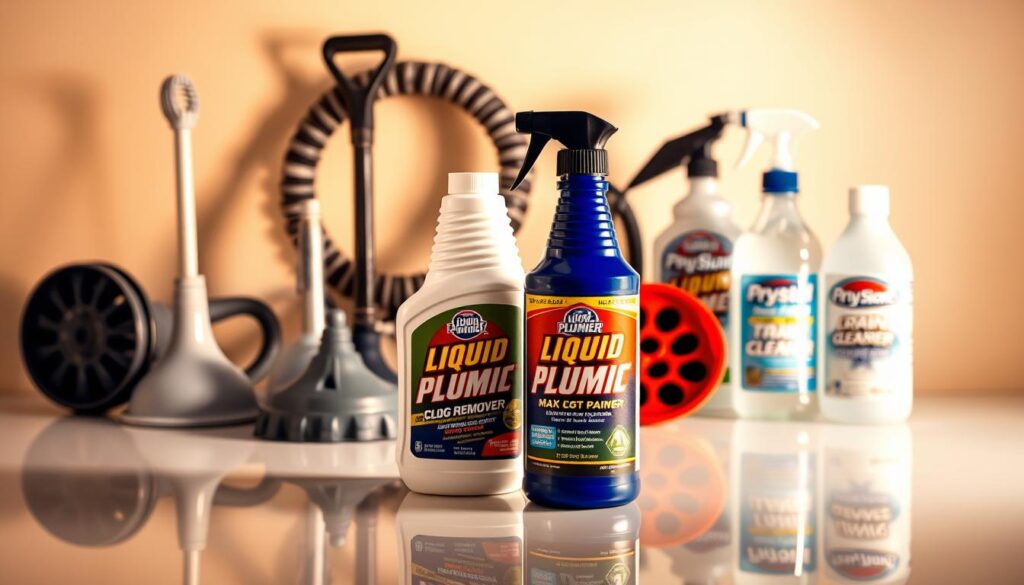
- Liquid Plumr Heavy Duty Clog Remover
- Made with sodium hypochlorite
- Breaks down tough clogs in 15 minutes
- Safe for septic systems
- Drano Max Gel Clog Remover
- Works well on standing water
- Helps prevent future clogs
- Safe for plastic pipes
- Green Gobbler Liquid Hair & Grease Clog Remover
- Made from natural ingredients
- Dissolves hair and grease buildup
- Works in 30 minutes
When comparing liquid plumber vs toilet clogs, remember these products are best for certain blockages. They’re great at tackling hair and grease but might not handle solid objects or big toilet paper wads.
Safety tip: Always follow manufacturer instructions carefully and wear protective equipment when using chemical drain cleaners.
Your choice of liquid plumber for toilet clogs depends on the type of clog. Different products tackle different blockages. Knowing your clog type is essential for effective cleaning.
When Chemical Drain Cleaners Actually Work
Using drain cleaner in toilets can be effective, but it depends on the clog type. Liquid plumber works differently on various blockages.
Chemical drain cleaners can tackle some clogs well. Your success depends on knowing what’s causing the blockage.
Clogs That Respond Well to Chemical Treatment
- Organic waste buildup
- Light soap scum accumulation
- Minimal hair blockages
- Grease-based obstructions
Drain cleaners work best on certain materials. Sodium hydroxide breaks down proteins and organic matter. This makes it effective for minor blockages.
| Clog Type | Chemical Treatment Effectiveness |
|---|---|
| Organic Waste | High |
| Soap Scum | Moderate |
| Paper Products | Low |
| Mineral Deposits | Very Low |
Pro tip: Chemical drain cleaners are better for preventing slow drains than fixing blockages. If a plunger doesn’t work, chemicals might not help either.
Toilet drains face special challenges. The curved trap and standing water can make chemicals less effective. Always use drain cleaners carefully and follow the instructions.
Safer Alternatives to Liquid Plumber for Toilet Clogs
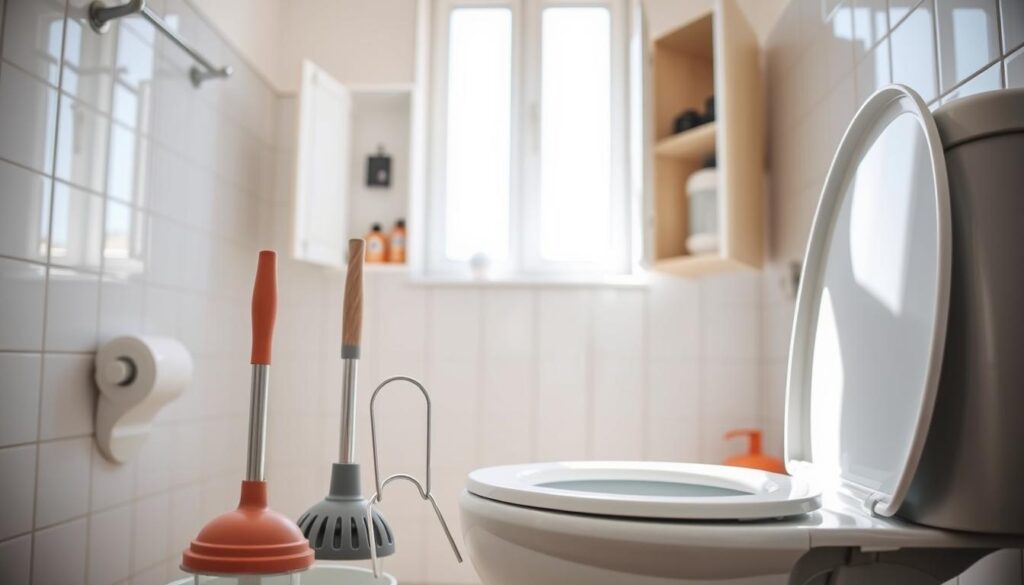
When your toilet gets clogged, you have safer options than liquid plumber. These alternatives can clear blockages without harming your plumbing. They are gentler and often more effective than chemical cleaners.
The first tool you should try is a toilet plunger. Not all plungers are the same. A flange plunger is best for toilets. Here’s how to use it right:
- Make sure water covers the plunger head
- Get a tight seal around the toilet bowl’s drain
- Push and pull with firm, consistent pressure
- Keep going if you need to
If plungers don’t work, a toilet auger (or plumbing snake) is a good next step. It physically breaks up tough clogs. Be careful not to scratch the porcelain when using it.
Another great choice is enzyme-based drain cleaners. These natural solutions use good bacteria to break down organic matter. They work slower but are safer for your pipes and the environment.
Pro tip: Always have a plunger and auger by your toilet. They can prevent costly plumbing repairs and solve most clogs quickly.
Effective Methods to Prevent Future Toilet Clogs
Stopping toilet clogs before they start is much simpler than fixing them. Smart liquid plumber toilet safety tips can keep your bathroom plumbing working well. This way, you avoid expensive repairs.
Knowing how to maintain your toilet can save you time, money, and stress. Let’s look at some important strategies to keep your toilet in great shape.
Proper Flushing Habits
Your toilet is made for certain types of waste. Stick to the “three Ps” rule:
- Pee
- Poo
- Toilet Paper
Don’t flush these items:
- Feminine hygiene products
- Baby wipes
- Cotton swabs
- Dental floss
- Paper towels
Regular Cleaning and Inspection Tips
Keep your toilet working well with these liquid plumber toilet safety tips:
- Clean rim jets monthly with a small brush
- Regularly check tank parts
- Use enzyme cleaners for upkeep
- Look for slow leaks or weak flushes
Pro tip: Think about getting a bidet. It cuts down on toilet paper use and lowers clog risks.
By following these easy maintenance steps, you can greatly lower the chance of toilet clogs. Your plumbing will stay in top shape.
When to Call a Professional Plumber Instead
At times, using liquid plumber just won’t do the trick. Your DIY attempts might not work against tougher plumbing problems. Knowing when to call a pro can save you time, money, and prevent plumbing damage.
You should reach out to a professional plumber if you notice:
- Recurring clogs in the same toilet
- Slow drains in multiple fixtures
- Gurgling sounds from different drains
- Sewage backing up into showers or tubs
- Visible sewage in your yard or basement
These signs point to deeper issues that can’t be fixed with just liquid plumber. Professional plumbers have the right tools like:
- Motorized drain augers reaching 50-100 feet
- Hydro-jetting machines for tough blockages
- Video camera inspection tools
Getting professional drain cleaning services can prevent expensive long-term damage. The initial cost might seem high, but it’s cheaper than repeated chemical treatments or plumbing repairs.
Remember, a backed-up toilet isn’t just an inconvenience—it’s a health hazard that needs quick attention.
Emergency plumbing services are ready 24/7. They ensure you’re not left without help when serious toilet clogs happen. Choosing to call a professional can protect your home and give you peace of mind.
Conclusion
Dealing with toilet clogs needs careful thought about your choices. Liquid plumber can work in toilets, but knowing its limits is key. Is liquid plumber safe for toilet pipes? Not always. Chemical drain cleaners can harm your plumbing and health.
Looking into alternatives to liquid plumber for toilets is a better way. Tools like plungers and toilet augers are safer and work better. Keeping your plumbing in good shape helps avoid big problems.
Experts say knowing your plumbing well is important before trying to fix it. If DIY methods don’t work, getting help from a pro is best. This way, you avoid expensive fixes and keep your toilet working well.
In the end, keeping your plumbing safe means finding good solutions that are safe. Being informed and taking action early helps manage toilet clogs well. This keeps your home’s systems running smoothly.