
Affiliate Disclosure
Plumber Guide Guys is a participant in the Amazon Services LLC Associates Program, an affiliate advertising program designed to provide a means for sites to earn advertising fees by advertising and linking to Amazon.
Do You Need a Plumber to Install a Sump Pump? Ever thought about if a pro plumber is needed for a sump pump in your basement? The answer isn’t simple. Some folks do it themselves, but others see the value in hiring a plumber.
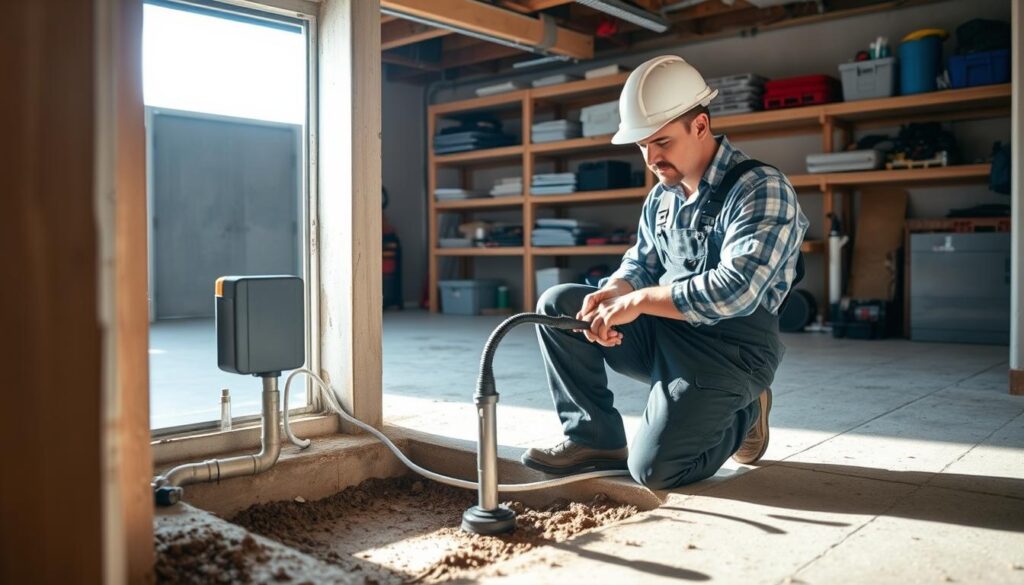
Deciding if you need a plumber depends on a few things. Your home’s waterproofing needs, your DIY skills, and how complex the job is matter a lot.
Getting a sump pump right is more than just stopping water damage. It’s about keeping your home’s foundation safe and your basement dry. Every basement is different, and some might need a pro’s touch.
Key Takeaways
- Professional plumbers offer specialized knowledge for sump pump installation
- DIY installations carry risks and complications
- Your home’s specific requirements determine the best installation method
- Proper installation ensures long-term basement water protection
- Cost-effectiveness isn’t just about initial expenses, but long-term reliability
Table of Contents
Understanding Sump Pump Installation Basics
Keeping your basement dry starts with knowing about sump pumps. These systems are key to stopping water damage. Learning how they work is the first step to protecting your home.
A sump pump removes water from your basement. It’s a vital tool against water damage. When water builds up, the pump kicks in, moving water away from your foundation.
What Is a Sump Pump and How Does It Work
There are two main types of sump pumps:
- Submersible Pumps: Sit at the bottom of the sump pit
- Pedestal Pumps: Have their motor above the water
The Role of the Sump Pit in Your Basement
The sump pit catches groundwater and prevents flooding. It must be at the basement’s lowest point. This ensures it captures all water effectively.
| Sump Pit Specifications | Recommended Dimensions |
|---|---|
| Diameter | 18 inches |
| Minimum Depth | 22 inches |
| Base Material | Concrete or Brick (Not Direct Earth) |
Key Components of a Sump Pump System
A good sump pump system has several important parts:
- Sump Basin
- Pump Unit
- Discharge Pipe
- Check Valve
- Float Switch
- Optional Battery Backup
Knowing these parts helps homeowners see why installing a sump pump is complex. It also shows why getting professional help is important for a good water management system.
Do You Need a Plumber to Install a Sump Pump
Deciding if you need a plumber to install a sump pump depends on several factors. Some homeowners can do it themselves, but others might need a pro to protect their basement from water damage.
When thinking about getting a plumber for sump pump installation, check your skills and the job’s complexity. A pro can avoid costly mistakes and ensure your basement stays dry.
- Assess your current plumbing and electrical knowledge
- Understand local building code requirements
- Evaluate the complexity of your basement layout
- Consider your comfort level with DIY projects
Professional installation is key in certain situations:
| Installation Scenario | Recommended Approach |
|---|---|
| New Home Construction | Professional Plumber Required |
| Complex Basement Layout | Professional Installation |
| Existing Pump Replacement | DIY Possible with Proper Skills |
A licensed plumber ensures the job is done right. They handle electrical connections, placement, and follow local codes. Your home’s water management system depends on precise installation. If you’re not sure about your skills, hiring a pro can save you from water damage and expensive fixes.
Remember: A small investment in professional installation can save thousands in future water damage repairs.
Who Can Install a Sump Pump in Your Home
Choosing the right person for sump pump installation is key. Experts with different skills can keep your basement dry. Knowing who can install a sump pump helps you make a smart choice.
Licensed Journeyman Plumbers
A professional plumber has the best skills for sump pump jobs. They know a lot about plumbing and electrical work. They can:
- Ensure proper pipe routing
- Complete electrical connections safely
- Navigate local building codes
- Obtain necessary permits
Licensed Contractors
Licensed contractors are great for managing basement waterproofing projects. They handle all parts of home improvement, including:
- Assessing structural considerations
- Recommending appropriate pump types
- Integrating sump pump with broader renovation projects
- Managing complex installation requirements
Basement Waterproofing Specialists
These experts focus only on keeping basements dry. They know a lot about water management, including:
- Analyze soil drainage patterns
- Designing water prevention systems
- Identifying moisture risks
- Creating long-term solutions
“Choosing the right professional ensures your sump pump functions effectively and protects your home from water damage.” – Home Maintenance Expert
| Professional Type | Key Strengths | Best For |
|---|---|---|
| Journeyman Plumbers | Technical Plumbing Skills | Precise Pump Installation |
| Licensed Contractors | Project Management | Complex Renovation Projects |
| Waterproofing Specialists | Water Management Expertise | Comprehensive Basement Protection |
Plumber-Installed Versus DIY Sump Pump Installation
Deciding between a professional plumber and DIY for sump pump installation is a big choice. It affects your budget and the system’s long-term performance.
DIY sump pump installation has its perks:
- Potential cost savings of $200-$500
- Complete control over the project timeline
- Flexibility in selecting specific components
- Personal satisfaction of completing home maintenance
On the other hand, professionals offer expertise that DIYers might not have. A licensed plumber ensures:
- Proper electrical and plumbing code compliance
- Comprehensive system assessment
- Warranty protection for installation
- Expert troubleshooting of drainage issues
If you’re good with basic tools, DIY sump pump installation might work for you. Those with plumbing and electrical know-how can also do it well.
But, DIY comes with risks like water damage, bad electrical connections, and voiding warranties. A professional plumber reduces these risks, giving you peace of mind and top-notch results.
Your situation will guide your choice. Simple replacements might be DIY-friendly, but complex jobs or new systems need a pro.
When to Call a Professional for Sump Pump Installation
Water damage can be very bad for your home. Knowing when to call a professional plumber for sump pump replacement can save you a lot of money. It also keeps your basement from flooding.
Signs Your Sump Pump Needs Replacement
Knowing when your sump pump needs help can stop big water damage problems. Look out for these signs:
- Strange grinding or rattling noises indicating motor wear
- Water pooling in basement despite pump running
- Frequent cycling or constant operation of the pump
- Pump age exceeding 7-10 years
- No backup power during electrical outages
Risks of DIY Sump Pump Installation
Trying to replace a sump pump yourself can cause big problems:
- Incorrect installation causing poor drainage
- Potential electrical hazards from improper wiring
- Reduced system efficiency
- Risk of foundation damage
- Potential voiding of home insurance coverage
Benefits of Hiring a Licensed Plumber
A professional plumber for sump pump installation has many benefits:
- Precise home-specific system assessment
- Compliance with local building codes
- Safe electrical and plumbing connections
- Comprehensive system testing
- Workmanship guarantees
Choosing professional sump pump replacement keeps your home safe from water damage and structural harm.
The Sump Pump Installation Process Step by Step
Installing a sump pump needs careful planning and precise steps. Your sump pump installation guide has several key steps. These steps ensure your basement is protected and water is managed properly.
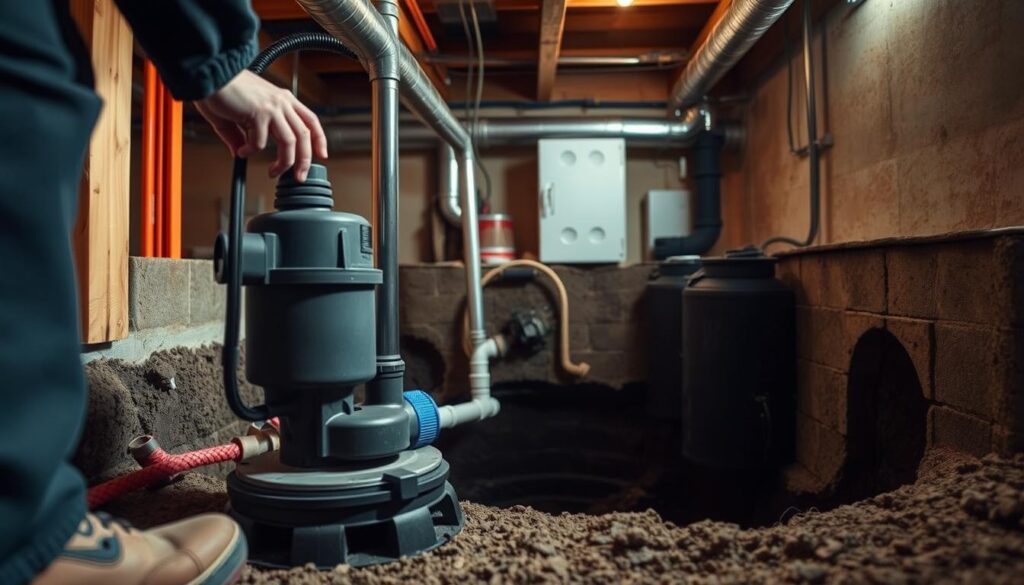
- Tape measure
- Shovel
- PVC pipes and cement
- Electrical connections
- Safety equipment
First, pick the right spot in your basement. Look for the lowest point where water tends to gather. The sump pit should be:
- 18 inches wide
- 22 inches deep
- Far from foundation walls
When digging, make a level base with concrete or gravel. Precision is key to avoid future drainage problems. Choose between submersible or pedestal pumps based on your basement’s needs.
Now, follow these important steps for installation:
- Read the manufacturer’s manual carefully
- Turn off the electrical power first
- Attach the check valve correctly
- Drill a weep hole at a 45-degree angle
- Secure electrical cords with zip ties
Lastly, test your system by filling the pit with water. Make sure the pump works well. If you’re unsure about any step, consider hiring a professional.
Factors That Affect Sump Pump Installation Cost
Knowing the cost of a sump pump installation helps you plan your budget. The price depends on several factors that can change your total cost.
The cost of installing a sump pump is usually between $500 and $1,800. This price varies based on different elements.
Labor Costs and Professional Fees
Licensed plumbers charge $100 to $150 per hour for installation. A typical job takes 3-5 hours, costing $300 to $750 in labor. Some plumbers offer a flat rate, making budgeting easier.
- Hourly rates: $100-$150
- Installation time: 3-5 hours
- Total labor cost: $300-$750
Equipment and Material Expenses
The cost of a sump pump depends on its type and size. Basic models start at $150, while high-end submersible pumps can cost up to $1,000. You’ll also need PVC piping, check valves, and a sump basin, adding to the total cost.
- Pedestal pumps: $150-$300
- Submersible pumps: $200-$500
- Premium pumps: $400-$1,000
- Additional materials: $100-$300
Regional Pricing Differences
Your location affects the cost of a sump pump installation. Cities often charge more due to higher labor costs and local market rates. Permit fees and building codes also play a role in the final price.
To save money, get quotes from several licensed plumbers. Compare their prices, services, and make sure you’re getting a quality installation. This will protect your home from water damage.
Choosing the Right Sump Pump Installer for Your Needs
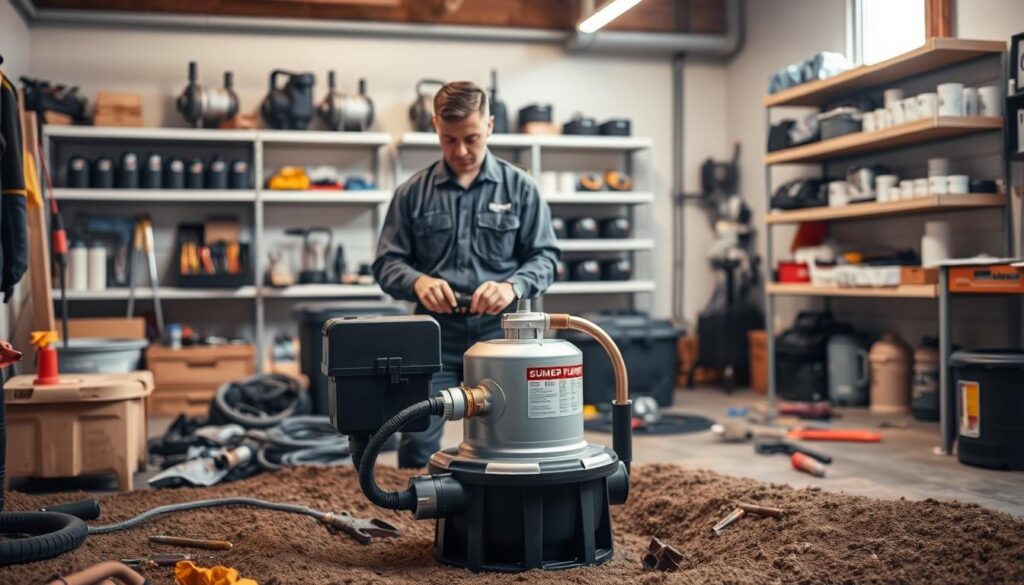
Finding the right plumber for sump pump installation is key. Your basement waterproofing needs skill and care.
When looking for a plumber, consider these important points:
- Verify professional licensing and certifications
- Check years of specialized sump pump installation experience
- Review customer testimonials and local reputation
- Evaluate if they offer a full range of services
A good plumber should give clear, detailed quotes. These should include:
| Quote Components | What to Expect |
|---|---|
| Labor Costs | Detailed breakdown of installation time and rates |
| Equipment Expenses | Itemized list of sump pump and related materials |
| Additional Services | Potential warranty, maintenance, and emergency support |
“The right installer transforms a problem into a reliable basement protection solution.”
Choose local experts who know your area’s waterproofing needs. Ask neighbors for suggestions and check online reviews. This helps you make a smart choice.
Spending time to find the right installer can save you money and avoid water damage problems later.
Basement Waterproofing and Sump Pump Installation
Keeping your basement dry is more than just a sump pump. It’s about a whole system to stop water from getting in. This system tackles all the ways water can enter and how to move it away.
When you hire a plumber for your basement, know what makes a sump pump system great. It’s not just one thing. It’s a whole plan.
Proper Sump Pit Placement and Sizing
Finding the best spot for your sump pit is key. Experts look at a few important things:
- Natural water flow patterns in the basement
- Location of foundation footers
- Accessibility for maintenance
- Proper clearance for pump operation
The perfect sump pit is 14-18 inches wide and 22 inches deep. This size holds enough water and stops the pump from working too much.
Sealing and Drainage System Integration
Waterproofing is more than just a sump pump. Experts build a system that:
- Channels water away from foundation walls
- Prevents moisture infiltration
- Directs water discharge safely away from your home
| Waterproofing Strategy | Key Benefits |
|---|---|
| Interior Perimeter Drainage | Intercepts water before wall penetration |
| Exterior Grading | Redirects surface water away from foundation |
| Sealed Sump Pit | Prevents humidity and musty odors |
With the help of waterproofing experts, you can build a strong defense against basement water. It’s more than just a sump pump.
Battery Backup Systems and Emergency Sump Pump Installation
Keeping your basement dry is more than just a regular sump pump. When storms hit and the power goes out, your home is at risk. That’s why battery backup systems are key in preventing basement flooding.
Battery backup sump pumps are lifesavers when the power is out. They kick in automatically, keeping water out and your home safe from damage.
- Provides continuous pump operation during electrical outages
- Offers additional pumping capacity during extreme flooding
- Reduces risk of basement water damage
When it’s time to replace your sump pump, think about getting a battery backup. Experts can help find the right system for your basement. You’ll find different types, like:
- Standalone battery backup pumps
- Combination primary and backup pump units
- Water-powered backup systems
These systems can run for 5-8 hours, depending on the battery and how much water you get. Getting a good backup system can save you a lot of money on repairs.
Getting it installed right is important. It ensures it works well and lasts long. You might spend $200-$800 for a top-notch system that gives you peace of mind.
Conclusion
Deciding if you need a plumber for a sump pump installation can be tricky. Your situation, skill level, and how complex the job is matter a lot. A professional installation ensures proper water management and keeps your home safe from flooding.
DIY installation might seem like a good way to save money. Simple replacements might be doable with basic tools and some research. But, complex systems or new installations usually need a pro’s touch for the best results and to follow local codes.
Your home’s safety should be your top priority. While saving money is important, professional installation can save you from costly water damage later. Plumbers and basement experts have the skills to do more than just install a pump. They understand how to manage water effectively.
Think about your comfort, skills, and the project’s needs. DIY might be okay for simple replacements. But for full water protection, hiring pros offers peace of mind, precision, and reliability that DIY can’t match.
FAQ
How much does it typically cost to have a sump pump professionally installed?
How much does it typically cost to have a sump pump professionally installed?
FAQ
How much does it typically cost to have a sump pump professionally installed?
The cost for a sump pump installation varies. It can range from 0 to
FAQ
How much does it typically cost to have a sump pump professionally installed?
The cost for a sump pump installation varies. It can range from $300 to $1,200. A simple replacement might cost $300-$600. But, a new installation with digging can cost $500-$1,200.
Prices change based on where you live, the pump type, and extra features like backup systems.
Can I install a sump pump myself, or do I really need a professional?
DIY experts can replace a sump pump. But, for new systems or complex jobs, a pro is best. You need plumbing and electrical skills, plus knowledge of local codes.
If you’re unsure, a pro ensures it’s done right. This avoids water damage.
How long does a typical sump pump installation take?
A pro can install a sump pump in 3-5 hours for a simple swap. For a new setup with digging, it takes 6-10 hours. DIY jobs can take longer, depending on your skills.
How often should I replace my sump pump?
Sump pumps usually last 7-10 years. Look for signs of wear like noises, frequent cycling, or rust. Replace it before it fails completely.
Regular care can extend its life. But, timely replacement is key.
Do I need a battery backup system for my sump pump?
Yes, a battery backup is a good idea, mainly in storm-prone areas. It keeps your pump working during power outages. This protects your basement from floods. The cost is $200-$800 extra.
What’s the difference between a submersible and pedestal sump pump?
Submersible pumps are quieter and more powerful. They sit underwater in the pit. Pedestal pumps are above the pit, making them easier to service but less powerful and noisy.
Your choice depends on your basement’s needs, water volume, and space.
How far should the sump pump discharge water from my house?
Water should be discharged 10-20 feet away from your foundation. The area should slope away from your house. Local codes might have specific rules, so check with a pro.
Can I install a sump pump in an existing home?
Yes, you can install a sump pump in an existing home. This involves digging a pit, installing the pump, and connecting it to drainage. It’s more complex than a replacement and best done by a pro.
,200. A simple replacement might cost 0-0. But, a new installation with digging can cost 0-
FAQ
How much does it typically cost to have a sump pump professionally installed?
The cost for a sump pump installation varies. It can range from $300 to $1,200. A simple replacement might cost $300-$600. But, a new installation with digging can cost $500-$1,200.
Prices change based on where you live, the pump type, and extra features like backup systems.
Can I install a sump pump myself, or do I really need a professional?
DIY experts can replace a sump pump. But, for new systems or complex jobs, a pro is best. You need plumbing and electrical skills, plus knowledge of local codes.
If you’re unsure, a pro ensures it’s done right. This avoids water damage.
How long does a typical sump pump installation take?
A pro can install a sump pump in 3-5 hours for a simple swap. For a new setup with digging, it takes 6-10 hours. DIY jobs can take longer, depending on your skills.
How often should I replace my sump pump?
Sump pumps usually last 7-10 years. Look for signs of wear like noises, frequent cycling, or rust. Replace it before it fails completely.
Regular care can extend its life. But, timely replacement is key.
Do I need a battery backup system for my sump pump?
Yes, a battery backup is a good idea, mainly in storm-prone areas. It keeps your pump working during power outages. This protects your basement from floods. The cost is $200-$800 extra.
What’s the difference between a submersible and pedestal sump pump?
Submersible pumps are quieter and more powerful. They sit underwater in the pit. Pedestal pumps are above the pit, making them easier to service but less powerful and noisy.
Your choice depends on your basement’s needs, water volume, and space.
How far should the sump pump discharge water from my house?
Water should be discharged 10-20 feet away from your foundation. The area should slope away from your house. Local codes might have specific rules, so check with a pro.
Can I install a sump pump in an existing home?
Yes, you can install a sump pump in an existing home. This involves digging a pit, installing the pump, and connecting it to drainage. It’s more complex than a replacement and best done by a pro.
,200.
Prices change based on where you live, the pump type, and extra features like backup systems.
Can I install a sump pump myself, or do I really need a professional?
DIY experts can replace a sump pump. But, for new systems or complex jobs, a pro is best. You need plumbing and electrical skills, plus knowledge of local codes.
If you’re unsure, a pro ensures it’s done right. This avoids water damage.
How long does a typical sump pump installation take?
A pro can install a sump pump in 3-5 hours for a simple swap. For a new setup with digging, it takes 6-10 hours. DIY jobs can take longer, depending on your skills.
How often should I replace my sump pump?
Sump pumps usually last 7-10 years. Look for signs of wear like noises, frequent cycling, or rust. Replace it before it fails completely.
Regular care can extend its life. But, timely replacement is key.
Do I need a battery backup system for my sump pump?
Yes, a battery backup is a good idea, mainly in storm-prone areas. It keeps your pump working during power outages. This protects your basement from floods. The cost is 0-0 extra.
What’s the difference between a submersible and pedestal sump pump?
Submersible pumps are quieter and more powerful. They sit underwater in the pit. Pedestal pumps are above the pit, making them easier to service but less powerful and noisy.
Your choice depends on your basement’s needs, water volume, and space.
How far should the sump pump discharge water from my house?
Water should be discharged 10-20 feet away from your foundation. The area should slope away from your house. Local codes might have specific rules, so check with a pro.
Can I install a sump pump in an existing home?
Yes, you can install a sump pump in an existing home. This involves digging a pit, installing the pump, and connecting it to drainage. It’s more complex than a replacement and best done by a pro.
FAQ
How much does it typically cost to have a sump pump professionally installed?
The cost for a sump pump installation varies. It can range from 0 to
FAQ
How much does it typically cost to have a sump pump professionally installed?
The cost for a sump pump installation varies. It can range from $300 to $1,200. A simple replacement might cost $300-$600. But, a new installation with digging can cost $500-$1,200.
Prices change based on where you live, the pump type, and extra features like backup systems.
Can I install a sump pump myself, or do I really need a professional?
DIY experts can replace a sump pump. But, for new systems or complex jobs, a pro is best. You need plumbing and electrical skills, plus knowledge of local codes.
If you’re unsure, a pro ensures it’s done right. This avoids water damage.
How long does a typical sump pump installation take?
A pro can install a sump pump in 3-5 hours for a simple swap. For a new setup with digging, it takes 6-10 hours. DIY jobs can take longer, depending on your skills.
How often should I replace my sump pump?
Sump pumps usually last 7-10 years. Look for signs of wear like noises, frequent cycling, or rust. Replace it before it fails completely.
Regular care can extend its life. But, timely replacement is key.
Do I need a battery backup system for my sump pump?
Yes, a battery backup is a good idea, mainly in storm-prone areas. It keeps your pump working during power outages. This protects your basement from floods. The cost is $200-$800 extra.
What’s the difference between a submersible and pedestal sump pump?
Submersible pumps are quieter and more powerful. They sit underwater in the pit. Pedestal pumps are above the pit, making them easier to service but less powerful and noisy.
Your choice depends on your basement’s needs, water volume, and space.
How far should the sump pump discharge water from my house?
Water should be discharged 10-20 feet away from your foundation. The area should slope away from your house. Local codes might have specific rules, so check with a pro.
Can I install a sump pump in an existing home?
Yes, you can install a sump pump in an existing home. This involves digging a pit, installing the pump, and connecting it to drainage. It’s more complex than a replacement and best done by a pro.
,200. A simple replacement might cost 0-0. But, a new installation with digging can cost 0-
FAQ
How much does it typically cost to have a sump pump professionally installed?
The cost for a sump pump installation varies. It can range from $300 to $1,200. A simple replacement might cost $300-$600. But, a new installation with digging can cost $500-$1,200.
Prices change based on where you live, the pump type, and extra features like backup systems.
Can I install a sump pump myself, or do I really need a professional?
DIY experts can replace a sump pump. But, for new systems or complex jobs, a pro is best. You need plumbing and electrical skills, plus knowledge of local codes.
If you’re unsure, a pro ensures it’s done right. This avoids water damage.
How long does a typical sump pump installation take?
A pro can install a sump pump in 3-5 hours for a simple swap. For a new setup with digging, it takes 6-10 hours. DIY jobs can take longer, depending on your skills.
How often should I replace my sump pump?
Sump pumps usually last 7-10 years. Look for signs of wear like noises, frequent cycling, or rust. Replace it before it fails completely.
Regular care can extend its life. But, timely replacement is key.
Do I need a battery backup system for my sump pump?
Yes, a battery backup is a good idea, mainly in storm-prone areas. It keeps your pump working during power outages. This protects your basement from floods. The cost is $200-$800 extra.
What’s the difference between a submersible and pedestal sump pump?
Submersible pumps are quieter and more powerful. They sit underwater in the pit. Pedestal pumps are above the pit, making them easier to service but less powerful and noisy.
Your choice depends on your basement’s needs, water volume, and space.
How far should the sump pump discharge water from my house?
Water should be discharged 10-20 feet away from your foundation. The area should slope away from your house. Local codes might have specific rules, so check with a pro.
Can I install a sump pump in an existing home?
Yes, you can install a sump pump in an existing home. This involves digging a pit, installing the pump, and connecting it to drainage. It’s more complex than a replacement and best done by a pro.
,200.
Prices change based on where you live, the pump type, and extra features like backup systems.
Can I install a sump pump myself, or do I really need a professional?
DIY experts can replace a sump pump. But, for new systems or complex jobs, a pro is best. You need plumbing and electrical skills, plus knowledge of local codes.
If you’re unsure, a pro ensures it’s done right. This avoids water damage.
How long does a typical sump pump installation take?
A pro can install a sump pump in 3-5 hours for a simple swap. For a new setup with digging, it takes 6-10 hours. DIY jobs can take longer, depending on your skills.
How often should I replace my sump pump?
Sump pumps usually last 7-10 years. Look for signs of wear like noises, frequent cycling, or rust. Replace it before it fails completely.
Regular care can extend its life. But, timely replacement is key.
Do I need a battery backup system for my sump pump?
Yes, a battery backup is a good idea, mainly in storm-prone areas. It keeps your pump working during power outages. This protects your basement from floods. The cost is 0-0 extra.
What’s the difference between a submersible and pedestal sump pump?
Submersible pumps are quieter and more powerful. They sit underwater in the pit. Pedestal pumps are above the pit, making them easier to service but less powerful and noisy.
Your choice depends on your basement’s needs, water volume, and space.
How far should the sump pump discharge water from my house?
Water should be discharged 10-20 feet away from your foundation. The area should slope away from your house. Local codes might have specific rules, so check with a pro.
Can I install a sump pump in an existing home?
Yes, you can install a sump pump in an existing home. This involves digging a pit, installing the pump, and connecting it to drainage. It’s more complex than a replacement and best done by a pro.
Can I install a sump pump myself, or do I really need a professional?
How long does a typical sump pump installation take?
How often should I replace my sump pump?
Do I need a battery backup system for my sump pump?
What’s the difference between a submersible and pedestal sump pump?
How far should the sump pump discharge water from my house?
Can I install a sump pump in an existing home?
How much does it typically cost to have a sump pump professionally installed?
FAQ
How much does it typically cost to have a sump pump professionally installed?
The cost for a sump pump installation varies. It can range from 0 to
FAQ
How much does it typically cost to have a sump pump professionally installed?
The cost for a sump pump installation varies. It can range from $300 to $1,200. A simple replacement might cost $300-$600. But, a new installation with digging can cost $500-$1,200.
Prices change based on where you live, the pump type, and extra features like backup systems.
Can I install a sump pump myself, or do I really need a professional?
DIY experts can replace a sump pump. But, for new systems or complex jobs, a pro is best. You need plumbing and electrical skills, plus knowledge of local codes.
If you’re unsure, a pro ensures it’s done right. This avoids water damage.
How long does a typical sump pump installation take?
A pro can install a sump pump in 3-5 hours for a simple swap. For a new setup with digging, it takes 6-10 hours. DIY jobs can take longer, depending on your skills.
How often should I replace my sump pump?
Sump pumps usually last 7-10 years. Look for signs of wear like noises, frequent cycling, or rust. Replace it before it fails completely.
Regular care can extend its life. But, timely replacement is key.
Do I need a battery backup system for my sump pump?
Yes, a battery backup is a good idea, mainly in storm-prone areas. It keeps your pump working during power outages. This protects your basement from floods. The cost is $200-$800 extra.
What’s the difference between a submersible and pedestal sump pump?
Submersible pumps are quieter and more powerful. They sit underwater in the pit. Pedestal pumps are above the pit, making them easier to service but less powerful and noisy.
Your choice depends on your basement’s needs, water volume, and space.
How far should the sump pump discharge water from my house?
Water should be discharged 10-20 feet away from your foundation. The area should slope away from your house. Local codes might have specific rules, so check with a pro.
Can I install a sump pump in an existing home?
Yes, you can install a sump pump in an existing home. This involves digging a pit, installing the pump, and connecting it to drainage. It’s more complex than a replacement and best done by a pro.
,200. A simple replacement might cost 0-0. But, a new installation with digging can cost 0-
FAQ
How much does it typically cost to have a sump pump professionally installed?
The cost for a sump pump installation varies. It can range from $300 to $1,200. A simple replacement might cost $300-$600. But, a new installation with digging can cost $500-$1,200.
Prices change based on where you live, the pump type, and extra features like backup systems.
Can I install a sump pump myself, or do I really need a professional?
DIY experts can replace a sump pump. But, for new systems or complex jobs, a pro is best. You need plumbing and electrical skills, plus knowledge of local codes.
If you’re unsure, a pro ensures it’s done right. This avoids water damage.
How long does a typical sump pump installation take?
A pro can install a sump pump in 3-5 hours for a simple swap. For a new setup with digging, it takes 6-10 hours. DIY jobs can take longer, depending on your skills.
How often should I replace my sump pump?
Sump pumps usually last 7-10 years. Look for signs of wear like noises, frequent cycling, or rust. Replace it before it fails completely.
Regular care can extend its life. But, timely replacement is key.
Do I need a battery backup system for my sump pump?
Yes, a battery backup is a good idea, mainly in storm-prone areas. It keeps your pump working during power outages. This protects your basement from floods. The cost is $200-$800 extra.
What’s the difference between a submersible and pedestal sump pump?
Submersible pumps are quieter and more powerful. They sit underwater in the pit. Pedestal pumps are above the pit, making them easier to service but less powerful and noisy.
Your choice depends on your basement’s needs, water volume, and space.
How far should the sump pump discharge water from my house?
Water should be discharged 10-20 feet away from your foundation. The area should slope away from your house. Local codes might have specific rules, so check with a pro.
Can I install a sump pump in an existing home?
Yes, you can install a sump pump in an existing home. This involves digging a pit, installing the pump, and connecting it to drainage. It’s more complex than a replacement and best done by a pro.
,200.
Prices change based on where you live, the pump type, and extra features like backup systems.
Can I install a sump pump myself, or do I really need a professional?
DIY experts can replace a sump pump. But, for new systems or complex jobs, a pro is best. You need plumbing and electrical skills, plus knowledge of local codes.
If you’re unsure, a pro ensures it’s done right. This avoids water damage.
How long does a typical sump pump installation take?
A pro can install a sump pump in 3-5 hours for a simple swap. For a new setup with digging, it takes 6-10 hours. DIY jobs can take longer, depending on your skills.
How often should I replace my sump pump?
Sump pumps usually last 7-10 years. Look for signs of wear like noises, frequent cycling, or rust. Replace it before it fails completely.
Regular care can extend its life. But, timely replacement is key.
Do I need a battery backup system for my sump pump?
Yes, a battery backup is a good idea, mainly in storm-prone areas. It keeps your pump working during power outages. This protects your basement from floods. The cost is 0-0 extra.
What’s the difference between a submersible and pedestal sump pump?
Submersible pumps are quieter and more powerful. They sit underwater in the pit. Pedestal pumps are above the pit, making them easier to service but less powerful and noisy.
Your choice depends on your basement’s needs, water volume, and space.
How far should the sump pump discharge water from my house?
Water should be discharged 10-20 feet away from your foundation. The area should slope away from your house. Local codes might have specific rules, so check with a pro.
Can I install a sump pump in an existing home?
Yes, you can install a sump pump in an existing home. This involves digging a pit, installing the pump, and connecting it to drainage. It’s more complex than a replacement and best done by a pro.
FAQ
How much does it typically cost to have a sump pump professionally installed?
The cost for a sump pump installation varies. It can range from 0 to
FAQ
How much does it typically cost to have a sump pump professionally installed?
The cost for a sump pump installation varies. It can range from $300 to $1,200. A simple replacement might cost $300-$600. But, a new installation with digging can cost $500-$1,200.
Prices change based on where you live, the pump type, and extra features like backup systems.
Can I install a sump pump myself, or do I really need a professional?
DIY experts can replace a sump pump. But, for new systems or complex jobs, a pro is best. You need plumbing and electrical skills, plus knowledge of local codes.
If you’re unsure, a pro ensures it’s done right. This avoids water damage.
How long does a typical sump pump installation take?
A pro can install a sump pump in 3-5 hours for a simple swap. For a new setup with digging, it takes 6-10 hours. DIY jobs can take longer, depending on your skills.
How often should I replace my sump pump?
Sump pumps usually last 7-10 years. Look for signs of wear like noises, frequent cycling, or rust. Replace it before it fails completely.
Regular care can extend its life. But, timely replacement is key.
Do I need a battery backup system for my sump pump?
Yes, a battery backup is a good idea, mainly in storm-prone areas. It keeps your pump working during power outages. This protects your basement from floods. The cost is $200-$800 extra.
What’s the difference between a submersible and pedestal sump pump?
Submersible pumps are quieter and more powerful. They sit underwater in the pit. Pedestal pumps are above the pit, making them easier to service but less powerful and noisy.
Your choice depends on your basement’s needs, water volume, and space.
How far should the sump pump discharge water from my house?
Water should be discharged 10-20 feet away from your foundation. The area should slope away from your house. Local codes might have specific rules, so check with a pro.
Can I install a sump pump in an existing home?
Yes, you can install a sump pump in an existing home. This involves digging a pit, installing the pump, and connecting it to drainage. It’s more complex than a replacement and best done by a pro.
,200. A simple replacement might cost 0-0. But, a new installation with digging can cost 0-
FAQ
How much does it typically cost to have a sump pump professionally installed?
The cost for a sump pump installation varies. It can range from $300 to $1,200. A simple replacement might cost $300-$600. But, a new installation with digging can cost $500-$1,200.
Prices change based on where you live, the pump type, and extra features like backup systems.
Can I install a sump pump myself, or do I really need a professional?
DIY experts can replace a sump pump. But, for new systems or complex jobs, a pro is best. You need plumbing and electrical skills, plus knowledge of local codes.
If you’re unsure, a pro ensures it’s done right. This avoids water damage.
How long does a typical sump pump installation take?
A pro can install a sump pump in 3-5 hours for a simple swap. For a new setup with digging, it takes 6-10 hours. DIY jobs can take longer, depending on your skills.
How often should I replace my sump pump?
Sump pumps usually last 7-10 years. Look for signs of wear like noises, frequent cycling, or rust. Replace it before it fails completely.
Regular care can extend its life. But, timely replacement is key.
Do I need a battery backup system for my sump pump?
Yes, a battery backup is a good idea, mainly in storm-prone areas. It keeps your pump working during power outages. This protects your basement from floods. The cost is $200-$800 extra.
What’s the difference between a submersible and pedestal sump pump?
Submersible pumps are quieter and more powerful. They sit underwater in the pit. Pedestal pumps are above the pit, making them easier to service but less powerful and noisy.
Your choice depends on your basement’s needs, water volume, and space.
How far should the sump pump discharge water from my house?
Water should be discharged 10-20 feet away from your foundation. The area should slope away from your house. Local codes might have specific rules, so check with a pro.
Can I install a sump pump in an existing home?
Yes, you can install a sump pump in an existing home. This involves digging a pit, installing the pump, and connecting it to drainage. It’s more complex than a replacement and best done by a pro.
,200.
Prices change based on where you live, the pump type, and extra features like backup systems.
Can I install a sump pump myself, or do I really need a professional?
DIY experts can replace a sump pump. But, for new systems or complex jobs, a pro is best. You need plumbing and electrical skills, plus knowledge of local codes.
If you’re unsure, a pro ensures it’s done right. This avoids water damage.
How long does a typical sump pump installation take?
A pro can install a sump pump in 3-5 hours for a simple swap. For a new setup with digging, it takes 6-10 hours. DIY jobs can take longer, depending on your skills.
How often should I replace my sump pump?
Sump pumps usually last 7-10 years. Look for signs of wear like noises, frequent cycling, or rust. Replace it before it fails completely.
Regular care can extend its life. But, timely replacement is key.
Do I need a battery backup system for my sump pump?
Yes, a battery backup is a good idea, mainly in storm-prone areas. It keeps your pump working during power outages. This protects your basement from floods. The cost is 0-0 extra.
What’s the difference between a submersible and pedestal sump pump?
Submersible pumps are quieter and more powerful. They sit underwater in the pit. Pedestal pumps are above the pit, making them easier to service but less powerful and noisy.
Your choice depends on your basement’s needs, water volume, and space.
How far should the sump pump discharge water from my house?
Water should be discharged 10-20 feet away from your foundation. The area should slope away from your house. Local codes might have specific rules, so check with a pro.
Can I install a sump pump in an existing home?
Yes, you can install a sump pump in an existing home. This involves digging a pit, installing the pump, and connecting it to drainage. It’s more complex than a replacement and best done by a pro.