
Affiliate Disclosure
Plumber Guide Guys is a participant in the Amazon Services LLC Associates Program, an affiliate advertising program designed to provide a means for sites to earn advertising fees by advertising and linking to Amazon.
Can a Phantom Flush Be Fixed Without Calling a Plumber? Ever wondered why your toilet might flush on its own? This can cost you money and be really frustrating. The good news is, you can often fix this problem yourself without needing a plumber. DIY fixes for phantom flushes are simple and can be done by homeowners who are handy.
Phantom flushing happens when your toilet runs water without anyone pressing the handle. This can waste a lot of water, up to 250 gallons a day. It can also make your water bill much higher. Learning how to fix this problem yourself can save you both time and money.
Key Takeaways
- Phantom flushing wastes significant water resources
- Most toilet leak issues are DIY-friendly
- Basic tools can resolve most phantom flush problems
- Regular toilet maintenance prevents unexpected issues
- Simple repairs can save hundreds on water bills
Table of Contents
Understanding What Ghost Flushing Really Means
Ever had your toilet flush by itself? This is called ghost flushing. It’s a common plumbing issue that might seem spooky but has simple explanations. Phantom flush causes can mess with your home’s water system.
Ghost flushing happens when water leaks from the tank into the bowl. This makes the fill valve think it needs to refill. But it’s not a real flush, and it can waste a lot of water.
How Phantom Flushes Develop in Your Toilet
Leaks in your toilet’s parts can cause ghost flushing. Finding and fixing these leaks is key:
- Deteriorating flapper seal
- Misaligned fill valve
- Worn toilet components
- Mineral buildup blocking proper sealing
The Hidden Cost of Ignoring Ghost Flushing
Silent water waste can cost a lot. A leaking toilet can waste up to 250 gallons a day. This can really up your water bill. Fixing leaks early saves money and prevents damage.
Knowing how your toilet works helps you find and fix problems before they get worse.
Common Causes Behind Your Toilet’s Phantom Flush
Learning about phantom flush causes can save you money and cut down on water waste. A phantom flush, or ghost flushing, occurs when your toilet runs water by itself. This happens without anyone pressing the flush handle. Knowing the main problems helps you fix your running toilet yourself fast and well.
- Faulty Flapper Valve: The most common cause of phantom flushing. Over time, the rubber flapper wears out, not sealing the tank and bowl properly.
- Incorrect Water Levels: If the tank water is too high or too low, it messes up the flushing process.
- Damaged Fill Valve: A broken fill valve can cause water to move unexpectedly and run on and off.
- Chain and Lever Problems: A loose or misaligned flush chain can stop the flapper from closing right.
Water pressure changes and small tank cracks can also lead to ghost flushing. These small issues might seem minor but can waste a lot of water and raise your utility bills.
Spotting these phantom flush causes early can stop bigger plumbing problems and keep your toilet working well. Fixing these issues quickly is key to fixing your running toilet yourself without needing to call an expensive plumber.
How to Diagnose a Ghost Flushing Problem
Fixing a running toilet yourself needs careful skills. If your toilet seems to flush on its own, there are ways to find out why. Catching the problem early can stop water waste and save you money.
Spotting a ghost flush requires a few steps you can learn at home. The food dye test is a top method. It shows hidden leaks in your toilet tank.
Performing the Food Dye Test
To do the food dye test, just follow these steps:
- Remove the toilet tank lid carefully
- Flush the toilet to clear the tank
- Add several drops of food coloring into the tank water
- Wait 20-30 minutes without flushing
- Check if colored water appears in the toilet bowl
If you see colored water in the bowl without flushing, you’ve found a leak in your toilet’s internal mechanism. This easy test can quickly show you where the problem is.
Listening for Water Leaks and Running Water
Another way to find problems is to listen closely. Look for any water sounds when the toilet isn’t being used. Small running or trickling sounds usually mean there’s a leak.
Your water bill can also tell you something. A sudden jump in cost might mean your toilet is flushing by itself. By being alert and using these methods, you can fix toilet issues before they get worse.
Can a Phantom Flush Be Fixed Without Calling a Plumber
Good news for homeowners with phantom flush problems! Most toilet issues can be fixed without a plumber. You can solve these water waste problems with basic tools and patience.
To figure out if you can fix a phantom flush without a plumber, think about these things:
- How complex the toilet problem is
- How comfortable you are with basic repairs
- If you have the parts you need
- The exact symptoms of the ghost flushing
Can you fix a phantom flush without a plumber? Usually, yes! Most phantom flush problems come from simple part failures. You can fix these yourself. Common repairs include:
- Replacing a worn-out flapper valve
- Adjusting the water level in the tank
- Fixing loose or damaged chain connections
- Cleaning or replacing the fill valve
Remember, while DIY repairs often work, some problems need a pro. If you’ve tried many fixes and nothing works, it’s time to call a plumber.
Pro tip: Always shut off the water supply before starting any toilet repairs to avoid water damage.
With the right tools and approach, you can fix most phantom flush problems yourself. This can save you money and fix the issue in your own bathroom.
Replacing a Worn or Faulty Flapper Valve
A faulty flapper valve often causes phantom flushing in home toilets. Learning how to fix a flapper valve can save you money and prevent water waste. This guide will show you how to replace your toilet’s flapper.
Toilet flappers wear out over time, leading to slow leaks and ghost flushing. It’s important to know when to replace this key part to keep your bathroom’s plumbing working well.
Selecting the Right Replacement Flapper
Choosing the right flapper is important. Here are some things to think about:
- Measure your current flapper’s size (2-inch or 3-inch)
- Check your toilet’s brand and model
- Look for chlorine-resistant materials
- Consider universal versus specific replacement flappers
Step-by-Step Flapper Replacement Instructions
Follow these steps for a successful flapper valve toilet fix:
- Shut off the water supply valve near the toilet base
- Flush and drain the tank completely
- Remove the old flapper by detaching the chain
- Clean the flush valve seat thoroughly
- Install the new flapper carefully
- Reconnect the chain with proper slack
- Turn the water supply back on
| Flapper Type | Pros | Cons |
|---|---|---|
| Standard Rubber | Inexpensive | Wears out quickly |
| Chlorine-Resistant | Longer lifespan | Higher cost |
| Universal | Fits most toilets | May not seal perfectly |
Pro tip: Always perform a dye test after installation to ensure a proper seal and prevent future phantom flushing.
Adjusting Water Levels and Fill Valve Issues
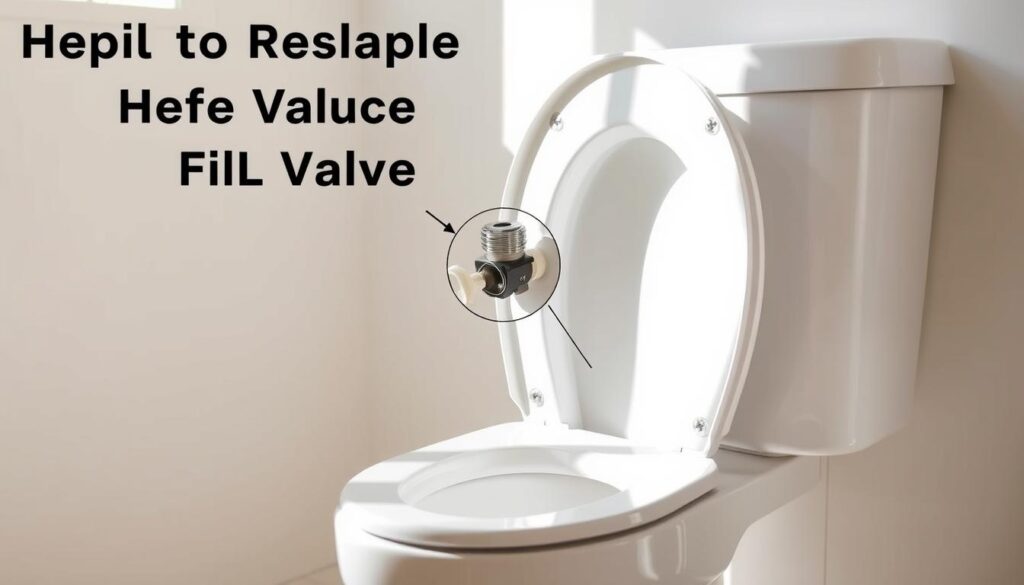
Water levels in your toilet tank are very important. They help stop phantom flushing. If the water level is off, it can lead to leaks and higher water bills.
Finding the right water level is essential. Your tank should have water about one inch below the top of the overflow tube. The wrong level can cause many issues:
- Water trickling into the overflow tube
- Incomplete or weak toilet flushes
- Continuous running of tank water
To fix water level problems, follow these steps for replacing the fill valve:
- Find the fill valve adjustment mechanism
- Determine if your fill valve is a float ball or float cup
- Adjust in small steps
- Flush and check the water level
- Keep adjusting until it’s just right
If these steps don’t solve your problem, you might need a new fill valve. Look out for signs like constant running, loud noises, or trouble shutting off.
Pro tip: Always turn off the water supply before making any adjustments or replacements to prevent water damage.
Fixing Problems with the Flush Handle and Chain
Phantom flushing often comes from issues with your toilet’s flush handle and chain. Knowing how to stop this starts with checking these key parts.
Your toilet’s flush handle and chain are key to stopping ghost flushing. If they don’t work right, they can lead to water leaks and unexpected flushing.
Chain Tension and Alignment Matters
Getting the chain tension right is vital for fixing phantom flush issues. Here’s what to check:
- Make sure there’s about ½ inch of slack when the flapper is closed
- Look for kinks or corrosion in the chain
- Check if the chain is getting caught under the flapper
Handling Flush Lever Problems
A sticking or loose flush handle can cause flushing problems. Look out for these signs:
- If the handle doesn’t go back to its normal position
- If you see rust or mineral buildup
- If the mounting connections are loose
Quick fixes include cleaning with vinegar, adjusting the nut, or replacing the handle if it’s worn out. Fixing these small problems can stop phantom flushing and save water at home.
Preventing Future Phantom Flushes in Your Home

Keeping your toilet in good shape is key to saving water. Regular checks can save you money and avoid plumbing problems. Simple steps can keep your toilet working well.
Begin with a quick monthly check. Your list should include:
- Inspect the toilet flapper for wear and discoloration
- Check the flush chain for proper tension
- Verify water levels in the tank
- Listen for unusual running water sounds
- Test the flush handle’s smooth operation
Water quality affects your toilet’s parts. Hard water and chemical treatments can damage rubber parts. Pick cleaning products that won’t harm your toilet.
Choose good-quality parts for repairs. Cheap parts might seem good, but they often need more fixes. Look for flappers that last long and resist chlorine.
Think about getting new toilet tech. Systems like adjustable flush and dual-flush use less water. They also cut down on phantom flushing.
Remember: Five minutes of monthly maintenance can save hundreds of gallons of water and prevent costly repairs.
When to Call Professional Plumbers for Help
At times, your DIY efforts may not be enough. While you can fix a running toilet yourself, there are times when you need a pro.
Knowing when to call a plumber can prevent costly mistakes and water damage. Your DIY spirit is great, but knowing your limits is key to protecting your plumbing.
Critical Signs Requiring Professional Intervention
- Persistent phantom flushing after multiple DIY repairs
- Visible cracks in the toilet tank
- Complex water supply connection issues
- High-end or specialized toilet models
Professional plumbers have skills and tools beyond what you can do at home. They can find problems you might miss.
| Problem Indicator | Professional Intervention Needed |
|---|---|
| Extensive Tank Damage | Full Assessment and Possible Replacement |
| Recurring Phantom Flush | Advanced Diagnostic Testing |
| Complex Component Failure | Specialized Repair Techniques |
If fixing a running toilet becomes too hard, call a plumber. They offer solutions that prevent future problems and keep your toilet working well.
Choosing the Right Plumbing Professional
- Check verified online reviews
- Verify state licensing
- Request detailed estimates
- Ask about service warranties
Choosing professional help can save you money. It prevents water damage and repeated repairs that don’t work.
Conclusion
Dealing with a phantom flush doesn’t have to be expensive. You can fix it yourself and save money on plumbing services. Most issues are easy to find and fix with simple tools and a little know-how.
Understanding why your toilet is flushing by itself is key. Problems like worn-out flapper valves or a misaligned chain can be fixed easily. Yes, you can fix a phantom flush without a plumber, often in less than an hour.
Regular checks help prevent phantom flushes. By keeping up with maintenance, you protect your plumbing and save water. While DIY fixes work for many problems, don’t hesitate to call a pro for tough issues.
With this guide, you’re ready to handle your toilet’s needs. Use your new skills to save money and keep your bathroom working well. You’ve got this!