
Affiliate Disclosure
Plumber Guide Guys is a participant in the Amazon Services LLC Associates Program, an affiliate advertising program designed to provide a means for sites to earn advertising fees by advertising and linking to Amazon.
How to Winterize Plumbing? Are you ready to avoid a $5,000 plumbing disaster this winter? Most homeowners aren’t. Seasonal plumbing maintenance is key to protect your wallet from winter emergencies.
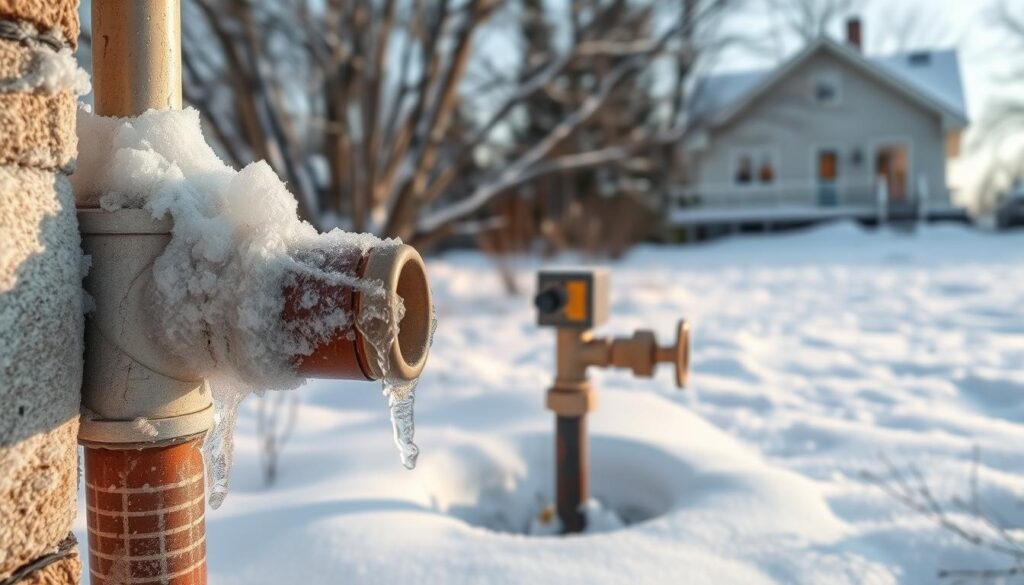
Protecting your pipes is vital for every homeowner in the U.S. A recent study found that 23% of homes face frozen pipes or heating failures in winter. These issues can cost thousands of dollars. Learning how to winterize plumbing can save you from these high costs.
This guide will show you how to protect your plumbing system. You’ll learn how to keep your pipes safe, prevent freezing, and maintain your home’s structure during winter.
Key Takeaways
- Winterizing plumbing can prevent costly damage
- Proactive maintenance saves money on emergency repairs
- Both indoor and outdoor pipes need protection
- Timing is key for effective winterization
- DIY methods can complement professional services
Table of Contents
Why Winterizing Your Plumbing System Is Essential
Winter can be tough on your home’s plumbing. Knowing how important it is to winterize your plumbing can save you from big headaches and bills. Keeping your pipes safe is not just a good idea—it’s a must for anyone living in cold areas.
The Risks of Frozen Pipes
As temperatures fall, stopping pipes from freezing is key. Water inside pipes grows by about 9% when it freezes. This can lead to serious damage to your plumbing.
- Potential structural damage to walls and floors
- Risk of massive water leaks
- Expensive emergency repair costs
- Potential mold growth from water damage
Cost of Prevention vs. Emergency Repairs
Protecting your pipes in winter is a smart move. Think about the money you’ll save by taking action early:
| Winterization Method | Estimated Cost | Potential Savings |
|---|---|---|
| DIY Winterization | $200-$500 | Up to $1,200 annually |
| Professional Winterization | $400-$1,500 | Prevents $5,000+ in possible damage |
The numbers are clear. By investing in winterizing your plumbing now, you can avoid thousands of dollars in water damage and repair costs. Whether you do it yourself or hire a pro, you’ll get great protection for your home in the cold months.
When to Start Winterizing Your Plumbing
Timing is key when getting your plumbing ready for cold weather. You need to plan your seasonal plumbing maintenance well before winter hits.
The best time to start winterizing your pipes is 4-6 weeks before the first frost. The exact timing varies by region in the United States.
- Northern states: Start by Labor Day
- Southern regions: Wait until around Halloween
- Watch for nighttime temps below 45°F
Keep an eye on local weather forecasts. Sudden cold snaps can damage your plumbing. It’s better to be proactive than reactive with your winterization plans.
“Prevention is always cheaper than repair when it comes to winter plumbing protection.”
In early fall, check exposed pipes and insulation. Also, prepare outdoor water sources. Early action helps avoid frozen pipes and costly repairs.
How to Winterize Plumbing: Step-by-Step Process
Winter can be tough on your home’s plumbing. DIY winterization can save you money and prevent damage. It’s key for those in cold areas.
- Foam pipe insulation sleeves
- Caulking gun
- Weather-stripping
- Insulated faucet covers
- Utility knife
Insulating Exposed Pipes
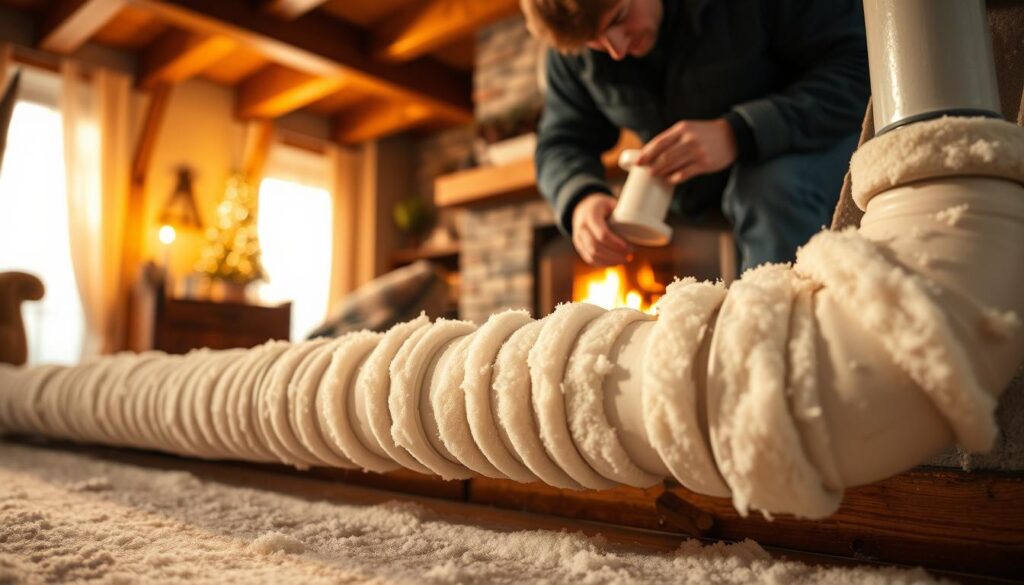
Pipes in cold spots like basements and attics are at risk. Buy foam insulation for about $2 a foot. Measure and cut it to fit, then wrap it around pipes.
Disconnecting and Draining Outdoor Hoses
Take off outdoor hoses before it gets too cold. Drain them by holding them up. Then, store them in a warm place to avoid damage.
| Location | Winterization Risk | Recommended Action |
|---|---|---|
| Basement Pipes | High Freezing Risk | Full Insulation Coverage |
| Attic Pipes | Moderate Freezing Risk | Comprehensive Insulation |
| Outdoor Faucets | Extreme Freezing Risk | Disconnect and Cover |
Sealing Air Leaks Around Plumbing
Cold air can ruin your winter prep. Check for gaps around pipes. Use caulk or foam to block air leaks. Pro tip: On windy days, move your hand around pipe entries to detect cold air movement.
By doing these DIY steps, you’ll lower the chance of frozen pipes and water damage.
Protecting Indoor Pipes from Freezing Temperatures
Winter pipe protection is key to keeping your home’s pipes safe. It’s important to winterize your indoor plumbing, more so in areas with harsh winters.
Many people don’t realize how vulnerable their home’s pipes are. Pipes near outside walls, in cold basements, or near windows are at high risk of freezing.
- Maintain indoor temperature at least 55°F consistently
- Open cabinet doors under sinks to allow warm air circulation
- Keep interior doors open to promote heat distribution
- Seal air leaks around pipe locations
Preventing frozen pipes is not just about heating. Good air flow is also essential. Make sure to remove cleaning products from open cabinets to keep them safe from children and pets. This lets warm air reach the pipes.
Don’t forget about your garage and basement. Keep your garage door closed to keep cold air out. For basement pipes, using space heaters safely can help keep them warm.
Consistent heating is always more cost-effective than repairing damaged pipes after a freeze.
By using these winter pipe protection tips, you can keep your plumbing safe. This way, you can avoid expensive repairs during the coldest months.
Winterizing Outdoor Plumbing and Faucets
It’s key to protect outdoor plumbing from freezing to avoid costly damage. Winter can harm exposed pipes and faucets. So, winterizing outdoor plumbing is a must for home maintenance.
Outdoor plumbing is most at risk in winter. Draining water lines before winter can stop pipe bursts and save on repairs.
Installing Insulated Faucet Covers
Here’s how to protect outdoor faucets:
- Find the shut-off valve for each exterior faucet
- Turn off the water supply fully
- Drain any water left in the line
- Put on foam insulated covers
Insulated faucet covers are easy to use and affordable. They cost between $15-30 for a multi-pack and can last for many winters.
| Faucet Cover Type | Cost | Protection Level |
|---|---|---|
| Foam Dome Cover | $5-10 each | Good |
| Hard Plastic Cover | $10-15 each | Better |
| Frost-Free Hose Bib | $30-50 | Best |
Draining Irrigation Systems
Don’t forget to winterize your irrigation system too:
- Turn off the main water supply to the system
- Drain all irrigation lines fully
- Insulate above-ground valves and parts
- Think about getting a pro to winterize it for you
Getting a pro to winterize your irrigation system costs $100-200. It’s a good investment to prevent freeze damage.
Preparing Your Home Before Winter Vacation
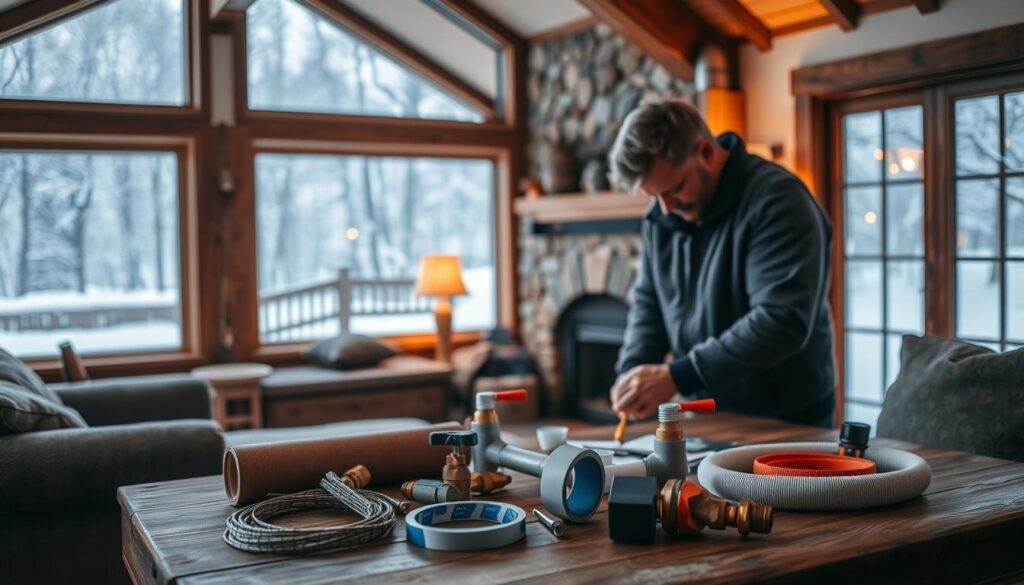
Planning a winter vacation means you need to protect your home’s plumbing. It’s important to winterize your home to avoid water damage and expensive repairs while you’re away.
Before you leave, make sure to take these important steps for winterizing your plumbing:
- Locate and shut off the main water supply valve
- Drain all water lines before winter temperatures hit
- Open faucets to release remaining water pressure
- Flush toilets to empty water tanks
Draining water lines before winter is a must. Turn the main water valve clockwise completely. Open all faucets in your home, letting water drain until nothing flows. This step removes freezing hazards from your pipes.
Keeping your home at the right temperature is also key. Set your thermostat to at least 55°F while you’re away. Using a programmable thermostat helps keep a safe temperature without wasting energy.
Pro tip: Ask a trusted neighbor or friend to check on your home periodically during your absence.
More steps to winterize your home include:
- Set water heater to vacation mode
- Unplug non-essential appliances
- Ensure all windows and doors are sealed
- Add RV antifreeze to toilet bowls and drains
By taking these vacation winterization steps, you’ll keep your home’s plumbing safe. This way, you can enjoy your winter vacation without worry.
Signs Your Pipes May Be Frozen
Winter can be tough on homes, with pipes freezing a big worry. Spotting frozen pipes early can prevent expensive damage and repairs.
Spotting frozen pipes needs you to watch for certain signs. Knowing these signs helps you act fast to avoid big problems.
No Water Flow from Faucets
One clear sign of frozen pipes is when faucets don’t work. If you turn on a faucet and no water comes out, it’s likely a frozen pipe. Be careful if:
- Only one faucet is affected
- Multiple fixtures show no water flow
- Water pressure is significantly reduced
Frost on Visible Pipes
Looking at exposed pipes can tell you a lot. Check for these signs:
| Visual Indicator | Meaning |
|---|---|
| Frost on pipe exterior | Strong indication of freezing |
| Condensation | Potential ice formation risk |
| Pipe bulging | Immediate risk of burst pipe |
Strange Sounds from Your Plumbing System
Unusual sounds from your pipes can mean trouble. Listen for:
- Banging or clanking noises
- Whistling sounds when water runs
- Unusual vibrations in walls
“Early detection of frozen pipes can prevent thousands of dollars in possible water damage.” – Plumbing Safety Association
If you think your pipes might be frozen, act fast. Turn off your main water supply. Try warming them gently. If unsure, call a professional plumber.
Professional vs. DIY Plumbing Winterization
Choosing between professional and DIY plumbing winterization can be tough. It depends on your skills, the complexity of your home, and your budget.
Cost is a big factor in seasonal plumbing maintenance. DIY winterization costs $200 to $500 for materials. Professional services can cost $400 to $1,500, depending on your home’s size and complexity.
When to Choose Professional Services
- Complex plumbing systems with multiple levels
- Lack of personal plumbing expertise
- Large irrigation systems
- Vacant homes during winter
- Older pipes with previous freeze damage
DIY Winterization Tasks
- Install basic pipe insulation
- Disconnect garden hoses
- Manage thermostat settings
- Open cabinet doors for better air circulation
- Perform basic maintenance checks
Professional winterization services offer full protection. They inspect your system, use top-grade insulation, maintain your water heater, and provide emergency repairs.
| Service Type | Cost Range | Complexity |
|---|---|---|
| DIY Winterization | $200-$500 | Low to Moderate |
| Professional Services | $400-$1,500 | High |
A mix of DIY and professional services is often the best choice. Tackle simple tasks yourself and hire pros for the tough stuff. This way, you save money and get thorough protection.
Winterizing your home is a smart investment. It helps avoid expensive damage from freezing and keeps your plumbing working all winter.
Conclusion
Learning to winterize plumbing is key to protecting your home and saving money. By following a complete winterization guide, you can avoid expensive pipe damage. This also helps lower your winter energy bills. Most homeowners save $800-1,200 a year by being prepared.
The steps for RV plumbing winterization and protecting your home are important. Whether you’re new to homeownership or have experience, using winterization techniques can greatly reduce the risk of frozen pipes and water damage.
Experts say to start winterizing 4-6 weeks before cold weather hits. This gives you time to insulate pipes, seal air leaks, and prepare your home for winter. Spending $200-500 on DIY materials or $400-1,500 for a pro is much cheaper than fixing emergencies.
You now know how to protect your plumbing system. By using the strategies from this guide, you’ll keep your property safe, lower energy costs, and feel secure during the cold months. Remember, every frozen pipe problem can be avoided with the right preparation and care.