
Affiliate Disclosure
Plumber Guide Guys is a participant in the Amazon Services LLC Associates Program, an affiliate advertising program designed to provide a means for sites to earn advertising fees by advertising and linking to Amazon.
How to Plumb a Washing Machine Drain Pan? Are you worried about water damage from a washing machine leak? A simple installation can protect your home from disaster.
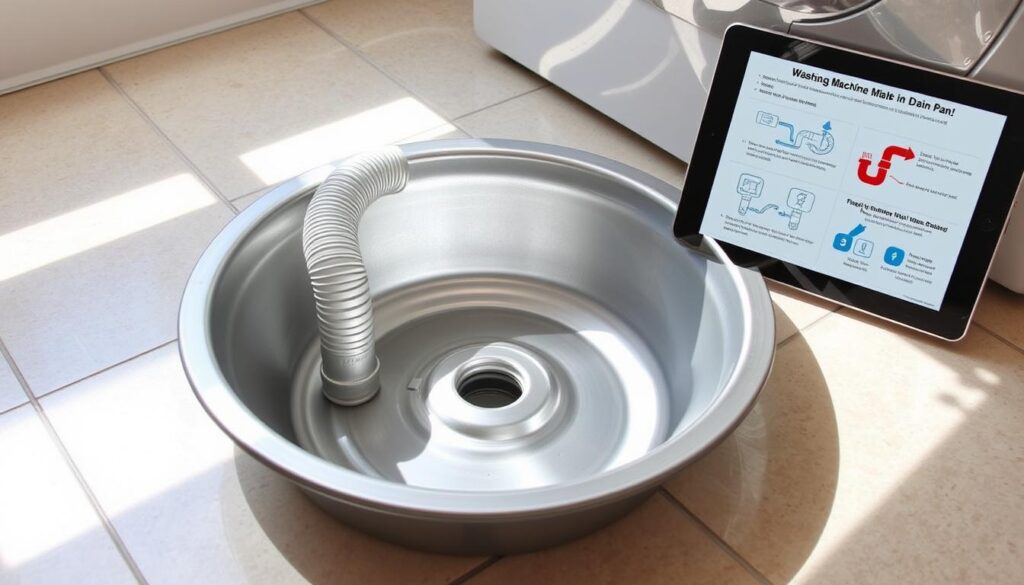
A washing machine drain pan is your first defense against water damage. Learning to plumb one is a key step in protecting your home. It keeps your floors, walls, and foundation safe from costly repairs.
Installing a washing machine drain pan is more than a home improvement. It’s a smart investment in your property’s future. This guide will show you how to prevent water damage and keep your laundry area dry and safe.
Key Takeaways
- Washing machine drain pans prevent expensive water damage
- Professional installation isn’t always necessary
- Proper plumbing connection is key for effectiveness
- Regular checks keep the drainage system working well
- Different materials offer different levels of durability
Table of Contents
Understanding Washing Machine Drain Pans and Their Importance
Water damage can quietly harm your home’s structure. That’s why protecting against washing machine leaks is key. Drain pans act as your first defense against water damage in your laundry area.
A washing machine drain pan is a special tray to catch water leaks. It stops water damage before it starts. These trays are vital for keeping your home safe from water damage.
What Exactly Is a Washing Machine Drain Pan?
A drain pan is like a shield for your floors. It’s a strong tray placed under your washing machine. It has features like:
- Raised edges to hold water
- A sloped bottom for easy water flow
- A built-in drain to move water away
Why Your Home Needs Water Damage Prevention
Water leaks can lead to huge and costly damage. The Environmental Protection Agency says an average home loses about 10,000 gallons of water a year through leaks.
Protecting Against Mold and Mildew Growth
Moisture is perfect for mold growth. Within 24-48 hours, mold can start growing on damp surfaces. This can harm your home’s air and your family’s health. A drain pan stops this by quickly moving water away.
Prevention is always more cost-effective than repair when it comes to water damage.
Types of Washing Machine Drain Pans: Choosing the Right Material
When setting up your washer drain pan, you’ll find two main materials: plastic and metal. Each has its own benefits for keeping your laundry area safe from water damage.
Plastic drain pans are a budget-friendly choice. Made from high-impact polypropylene, they offer several advantages:
- Cost-effective pricing ($20-$60)
- Lightweight design for easy installation
- Natural rust and corrosion resistance
- Flexible for various laundry room configurations
Metal drain pans are a sturdier option. Made from stainless steel or aluminum, they last longer and perform better. Their benefits include:
- Enhanced strength for heavier washing machines
- Minimal risk of warping or cracking
- Extended lifespan
- Ideal for high-use laundry environments
Choosing the right washer drain pan depends on your budget, machine weight, and usage. Plastic pans are good for lighter machines and those on a tight budget. Metal pans offer the best protection for heavy-duty washers.
Prices vary from $20 for basic plastic pans to $160 for top metal models. Think about your needs to pick the best material for your laundry room.
Essential Safety Precautions and Setup Before Installation
Getting ready for a washing machine drain pan installation is key. It’s all about safety and avoiding damage. Proper steps can keep you safe and your home intact.
First, understand the safety steps for your protection and your home’s. Moving a heavy appliance is tough. So, be well-prepared.
Lifting Safety and Weight Considerations
When lifting a washing machine, follow these tips:
- Know the weight of your washing machine (usually 180-200 pounds)
- Use your legs to lift, not your back
- Get at least two people to help
- Use dollies or moving equipment if you can
Preparing Your Washing Machine for Pan Installation
Before you start, do these important steps:
- Check your washing machine’s manual
- Unplug it from the power outlet
- Turn off the water supply
- Drain all water from the hoses
- Make sure electrical cords are secure
Protecting Your Floors and Walls During the Process
To avoid damage, take these precautions:
- Use blankets or pads to cover furniture
- Don’t put too much weight on the drain pan walls
- Don’t lay the washer on its side
- Clear the area of any obstacles
Safety tip: Never move a heavy washing machine by yourself. Always get help to avoid injuries or damage.
How to Plumb a Washing Machine Drain Pan
Setting up a drain pan for your washing machine needs some prep and the right tools. A well-installed drain pan stops water damage and keeps your home safe from leaks. This guide will show you how to connect your drain pan correctly.
Tools and Materials for Installation
First, get these important tools for a good drain pan setup:
- Power drill with 1-1/4″ titanium step bit
- Silicone caulk
- Pipe wrench
- Measuring tape
- Safety goggles
- PVC pipe for washing machine drain
- Hose clamps
- Hacksaw
Connecting the Drain Pan to Plumbing System
For a good drain pan connection, measure right and install carefully. Place your drain pan where it’s supposed to go, making sure it’s level and fits with your plumbing.
- Mark the drain hole location accurately
- Drill a clean 1-1/4″ hole using the titanium step bit
- Apply silicone caulk around the PVC fitting
- Align the pan’s drain tube with the floor drain
- Secure connections using hose clamps
Installing PVC Pipe for Proper Drainage
When putting in PVC pipe for your washing machine drain, measure and cut it to the right length. Make sure the connection is tight and leak-free between the drain pan and your plumbing. Use a hacksaw to cut the pipe neatly, making sure water flows well.
Remember, a good drain pan plumbing connection is key to avoiding water damage and keeping your laundry room safe from flooding.
Installation Methods: Getting the Pan Under Your Washing Machine
Installing a washing machine drain pan needs careful planning and the right techniques. There are different ways to install a drain pan. These methods help protect your laundry room from water damage and make setup easier.
When placing your drain pan, you have several lifting techniques to choose from:
- Traditional Two-Person Lift Method
- Needs two people on opposite sides of the washing machine
- Lift the machine slightly off the ground
- Slide the drain pan underneath
- Carefully lower the washing machine into the pan
- Ergonomic Strap Technique
- Use forearm or waist lifting straps
- Reduces back strain
- Provides better leverage for heavy appliances
- Minimizes risk of personal injury
- 2×4 Wood Plank Method
- Creates a stable platform for moving the washing machine
- Allows gradual positioning over the drain pan
- Reduces direct lifting requirements
If DIY installation makes you nervous, consider hiring a professional. Experts can place your washing machine correctly and avoid damage to your machine or floor.
| Installation Method | Difficulty Level | Equipment Needed |
|---|---|---|
| Two-Person Lift | Moderate | Extra pair of hands |
| Strap Technique | Easy | Lifting straps |
| 2×4 Wood Plank | Complex | Multiple 2×4 planks |
After installation, check your washing machine’s level. Also, think about adding anti-vibration pads to stop it from moving too much during use.
Washing Machine Drain Pan Plumbing Code Requirements
Understanding drain pan plumbing codes can be tricky. Building codes for drain pans differ a lot in different places. It’s very important to know the local rules before you start.
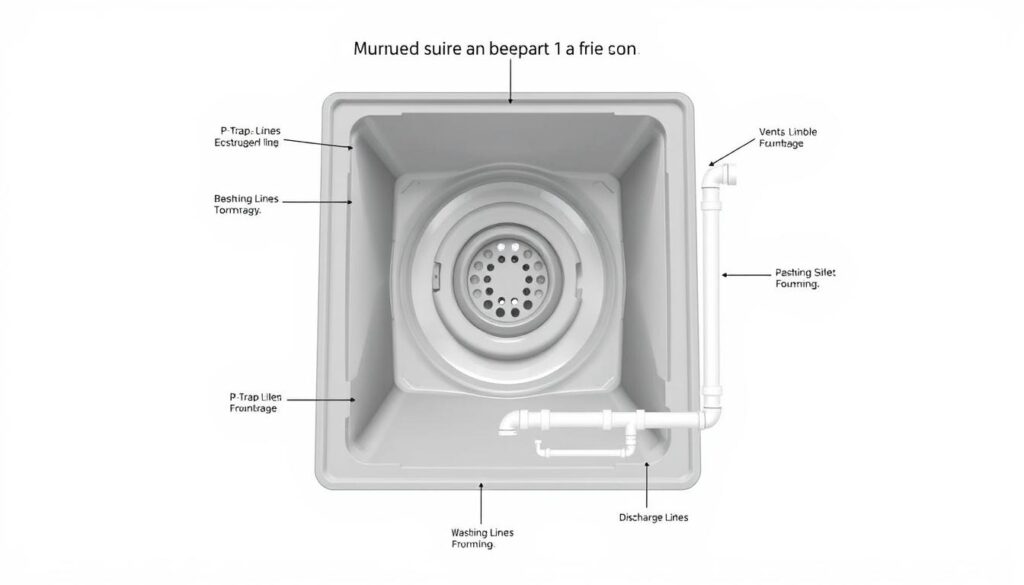
Knowing your local building codes is key to protecting your home. It also makes sure your washing machine drain pan is installed right. Each city or town has its own rules that can affect your project.
Understanding Local Building Code Compliance
Your local building department knows the specific rules for drain pans. You should look into a few important things:
- Minimum wall height requirements
- Approved pan materials
- Drainage system connection standards
- Permit necessity for installation
Drainage System Standards and Regulations
Drain pan plumbing codes have specific rules for installation. Important things to think about include:
- Proper drainage connection methods
- Minimum pipe size specifications
- Acceptable pipe materials (PVC, CPVC, ABS)
- Venting requirements
Pro tip: Talk to a licensed plumber who knows the local codes. This ensures you follow the rules and keeps your home safe.
Compliance isn’t just about avoiding fines—it’s about protecting your property and maintaining insurance coverage.
Setting Up Your Laundry Room Drainage Systems
Setting up a good laundry room drainage system is more than just a drain pan. You need to plan well to avoid water damage at home.
A good laundry room drainage system has a few key parts:
- Proper overflow drain installation
- Strategic pipe connections
- Water management solutions
When you design your laundry room drainage, remember these important points:
- Drain Pan Placement: Make sure the pan is level and ready to catch leaks
- Pipe Connection: Connect the drain pan to your home’s plumbing
- Water Removal Path: Make a clear path for water to leave safely
Your drainage system should have many safety features. Automatic shutoff valves and moisture sensors help prevent flooding. They work together to keep your home safe from water damage.
If you have a laundry room upstairs, you need a special drainage plan. This plan uses drain pans, detection systems, and fast action to protect your home from water problems.
Professional tip: Always check local building codes to ensure your washing machine drainage setup meets regional requirements.
Maintaining Your Washing Machine Drain Pan for Optimal Performance
Keeping your washing machine drain pan in good shape is key to avoiding water damage. Regular care helps it work well for a long time and prevents sudden problems.
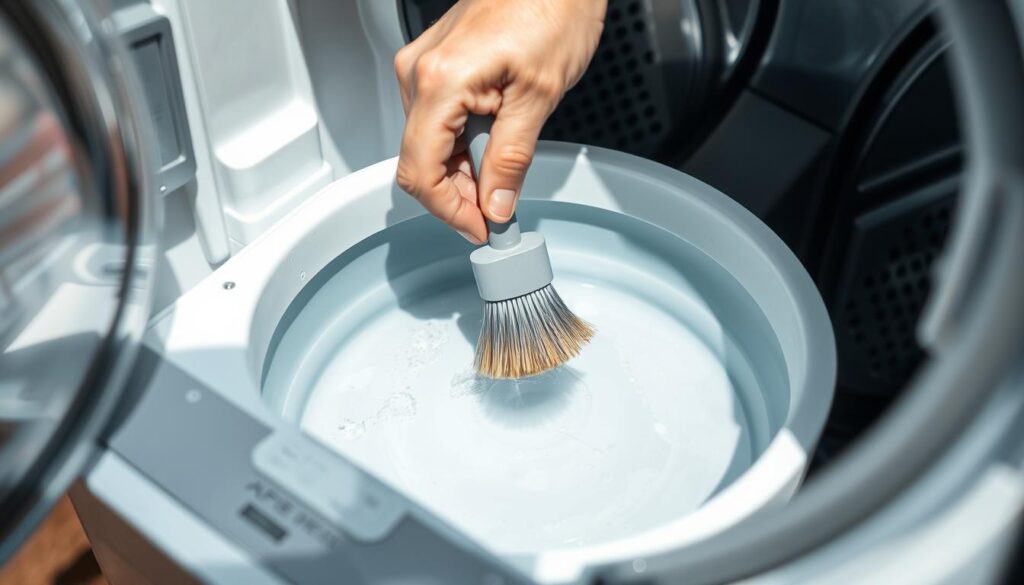
- Do quarterly cleaning procedures
- Check it monthly with your eyes
- Make sure the drainage works right
- Fix any problems right away
Regular Cleaning Procedures
Cleaning your washing machine drain pan is easy and quick. Just lift the machine a bit and clean the pan with a soft detergent and water. Stay away from harsh chemicals that can harm the pan.
Focus on removing:
- Detergent residue
- Dirt that builds up
- Lint that might clog
- Debris from moisture
Inspection and Troubleshooting Common Issues
Spotting problems with your drain pan is important. Look out for signs like slow draining, cracks, or water pooling. These signs can help you catch and fix issues early.
Common problems include:
- Blocked drain openings
- Sediment buildup
- Minor damage
- Installation mistakes
If you keep running into the same issues, it’s time for a pro to check it. They can make sure your drain pan keeps protecting your laundry area from water damage.
Cost Considerations and Professional Installation Options
Homeowners need to know the cost of installing a drain pan to prevent water damage. The price of washing machine pans changes based on the material and how hard it is to install.
- Drain pan materials:
- Plastic pans: $20 – $60
- Metal pans: $70 – $160
- Additional installation materials:
- PVC pipes: $5 – $15
- Silicone caulk: $5 – $10
- Pipe fittings: $3 – $10
Getting a professional to install a drain pan costs between $100 and $300. This might seem pricey, but it’s a small price to pay to avoid expensive water damage repairs.
A professional installation is your best insurance against costly water damage and possible home repairs.
| Service Type | Estimated Cost | Recommended For |
|---|---|---|
| DIY Installation | $30 – $200 | Experienced homeowners |
| Professional Installation | $100 – $300 | Complex setups, heavy machines |
Pro tip: Consider hiring professionals if you have a heavy washing machine or lack experience with plumbing installations.
When planning your budget for a washing machine drain pan, remember the initial cost is low compared to the cost of water damage. Protect your home by investing in professional drain pan installation.
Conclusion
A washing machine drain pan is a smart choice for your home’s safety. Learning about washing machine drain pan installation helps protect your property from water damage. This damage could cost thousands to fix.
Your home needs protection. Modern drain pans catch leaks and stop water from damaging floors, walls, and foundations. They work for new and old washing machines alike.
The main point is clear: installing a drain pan can save you a lot of trouble and money. It’s important to choose the right materials and follow local building codes. Each step helps prevent water damage.
Your safety is the most important thing. If you’re not sure about installing a drain pan, get help from a professional plumber. Protecting your home is worth the effort and cost.