
Affiliate Disclosure
Plumber Guide Guys is a participant in the Amazon Services LLC Associates Program, an affiliate advertising program designed to provide a means for sites to earn advertising fees by advertising and linking to Amazon.
How to Do Plumbing for a Sink? Are you tired of paying high fees for a simple sink installation? You can save hundreds of dollars by doing it yourself.
Sink plumbing might look hard, but with the right help, you can become a DIY pro. This guide will show you how to do it step by step.
Whether you’re updating your kitchen or putting in a new sink, knowing plumbing basics is key. It lets you do the job well and fast.
Key Takeaways
- Learn essential plumbing skills for sink installation
- Save money by completing the project yourself
- Understand critical tools and techniques
- Gain confidence in home improvement projects
- Prevent costly professional installation fees
Table of Contents
Understanding Your Sink Plumbing System
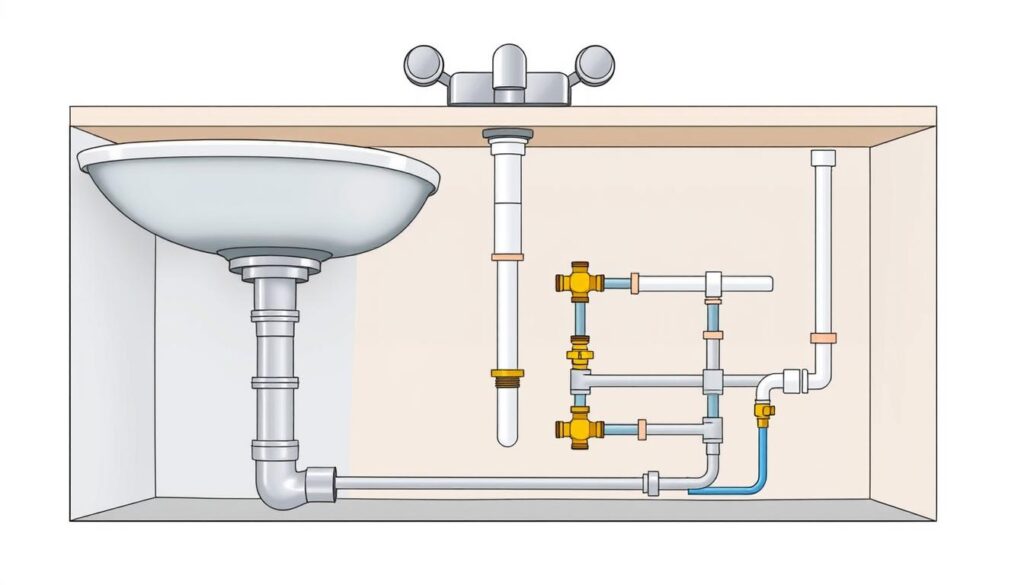
Exploring sink plumbing might seem hard, but it’s simpler when you know the basics. Your home’s plumbing is a complex system. It brings in fresh water and takes out wastewater.
The water supply system is key to your home’s plumbing. It brings in fresh water, either from the city or a well. This network connects directly to your sink, making sure you always have water.
Water Supply Lines and Shutoff Valves
The heart of your sink’s plumbing is the supply lines and shutoff valves. These parts let you:
- Control water flow to individual fixtures
- Quickly stop water in case of emergencies
- Do maintenance without affecting the whole home’s water supply
Drain Assembly Components
The drain assembly is vital for your sink’s plumbing. It includes several important parts:
| Component | Function |
|---|---|
| Sink Flange | Creates a watertight seal between sink and drain pipe |
| Tailpiece | Connects sink drain to P-trap |
| P-Trap | Prevents sewer gases from entering home |
The Role of P-Traps and Venting
P-traps are ingenious curved pipe sections that are very important. They hold water, creating a seal that keeps sewer gases out.
The vent pipes are the unsung heroes of your drainage system, allowing air circulation that ensures smooth water flow and prevents possible blockages.
Knowing about these parts helps you keep your plumbing system healthy and efficient. This makes your home comfortable and functional.
Essential Tools and Materials for Sink Plumbing Installation
Getting ready for a sink plumbing job means you need the right tools and materials. Having the right gear is key for a smooth and professional job.
- Safety goggles and protective gloves for personal protection
- Basin wrench for reaching tight spaces under sinks
- Adjustable wrench and pipe wrench for turning pipes and fittings
- Tongue and groove pliers for various gripping tasks
- Hacksaw or pipe cutter for precise pipe cutting
- Drain auger or snake for clearing clogs
- Bucket for catching water during installation
Don’t forget to get these materials:
- Plumber’s tape (Teflon tape) for sealing threaded connections
- Supply lines for water connections
- Drain assembly kit
- Plumber’s putty or silicone sealant
- PVC pipes and fittings (if needed)
| Tool Category | Recommended Tools | Primary Use |
|---|---|---|
| Cutting Tools | Hacksaw, Pipe Cutter | Trimming pipes to correct length |
| Gripping Tools | Tongue and Groove Pliers | Securing and manipulating pipe fittings |
| Reaching Tools | Basin Wrench | Accessing tight spaces under sink |
Pro tip: Invest in quality tools to make your sink plumbing installation easier and more efficient.
Always check your specific sink and plumbing needs before buying tools and materials. Some jobs might need special tools based on your sink type and plumbing setup.
Preparing Your Workspace and Removing the Old Sink
Replacing a sink needs careful planning and the right steps to remove the old one. You must set up your workspace well and follow the steps to avoid accidents.
Start by getting all the tools you need and making your workspace clean and organized. This helps avoid damage and makes the installation easier.
Shutting Off Water Supply
First, turn off the water. Find your home’s main water shutoff valve or the one under the sink. Turn it clockwise until it’s closed to stop water from leaking while you work.
- Identify water shutoff valve location
- Close valve completely
- Open faucet to drain remaining water
- Place bucket underneath pipes to catch drips
Disconnecting Supply Lines and Drain Pipes
Disconnecting the lines carefully stops water damage and plumbing issues. Use adjustable wrenches to loosen the nuts on the water and drain pipes.
| Tool | Purpose | Recommended Size |
|---|---|---|
| Adjustable Wrench | Loosening Connection Nuts | 10-inch |
| Pipe Wrench | Removing Stubborn Connections | 14-inch |
| Plumber’s Tape | Sealing Pipe Threads | White PTFE Tape |
Removing Sink Clips and Cleaning the Countertop
Sink clips hold the sink to the countertop. Use a screwdriver or socket wrench to remove these clips carefully. Move slowly to avoid damaging the countertop.
- Identify all mounting clips
- Loosen clips systematically
- Gently lift sink from countertop
- Clean mounting surface thoroughly
A clean countertop is key for a smooth sink installation. Remove old caulk, clean off any residue, and get ready for the new sink.
Installing Your New Sink and Faucet Assembly
Installing a new sink and faucet needs careful steps and precision. Success comes from following specific steps and knowing the installation process well.
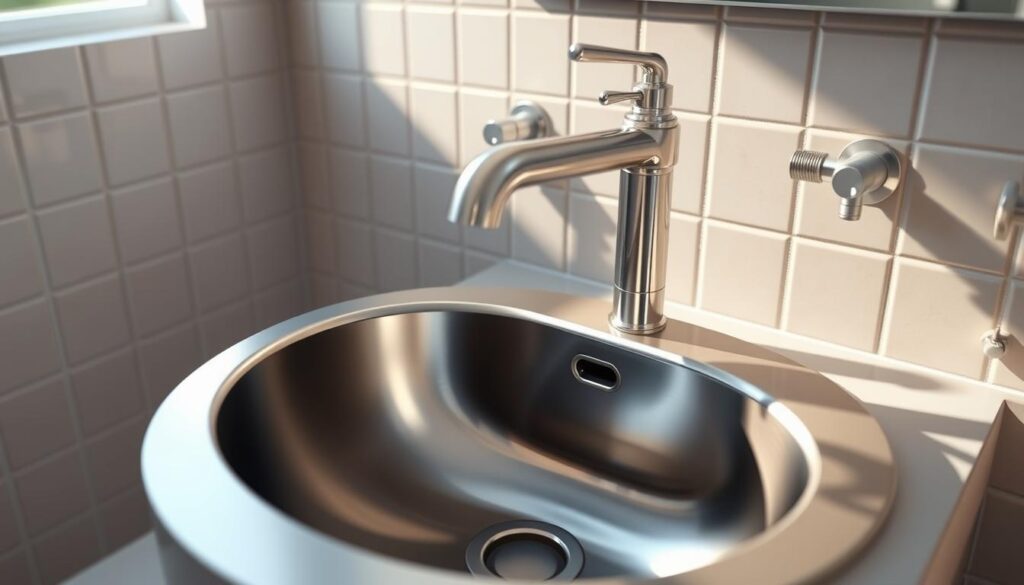
First, gather all tools and materials you’ll need. Make sure you have everything ready to make the installation smooth and efficient.
- Adjustable wrench
- Plumber’s putty
- Silicone sealant
- Clean cloth or rag
- Protective gloves
Start by applying a thin bead of plumber’s putty around the sink’s rim. This makes a watertight seal between the sink and countertop. Carefully lower the sink into position, making sure it sits evenly and securely.
| Installation Step | Key Actions | Tools Required |
|---|---|---|
| Sink Placement | Apply plumber’s putty | Putty knife |
| Faucet Mounting | Secure with mounting nuts | Adjustable wrench |
| Seal Check | Inspect for gaps | Silicone sealant |
When installing the faucet, align it correctly and tighten mounting nuts underneath the sink. Use your adjustable wrench to ensure a tight, secure fit without over-tightening, which could damage the fixture.
Pro Tip: Always double-check manufacturer instructions specific to your sink and faucet model.
Pay special attention to creating a proper seal around edges and connections. This prevents water leaks and ensures a professional-looking installation.
How to Do Plumbing for a Sink: Step-by-Step Drain Installation
Installing a sink drain might seem hard, but it’s doable with the right steps. Knowing about drain parts helps you make a tight and efficient plumbing system for your sink.
First, get all the tools and materials you need. You’ll require a few key items to install your sink drain well. A comprehensive drain installation guide is a good place to start.
Mounting the Sink Flange and Drain Body
Begin by getting the sink flange ready. Put a lot of plumber’s putty on the underside of the flange for a tight seal. The curved trap must be placed right to ensure good drainage and avoid leaks.
- Clean the sink surface thoroughly
- Apply plumber’s putty evenly
- Insert the flange and press firmly
- Secure with mounting hardware
Connecting the Tailpiece and P-Trap
The trap arm is key for your sink’s drainage. You’ll need to adjust it based on whether your drain is in the wall or floor.
- Use slip nuts and washers for connections
- Ensure rubber washers face the correct water flow direction
- Hand-tighten connections, then use pliers for a quarter turn
- Avoid overtightening to prevent damage
Installing Garbage Disposal
Adding a garbage disposal needs extra care. Make sure the mounting tabs fit the bracket, then turn clockwise until it clicks. Don’t forget to remove the plastic plug in the dishwasher inlet.
Install slowly to avoid plumbing problems later. The right drain setup ensures water flows well, prevents leaks, and keeps your sink working great.
Connecting Water Supply Lines to Your Sink
Connecting water supply lines is a key step in installing a sink. It needs precision and careful attention. Your sink’s performance depends on the right connection of hot and cold water lines to the faucet.
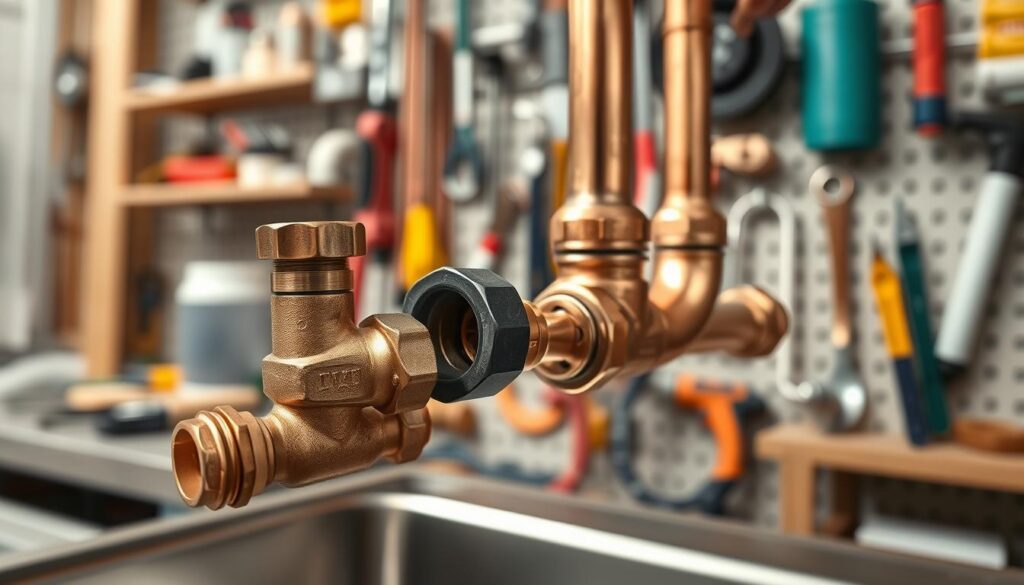
First, find the correct supply line connections. Most faucets have two separate connections – one for hot water and one for cold. Make sure you connect them correctly to avoid mixing.
“Proper connection prevents leaks and ensures smooth water flow” – Professional Plumbing Association
Here are the main steps to connect supply lines:
- Clean the connection points well
- Wrap Teflon tape clockwise around thread connections
- Hand-tighten supply line nuts first
- Use a wrench for the final quarter-turn tightening
- Avoid over-tightening to prevent damage
Different sinks need different approaches. Here’s a quick guide for supply line connections:
| Sink Type | Connection Method | Recommended Line Length |
|---|---|---|
| Standard Kitchen Sink | Direct Compression Fitting | 12-20 inches |
| Bathroom Vanity Sink | Flexible Braided Lines | 9-16 inches |
| Utility Sink | Rigid Copper Lines | 18-24 inches |
Always double-check your connections and look for leaks before finishing the installation. Proper water supply line connection makes your sink work well and avoids plumbing problems later.
Testing Your Sink Plumbing for Leaks and Proper Drainage
After installing your sink plumbing, it’s important to test everything. This ensures it works right and avoids water damage. Look closely at all connection points to find and fix any problems early.
Comprehensive Leak Inspection Checklist
Begin by checking key areas for leaks:
- The drain flange where it meets the sink
- Connection between the drain body and tailpiece
- Slip-joint connections on the P-trap
- Where the trap arm enters the wall drain
Detecting and Addressing Potencial Leaks
Look for signs of water problems:
- Check for drips or seepage around pipe connections
- Inspect water running down the outside of pipes
- Identify leak sources:
- Loose connections: Tighten slip nuts
- Misaligned washers: Disassemble and reposition
Water Flow and Drainage Testing
Do a detailed drainage test by following these steps:
- Turn on faucet at full force
- Check drainage speed
- Listen for unusual sounds like gurgling
Garbage Disposal and Water Pressure Verification
If you’ve installed a garbage disposal, check these things:
- Run cold water
- Turn on disposal for 30 seconds
- Listen for unusual noises
- Check for leaks at mounting flange
Final Water Pressure Assessment
| Check Point | Action |
|---|---|
| Faucet Aerator | Clean if water flow seems weak |
| Shutoff Valves | Verify fully open |
| Flow Restrictors | Confirm normal water conservation settings |
Pro Tip: Take your time during testing. Fixing leaks now saves you from expensive water damage later. Check for slow leaks by running water for several hours.
Common Sink Plumbing Mistakes and How to Avoid Them
Sink plumbing can be tricky. Even small mistakes can cause big problems. Skipping the dry-fit test before final installation is a big error. It can lead to finding out the sink doesn’t fit right after it’s sealed.
Some common mistakes include:
- Forgetting to knock out the dishwasher inlet plug on garbage disposals, which prevents proper dishwasher drainage
- Using too few or improperly positioned sink mounting clips, causing corners to lift
- Misaligning the drain so it doesn’t connect properly to existing plumbing
Connection issues can be a big headache. Overtightening connections can crack plastic washers, strip threads, or damage fixtures. On the other hand, undertightening connections can cause leaks. Always install rubber washers in slip-joint connections and use the right sealant for your job.
Remember to turn off the water supply before starting work. This simple step prevents water damage and flooding. If you’re unsure about your skills, it’s best to call a professional plumber.
Stay away from corrosive chemical drain cleaners. They can harm your pipes. Instead, use mechanical tools like plungers or drain snakes to safely clear clogs.
Pro Tip: Always follow manufacturer instructions for specific fixtures and fittings to ensure a successful installation.
By avoiding these common mistakes, you’ll greatly improve your chances of a leak-free sink plumbing installation. This will serve you well for many years.
Conclusion
Mastering sink plumbing means knowing about key parts like water lines and shutoff valves. You’ve learned how to handle drain assemblies and P-traps to keep sewer gases out. Installing a new sink needs careful prep, the right tools, and a step-by-step approach.
Success comes from focusing on the details at every step. From setting up faucet hardware to connecting water lines, each action is important. Don’t skip the testing phase. A few extra minutes can save you from water damage and trouble later.
Knowing your limits is key. This guide gives you DIY skills, but some jobs need a pro. Local codes and complex setups might require expert help. Asking for help when needed shows smart thinking, not weakness.
Whether you’re updating a kitchen sink or a bathroom vanity, you’re ready. You have the basics to handle plumbing projects with confidence. Remember, patience and attention to detail are your best friends for a successful, leak-free job.